










I remember unboxing a $400 desk that looked like a mid-century dream in the studio-lit photos. Two hours of assembly later, I realized that if I so much as breathed too hard, my monitor would vibrate like a tuning fork. It is a classic trap: buying furniture for how it looks on a screen rather than how it actually supports your wrists and your work. Finding great desks isn't about the price tag or the wood stain; it is about the physics of the thing.
We have all been there—staring at 47 browser tabs of workstations at 1 AM, trying to figure out if that $150 special is going to collapse under the weight of a dual-monitor setup. Most people settle for 'fine,' but when you are sitting at a station for 40 hours a week, 'fine' eventually leads to a sore neck and a lot of frustration.
Quick Takeaways
- Depth matters more than width; aim for at least 29 inches to save your eyesight.
- Avoid 'aesthetic' legs like thin hairpins if you plan on typing vigorously.
- Real 1-inch thick desktops are the minimum for mounting monitor arms safely.
- Integrated drawers usually kill your legroom—go for a clean surface instead.
The Aesthetic Trap of the Internet's 'Coolest Desk'
If you spend any time on social media, you have seen the 'coolest desk' setup. It usually involves a thin, minimalist slab of wood supported by two spindly hairpin legs, decorated with a single succulent and a pristine mechanical keyboard. It looks incredible in a 4:5 aspect ratio photo. In reality? It is a structural nightmare. Most of these trendy setups lack a modesty panel or a cross-bar, meaning they have zero lateral stability. If you type with any degree of force, the whole thing shimmies.
I once bought a desk purely for the 'vibe' and ended up having to wedge a piece of folded cardboard under one leg just to stop my webcam from shaking during Zoom calls. These desks are often designed by people who value photography over ergonomics. They are usually too shallow—under 24 inches—which forces your monitor right into your face. A desk meant for an eight-hour workday needs to prioritize your physical comfort over how many likes it gets. If you cannot lean your full weight on the front edge without the back legs lifting, it is not a desk; it is a console table with an identity crisis.
What Separates a Merely Good Desk From Great Desks?
A good desk is flat and holds your laptop. Great desks, however, are built to handle the chaos of a real life. The first thing I check is the desktop thickness. If it is less than an inch thick and made of cheap particle board, it will sag within six months under the weight of a monitor mount. You want a dense core—either solid wood, high-grade plywood, or high-density fiberboard. This density is what prevents that annoying monitor wobble every time you move your mouse.
Then there is the leg design. While modern minimalist frames are popular, they often fail the 'nudge test.' I always prefer a frame that uses a C-leg or a T-leg design with heavy-duty steel. If you are worried about the industrial look, a traditional writing computer desk often provides the structural integrity that modern 'lifestyle' desks lack. Those older designs survived for a reason: they have four points of contact and often a support rail running underneath the center of the desk to prevent the surface from bowing. Weight capacity is another huge tell. A top-tier desk should be rated for at least 150 lbs, even if you only plan on putting a 15 lb laptop on it. That overhead ensures the motor or the frame isn't being stressed to its limit every single day.
How to Actually Read Home Office Desks Reviews
Most home office desks reviews are written five minutes after the person finishes assembly. They are glowing because the desk is new and clean. To find the truth, you have to look for the 'one-year-later' updates or the reviews that mention specific technical flaws. I ignore any review that just says 'it looks pretty.' Instead, I look for mentions of 'clamp compatibility.' If a desk has a metal frame running too close to the edge, you won't be able to attach a monitor arm or a microphone boom, which is a dealbreaker for a modern setup.
I also look for comments on surface durability. Cheap laminates will start to peel at the front edge where your wrists rub against them. When finding the best office desk online, scroll past the five-star fluff and look for the three-star reviews. Those are usually written by the people who liked the desk but noticed that the pre-drilled holes didn't align or that the surface scratches if you so much as look at it wrong. A home office desk review that mentions 'lateral sway' is an immediate red flag—that is a flaw you can't fix with a screwdriver.
Why the Best Large Desk Will Always Beat Built-in Drawers
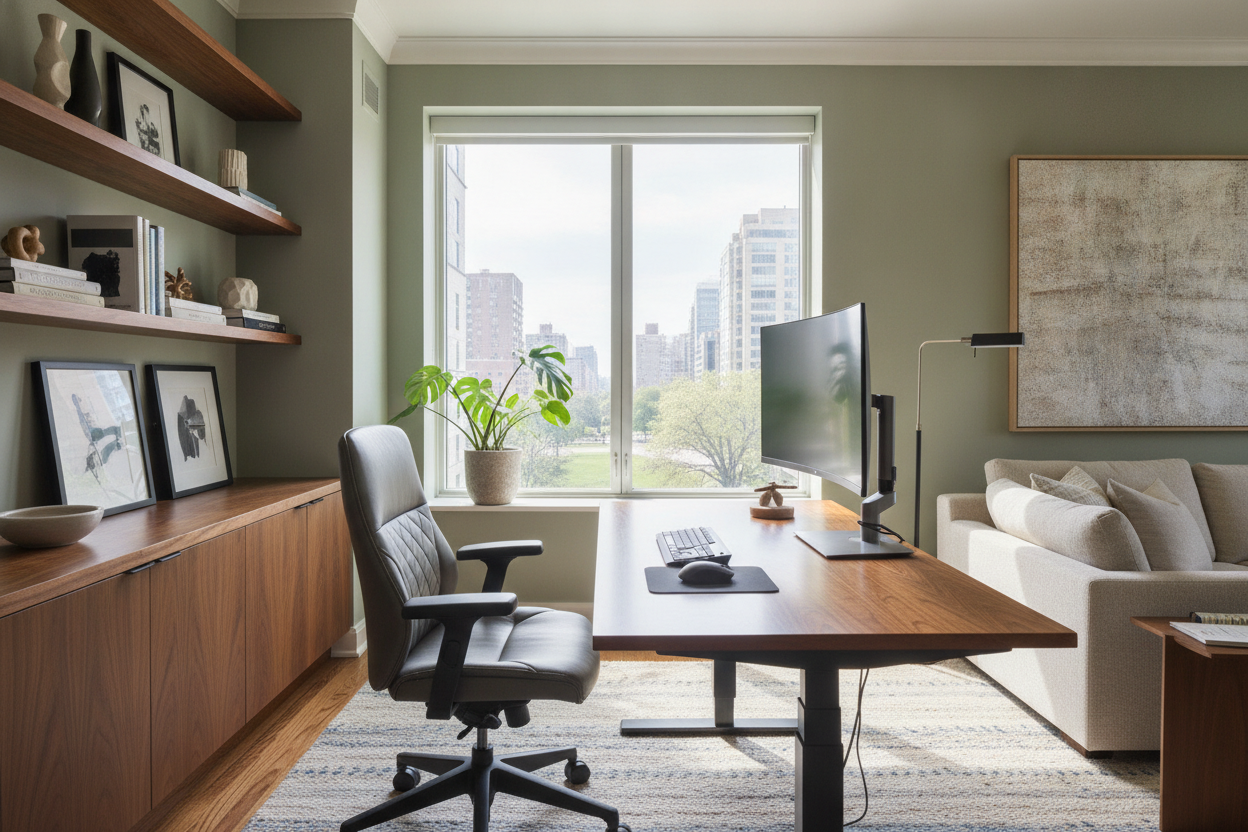
People love the idea of built-in drawers. They think it will keep them organized. In my experience, desk drawers are just places where pens go to die and where you inevitably bang your knees. The best large desk is one that gives you a massive, uninterrupted surface area. This is especially true if you are a multi-monitor user. You need space to spread out papers, a coffee mug, and maybe a tablet without feeling like you are playing Tetris with your peripherals.
If you really need storage, buy a separate rolling pedestal. It gives you the flexibility to move it out of the way when you want to stretch your legs. For those working in tight quarters, a corner desk with large storage is the one exception I make. It utilizes the 'dead' corner space for your CPU or files while keeping the primary workspace open. A top rated desk for dual monitors needs at least 55 inches of width, but 60 to 72 inches is the sweet spot where you actually stop feeling cramped. Surface area is the ultimate luxury in a home office.
So, What is the Best Desk for 2025?
The best desk 2025 has to offer isn't a one-size-fits-all answer, but the framework for picking it remains the same. If you are a gamer or a heavy computer user, prioritize a steel frame with a depth of 30 inches. If you are a writer who prefers a clean, tactile feel, look for solid wood tops that can be refinished in a decade. The 'what is the best desk' question really comes down to your floor plan. Don't buy a massive executive desk for a 10x10 room; you will feel suffocated.
I have spent years testing these, and my biggest takeaway is this: buy the most stable frame you can afford and the simplest top. You can always replace a desktop, but a wobbly frame is a permanent headache. If you are ready to stop squinting at tiny photos and want to make a real investment, this home office desk buying guide will help you narrow down the technical specs that actually matter for your specific workflow.
FAQ
Does a thicker desktop mean a better desk?
Generally, yes. A thicker top (1 inch or more) is less likely to warp over time and can better support the concentrated weight of monitor clamps and heavy equipment.
How much depth do I really need?
Standard desks are 24 inches deep, but if you use a monitor larger than 27 inches, you really want 29 or 30 inches of depth to maintain a healthy focal distance for your eyes.
Are standing desks better than sitting desks?
It depends on your discipline. Standing desks are great for staying active, but a high-quality fixed-height desk is almost always more stable and cheaper than a similarly priced motorized one.


Dejar un comentario
Este sitio está protegido por hCaptcha y se aplican la Política de privacidad de hCaptcha y los Términos del servicio.