










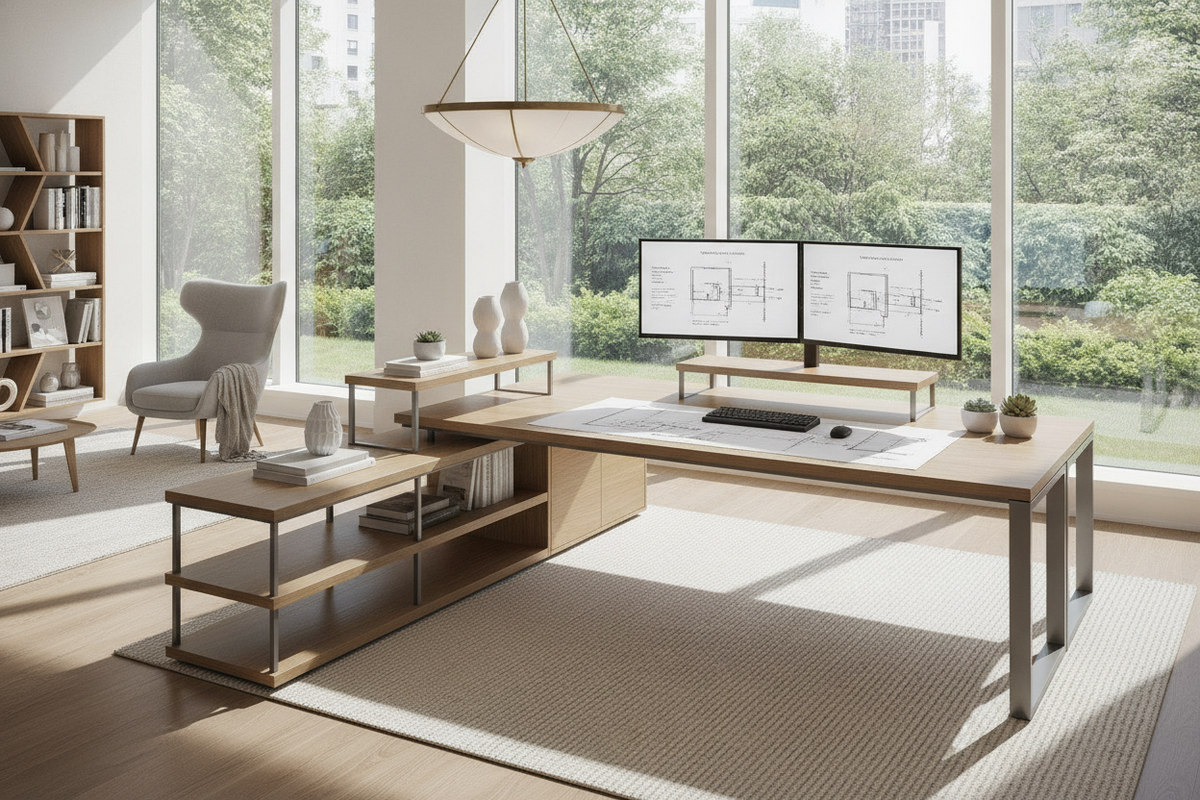
A 60-inch L-shaped desk represents a practical sweet spot for modern home offices. Large enough to accommodate multi-screen computing alongside analog writing surfaces, this footprint still fits gracefully within standard room dimensions without overwhelming available floor area. When chosen thoughtfully, a 60-inch corner workstation organizes technology, supports posture transitions, and eliminates desktop clutter.
Dimensional Configurations: Symmetric vs. Asymmetric Profiles
Choosing the right corner desk begins with evaluating the ratio between the main desk surface and the secondary return wing. Depending on your room dimensions and working habits, you can select between equal-sided footprints or staggered profiles.
For spaces where square footage is tight or layout versatility is essential, comparing alternative sizes like a 55 inch l shaped corner desk with storage can help clarify whether a full 60-inch span or a slightly more compact alternative best matches your available corner space.
The 60x60 Symmetric Corner Workstation
A symmetric 60x60 configuration features equal-length surfaces on both wings, creating an expansive, balanced workstation. This design is well suited for dedicated home offices where the corner serves as the room anchor. The dual 60-inch spans allow you to maintain distinct, fully equipped zones—such as a dual-monitor computing station on one side and a creative sketching, drafting, or document review area on the other—without either zone encroaching on the corner apex.
The 48x60 Offset Return Blueprint
In contrast, an asymmetric or offset return profile pairs a primary 60-inch worktop with a shorter secondary return, frequently around 48 inches long. This arrangement provides an expansive main desk while preserving essential walkway clearance on the secondary side. Offset designs work particularly well in multi-use rooms, guest bedrooms, or open-plan areas where room traffic passes close to one side of the desk.
Room Planning, Clearance Zones, and Placement Strategy
Proper placement requires accounting for both the desk's physical perimeter and the dynamic space required by the user. Maintaining generous clearance behind the desk ensures an ergonomic chair can glide, recline, and swivel without scraping baseboards or bumping into nearby furniture.
When evaluating compact room dimensions or secondary desk options, reviewing a desk drawers guide offers practical insights into calculating usable legroom and perimeter buffers before finalizing your room layout.
- Corner Placement: Placing both wings flush against intersecting walls maximizes open floor area, conceals under-desk wire runs, and creates an immersive, focused cockpit environment.
- Floating Placement: Orienting the primary 60-inch surface outward toward the room while anchoring the return against a wall creates an executive presence, establishing a clear visual boundary in open spaces.
- Window Orientation: Positioning the workstation perpendicular to natural light sources helps minimize screen glare while keeping outdoor views within peripheral sightlines.
Integrated Storage Architecture: Drawers vs. Open Pedestals
Storage architecture determines how cleanly your 60-inch workstation functions throughout the workday. Integrated cabinetry helps keep the primary tabletop clear for daily tasks.
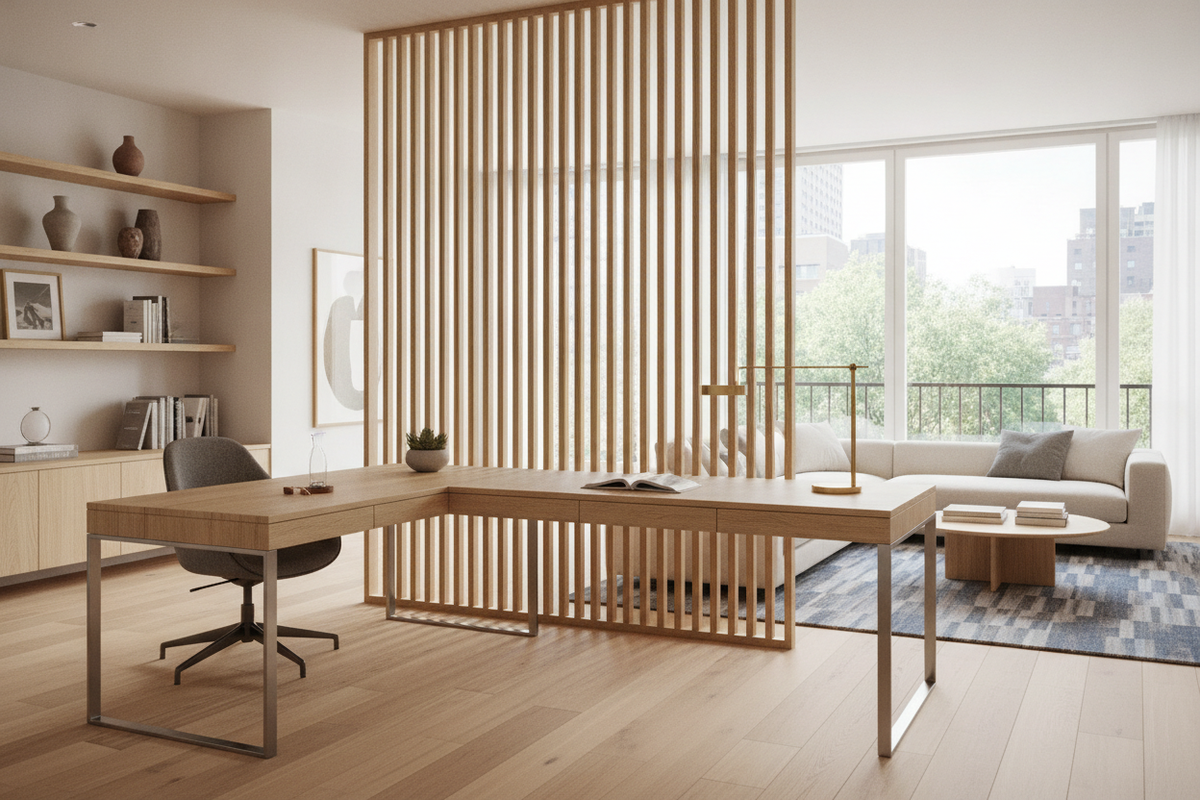
If you prefer a cohesive, warm finish with concealed compartments, models such as the l shaped corner desk with drawers brown wood grain demonstrate how integrated pedestals blend practical file storage with contemporary room styling.
Configuring 60-Inch L-Shaped Desks with Drawers
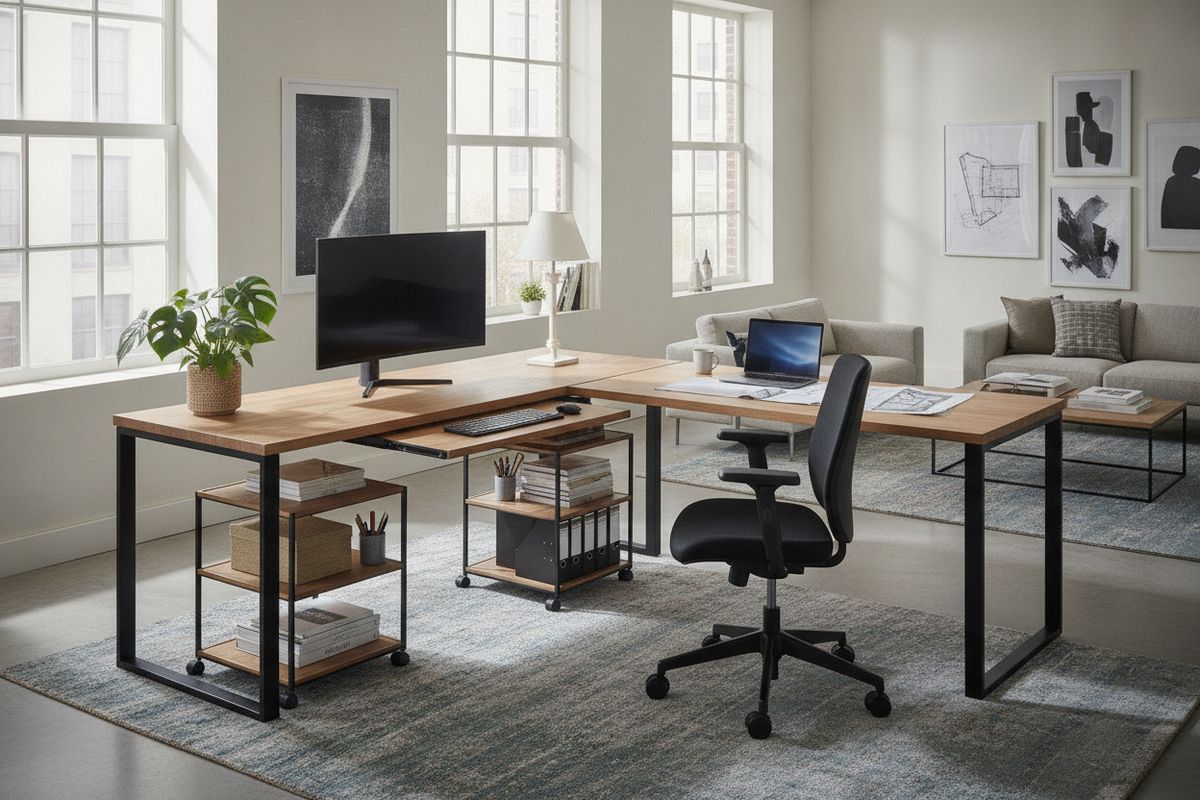
Integrated drawer pedestals provide dedicated homes for paperwork, office supplies, and charging accessories. When selecting a desk with built-in drawers, positioning is critical to maintaining uninhibited leg movement. Placing filing pedestals at the outermost edge of the return wing leaves the inner corner entirely open for effortless chair swiveling.
Designs like the l shaped desk with 3 drawers and wood legs highlight the advantage of fixed exterior drawer units that preserve central knee clearance while offering multi-tiered storage.
Open Return Shelving and Tower Compartments
Open lower shelving and dedicated CPU platforms provide continuous ventilation for desktop computer towers, preventing heat buildup within enclosed compartments. Open shelves also offer accessible space for storage bins, reference books, and network equipment, keeping cords accessible for periodic adjustments.
Material Profiles and Structural Frameworks
The durability and appearance of your workstation depend heavily on the materials used in the tabletop and supporting base. Balancing structural stability with visual appeal ensures the desk complements your overall interior design.
To explore how modern materials pair with functional storage elements across diverse office designs, consulting a contemporary desk with drawers the ultimate buying guide for 2024 helps clarify the differences between wood grain finishes, metal supports, and integrated hardware.
- Engineered Wood with Laminate: Delivers exceptional resistance to daily scratches, moisture rings, and wear while providing realistic wood grain or modern matte textures.
- Heavy-Duty Steel Framing: Welded metal legs and crossbeams provide rigid stability that resists lateral sway, supporting multiple monitors, monitor arms, and heavy desktop equipment.
- Solid Wood Accents: Tapered wooden legs or natural veneer surfaces lend organic warmth, blending functional home office furniture with existing residential decor.
Workstation Surface Zoning and Cable Management
A primary benefit of a 60-inch L-shaped desk is the ability to separate different types of daily work. By mapping out your tabletop into distinct zones, you can maintain focus and minimize clutter.
- Primary Digital Hub: Center your main monitors and primary keyboard tray along the longer 60-inch span, aligning your line of sight directly ahead to support neutral neck posture.
- Secondary Task Wing: Dedicate the return wing to writing notebooks, tablets, reference binders, or desktop audio interfaces, keeping these items within reach without cluttering your main typing zone.
- Integrated Wire Routing: Use desktop grommets, under-desk cable raceways, and adhesive clips to bundle power cords along the interior frame legs, keeping the footwell completely unobstructed.
Step-by-Step Decision Checklist for Your 60-Inch Corner Desk
Before committing to a specific workstation build, walk through this planning checklist to confirm compatibility with your home office:
- Measure Corner Angles: Confirm that baseboards and wall trim do not prevent the desk frame from sitting square against the wall.
- Verify Return Direction: Determine whether a left-hand or right-hand return orientation best complements your room's entryways and window locations, or select a reversible frame.
- Assess Legroom Needs: Ensure that support legs, crossbars, and drawer units leave generous knee clearance throughout your normal swivel range.
- Plan Power Access: Identify nearby wall outlets to route surge protectors cleanly beneath the main span without stretching cords across open walking paths.

Dejar un comentario
Este sitio está protegido por hCaptcha y se aplican la Política de privacidad de hCaptcha y los Términos del servicio.