










Domestic Task Seating: Balancing Ergonomics and Home Aesthetics
Selecting at home desk chairs requires a different design strategy than outfitting a corporate floor plate. Commercial contract furniture often prioritizes uniform industrial durability and institutional palettes, which can look out of place inside bedrooms, living areas, or residential studies. In contrast, residential task seating must provide adequate physical support during extended computer sessions while blending naturally into domestic decor schemes. Achieving this balance involves evaluating physical proportions, mechanical adjustments, upholstery textures, and room circulation paths. Exploring an office computer desk guide can help ground your overall aesthetic choices as you configure a cohesive workstation.
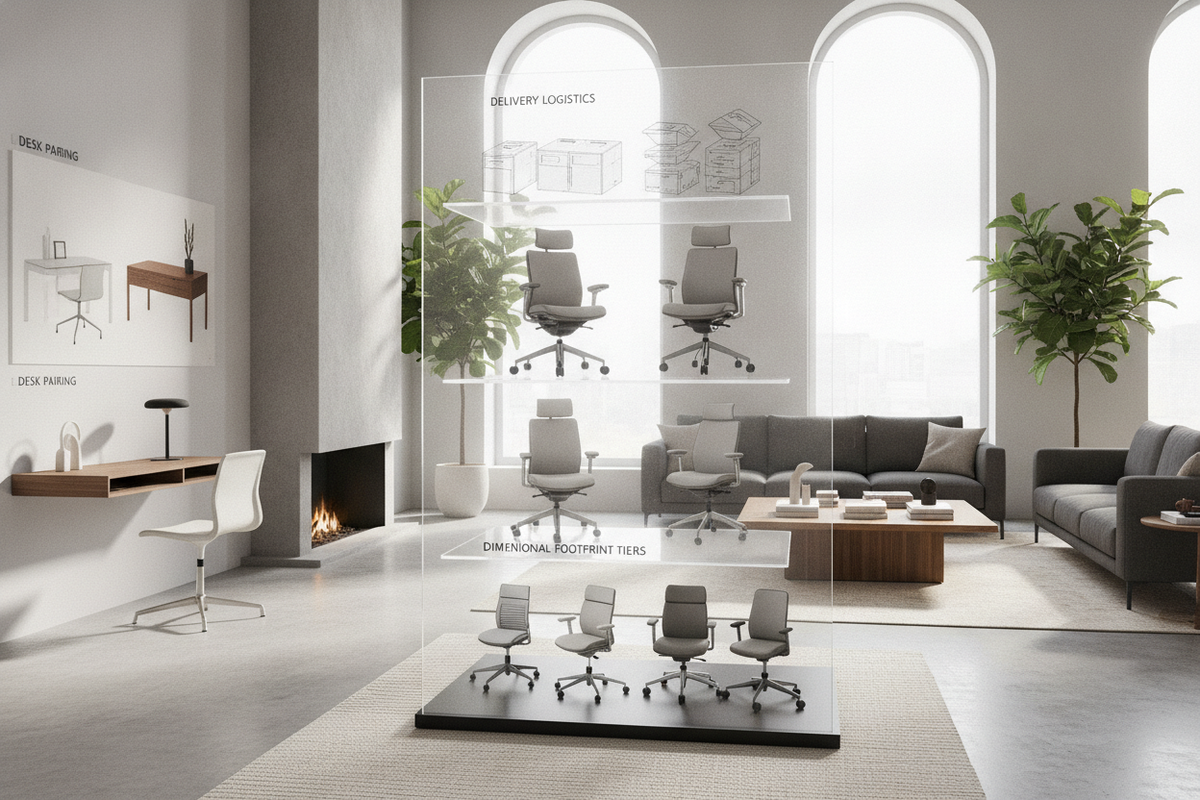
Dimensional Footprint Tiers for Residential Workspaces
Home workspaces vary significantly in scale, ranging from compact multi-use nooks to dedicated standalone rooms. Categorizing chairs by their spatial footprint ensures that adequate floor clearance remains for smooth swivel motion and daily foot traffic.
Compact Armless and Low-Profile Seating for Multi-Use Rooms
In dual-purpose environments such as guest rooms, bedroom corners, or hallway alcoves, visual weight and physical clearance are primary considerations. Armless desk chairs and low-profile task seating minimize visual clutter and tuck completely beneath table aprons when not in use. This approach pairs well with concealed workstations and alcove desks, as detailed in our computer desk office guide. Choosing a compact base allows the chair to operate smoothly in tight corridors without catching on nearby drapery or bed frames.
Mid-Back and High-Back Task Chairs for Dedicated Home Offices
Dedicated home office rooms offer greater spatial leeway for mid-back and high-back seating. High-back executive chairs feature extended backrests and integrated headrests that support the entire upper torso. These chairs require a wider turning radius and deeper rolling clearance behind the primary work surface. Pairing a full-scale task chair with a corner or L-shaped setup, such as an office computer desk product, creates a balanced executive environment where storage access and chair motion do not conflict.
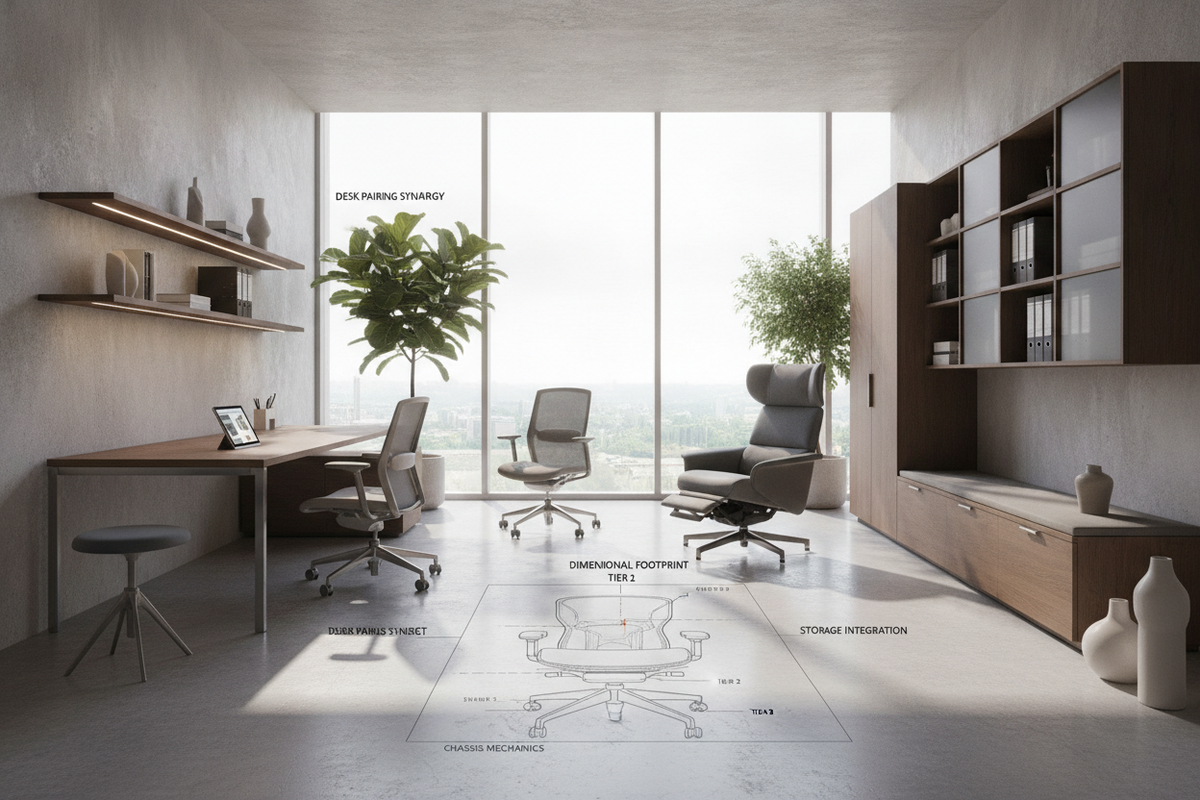
Chassis Mechanics and Ergonomic Adjustability Framework
A dependable residential task chair relies on several interconnected mechanical assemblies to support active sitting postures throughout the workday:
- Pneumatic Height Cylinder: Facilitates smooth vertical travel, allowing users to position the seat cushion so their feet rest flat on the floor with knees at an open, comfortable angle.
- Synchro-Tilt and Recline Tension: Enables the backrest and seat pan to recline in tandem, encouraging dynamic movement while keeping the pelvis stabilized. Adjustable tilt tension customizes resistance based on user preference.
- Lumbar Support Elements: Integrated or height-adjustable lumbar contours help maintain the natural inward curve of the lower back, reducing slouching during long working sessions.
- Armrest Configurations: Options range from fixed padded arms to multi-directional adjustable mechanisms or flip-up assemblies. Flip-up arms are particularly advantageous in residential spaces, enabling the chair to push flush against the desk edge when work concludes.
Material and Upholstery Selection for Residential Spaces
Upholstery impacts both seated comfort and room ambiance. Selecting the right material involves balancing breathability, maintenance requirements, and tactile appeal:
- Performance Mesh: Offers continuous airflow across the backrest, helping maintain a neutral temperature in warm rooms while delivering flexible, responsive support.
- Woven Fabrics and Bouclé: Soft residential textiles integrate seamlessly with living room or bedroom soft furnishings, introducing warmth and varied textures to the home workspace.
- Faux Leather and Polyurethane: Provide a sleek, modern finish that is easy to wipe clean, making them practical for multi-functional spaces where snacks or beverages are common.
Desk Pairing Synergy and Storage Integration
Careful dimensional coordination between your task chair and surrounding furniture prevents accidental surface damage and awkward seating postures. Before selecting a chair, measure the clear span between desk legs, the vertical distance from the floor to the desk underside or drawer aprons, and the clearance to nearby credenzas or filing cabinets. When browsing a computer desk collection, ensure the chair armrests can either clear the lower edge of the desktop or adjust downward to slide beneath it. Maintaining unobstructed clearance behind the workstation ensures you can push back from the desk smoothly without colliding with walls or storage doors.
Delivery Logistics and Assembly Staging Protocols
Securing home office seating involves navigating various shipping options and domestic handling logistics. Retailers frequently offer programs such as desk chair free shipping, office chair free shipping, and computer chair free shipping, which deliver standard parcel shipments directly to your doorstep. For time-sensitive workstation upgrades, exploring local expedited options such as office chair delivery today, office chair same day delivery, or same day delivery office chair arrangements can help furnish an operational setup immediately.
When planning your desk chair delivery or office chair delivery, verify package dimensions to confirm the carton can navigate hallways and doorways. Standard office chair free delivery typically brings the boxed unit to ground-level entryways. Staging the unboxing in an open area with protective floor coverings prevents accidental scuffs on hardwood during base and cylinder assembly.
Long-Term Maintenance and Floor Surface Protection
Preserving the functionality and appearance of your home task chair involves simple, regular upkeep:
- Caster Selection: Standard hard nylon casters operate smoothly on medium-pile carpets, while soft polyurethane or rollerblade-style casters help protect hardwood, laminate, and tile floors from surface abrasion.
- Hardware Checkups: Periodically checking and tightening chassis bolts, armrest connections, and base fasteners keeps the chair sturdy and eliminates unwanted squeaks.
- Upholstery Care: Routine vacuuming of fabric weaves and prompt spot cleaning of smooth surfaces preserves fabric breathability and prevents dust accumulation over time.

Dejar un comentario
Este sitio está protegido por hCaptcha y se aplican la Política de privacidad de hCaptcha y los Términos del servicio.