










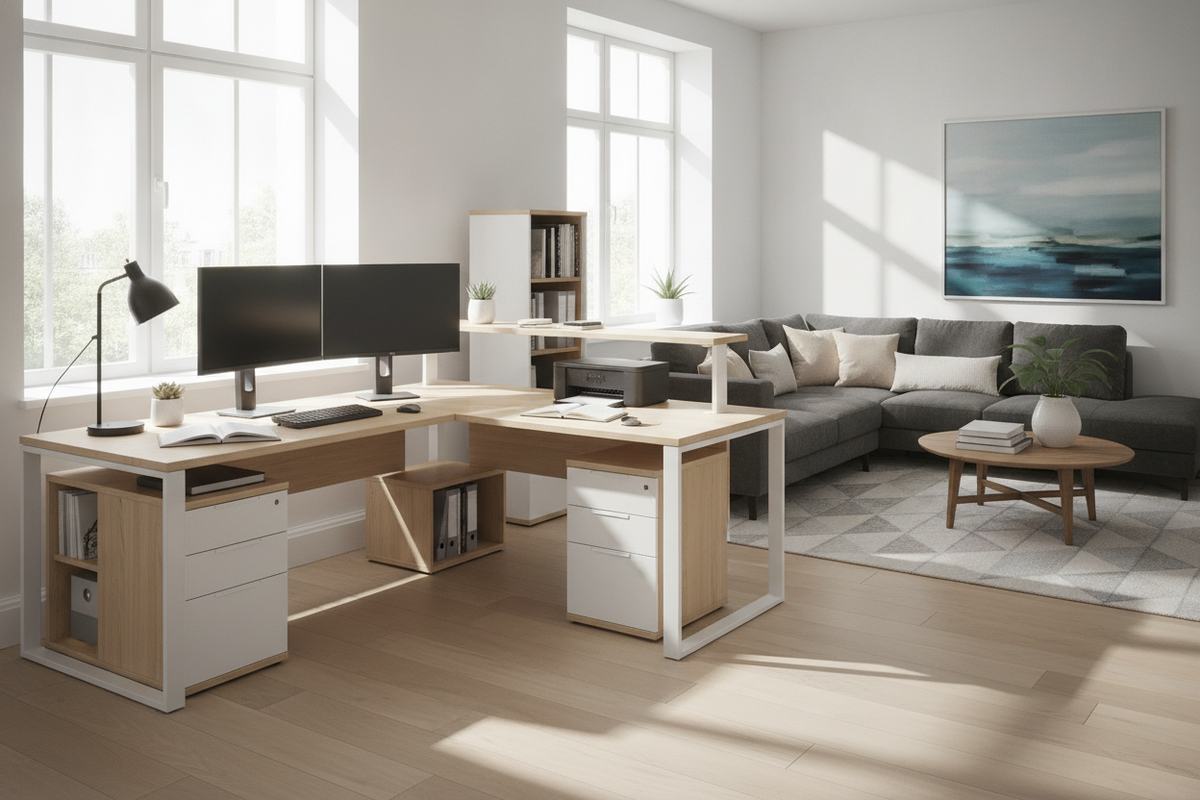
Structural Archetypes of Modular Flat-Pack Computer Desks
Modular flat-pack office furniture has redefined how residential workstations are configured. Whether you are assembling a minimalist setup or a dedicated home command center, identifying the foundational framework of a desk determines its functional lifespan, load distribution, and versatility across different floor plans.
Modular Tabletop and Leg Combinations
One of the most popular approaches to creating a custom workspace involves pairing standalone tabletops with separate supporting elements. Users can select basic tubular steel posts, solid wood trestles, or height-adjustable legs to anchor a flat board. This modularity allows for straightforward component replacement and width adjustments over time. For those seeking adaptable surface designs, exploring a comprehensive computer desk collection provides clarity on how modern tops integrate with varied leg profiles.
Pedestal-Supported Workstations with Built-In Storage
Pedestal-style desks rely on one or two drawer towers to uphold the working surface, replacing traditional legs with functional storage volume. This configuration offers high organizational density by keeping hardware, notebooks, and cables directly beneath the desktop. Because the base units serve as both load-bearing columns and filing compartments, pedestal desks maintain a grounded and cohesive appearance in study rooms and executive setups.
Compact Mobile and Corner Workstation Designs
For flexible multi-use rooms, rolling desks on lockable casters and triangular corner units offer space optimization. Caster-mounted frames can be rolled aside when a room shifts from work hours to entertaining, while L-shaped profiles maximize underutilized corner zones. If keeping a workspace out of view is essential, checking a specialized computer desk ikea guide offers practical concepts for concealing computer gear within compact footprints.
Dimensional Categories and Spatial Footprint Planning
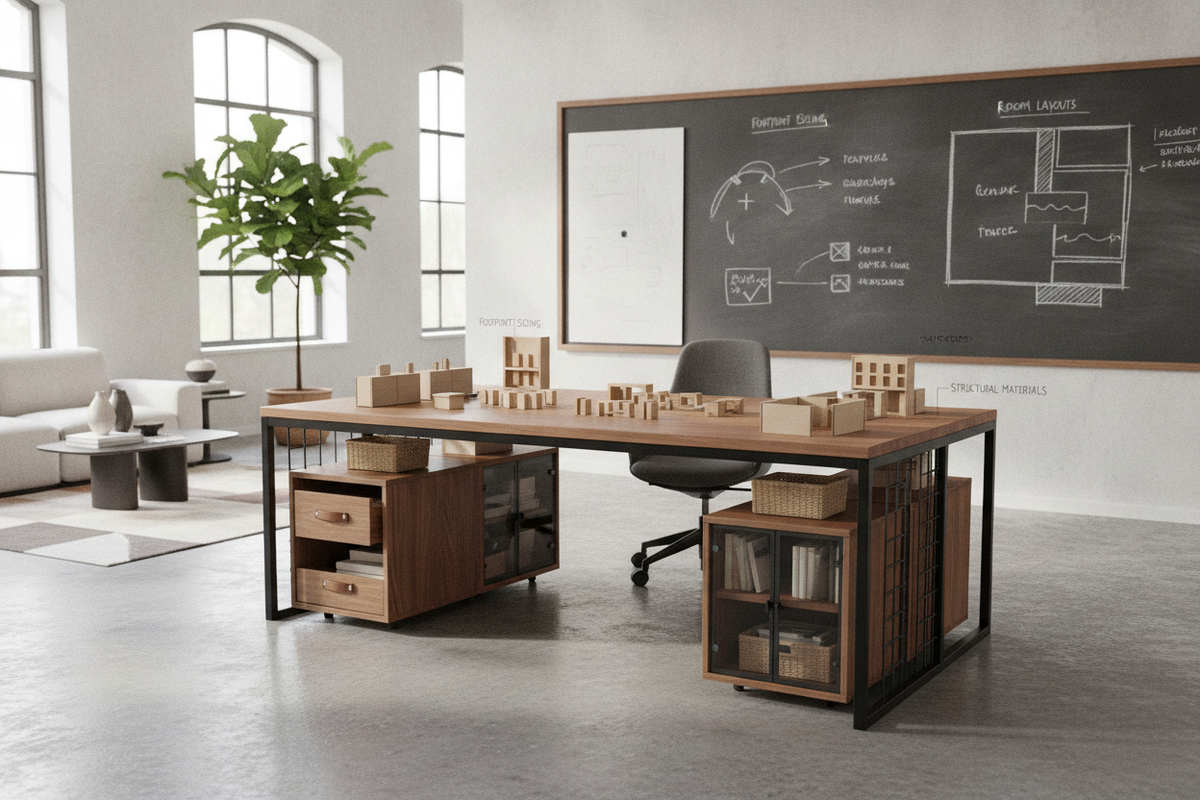
Selecting a workstation requires balancing the visual footprint against physical clearances for chair movement, display positioning, and natural traffic lines. Desks generally fall into three structural sizing tiers.
Compact Workstations for Nooks and Bedrooms
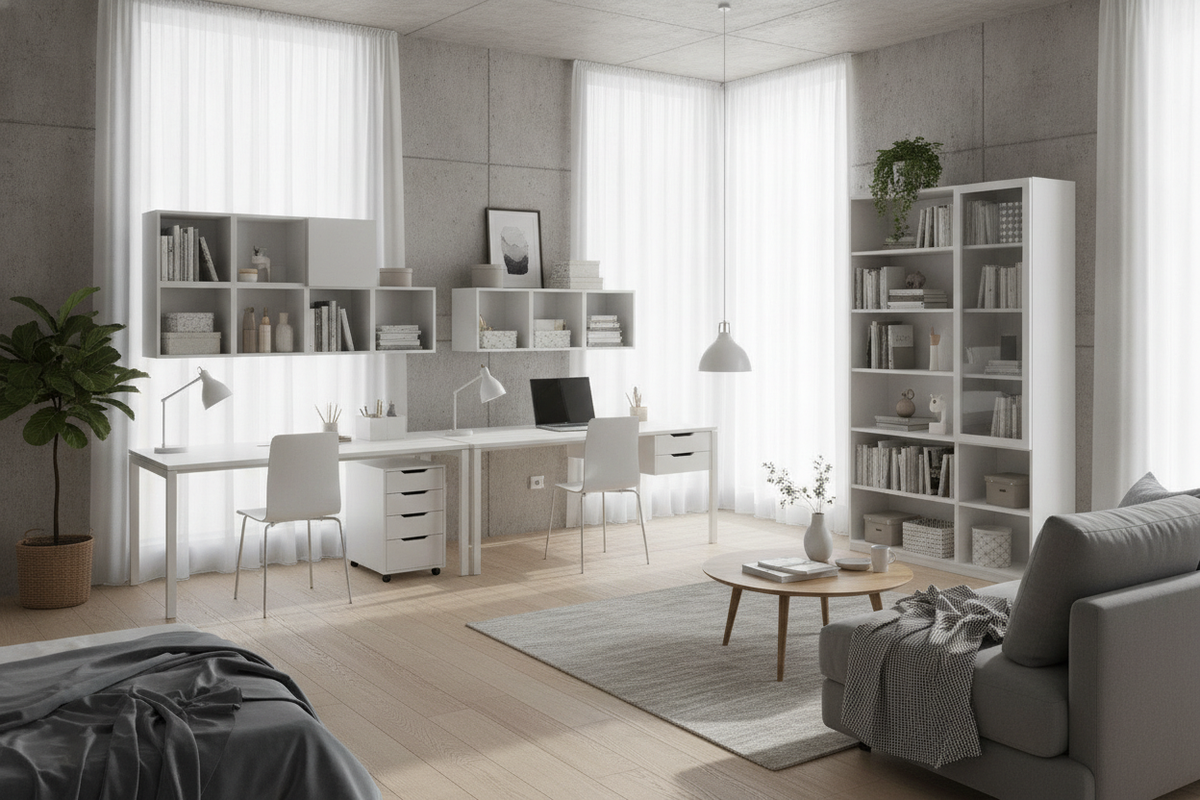
Compact desks are tailored for secondary spaces such as bedroom corners, hallway alcoves, and studio apartments. These desks prioritize a shallow depth and narrow width, ensuring that daily laptop work can occur without blocking doorways or closet access. When choosing a compact desk, pairing it with low-profile task seating preserves open floor space.
Standard Single-User Formats for Daily Productivity
Standard mid-sized work surfaces represent the everyday baseline for full-time remote professionals. These dimensions provide adequate surface depth to accommodate an external monitor, an ergonomic keyboard, and reference notebooks side by side. The increased clearance beneath the surface also permits standard swivel chairs with armrests to tuck fully under the desk when not in use.
Expansive Dual-Monitor and Corner Workstations
Power users, content creators, and multi-display operators require expansive surface areas to support multiple monitors, peripheral switchers, and audio hardware. Corner configurations and extended tabletops distribute equipment weight evenly across multiple support legs. Choosing a dedicated white computer desk product in an L-shaped format gives you generous depth on both wings, keeping primary and secondary tasks organized without clutter.
Storage Architecture: Drawers, Cabinets, and Cord Management
A functional desk relies on disciplined cable and accessory organization. Structural storage components prevent desktop clutter and preserve visual calm in open-concept spaces.
Filing Cabinets and Modular Under-Desk Drawers
Under-desk storage pedestals range from shallow stationery pullouts to deep hanging-folder drawers. Freestanding modular drawer units can be positioned flush beneath the work surface or placed adjacent to the desk to serve as an extended printer platform. For practical storage reviews, our ikea drawer white guide details how modular organizers keep desktop essentials sorted.
Integrated Wire Channels and Power Management
Modern desks frequently include built-in cord pass-through grommets, rear scalloped cutouts, or underside horizontal wire trays. Routing power strips and adapter bricks into a dedicated under-desk tray keeps cables suspended off the floor, reducing visual clutter and preventing vacuum cleaner snags.
Vertical Overhead Units and Monitor Risers
When floor area is constrained, building upward provides additional storage. Desk hutches, elevated monitor shelves, and wall-mounted shelving tiers take advantage of vertical space. Monitor risers position displays closer to eye level while opening up the desktop underneath for keyboards, drawing tablets, or notebooks.
Material Evaluation, Finish Selection, and Durability
Flat-pack computer workstations utilize various engineered materials, laminates, and metal subframes that influence surface feel, weight, and long-term wear.
Engineered Wood, Laminate Finishes, and Colorways
Modern desk surfaces commonly feature particleboard or lightweight fiberboard wrapped in melamine foil or printed wood-grain laminates. Classic white, oak-effect, and matte dark finishes integrate easily into varied interior palettes. Melamine surfaces offer good resistance to everyday writing marks and light spills, though coasters remain recommended to prevent moisture penetration at seam lines.
Frame Rigidity, Fastener Integrity, and Reassembly Factors
Structural stability depends on the quality of internal joinery, including cam-lock fasteners, wooden dowels, and diagonal steel support brackets. Desks with reinforced perimeter aprons or steel underframes exhibit minimal lateral sway during typing. If you plan on moving residences, taking care not to over-tighten fasteners during assembly preserves the core material for subsequent reassembly.
Room Layout Strategies and Workstation Placement
Strategic furniture placement optimizes natural light, privacy, and room flow in both dedicated offices and multipurpose living zones.
Dedicated Office Zoning and Executive Positioning
In a private study, placing a desk perpendicular to windows avoids harsh screen glare while maintaining access to natural daylight. For video calls, orienting the desk toward the room entrance creates a polished background while keeping the workspace separate from high-traffic household zones.
Shared Living Spaces and Multipurpose Corner Setups
When incorporating an office into an open-plan living room or dining area, selecting furniture with cohesive finishes creates visual harmony with surrounding credenzas and bookcases. Aligning the desk flush against an accent wall or tucking it into a structural alcove clearly defines the work zone while maintaining a unified interior aesthetic.
Selection Checklist: Balancing Footprint, Price Tiers, and Function
Before purchasing a new flat-pack workstation, run through this practical selection checklist to ensure the model aligns with your spatial and organizational needs:
- Measure Available Clearances: Verify width, depth, and chair travel space, leaving generous clearance behind the seat.
- Assess Storage Needs: Decide between an open-frame leg setup or a combined unit like a drawer storage desk product that incorporates integrated cabinetry.
- Plan Cable Routes: Check for grommets, rear cable gaps, or space to install an underside raceway.
- Match Room Finishes: Coordinate top and leg colors with existing shelving, trim, and flooring tones.

Dejar un comentario
Este sitio está protegido por hCaptcha y se aplican la Política de privacidad de hCaptcha y los Términos del servicio.