










We often treat spare rooms as holding cells for overflow laundry or boxes we haven't unpacked since the last move. However, the decision to reclaim that square footage is one of the most high-value design shifts you can make. Converting a bedroom into an office is not merely about shoving a desk against a wall; it is about architectural repurposing. It requires shifting the room's psychology from rest to productivity without sacrificing the warmth that makes working from home desirable.
Key Design Considerations for Workspace Conversion
- Ergonomic Flow: Ensure a minimum of 36 inches of clearance behind your desk chair for unrestricted movement.
- Lighting Temperature: Switch from warm bedroom lighting (2700K) to cooler, focus-enhancing daylight bulbs (3500K-4000K).
- Acoustic Control: Hard surfaces create echoes; incorporate rugs and soft furnishings to dampen sound for video calls.
- Electrical Access: Map out outlet locations before placing heavy furniture to avoid trailing extension cords.
Space Planning & The "Command" Position
When transforming a bedroom into an office, the biggest error homeowners make is facing the wall. In bedroom design, we anchor beds against walls for security. In office design, this creates a claustrophobic "cubicle effect."
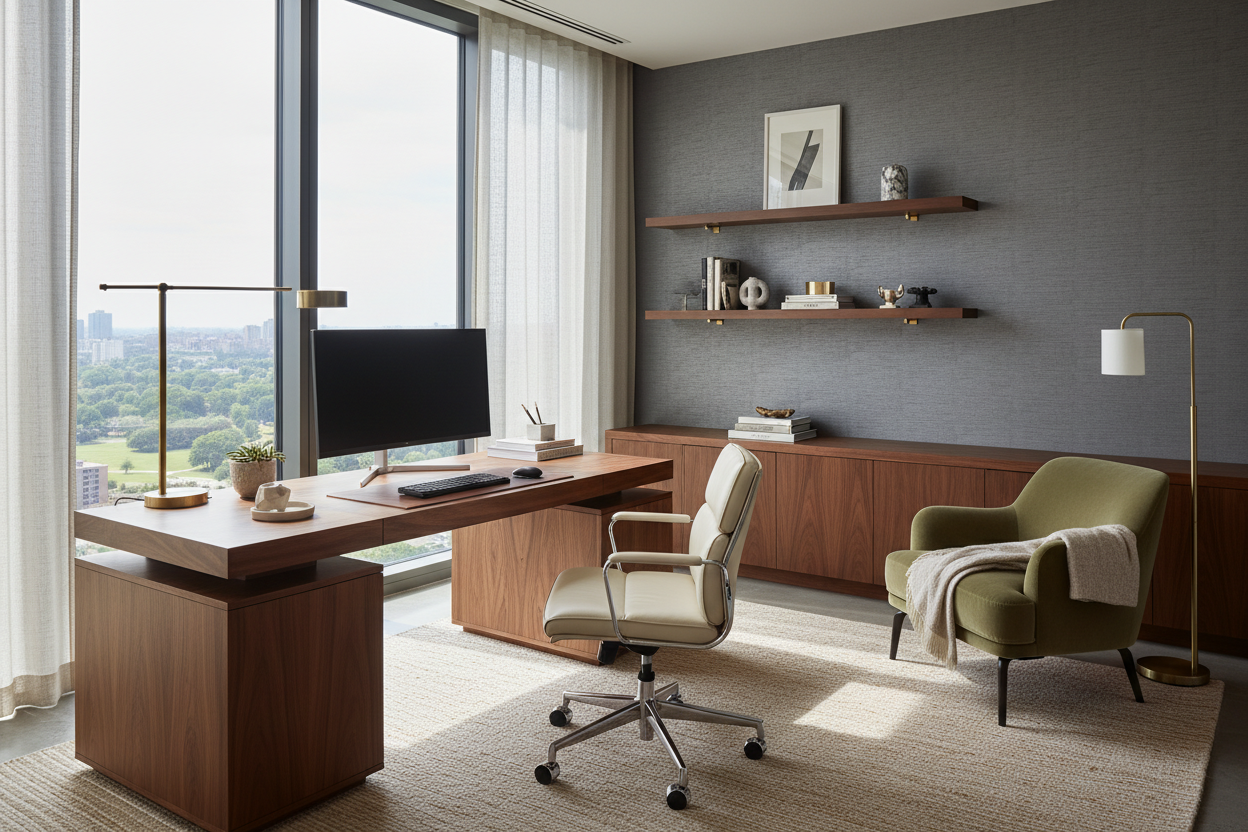
Instead, float your desk in the center of the room or perpendicular to a window. This is known as the command position. It allows you to see the door (reducing subconscious anxiety) and manages glare on your screens. If you are turning small room into office space, and floating the desk isn't feasible, place the desk perpendicular to the wall to create a distinct "zone" rather than a perimeter lineup.
Selecting Furniture: Materiality and Scale
The furniture you choose dictates the longevity of the design. When you turn a room into an office, you lose the visual softness of a bed. You must reintroduce texture.
Solid Wood vs. Veneer
For the primary desk, I almost always recommend solid wood or high-grade commercial laminate over standard residential veneer. Bedroom furniture sees passive use; office furniture sees active, abrasive use. A cheap veneer will chip at the edges within months of daily mouse and keyboard friction. Look for a desk with a "comfort edge" or a beveled silhouette to protect your forearms.
The Seating Equation
Do not repurpose a dining chair. An office chair is a tool, not just a seat. Look for a task chair with a 5-point base for stability and lumbar support that mimics the S-curve of your spine. If the aesthetic is too "corporate" for your home, look for mid-century modern inspired task chairs that hide mechanisms beneath upholstered shells.
Lighting Layers and Ambiance
Bedroom lighting is designed to induce sleep; office lighting must induce focus. When you transform bedroom into office space, you need three distinct layers:
- Ambient: The general overhead light. Replace flush mounts with a semi-flush fixture or a statement pendant to define the vertical space.
- Task: A dedicated articulated lamp. Place it on the opposite side of your dominant hand to eliminate writing shadows.
- Accent: If you have bookshelves, integrate LED strip lighting. This reduces eye strain by lowering the contrast between your bright monitor and the dark room behind it.
The Multi-Use Dilemma: Guest Room vs. Office
Many clients want to turn guest bedroom into home office spaces without losing the ability to host. The solution lies in verticality. Avoid sleeper sofas, which are often uncomfortable and bulky.
Instead, consider a high-quality Murphy bed unit with integrated shelving. When closed, it reads as a sophisticated library wall. This allows you to maintain a professional backdrop for video calls while retaining the utility of a spare bedroom into office conversion.
My Personal Take on Converting a Bedroom Into an Office
In my years of designing home workspaces, the most overlooked detail is the "monitor depth" issue. I once designed a stunning office for a client using a vintage parsons table they loved. It was beautiful, but only 24 inches deep. Within a week, the client called me complaining of headaches.
The issue? When you place a modern monitor on a shallow desk, the screen sits too close to your face. In a bedroom, we are used to furniture being flush and compact. But for an office, I now strictly specify desks with a minimum depth of 30 inches. This extra six inches allows you to rest your wrists properly and keeps the monitor at an ergonomic arm's length. Furthermore, I learned the hard way that bedroom carpet and caster wheels are enemies. If you aren't replacing the flooring, invest in a tempered glass chair mat immediately. Plastic mats crack and look cheap, but glass disappears visually and saves your carpet pile from being crushed.
Conclusion
Whether you are turning a spare bedroom into an office permanently or looking for a flexible solution, the success of the project lies in the layout and the quality of your materials. By prioritizing light, flow, and ergonomics, you create a space that invites productivity rather than clutter.
Frequently Asked Questions
How do I convert office to bedroom space if I sell the house?
To ensure an easy office to bedroom conversion for resale, avoid removing the closet. In most real estate markets, a room must have a closet to be legally listed as a bedroom. Use the closet for office storage or remove the doors for a desk nook, but keep the structural frame intact.
What is the best layout for turning small room into office space?
For small rooms (under 10x10 feet), utilize the "L-shape" layout. Place your desk against one wall and a credenza or low storage unit on the adjacent wall. This doubles your surface area without encroaching on the center floor space, keeping the room feeling airy.
Can I turn an office into a bedroom easily later?
Yes, provided you haven't made structural changes to the lighting or walls. If you installed hardwired sconces for a desk, ensure they are placed at a height that would also work for bedside reading lamps, typically 55-60 inches from the floor.


Dejar un comentario
Este sitio está protegido por hCaptcha y se aplican la Política de privacidad de hCaptcha y los Términos del servicio.