










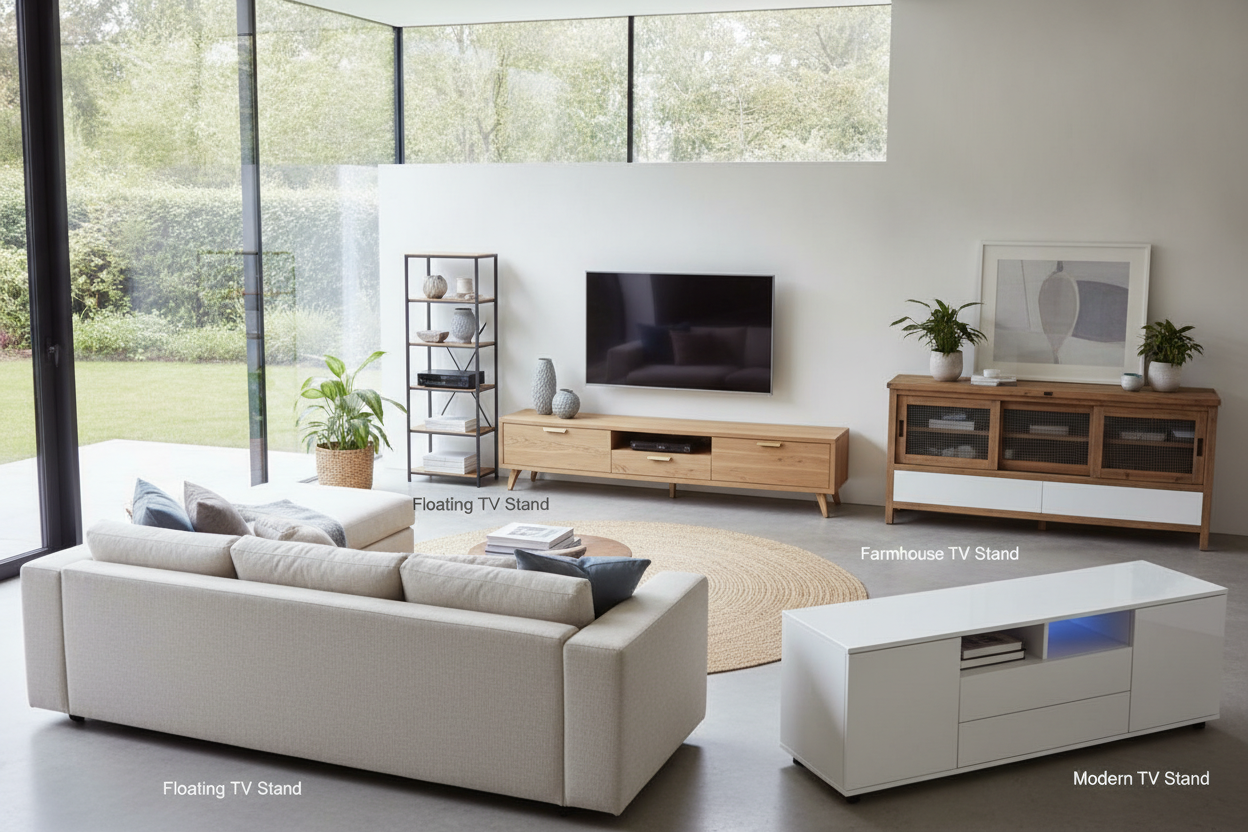
I once spent three hours assembling a 'media unit' I found on a flash sale site, only to realize my 65-inch TV hung over the edges like a toddler in a high chair. It looked ridiculous. I had fallen for a 'console' that was actually a narrow hallway table. Staring at 47 browser tabs of types of tv stand at 1 AM is a special kind of hell, and I have been there more times than I care to admit.
The problem is that furniture retailers use 'tv stand names' interchangeably. One site calls it a credenza, another calls it a sideboard, and a third calls it a low-profile entertainment center. If you pick the wrong one, you are either looking at a major return shipping fee or a living room that feels like a storage unit. I have tested enough of these to know which ones actually work for a real-life tech setup and which ones are just pretty boxes.
- Consoles: Best for tech-heavy setups with gaming consoles and soundbars.
- Credenzas: Use these if you need to hide blankets, board games, and ugly routers.
- Floating Stands: Great for small spaces, but they require a stud finder and a lot of confidence.
- Corner Units: The only real solution for 'fireplace-centric' rooms that lack a long wall.
Why I Kept Buying the Wrong Media Unit
For years, I bought furniture based on aesthetics alone. I’d see a sleek, minimalist bench and think, 'That’s the one.' Then I’d get it home and realize it was 18 inches deep, but my receiver was 19 inches deep. Or I’d buy something with solid wood doors and realize my remote couldn't talk to my cable box through the wood. It was a mess.
Learning the different kinds of tv stands isn't just about interior design; it’s about logistics. You have to account for heat dissipation, cable management, and viewing height. If your stand is too high, you’ll be at the chiropractor in a month. If it’s too flimsy, that $1,200 OLED is going to end up on the floor. Knowing the terminology helps you filter out the junk before you ever hit 'add to cart.'
The Classic Console (And Why It Is Still Everywhere)
The console is the workhorse of the living room. Usually sitting between 20 and 30 inches high, these tv stand styles are designed specifically for electronics. They are deep enough for a modern amplifier and usually have those glorious pre-drilled holes in the back for your rat's nest of HDMI cables.
I’m a huge fan of the mid-century modern tv stand because it solves the 'ugly tech' problem. The slatted doors allow infrared signals from your remote to pass through while keeping the glowing lights of your Xbox hidden. Plus, the tapered legs make the room feel bigger because you can see the floor underneath. It’s a classic for a reason.
Credenzas vs. Sideboards: Yes, There Is a Difference
If you have a lot of stuff that isn't a TV—think extra pillows, a record collection, or every board game you’ve ever owned—you need a credenza. In the furniture world, a credenza is typically lower and longer than a sideboard or buffet. Sideboards are often 34-36 inches high, which is great for serving food but terrible for watching TV unless you want to stare at the ceiling.
When choosing between these different types of tv stands, look for a storage credenza with sliding glass doors. The sliding mechanism is a lifesaver in tight rooms where you don't have the clearance for swinging doors. Glass doors are also a win because you can display your nice coffee table books while keeping the dust off your electronics.
Trendy Statement Pieces (Arches, Marble, and More)
Lately, everyone is moving away from the 'black glass and metal' look of the early 2000s. We’re seeing a lot of architectural shapes now. The arched tv stand trend is huge right now because it softens all the hard angles of a big rectangular screen. It makes the TV feel like part of the room’s architecture rather than an eyesore.
I’ve also experimented with stone tops. If you’re worried about durability, a faux marble tv stand is often better than the real thing. Real marble is incredibly heavy and can crack under the concentrated weight of a heavy TV stand base. Plus, one spilled drink and you’ve got a permanent ring. Faux options give you that high-end look without the constant anxiety.
Floating and Corner Units for Awkward Layouts
Sometimes you don't have a big, beautiful wall to work with. If you’re in a 500-square-foot studio, a floating console is your best friend. It mounts directly to the wall, leaving the floor clear. This 'floating' trick makes a tiny room feel significantly less cluttered. Just make sure you aren't mounting it into dry-wall alone—you need studs, or that TV is going down.
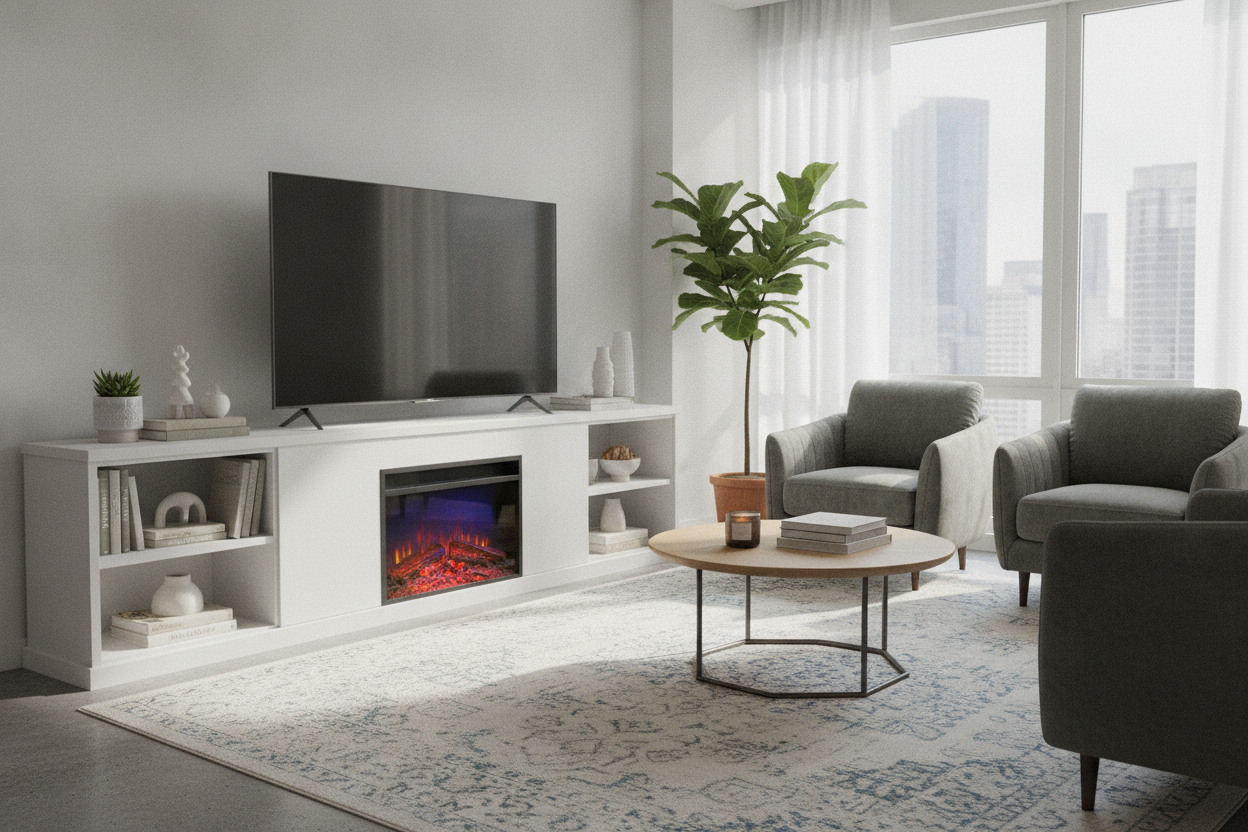
For those of us living in homes where the fireplace takes up the only good wall, corner units are the compromise. They are shaped like a wedge to fit into the 90-degree graveyard of your living room. If you’re struggling with a weird floor plan, you should browse different tv stands that focus on spatial efficiency. Don't try to force a 70-inch rectangular console into a 40-inch corner; it never looks right.
How high should my TV stand be?
Your eyes should be level with the middle of the screen when you're sitting on your sofa. For most people, that means a stand that is 22 to 28 inches tall. If you’re using a taller sideboard, be prepared for some neck fatigue.
Do I really need cable management holes?
Unless you want your living room to look like a server room at a tech startup, yes. If the stand you love doesn't have them, you can drill your own with a 2-inch hole saw bit, but it’s a pain and can void your warranty.
Can I put a 65-inch TV on a 50-inch stand?
Technically? Maybe. Visually? No. It looks top-heavy and unstable. Always aim for a stand that is at least 3-6 inches wider than your TV on both sides to keep the proportions looking balanced.

Dejar un comentario
Este sitio está protegido por hCaptcha y se aplican la Política de privacidad de hCaptcha y los Términos del servicio.