




A workspace serves as both an essential productivity hub and a defining interior anchor. Selecting among modern desks designer collections requires looking beyond simple work surfaces to evaluate proportion, spatial harmony, and architectural presence. When a workstation is chosen with intentionality, it shapes room traffic, establishes visual rhythm, and organizes daily tools without creating visual clutter or compromising personal comfort.
Understanding Designer Desks: Form Meets Function in the Modern Workspace
Utilitarian desks often prioritize basic utility over craftsmanship and visual cohesion. In contrast, designer desks treat the workstation as an intentional sculptural element within a room. High-level furniture design balances visual mass with negative space, ensuring the piece feels grounded without overwhelming surrounding décor or creating a cramped atmosphere.
A well-conceived workstation considers how light travels across its planes, how structural joints connect, and how daily activities unfold across its perimeter. Modern interpretations also merge refined craftsmanship with active utility. For example, selecting a height-adjustable ergonomic office workstation allows an interior to support continuous posture changes while preserving clean, uncluttered sightlines across the room.
By harmonizing structural stability with subtle geometric details, modern executive furniture elevates work routines into engaging rituals. When form and function operate in balance, the workstation supports long hours of focused thinking while serving as a centerpiece of interior refinement.
Silhouette Profiles: Choosing the Right Form Factor for Your Interior
The profile of an office desk designer piece defines how motion flows around the room. Different room configurations and professional workflows call for distinct geometric profiles, each bringing unique visual weight and spatial benefits.
For open layouts, reception lobbies, and expansive private suites, an executive L-shaped desk counter with integrated ambient lighting establishes a commanding presence. Such substantial footprints delineate dedicated operational zones while providing clear boundaries between client-facing interaction areas and private task surfaces.
Minimalist Linear and Floating Silhouettes
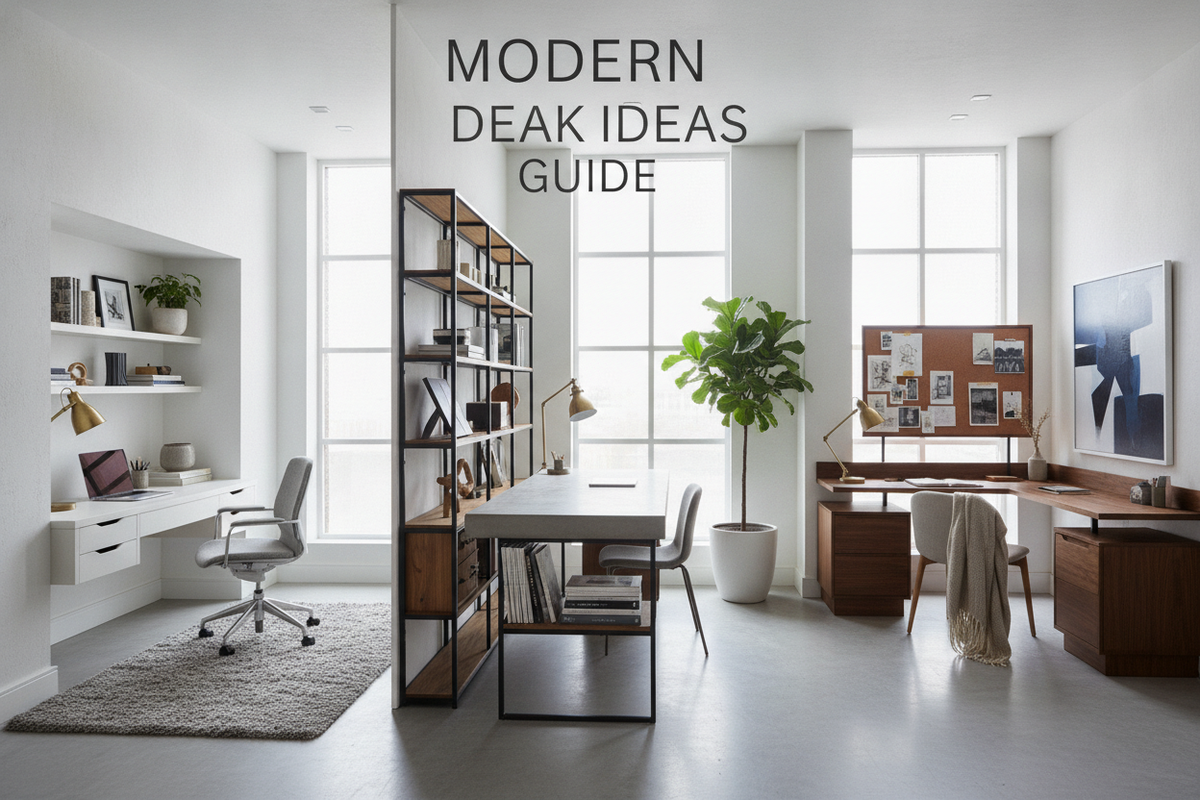
Linear desks built with open steel frames, cantilevered tabletops, or slim plinth bases keep floor visibility high. This openness expands perceived square footage in smaller rooms or multipurpose studio apartments. Floating or cantilevered writing tables emphasize horizontal planes, creating a light, airy mood suitable for focused writing, drafting, or laptop-based work.
Linear forms also offer remarkable styling versatility. Because they present straightforward geometry, they pair naturally with minimalist shelving, gallery wall compositions, and lightweight task chairs without competing for visual dominance.
Sculptural Corner and L-Shaped Architectures
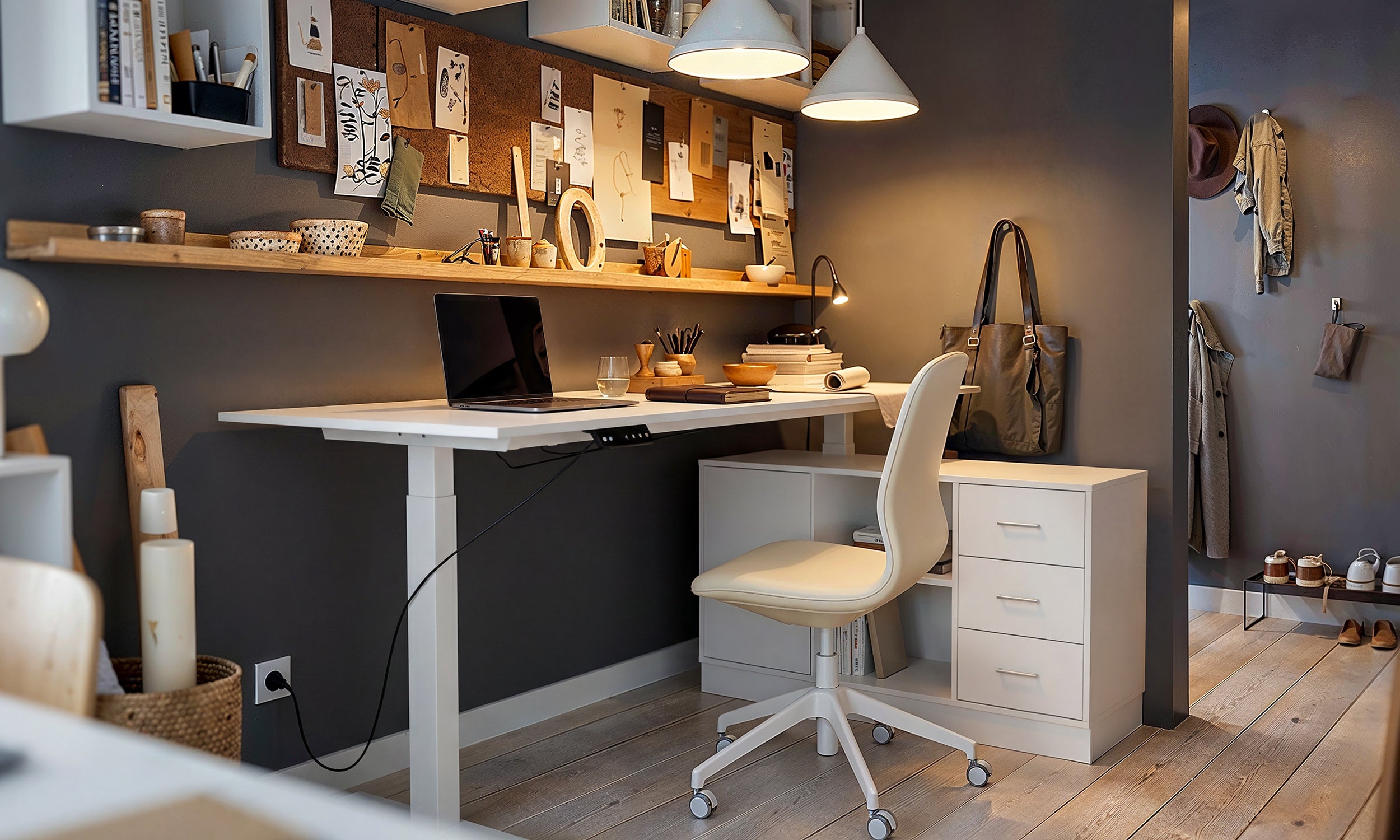
When daily tasks involve multiple monitors, paperwork management, hardware peripherals, and reference materials, corner configurations maximize perimeter efficiency. Integrating a modern minimalist corner desk with expansive storage provides generous desktop surface area while preserving central floor space for comfortable room circulation.
An L-shaped silhouette creates natural operational zones: one wing can remain dedicated to active digital input, while the adjacent wing accommodates physical reading, journaling, or creative layout tasks. This functional segregation keeps active projects organized and visually segmented.
Material Curation: Balancing Visual Warmth and Everyday Durability
Materiality dictates the tactile feel and visual longevity of a designer workstation. Thoughtful material selection creates tactile contrast against digital hardware while enduring continuous daily use:
- Engineered Architectural Finishes: High-density composite substrates paired with resilient matte veneers deliver uniform tone, scratch resistance, and easy maintenance across high-touch surfaces.
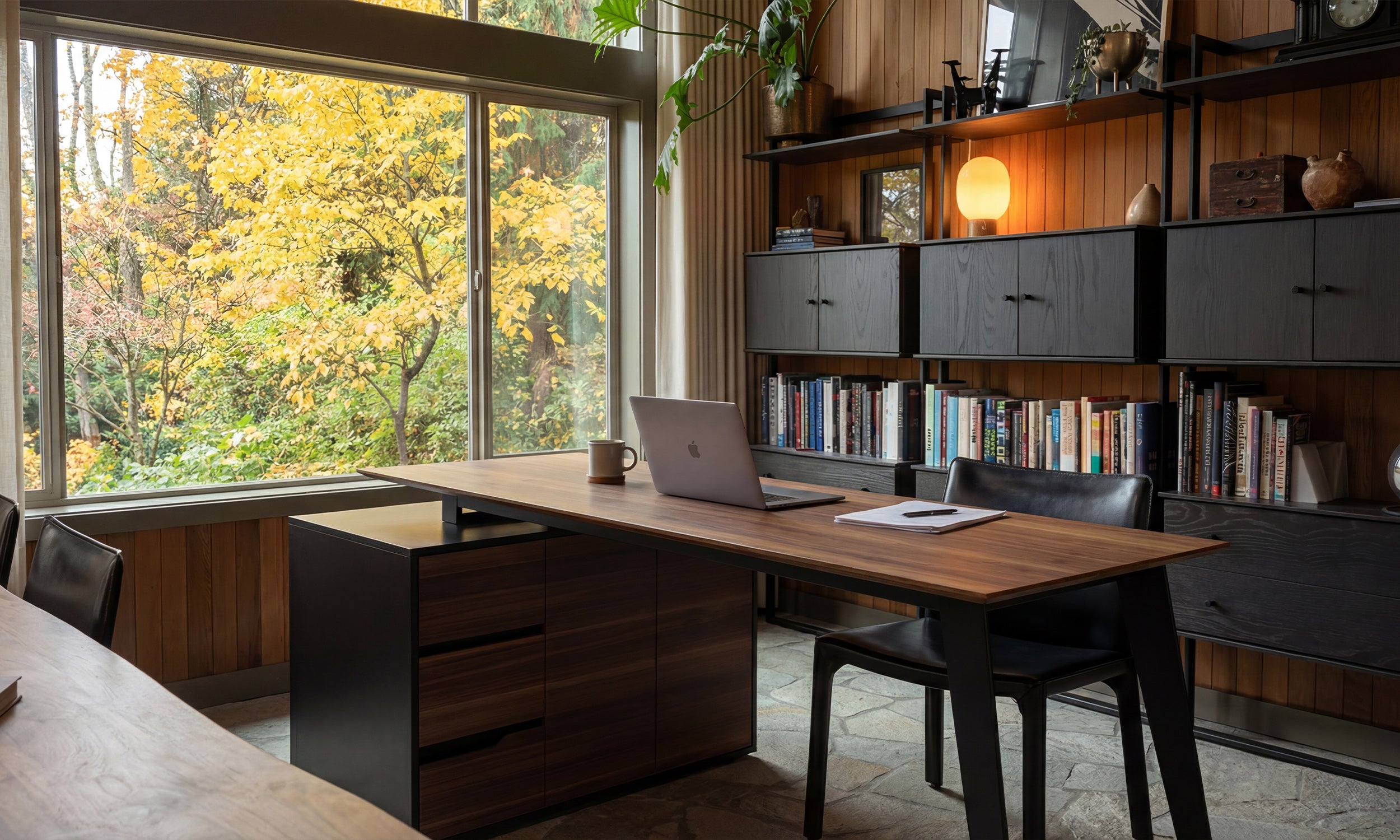
- Warm Wood Tones: Walnut, warm oak, and natural ash bring organic grain patterns that soften stark office electronics and introduce inviting architectural warmth to home interiors.
- Fluted and Ribbed Detailing: Textured vertical paneling on pedestals and modesty panels adds subtle shadow lines, architectural depth, and refined craftsmanship to executive silhouettes.
- Powder-Coated Metal Frameworks: Matte black, champagne, or brushed metallic supports create crisp geometric framing, providing structural stability while maintaining slender profiles.
When selecting materials, consider how ambient light interacts with the tabletop. Matte and satin finishes reduce distracting reflections from overhead task fixtures and daytime windows, ensuring visual comfort during extended working sessions.
Integrated Storage Architecture: Maintaining Clean Aesthetic Sightlines
A designer workspace quickly loses its appeal when cables, peripherals, and stationery create surface chaos. Effective desk design solves this by incorporating discreet, built-in storage modules. Choosing an integrated multi-door office storage cabinet with desk creates dedicated compartments for computer towers, files, and reference literature, keeping the primary work plane clear.
Consider these essential architectural storage strategies when selecting your setup:
- Concealed Wire Management: Routed channels, grommets, and under-desk cable raceways keep power bricks and connection cords hidden from primary view corridors.
- Tiered Drawer Utility: Shallow upper drawers organize writing instruments and quick-access tech accessories, while deeper lower drawers house vertical filing frameworks.
- Enclosed Credenza Returns: Cabinet doors with soft-closing hinges conceal bulky hardware, extra paper stocks, and personal items, preserving continuous visual calm.
When storage is designed into the desk's foundational architecture, organizational utility complements rather than disrupts the overall room composition.
Spatial Sizing and Room Placement Framework
Positioning a workstation requires balancing focal visibility, natural lighting, and comfortable circulation paths. Proper spatial zoning ensures the room remains functional for both work and general passage:
- Command Position: Placing the desk facing the room entrance with a solid wall behind provides psychological ease, a structured viewpoint, and a polished backdrop for virtual meetings.
- Perpendicular Window Placement: Orienting the desk surface perpendicular to windows provides ample natural daylight across the work plane while preventing direct screen glare and harsh backlighting.
- Circulation Clearance Margins: Maintain generous clearance space behind the chair for fluid movement and seated adjustment, ensuring smooth access to nearby drawers, credenzas, and perimeter walkways.
Curating the Surrounding Workspace Ensemble
A designer desk achieves its full visual potential when paired harmoniously with surrounding furnishings. In my experience styling professional studies, treating the desk as one part of a balanced composition transforms utility into inspiration.
Pair warm wood or crisp white desks with textured, low-pile area rugs to define the operational zone and dampen acoustic echo. Introduce supportive, tailored seating that complements the desk's hardware tones, and layer ambient and focused task lighting to create an inviting, balanced environment that sustains focus throughout the day.


Dejar un comentario
Este sitio está protegido por hCaptcha y se aplican la Política de privacidad de hCaptcha y los Términos del servicio.