










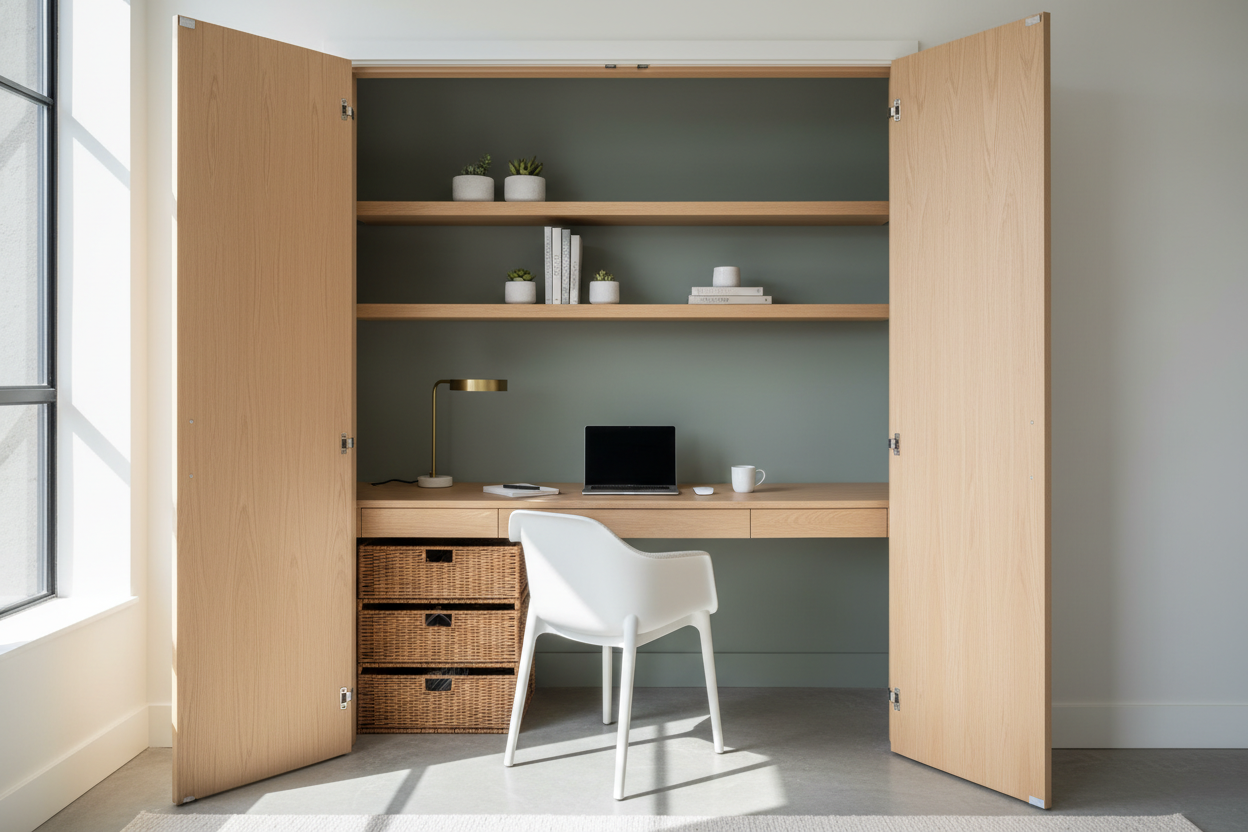
We have all been there: trying to conduct a professional Zoom call from the dining table while life happens chaotically in the background. The lack of dedicated square footage is the primary design dilemma for modern homeowners. If you are staring at a spare wardrobe wondering if it can be more than a dumping ground for coats, the answer is yes. Converting this space into a **closet office**—often affectionately dubbed a "cloffice"—is one of the most high-impact interior architectural moves you can make.
Key Features to Consider Before You Build
- Depth Requirements: Ensure a minimum depth of 24 inches for the desktop to accommodate a laptop and monitor comfortably.
- Electrical Access: Locate the nearest outlet immediately; you will likely need to route power inside or hire an electrician.
- Lighting Strategy: Closets lack natural light, so hardwired task lighting or rechargeable motion sensors are non-negotiable.
- Door Clearance: Determine if your chair can fit inside when the doors close, or if the doors need to be removed entirely.
Assessing Your Architecture: Space Planning & Layout
Before buying lumber or ordering a desk, we must look at the "bones" of the space. Closet home office ideas often fail because they ignore the door mechanism. Standard bi-fold doors can be cumbersome for a daily workspace. In my designs, I often recommend removing the doors entirely to create an open closet workspace that feels like a built-in niche, or replacing them with pocket doors if you want to hide the clutter at 5:00 PM.
For a bedroom closet office ideas, visual noise is the enemy of sleep. If the office is in your sleeping quarters, the ability to close it off is vital. In a guest room or hallway, an open office closet design can serve as a decorative focal point with the right wallpaper backing.
Choosing the Right Material: Surface & Sustainability
When selecting a surface for your home office in closet, durability is paramount. You are working in a confined area, meaning your wrists and equipment will constantly be in contact with the edge.
Solid Wood vs. Veneer
For a luxury look, a live-edge walnut slab or white oak solid wood top adds warmth and texture. However, high-quality high-pressure laminate (HPL) is often more practical for a small closet desk ideas setup. It resists heat from laptops and coffee rings better than softwoods. If you are building a floating desk, ensure you hit the studs with heavy-duty brackets; the torque of leaning on a desk is significant.
Illumination: The Make-or-Break Factor
A closet to office ideas project lives and dies by its lighting. Overhead can lights often cast a shadow exactly where you are working because they are positioned behind you.
To combat this, install under-shelf LED strips for ambient glow and a dedicated task lamp. For a truly integrated closet and office design, route channels into your floating shelves to recess the LED strips. This prevents the glare of the diodes from hitting your eyes and creates a soft, boutique showroom wash of light over your workspace.
Verticality and Storage Solutions
In a closet office space, you cannot build out, so you must build up. Use the full height of the closet. The top shelf—usually a wasteland for old sweaters—is perfect for archival storage in matching linen bins.
For office in closet ideas, consider pegboards or slat walls on the side returns (the inner side walls of the closet). These are often dead zones, but they are perfect for hanging headphones, cables, and small tools, keeping the limited desktop surface clear.
Lessons from My Own Projects: The "Caster Wheel" Trap
I want to share a specific headache from a wardrobe office conversion I designed for a client in a pre-war apartment. We designed a beautiful custom oak desk and installed expensive bi-fold doors to hide the office when guests arrived.
The mistake? We kept the original floor track for the bi-fold doors. Every time the client tried to roll their ergonomic chair in or out, the caster wheels would get stuck in the metal track groove with a jarring clunk. It ruined the flow of the workspace.
We eventually had to rip out the floor track and install top-hung hardware, which carries the weight of the doors from the header. The floor became seamless, and the chair rolled freely. If you are planning a home office and closet combo, look at the floor. If there is a raised threshold or a track, address it before you move your furniture in.
Conclusion
Creating a closet office is about more than just fitting a desk into a hole in the wall. It is about intentionality. By respecting ergonomics, investing in proper lighting, and choosing materials that withstand daily wear, you can carve out a sanctuary of productivity in the smallest of footprints. It is time to open the doors to better work-life balance.
Frequently Asked Questions
What is the minimum depth for a closet office?
Ideally, you want at least 24 inches of depth. This allows enough distance between your eyes and the monitor. If you have a shallow closet (18-20 inches), consider a keyboard tray that pulls out to extend your working surface.
How do I handle power in a closet with no outlets?
The cleanest solution is hiring an electrician to install an outlet below desk height. If renting, you can use a heavy-duty, flat-plug extension cord run along the baseboard, concealed with a paintable cable raceway for a cleaner look.
Can I keep my clothes in the same closet?
Yes, this is a common office and closet hybrid layout. The key is separation. dedicate the lower half to the workspace and use the upper vertical space for hanging clothes, perhaps installing a high rod with a pull-down mechanism to access garments without standing on your desk.



Dejar un comentario
Este sitio está protegido por hCaptcha y se aplican la Política de privacidad de hCaptcha y los Términos del servicio.