










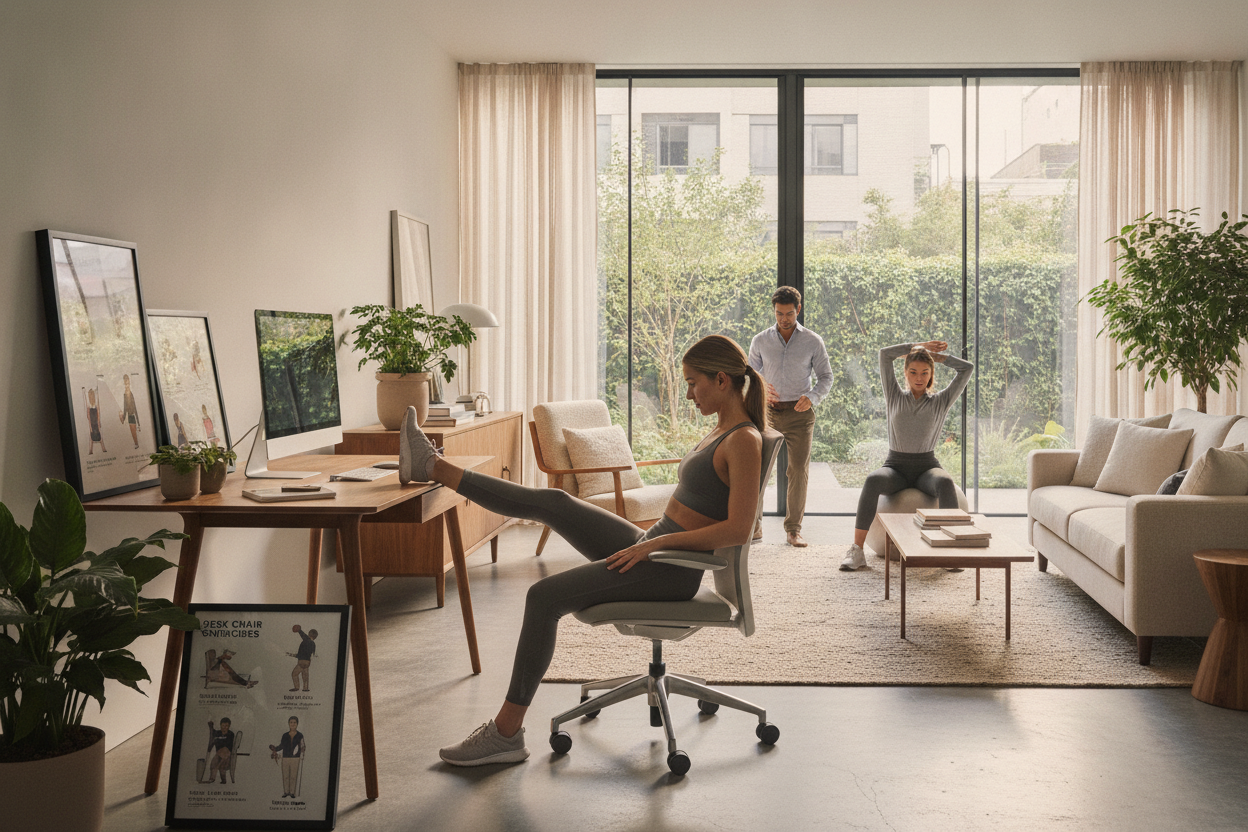
Modern knowledge work often requires extended periods seated in front of digital displays. While dedicated standing periods and walking intervals are beneficial, weaving gentle movement directly into your seated hours provides an accessible way to maintain physical engagement throughout the day. Executing a regular desk chair workout or targeted seated routine allows professionals to refresh posture, activate core muscles, and alleviate positional tension without stepping away from the workstation.
Achieving a smooth routine relies as much on your physical surroundings as it does on the movements themselves. A functional workstation setup—anchored by open floor space and proper furniture alignment—ensures that an exercise in office chair routine feels natural rather than cumbersome. Exploring a comprehensive work desk office guide can help you evaluate how furniture arrangement influences both productivity and physical ease during long working sessions.
Workstation Clearance and Chair Stability Fundamentals
Before beginning any chair workouts at work, establishing chair stability and physical clearance is essential. Not every seat responds identically to shifting body weight, so assessing your furniture configuration prevents unexpected slipping or tilting during movement.
- Base Stability and Casters: Standard office chairs with caster wheels roll easily across hard floors. When performing seated exercises, place the chair on a low-pile rug or lock the wheels if your model includes braking casters. Alternatively, plant your feet firmly before beginning any upper-body rotation.
- Armrest and Backrest Adjustability: Fixed armrests can restrict lateral torso movement. If possible, lower or swing adjustable armrests out of the way to grant your elbows and shoulders full range of motion.
- Perimeter Clearance: Ensure there is at least an arm’s length of open space to your left, right, and front to avoid knocking desk accessories, coffee mugs, or monitors during seated extensions.
8 Practical Desk Chair Exercises for Daily Office Routines
The following eight work chair exercises can be integrated into brief micro-breaks between tasks. They require no specialized fitness equipment and are structured to mobilize the spine, engage the midsection, and activate lower-body circulation.
Upper Body & Postural Realignment Movements
Sustained typing often pulls shoulders forward into a rounded posture. These upper-body routines encourage chest opening and gentle spinal rotation.
1. Seated Spinal Twist: Sit tall near the front third of your chair seat with both feet flat on the floor. Inhale to lengthen the spine, then exhale while gently rotating your torso toward the right. Place your left hand on the outside of your right thigh and your right hand on the chair armrest or back frame. Hold the position for several steady breaths before releasing and repeating on the left side.
2. Overhead Reach and Chest Expansion: Interlace your fingers in front of your chest, turn your palms outward, and press your arms upward toward the ceiling. Focus on lifting out of the lower back while drawing the shoulders away from your ears. Slowly lean slightly to the right, return to center, and lean to the left to stretch the latissimus and side ribs.
3. Shoulder Blade Retractions: Sit with an upright posture and let your arms rest naturally at your sides. Draw your shoulder blades backward and downward toward each other, as if holding a small object between them. Hold the contraction for a few seconds, release smoothly, and repeat for several controlled cycles to reset mid-back posture.
Core and Lower Body Seated Activation
Maintaining lower-body engagement while seated helps activate large muscle groups and promotes steady circulation through the hips and legs.
4. Seated Leg Extensions: While seated upright, extend your right leg straight out in front of you until it is parallel to the floor. Flex your foot toward your shin, hold the extended position briefly to engage the quadriceps, and lower the foot smoothly back to the floor. Alternate legs in a slow, rhythmic pattern.
5. Seated Marching Knee Lifts: Place your hands lightly on the sides of your seat pan for support. Engage your lower abdominal muscles to lift your right knee toward your chest without rounding your lower back. Lower the foot softly and lift the left knee, alternating sides in a controlled, marching tempo.
6. Seated Calf and Shin Raises: Keep both feet flat on the floor, hip-width apart. Press into the balls of your feet to raise your heels as high as possible, engaging the calf muscles. Lower your heels, then immediately lift your toes and forefeet upward while keeping the heels grounded to work the anterior shin muscles.
7. Seated Glute Engagement Holds: While maintaining an upright spine, actively squeeze your gluteal muscles together as if lifting slightly off the chair cushion. Hold the contraction for five seconds, then release completely. This subtle movement can be performed during reading or audio calls without shifting your upper body.
8. Seated Pelvic Tilts: Place your hands on your hips or thighs. Gently tilt your pelvis forward, creating a mild arch in your lower back while lifting your chest. Next, tilt your pelvis backward, gently rounding the lumbar spine while drawing the navel inward. Flow between these two positions smoothly to restore lumbar flexibility.
Under-Desk Clearance: Sizing Workstations for Legroom and Mobility
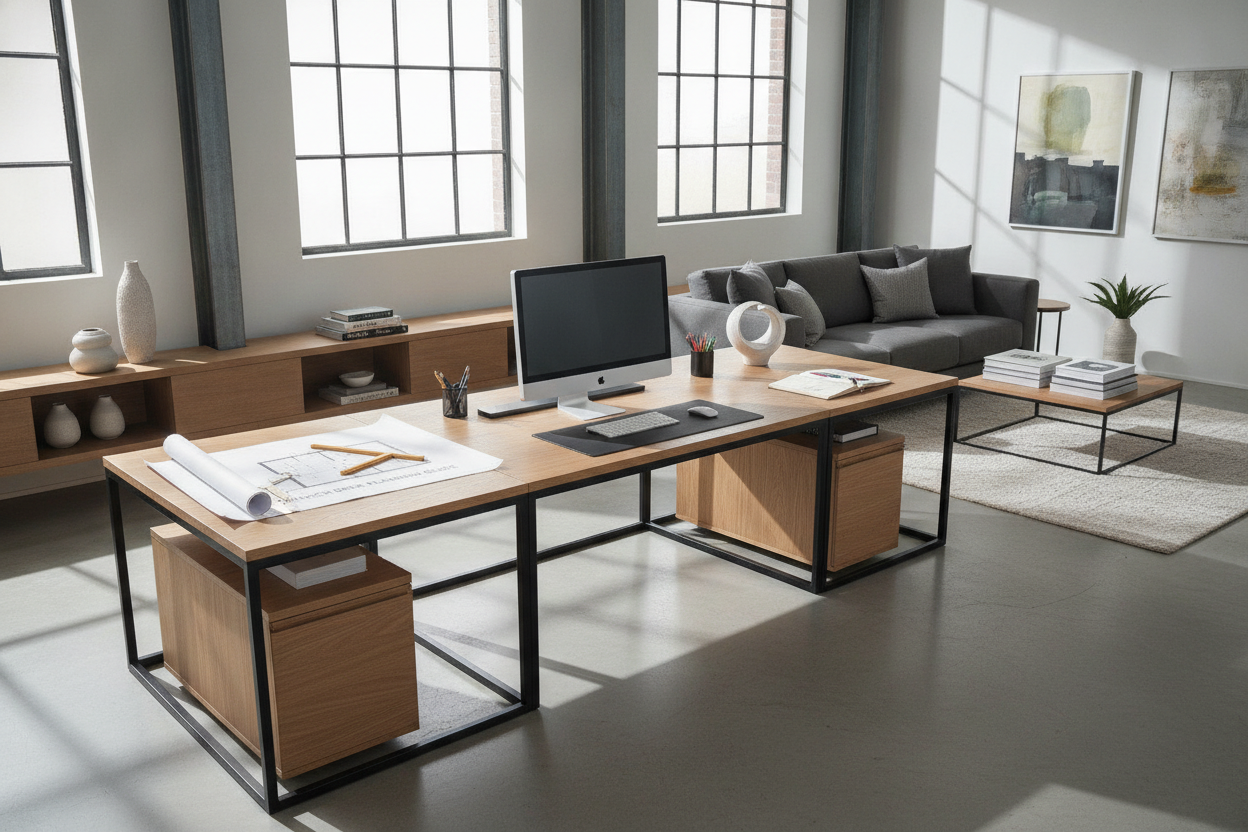
Executing an effective workout in office chair setup requires adequate physical room beneath the primary desktop. Desks with bulky center drawers, low support aprons, or intrusive shelving can restrict natural knee travel and prevent full leg extensions.
Opting for a workstation with an open frame—such as a modern, minimalist corner or straight desk—maximizes usable knee clearance. A spacious office desk product provides the horizontal span required to extend your legs forward without bumping into structural crossbeams or modesty panels.
Designing a Clutter-Free Movement Zone Around Your Desk
A cluttered office floor is one of the most common obstacles to consistent workday movement. Power cables, storage boxes, and stray peripheral cords not only impede chair caster travel but also create trip hazards when shifting positions.
Relocating loose paperwork, reference manuals, and extra electronics into dedicated storage units preserves valuable floor space. Integrating an office desk product equipped with integrated cabinetry keeps work essentials organized and off the carpet. For professionals managing compact floor plans, reviewing a practical desk office work guide offers actionable ideas for organizing vertical storage, securing cables, and maintaining an open activity zone around your desk.
Conclusion: Building a Sustainable Daily Desk Movement Habit
Integrating structured desk chair exercises into your daily schedule creates a balanced work environment where physical activity and productivity coexist. Rather than scheduling lengthy, disruptive workout sessions during crunch times, brief seated mobility routines provide a practical way to break up continuous static sitting.
By combining mindful movement techniques, a stable and adjustable chair, and a clean, spacious workstation layout, you can establish an office routine that supports sustained physical comfort throughout every working week.

Dejar un comentario
Este sitio está protegido por hCaptcha y se aplican la Política de privacidad de hCaptcha y los Términos del servicio.