




Evaluating Domestic Workspaces: Footprints and Spatial Clearance
Selecting a desk for office at home environments requires a distinct approach from furnishing a commercial suite. Residential rooms must accommodate daily domestic traffic, varied lighting conditions, and diverse architectural quirks such as baseboards, low sills, and uneven floorboards. Before committing to a specific workstation profile, surveying the immediate floor plan establishes whether a piece will complement the space or disrupt household circulation.
Clearance around the perimeter represents the first spatial priority. A functional workstation needs sufficient breathing room behind the seated position to allow chair movement without colliding with walls, credenzas, or open doorway paths. In shared spaces such as living areas or bedrooms, maintaining unobstructed walking routes prevents the furniture from overwhelming the domestic character of the room. Mapping the swing radius of nearby interior doors, closet panels, and casement windows ensures that everyday fixtures operate freely alongside your office at home desk setup.
Desktop depth forms the second critical dimension. Shallow surfaces suit compact nooks and secondary bedrooms where the primary equipment consists of a laptop and notebook. Conversely, setups supporting full external displays, desktop towers, or extensive paper documentation demand deeper table surfaces to maintain comfortable focal distances and uncluttered task zones. Balancing surface area against overall room scale keeps the workstation proportional to residential architecture.
Matching Home Office Desk Profiles to Room Layouts
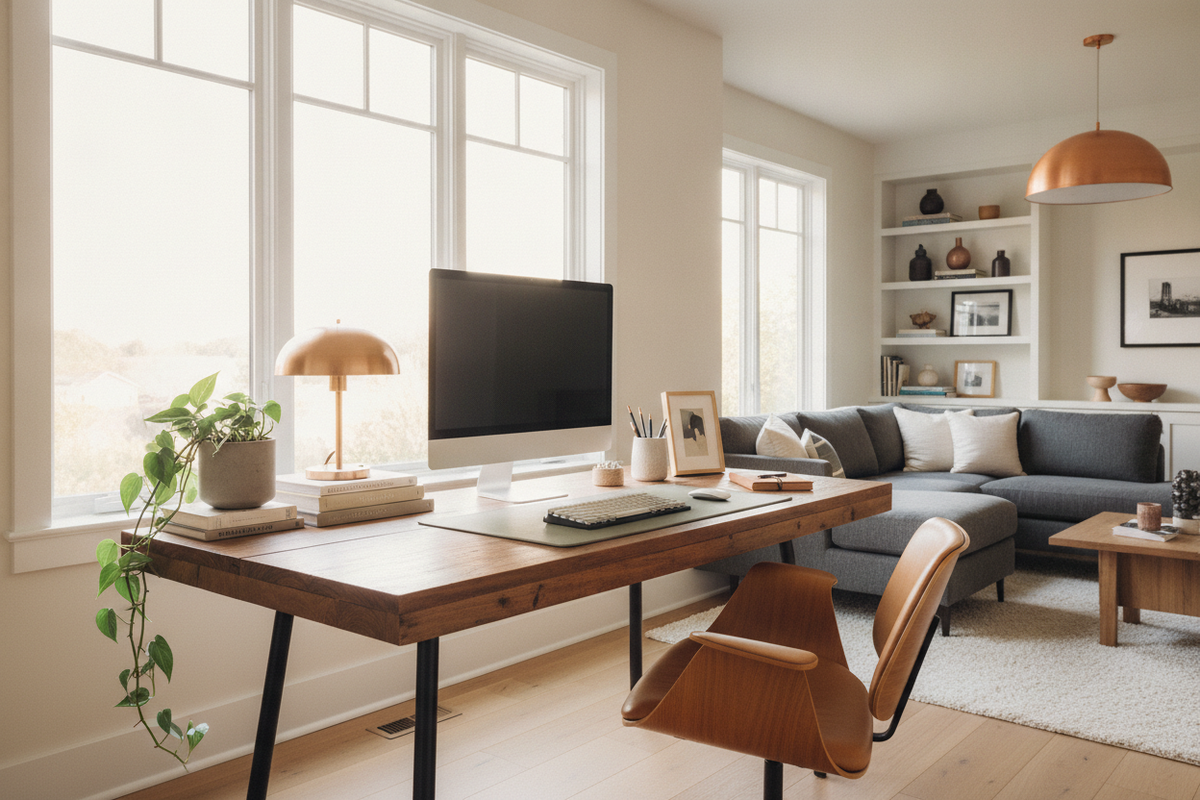
The profile of a work desk for the home largely dictates how naturally it integrates into existing domestic arrangements. Standard linear desks offer the greatest placement flexibility, resting comfortably along open accent walls, positioned perpendicular to daylight, or even floating within larger open-plan interiors.
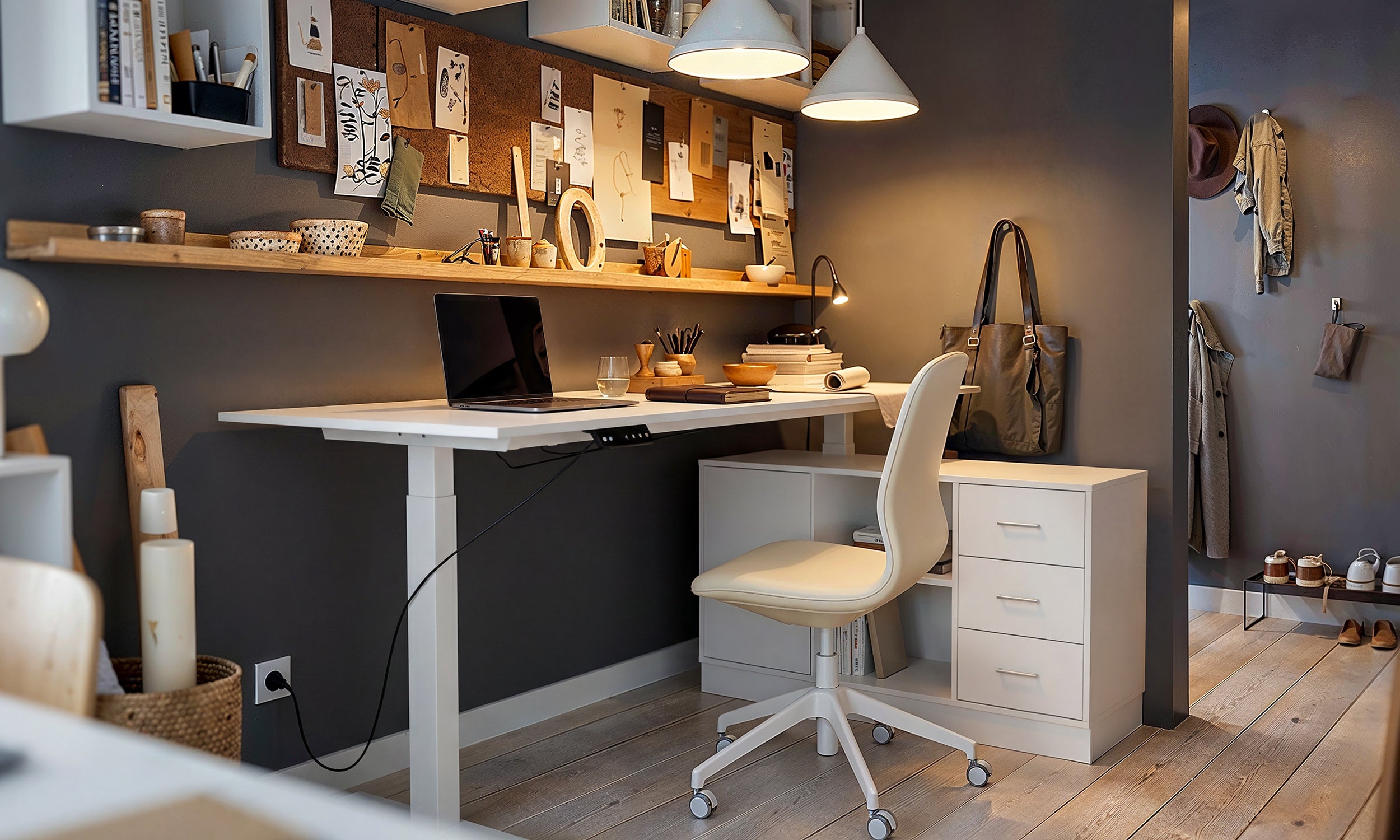
For spaces where square footage must be conserved or divided into distinct zones, corner and angled configurations present practical alternatives. An intentional configuration such as an office desk product transforms underutilized wall intersections into dedicated task hubs while keeping primary pathways clear. These layouts offer generous surface continuity, allowing you to separate computer hardware from writing or reading areas without requiring multiple freestanding pieces across the room.
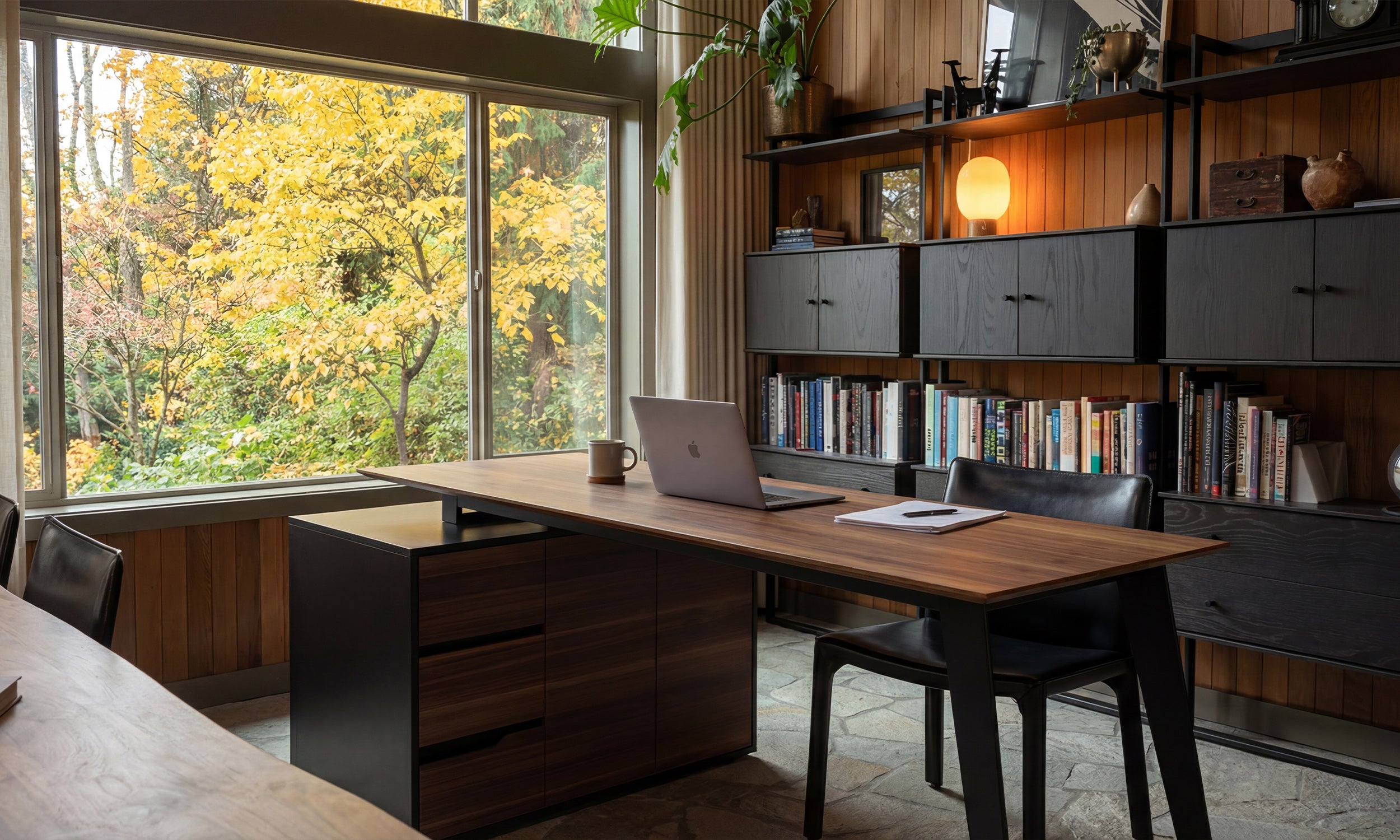
When evaluating profiles for multi-use rooms, consider how the desk interacts with ambient sightlines. Low-profile silhouettes with open leg architecture foster visual lightness, preventing smaller dens or guest rooms from feeling cramped. Substantial executive silhouettes with enclosed front panels ground the workspace, establishing a clear visual boundary between professional routines and home relaxation.
Storage Architectures: Integrated Drawers, Credenzas, and Shelving
Visual order strongly influences how comfortable a residential workspace feels at the end of the workday. While commercial settings rely on centralized file banks, a desk for at home arrangements depends on self-contained storage architectures to keep work materials from intruding into domestic life.
Integrated pedestal drawers provide immediate access to essential stationery, daily files, and hardware accessories while maintaining clean tabletop surfaces. Enclosed cabinetry helps hide peripheral chargers, paper supplies, and administrative folders behind finished fronts. Pairing a primary work surface with a comprehensive office desk product configuration balances expansive utility with a clean exterior presentation, enabling quick transitions between active work hours and evening rest.
Vertical storage architectures, such as overhead shelving hutches or attached bookcase wings, maximize vertical wall space without consuming valuable floor territory. Open cubbies accommodate decorative accents such as ceramics or framed prints alongside reference volumes, allowing the furniture to blend seamlessly into residential decor schemes.
Material Selection: Balancing Aesthetics, Structural Rigidity, and Durability
Workplace surfaces endure continuous friction from equipment movement, writing instruments, and daily cleaning routines. Selecting durable materials ensures that a desk for homes retains its appearance and structural rigidity over prolonged use.
Modern composite panels finished with high-pressure melamine or durable laminates provide dependable resistance to surface wear, moisture rings, and everyday scuffs. These finishes offer diverse aesthetic palettes, from muted solid tones to textured wood grains, facilitating visual coordination with existing residential cabinetry, flooring, and soft furnishings.
Underlying support structures contribute significantly to long-term stability. Heavy-gauge metal framing and reinforced corner brackets resist lateral wobble during active typing or writing tasks. Substantial panel legs with reinforced modesty panels deliver similar rigidity while concealing power strips and domestic cords behind a neat, solid profile.
Assembly, Cable Routing, and Ergonomic Daily Placement
Proper preparation during flat-pack assembly sets the foundation for a stable, long-lasting setup. Clearing a staging area, organizing hardware by type, and assembling the framework on a soft blanket protects delicate panel coatings from contact scratches. Verifying that all structural fasteners and cam locks are snug before upright positioning preserves frame alignment over years of service.
Floor surfaces in residential dwellings are rarely perfectly flat. Selecting furniture equipped with adjustable leveling glides allows you to compensate for slight unevenness across hardwood planks or transitions between carpet and tile, eliminating persistent desk rocking. For deeper perspective on personal workspace arrangements, consulting a desk work guide offers helpful context on harmonizing domestic architecture with focused daily routines.
Cable management requires deliberate routing to keep power cords, display connectors, and charging cables from draping onto domestic floors. Built-in desktop grommets, under-mount wire trays, and magnetic cord organizers direct lines down leg channels, keeping domestic pathways tidy and safe from accidental snags.
Selecting Your Ideal Work Desk for the Home
Finding the right balance between professional functionality and domestic harmony involves weighing your routine tasks against room proportions. A thoughtful review of your workflow helps narrow down the right configuration:
- Assess daily physical equipment to ensure tabletop depth comfortably hosts monitors, input devices, and analog writing tasks.
- Evaluate integrated drawer and cabinet capacity to keep administrative paperwork tucked away outside of work hours.
- Coordinate panel finishes and metal accents with existing domestic trim, wall tones, and surrounding wood furniture.
- Plan placement relative to windows to minimize screen glare while capturing natural ambient illumination.
By treating the workstation as an organic element of your broader interior plan rather than an isolated functional tool, you can explore creative possibilities outlined in a desk office work guide to build an organized, restful, and supportive domestic workspace.


Dejar un comentario
Este sitio está protegido por hCaptcha y se aplican la Política de privacidad de hCaptcha y los Términos del servicio.