










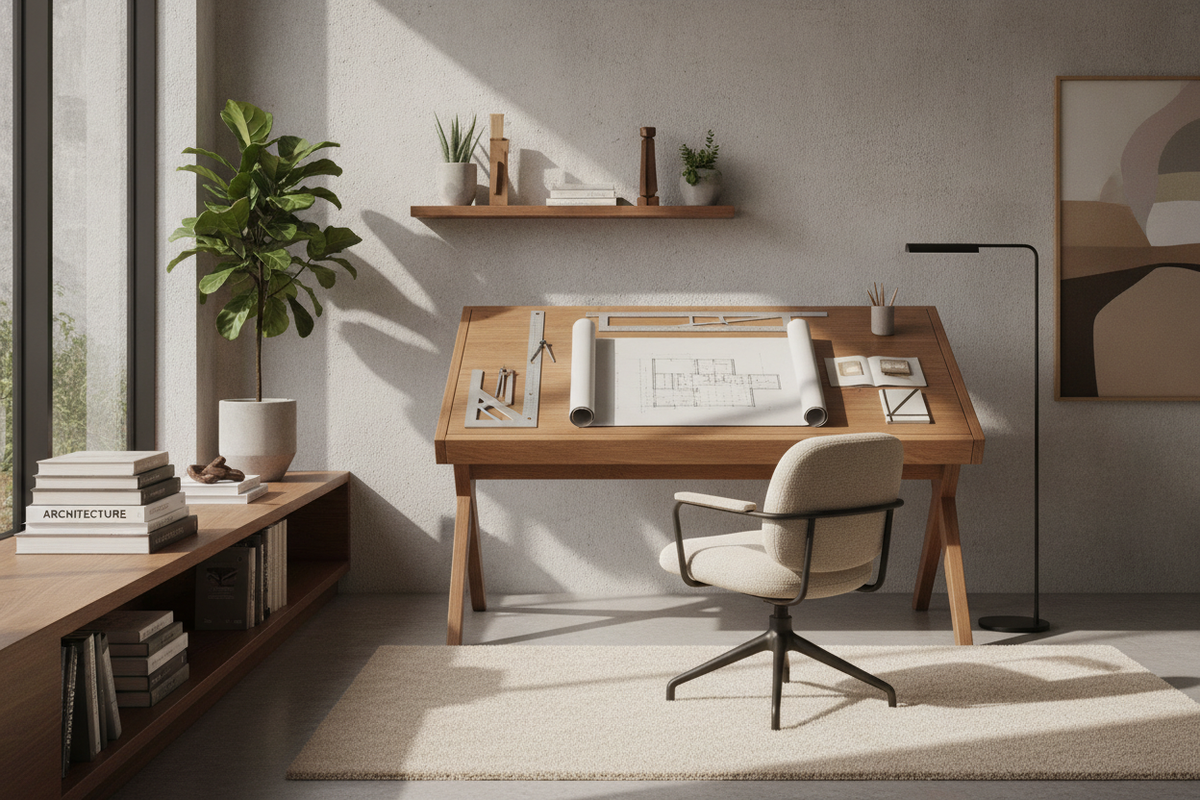
Anatomy of an Optimized Reader's Desk
A dedicated desk for reading serves a distinct functional purpose compared to a standard computer table. While typical workstations focus primarily on screen clearance and cable management, a specialized readers desk emphasizes tactile comfort, balanced reach zones, and flexible document positioning. Whether you are reviewing dense physical volumes, parsing digital papers, or alternating between textbooks and notebooks, configuring the workstation around reading habits prevents physical strain and clutter.
Surface Depth and Sightline Geometry
Engaging in sustained reading at desk layouts requires ample desktop real estate organized into distinct zones. An optimal layout provides enough depth to place an open book directly in the natural sightline without pushing auxiliary notebooks or reference texts off the edge. When a surface is too shallow, physical volumes crowd the keyboard or writing pad, forcing awkward head tilts and slouching. Allocating clear space for side-by-side materials allows readers to annotate comfortably while keeping primary source texts open flat.
Tilt Mechanisms and Bookstand Clearance
A flat desktop is not always ideal for continuous study. Sustained downward gaze can strain the neck and upper back. Specialized reading desks often incorporate adjustable drafting-style tilt panels or accommodate sturdy, modular desktop bookstands. Elevating reading materials to an angle brings text closer to eye level, maintaining a neutral spinal alignment. When planning a setup, ensure the desktop possesses adequate vertical clearance beneath any shelving to support angled book props and multi-volume displays.
Desk for Reading Archetypes and Dimension Frameworks
Selecting the right furniture archetype depends on room dimensions, research volume, and personal workflow preferences.
Compact Study Bureau vs. Expansive Library Desks
For cozy corners and multi-purpose rooms, compact secretary desks or streamlined writing tables provide dedicated focus without dominating the floor plan. These smaller silhouettes keep essentials contained and offer a tidy footprint. Conversely, expansive library tables and executive desks suit researchers handling multiple active volumes, manuscripts, and monitors simultaneously. To evaluate how structural footprints influence everyday workflow, reviewing a comprehensive desk reading guide helps clarify whether an enclosed or open profile best supports your collection.
Tiered and Hutch-Equipped Reading Desks
Desks featuring overhead hutches or built-in upper tiers provide practical vertical utility. By lifting active references, dictionaries, and bookends off the main writing surface, a tiered reading desk keeps the primary table completely clear for notation and active reading. This configuration provides easy overhead access while preserving wrist and arm space across the main tabletop.
Lighting, Glare Management, and Reading at Desk Ergonomics
Visual comfort plays a major role in long reading sessions. Proper luminaire selection and desktop placement reduce eye fatigue and maintain clear page contrast.
Task Lamp Placement and Shadow Elimination
Directing light across the page requires careful balance. Positioning a flexible, articulated task lamp on the side opposite your writing hand helps eliminate cast shadows across note pages. Matte desk finishes and diffused lamps prevent reflective glare on coated textbook pages and tablet screens, preserving crisp contrast throughout the text.
Seating Alignment and Leg Clearance
Comfortable long-session reading depends heavily on the relationship between chair height and desk apron clearance. A generous knee well permits natural leg movement and posture shifts during study. Ensuring that the desk underside is free from low crossbars allows readers to pull in close to the work surface without knee obstruction.
Storage Synergy: Merging Reading Desks with Book Shelving and Cabinets
An effective reader's workspace balances immediate accessibility with organized containment. Coordinating nearby furniture pieces creates a harmonious library environment. Exploring a broader reading guide can inspire ideas for building cohesive, distraction-free reading environments across different areas of the home.
Active Reading Stacks vs. Archival Storage
Dividing reading materials into tiered categories keeps desktops organized:
- Active Tier: Current chapters, primary sourcebooks, and active notepads placed directly on desktop organizers or book troughs.
- Secondary Reference Tier: Dictionaries, style guides, and frequently consulted anthologies placed on an integrated desk hutch or adjoining open shelving.
- Archival Tier: Completed texts, long-term research files, and boxed manuscripts stored in nearby credenzas or closed storage cabinets.
For detailed spatial planning between integrated furniture and modular drawers, consulting a specialized desk reading guide provides useful organizational strategies to keep surfaces clear of clutter.
Material Selection, Weight Capacity, and Structural Assembly
Reading furniture must withstand the substantial weight and surface friction associated with dense book collections.
Surface Durability and Finish Tactility
Desktops subjected to sliding heavy hardcovers require scratch-resistant, smooth surfaces. High-pressure laminates and smooth-sanded wood veneers provide tactile comfort for resting forearms while resisting pen pressure marks and corner scuffs from heavy book bindings.
Frame Rigidity and Heavy Book Support
Stacks of reference books add significant static load to horizontal planes. Selecting desks with reinforced cross-bracing, solid back panels, and thick shelf stock prevents structural sagging and eliminates distracting wobble during page turns and intensive study sessions.


Dejar un comentario
Este sitio está protegido por hCaptcha y se aplican la Política de privacidad de hCaptcha y los Términos del servicio.