










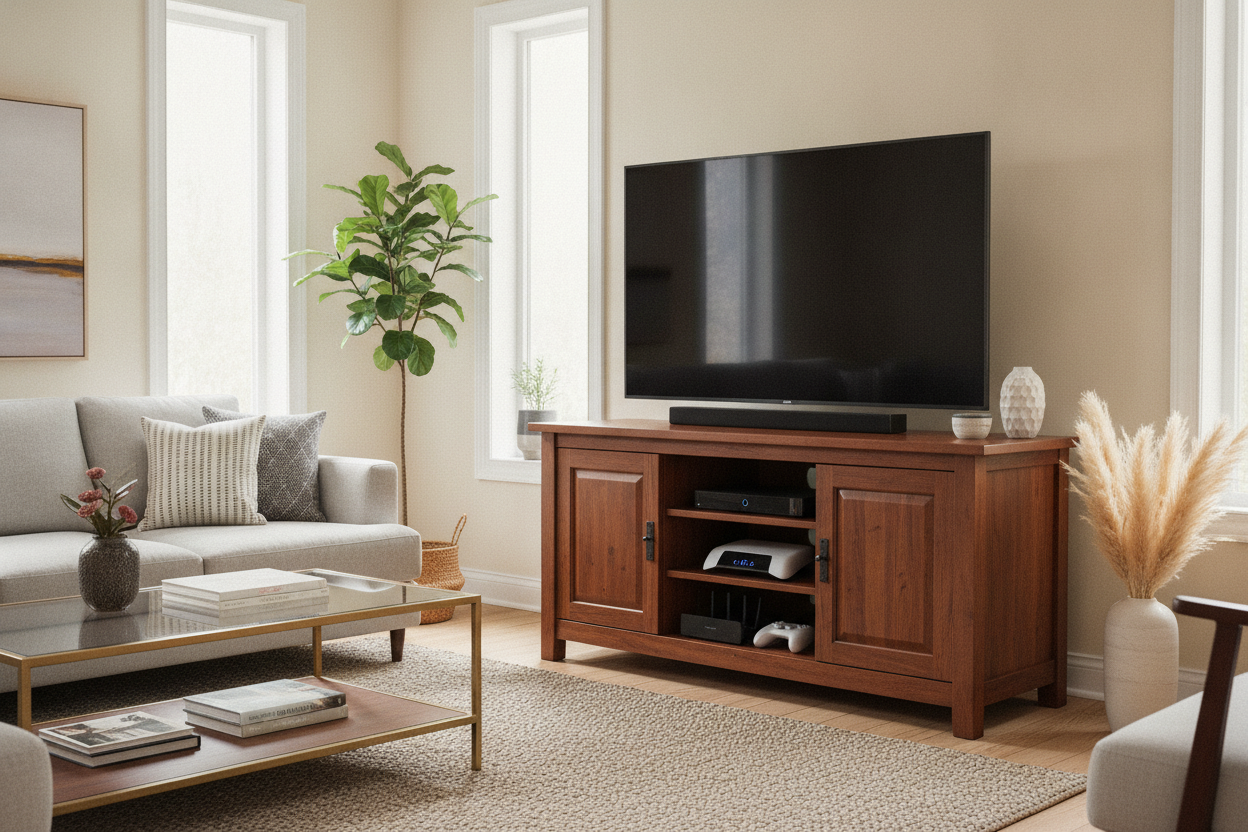
I remember staring at a beautiful antique sideboard I bought for my first apartment. It was stunning until I tried to shove a cable box inside and realized there wasn't a single hole for a cord. I ended up hacking a jagged circle into the back with a dull steak knife. Buying amish television stands shouldn't feel like a choice between heirloom quality and actually being able to plug in your TV.
We have all been there: staring at 47 browser tabs of media consoles at 1 AM, wondering if the piece that looks great in a staged photo will actually survive a toddler or a heavy-duty AV receiver. The reality is that most big-box furniture is made of compressed sawdust and hope. If you want something that doesn't wobble when you walk past it, you start looking at the heavy hitters.
Quick Takeaways
- Solid hardwood naturally dissipates heat better than synthetic materials.
- Amish builders have moved way beyond the 'country' aesthetic into sleek, modern designs.
- Customization is standard; you can usually request specific cord management layouts.
- These units are built to hold the weight of 85-inch TVs without sagging over time.
The Clash Between 18th-Century Craft and 21st-Century Wires
There is a funny irony in putting a high-tech PS5 inside an amish tv console built using techniques that haven't changed much since the 1700s. People often worry that 'Amish-made' means the back of the unit is a solid slab of wood with no escape for the spaghetti-mess of HDMI cables. In reality, modern Amish craftsmen are surprisingly tech-savvy about their designs. They know we have power strips, routers, and soundbars that need to live somewhere.
Unlike a floating tv stand wall mounted media console that prioritizes a 'zero-gravity' look but often leaves you struggling to hide cables behind drywall, a solid amish media console uses its depth to your advantage. You get actual cabinet space to hide the clutter. I’ve found that the sheer weight of these pieces—often 150 pounds or more—makes them the only real choice if you have kids or pets. They don't tip, they don't slide, and they don't feel like they are going to collapse under the weight of a premium center-channel speaker.
Wait, Do They Only Make Heavy Oak Farmhouse Stuff?
If you close your eyes and think of Amish furniture, you probably see heavy, honey-colored oak with rounded edges and maybe some wheat-pattern carvings. That is the 1990s version. Today’s amish built tv stand is just as likely to feature the clean lines of a mid-century modern entertainment center with tapered legs and sliding slat doors. They are using walnut, cherry, and quartersawn white oak in finishes that range from matte black to natural oils.
For those who actually want that cozy, lived-in look, you can still find a rustic entertainment center with shelves that fits the 'modern farmhouse' vibe without the 'disposable furniture' quality. I’ve seen amish tv consoles that look like they belong in a Scandinavian loft just as much as a cabin in the woods. The difference is the joinery. You’re getting dovetail drawers and mortise-and-tenon joints instead of those silver cam-locks that always seem to strip the wood the moment you tighten them.
Tackling the Heat: Why Real Wood Beats Flat-Pack Veneer
Electronic components like gaming consoles and receivers generate a surprising amount of heat. In a cheap particleboard cabinet, that heat gets trapped, and the glue in the MDF can actually start to off-gas or warp. An amish made tv stand is typically built with breathable plywood or solid wood backs. This is a massive advantage for the longevity of your tech. Hardwood doesn't act like an oven the way plastic-coated veneer does.
The best part about the 'old world' approach is the flexibility. Because these aren't mass-produced on an assembly line in a giant factory, you can often reach out to the shop to ask for specific modifications. If you have a massive amplifier that needs extra airflow, you can check the FAQ support center or contact the builder to have extra ventilation slots cut into the back panel or even the shelves. You aren't stuck with whatever the box gives you.
The Fireplace Insert Debate: Tacky or Genius?
I used to think an amish tv stand with fireplace was the height of kitsch. Then I spent a winter in a drafty living room and changed my mind. The trick is the frame. Most fireplace consoles you find at big-box retailers are made of flimsy composite materials that feel like they might melt if the heater runs too long. An amish fireplace tv stand uses a heavy hardwood frame that handles the thermal changes without cracking.
It is a surprisingly functional way to add zone heating to a room while giving your TV a sturdy home. These amish entertainment center with fireplace units usually come with high-quality infrared inserts that don't dry out the air. If you’re going to do the fireplace-under-the-TV thing, doing it in solid wood is the only way to make it look intentional and high-end rather than like a cheap afterthought.
Scaling Up: From Awkward Corners to Massive Media Walls
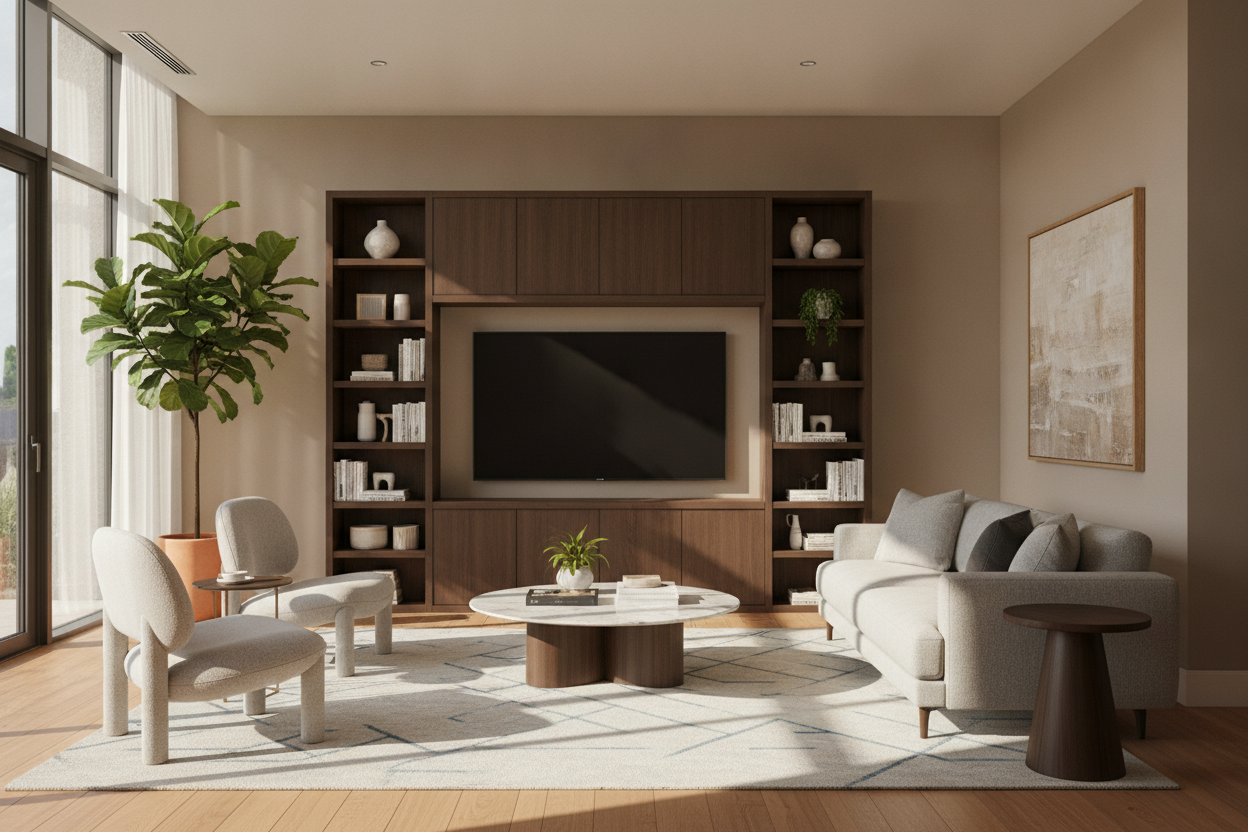
Not everyone has a giant, blank wall for their setup. If you’re dealing with a weird layout, an amish corner tv stand is a lifesaver. Because they use real wood, they can be built with the structural integrity to hold a large screen in a corner without the whole thing feeling top-heavy. But if you do have the space, the amish entertainment wall units are where these craftsmen really show off.
I’ve seen modular setups like a modern 3 piece entertainment center that offer enough storage for a library of books, board games, and every gaming console ever made. These amish wall units aren't just furniture; they are architecture. They anchor the room. When you touch the wood, you feel the grain and the hand-applied finish, which is something you just don't get from a flat-pack box delivered by a guy in a hurry.
My Personal Experience with Amish Media Units
I once bought a 'solid wood' media console from a popular online retailer that shall remain nameless. Within six months, the 65-inch TV I had on top caused the top surface to bow nearly half an inch. The doors stopped closing because the frame had shifted. It was a disaster. I eventually replaced it with an amish oak tv stand. It was more expensive upfront, but three moves and five years later, it still looks exactly like the day it arrived. The doors still click shut perfectly. It was a lesson in 'buy once, cry once.'
Common Questions About Amish TV Stands
Do Amish TV stands have holes for cables?
Yes. Almost every modern amish tv cabinet is designed with cord cutouts in the back. If you need specific placement for a soundbar or a specific shelf, most builders can accommodate that during the build process.
Is an amish entertainment center too heavy to move?
They are heavy, no doubt. But that is why they last. Most larger amish entertainment centers come in modular pieces—like a base unit and side cabinets—to make it possible to get them through a standard doorway without a crane.
Can I get a custom color?
That is the best part. You aren't limited to 'brown.' You can choose the wood species (Oak, Maple, Cherry, Walnut) and then pick from dozens of stains or paint colors. You can even get distressed finishes if you want that aged look without the actual age.

Dejar un comentario
Este sitio está protegido por hCaptcha y se aplican la Política de privacidad de hCaptcha y los Términos del servicio.