










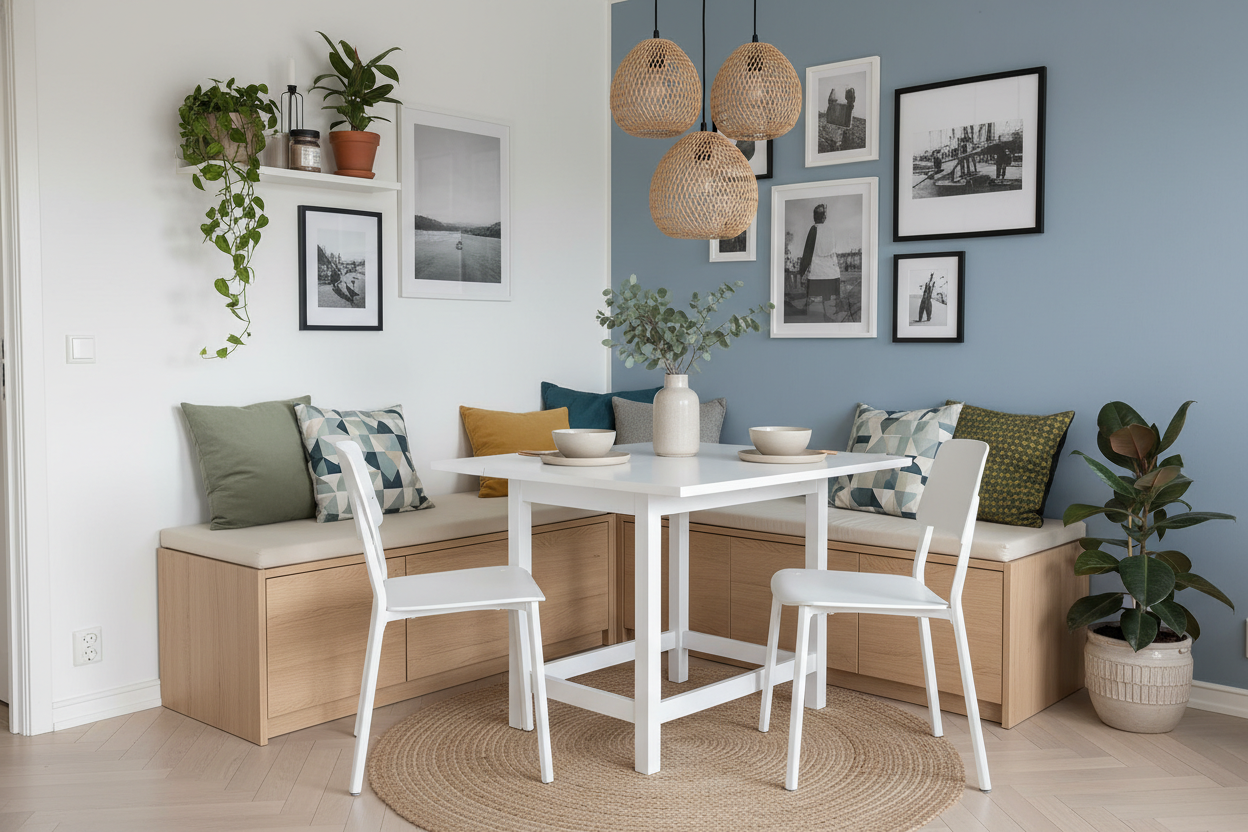
In interior design, the corner is often the most underutilized real estate in a home. It is frequently a dead zone that accumulates clutter rather than serving a purpose. However, with the rise of compact living and open-plan layouts, transforming these nooks into functional bistros or breakfast spots is essential. The right ikea corner dining table does not just save space; it anchors the room, providing a dedicated zone for coffee, work, or intimate meals without overwhelming the floor plan.
Quick Decision Guide: Key Features to Look For
- Base Structure: Prioritize pedestal bases over four-legged designs to allow easier movement in and out of corner banquettes.
- Material Integrity: Distinguish between solid pine (like the older Jokkmokk series) and honeycomb paper filling (Lack series) for longevity.
- Shape Dynamics: Round or oval tables soften the harsh lines of a corner, while square tables maximize surface area.
- Modularity: Look for drop-leaf mechanisms (like the Norden) that allow the table to adapt to varying guest counts.
Mastering Spatial Planning and Layout
When integrating an ikea corner kitchen table, the primary concern is flow. A common error I see in DIY designs is placing a table that visually blocks the walkway. In a tight corner, the silhouette of the furniture is paramount. You want to maintain a clearance of at least 36 inches from the table edge to the nearest obstruction (like an island or wall) to ensure the space feels breathable, not claustrophobic.
If you are pairing the table with a banquette or built-in bench, the table height becomes critical. Standard dining height is 30 inches, but ensure your bench seat is approximately 18 inches high. This 12-inch differential is the ergonomic sweet spot for comfortable dining.
Materiality: Modern vs. Vintage Appeal
While current catalogs offer sleek, melamine-finished options perfect for modern minimalism, do not overlook the charm of a vintage ikea dining table. Older IKEA pieces from the 90s (often found on second-hand marketplaces) frequently utilized solid birch or pine.
The Texture Factor
Mixing textures is what elevates a room from "showroom" to "curated." If you select a sleek, white laminate table, pair it with chairs that have a tactile element—think rattan, velvet, or worn leather. This contrast breaks up the visual monotony often associated with flat-pack furniture.
Creating a Cohesive Corner Dining Set
Buying a pre-bundled corner dining set ikea sells is convenient, but rarely yields a high-end look. As a designer, I advise clients to "break the set." If you buy an IKEA table, source your chairs elsewhere, or vice versa.
For a sophisticated vignette, center a pendant light directly over the table. The bottom of the fixture should hang 30 to 34 inches above the table surface. This lowers the visual ceiling of that specific corner, creating an intimate "room within a room" effect.
Lessons from My Own Projects: The "Knee-Knock" Reality
I learned the hard way about leg placement during a project for a client's studio apartment in Brooklyn. We selected a beautiful, square, four-legged IKEA table to push into a corner against a custom L-shaped bench. It looked perfect in the rendering.
However, once installed, we realized the flaw immediately. Every time someone tried to slide into the corner seat, they banged their knees against the table legs. It was a functional nightmare. We had to swap it out for a round pedestal table (similar to the Docksta).
Another detail often missed is the edge banding. On lower-end particleboard tables, the friction of sliding into a booth seat creates wear on the table edge much faster than on a standalone table. If you are designing a high-traffic nook, I always recommend applying a clear matte polyurethane to the edges of veneered tables to prevent that tell-tale peeling after six months of use.
Conclusion
Your corner dining space should be a marriage of form and function. By selecting the right base for mobility, mixing materials for warmth, and paying attention to vertical lighting, you can turn a basic IKEA purchase into a bespoke design statement. Don't just fill the corner; curate it.
Frequently Asked Questions
How much space do I need for a corner dining setup?
Ideally, you need a footprint of at least 4x4 feet for a small corner nook. This accommodates a small table (approx. 30 inches wide) and allows for seating space without encroaching on the main traffic flow of the kitchen.
Can I paint a laminate IKEA table to match my decor?
Yes, but preparation is key. You must use a high-adhesion primer (like a shellac-based primer) before painting, or the paint will scratch off the laminate surface within weeks. Finish with a durable enamel for the best results.
Are vintage IKEA tables better quality than new ones?
Generally, yes. Vintage IKEA pieces from the 1980s and 90s often featured more solid wood construction and less honeycomb-structure paper filling, making them heavier and more durable for long-term use.

Dejar un comentario
Este sitio está protegido por hCaptcha y se aplican la Política de privacidad de hCaptcha y los Términos del servicio.