










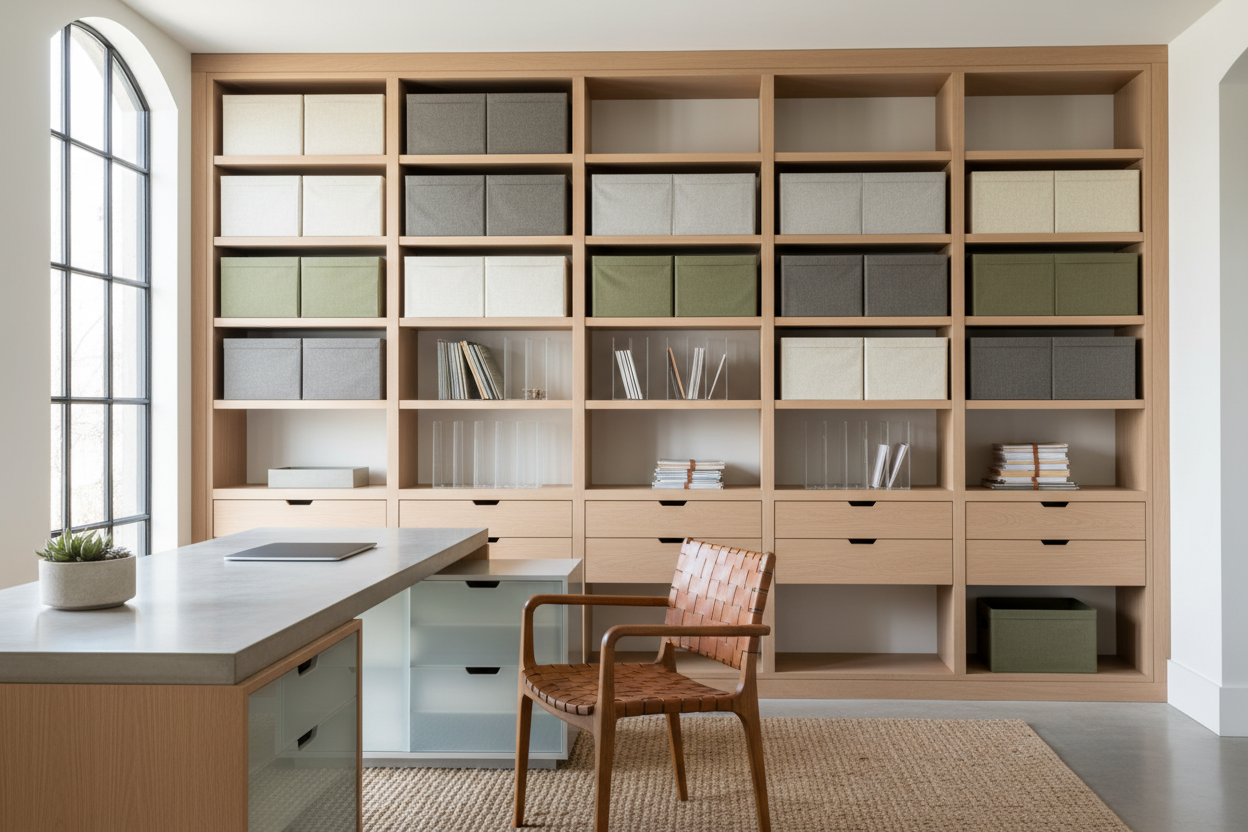
We all know the feeling. The kitchen island becomes a drop zone, the home office desk disappears under a mountain of mail, and suddenly, you are scrambling to find tax documents. Finding the right way to manage files for paperwork is often the last thing my clients want to think about. They focus on the statement sofa or the custom drapery, leaving their household filing system as an afterthought. Usually, this results in an ugly, commercial-grade metal cabinet shoved into a guest room corner.
But organizing your life does not mean sacrificing your aesthetic. After designing residential spaces across North America for over 15 years, I have learned that the best home filing system is one that blends seamlessly into your existing decor while keeping your daily life running smoothly. Today, I will walk you through how to build a paper filing system for home that actually complements your space, focusing on layout, material selection, and practical organization.
Quick Decision Guide: The Best Filing System for Home
- Prioritize dual-purpose furniture: Look for lateral file credenzas that can double as a TV stand or a console table to save space.
- Match your visual weight: Choose heavy, solid wood cabinets for large, traditional rooms, and lighter, woven or metal-framed options for smaller apartments.
- Invest in drawer hardware: The best home file system relies on full-extension, heavy-duty ball-bearing glides. Cheap tracks will bow under the weight of paper.
- Categorize simply: A functional home filing system template only needs three main categories: Action (bills), Reference (medical/taxes), and Archive (long-term records).
Integrating a Home Filing System into Your Decor
When clients ask me how to organize files at home, my first question is always about the room's primary function. A filing system for home office use can be more traditional, but if you are integrating storage into a living room or dining area, the silhouette matters immensely.
Material Matters: Wood, Metal, and Upholstered Options
The material you choose dictates the piece's longevity and its stylistic impact. A solid walnut or white oak file credenza adds warmth and grounds a room, making it an excellent choice for mid-century modern or transitional spaces. If you prefer an industrial or minimalist aesthetic, powder-coated steel cabinets have come a long way from the gray office drab of the 90s. For a softer approach, especially in bedrooms, consider upholstered storage ottomans equipped with interior file rails. They provide comfortable seating while secretly acting as a personal file system.
Space Planning and Filing Solutions for Home
Proper space planning is what separates an amateur layout from a professional one. In typical North American suburban homes, you might have the luxury of a dedicated study. But in open-concept spaces or urban apartments, you have to be strategic about your home file organization.
Concealed vs. Open Storage
The best way to organize home files in a shared space is through concealed storage. You want to maintain the negative space in the room so it does not feel cluttered. If you are using a lateral file cabinet, ensure you leave at least 36 inches of clearance in front of the piece so the drawers can open fully without hitting other furniture. If floor space is tight, look vertical. Tall bookcase units with file drawers at the base draw the eye upward, making the ceiling feel higher while providing essential paperwork filing system storage.
How to Organize Household Files Effectively
Beautiful furniture is useless if the interior is a mess. Once you have selected your physical storage, you need to establish a home filing organization routine that you will actually maintain.
Creating a Home Filing System Template
I always recommend setting up a straightforward home filing system template. Use hanging folders for broad categories (e.g., Financial, Auto, Property) and interior manila folders for specific subcategories (e.g., 2024 Taxes, Car Insurance). Color-coding can add a level of visual ease—perhaps blue for medical and green for financial. The goal is to organize a home filing system so intuitively that anyone in the household can find a document in under thirty seconds.
Lessons from My Own Projects
Early in my career, I sourced a stunning, vintage mid-century modern credenza for a client's home office filing system in a Chicago suburb. It looked incredible and perfectly matched their aesthetic. But I learned the hard way that vintage residential drawers simply were not built to handle the sheer weight of modern hanging folders packed with dense paper.
After six months, the wooden drawer tracks bowed completely, making the drawers impossible to open. I had to call in a custom millworker to retrofit the antique piece with heavy-duty metal glides. Now, I always check the hardware before recommending any home paper filing system. If the piece does not feature commercial-grade, full-extension glides, it does not matter how beautiful the veneer is—it will fail you. I also learned that while matte finishes look gorgeous, high-touch areas around drawer pulls need a durable, easy-to-clean sealant, otherwise the oils from your hands will leave permanent marks over time.
Frequently Asked Questions
What is the best way to organize files at home if I lack space?
If you have zero floor space for a dedicated cabinet, use a portable, decorative file box. You can store these on existing bookcase shelves or tuck them into the bottom of a hallway linen closet. They offer a great personal file organization solution without requiring new furniture.
How do I hide a paper filing system in a living room?
Look for pieces that disguise their function. A lateral file cabinet designed to look like a traditional console table or a media credenza is perfect. You can place a lamp, some books, and artwork on top, completely masking the fact that it holds your household filing system.
How long should I keep personal file organization documents?
While I am a designer and not an accountant, the general rule for a home paperwork filing system is to keep tax-related documents for seven years. Monthly utility bills can usually be shredded after a year, and manuals for appliances should be kept only as long as you own the item. Regularly purging is the secret to maintaining any good filing system for home.

Dejar un comentario
Este sitio está protegido por hCaptcha y se aplican la Política de privacidad de hCaptcha y los Términos del servicio.