










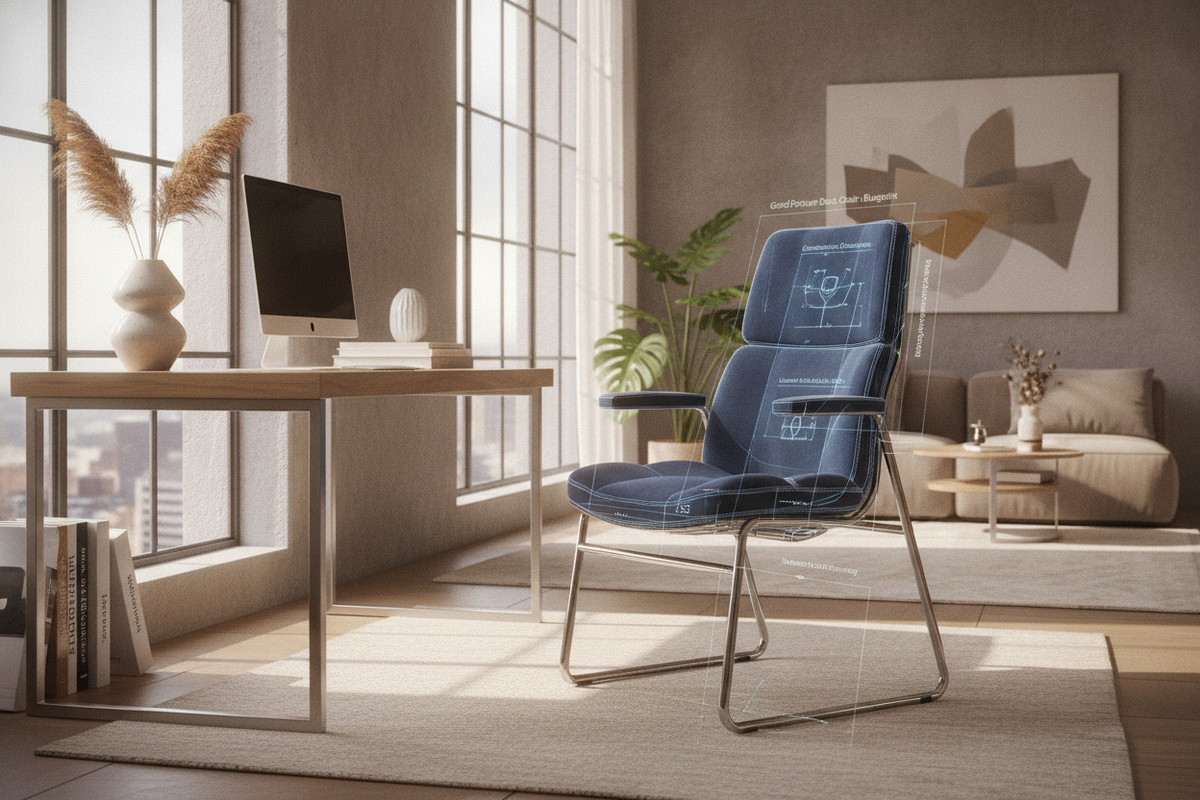
Architectural Foundations of a Good Posture Desk Chair
Selecting an effective good posture desk chair begins with understanding the core mechanical underpinnings beneath the seat pan. An ergonomic task chair serves as dynamic architectural scaffolding for the body during extended work intervals. Rather than locking the user into a rigid, static orientation, a high-caliber office chair good posture design facilitates micro-movements through specialized recline mechanics.
Synchronous tilt mechanisms represent the standard for dynamic support. In a synchro-tilt chassis, the backrest and seat pan recline at a coordinated ratio, enabling the torso to open up while keeping the feet planted and the thighs parallel to the floor. This dynamic motion prevents the front lip of the seat pan from rising excessively, which can otherwise impede circulation in the lower limbs. Complementing synchronous movement, weight-activated tension mechanisms automatically calibrate resistance based on body weight, ensuring smooth transitions between upright focus and reclined ideation without requiring manual knob adjustments.
For tasks requiring intense forward concentration, such as technical drawing, drafting, or rapid keyboarding, forward-tilt mechanisms provide targeted utility. By tilting the seat pan forward by a gentle downward angle, the chassis opens the hip angle and encourages the pelvis to maintain a neutral anterior tilt, reducing the tendency to slouch forward over the work surface.
Dimensional Sizing Tiers: Seat Depth, Pan Width, and Backrest Geometry
Proper ergonomic alignment requires careful dimensional harmony between the user's physique and the physical proportions of the chair. When planning a cohesive workspace, consulting an office desk chair guide helps establish baseline spatial expectations across different furniture silhouettes.
Seat pan depth adjustment stands as a primary structural factor in maintaining healthy leg posture. A properly adjusted seat depth supports the full length of the thighs while leaving a clear gap between the front edge of the seat cushion and the back of the knees. If a seat is too deep, the user is forced to perch forward, losing contact with the lumbar support. If the seat is too shallow, thigh support is compromised, increasing concentrated pressure on the ischial tuberosities.
- Compact Seating Profiles: Designed for smaller footprints and shorter torso lengths, featuring narrower seat pans and reduced depth ranges to prevent pressure behind the calves.
- Standard Task Profiles: Balanced dimensions suited for versatile home office layouts, incorporating adjustable armrest heights, standard seat width, and mid-to-high back support.
- Extended Backrest Profiles: Elevated back frames engineered for broader upper back support, often integrating dedicated cervical pillows or height-adjustable headrests to support neck alignment during reclined tasks.
Lumbar architecture must align with the natural inward curve of the lower spine. Adjustable lumbar pads that offer independent vertical tracking and depth calibration allow users to position the apex of support precisely at the lumbar curve, providing stable bracing against spinal flattening.
Suspension Materials: High-Density Molded Foam vs. Breathable Elastomeric Mesh
The interface between the user and the chair chassis relies on suspension materials that balance pressure distribution and thermal comfort over prolonged sitting sessions.
High-density molded polyurethane foam is prized for its contouring capabilities and long-term structural resilience. Unlike standard cut foam, molded foam is cast in specific contours that distribute pelvic weight evenly across the seat pan. A waterfall front edge profile further softens contact points beneath the thighs, promoting comfortable circulation. Molded foam seats are often paired with fabric or soft upholstery, offering consistent tactile warmth and steady support.
Breathable elastomeric mesh backings offer exceptional airflow, preventing heat retention along the spine during warm seasons or intensive work sessions. High-grade woven mesh distributes tensile load dynamically across the entire surface area of the backrest, adapting flexibly to changes in sitting posture. Hybrid designs—combining a molded foam seat pan with an elastomeric mesh backrest—represent a practical compromise, delivering firm pelvic support alongside ventilated spinal comfort.
Workstation Integration: Footprint Clearances, Knee Wells, and Desk Pairing
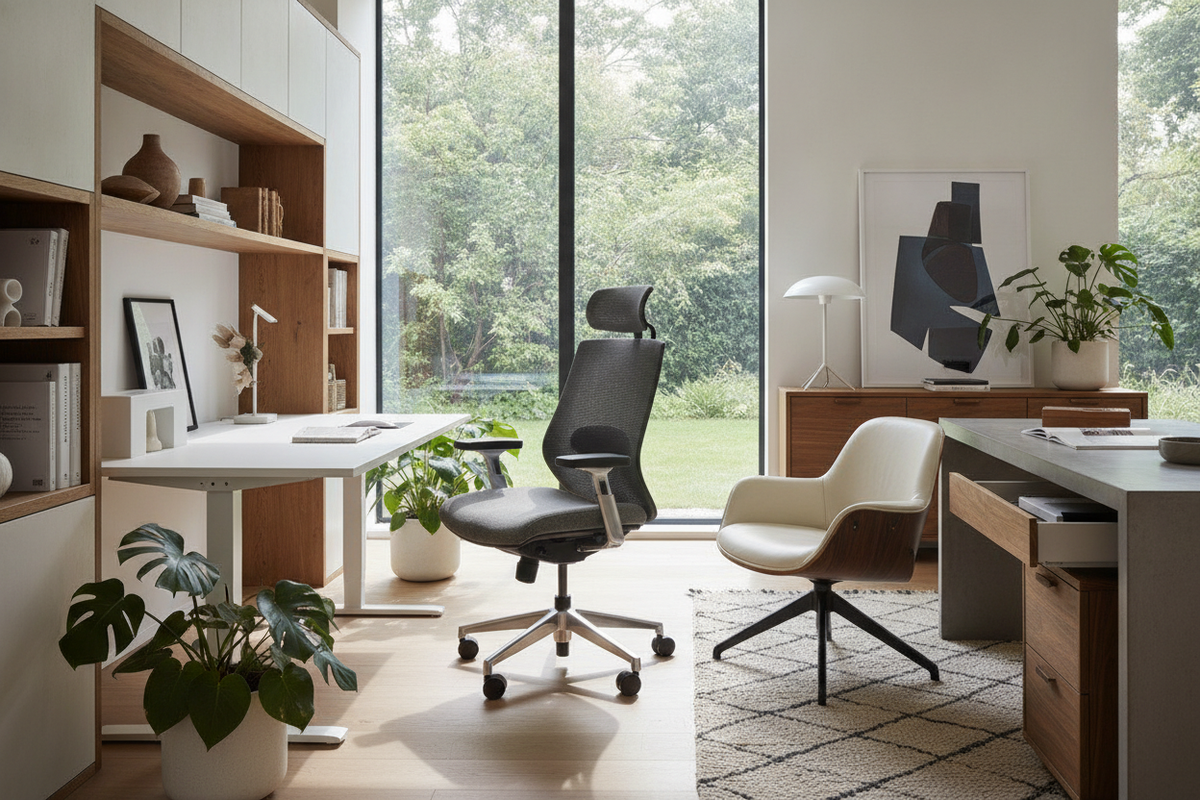
An ergonomic chair cannot function effectively in isolation; it must interact harmoniously with the surrounding desk architecture. The relationship between the five-star caster base, armrest heights, and desk knee wells dictates overall movement efficiency.
When positioning seating within an expansive setup, such as an L-shaped layout or an office desk product with dedicated return sections, clear floor pathways are essential. A standard task chair requires sufficient clearance beneath the desktop so that adjustable armrests can slide smoothly under the work surface when the user transitions closer to the keyboard. Fixed armrests that collide with desk edges frequently force the user to sit too far back, inducing forward neck lean and shoulder fatigue.
Furthermore, knee well depth and width must comfortably accommodate leg repositioning and chair rotation without striking structural modesty panels or internal drawer banks. Smooth-rolling dual-wheel casters matched to the flooring surface ensure effortless navigation across multi-monitor workstations.
Storage Architecture and Reach Zones: Mitigating Postural Strain
Maintaining neutral body posture throughout the workday requires thoughtful arrangement of desktop accessories and nearby storage units. Ergonomists categorize workstation space into primary, secondary, and tertiary reach zones.
The primary reach zone encompasses items within direct forearm sweep—keyboards, mice, and active notepads. The secondary zone extends to arm's length without leaning, ideal for desktop organizers and frequently accessed reference documents. The tertiary zone involves items requiring torso rotation or standing. Poorly organized workspaces force frequent, awkward twisting movements that degrade the spinal alignment provided by a quality chair.
Integrating dedicated organizational furniture, such as a 4 drawer multi door office storage cabinet with desk, allows essential paperwork, hardware peripherals, and desktop supplies to remain neatly stowed within easy reach. Placing storage cabinetry adjacent to the primary seating zone minimizes overreaching, supporting sustained, balanced posture throughout daily workflows.
Chassis Durability, Assembly Workflows, and Maintenance Frameworks
The structural longevity of an ergonomic desk chair depends on robust component selection and regular mechanical upkeep. Key structural elements include:
- Pneumatic Gas Cylinders: Heavy-duty pneumatic lift cylinders ensure smooth, reliable height adjustment and stable vertical dampening.
- Five-Star Base Framework: Reinforced nylon or polished aluminum bases offer structural stability, resisting tipping stresses during deep recline.
- Caster Selection: Hard nylon casters glide efficiently over carpeted areas, while soft polyurethane-tread casters protect hardwood, tile, and laminate flooring from abrasion.
Periodic maintenance preserves chair ergonomics over time. Regularly checking and tightening base bolts, armrest brackets, and backrest mounting screws prevents mechanical play and squeaking. Keeping the pneumatic cylinder free of dust and occasionally inspecting caster wheels for debris ensures smooth transit and reliable postural support across years of daily use.


Dejar un comentario
Este sitio está protegido por hCaptcha y se aplican la Política de privacidad de hCaptcha y los Términos del servicio.