










Understanding L-Shaped Desk Architecture: Return Orientations and Corner Geometry
Choosing a corner workstation requires a clear understanding of desk geometry. When shopping for a home depot l-shaped desk, the primary architectural feature to assess is the relationship between the main desktop surface and its secondary return wing. In modular home office furniture, these two surfaces meet to form a functional ninety-degree workspace that wraps naturally around the user.
Desk configurations generally fall into symmetrical or asymmetrical designs. Symmetrical units offer identical desktop lengths on both the left and right wings, making them ideal for placement squarely in a dedicated corner nook. Asymmetrical models, by contrast, feature an elongated primary workstation complemented by a shorter return wing. When evaluating an l shape desk home depot search result, pay close attention to whether the return is fixed to a single side or designed with a reversible orientation. Reversible frames offer significant flexibility, allowing you to reconfigure the return wing on either side to accommodate natural window lighting, doorway paths, or shifting room arrangements over time.
Dimensional Sizing Tiers: Room Planning for Corner Nooks and Executive Peninsulas
Before selecting a desk footprint, measuring the total room volume and circulation paths is essential. A well-planned home workspace should provide ample surface area without crowding entryways or obstructing closet doors. Sizing options generally span compact corner profiles, mid-sized task setups, and expansive executive footprints.
For modest workspaces and apartment alcoves, choosing a balanced footprint such as a white L-shaped corner desk delivers ample multi-monitor surface area while keeping the perimeter clear. When planning your layout, consider the following spatial clearance principles:
- Chair Swivel and Push-Back Zone: Maintain open floor clearance behind the primary seating point to ensure seamless movement without scuffing baseboards or adjacent furniture.
- Walkway Circulation: Leave sufficient perimeter passage between the desk edges and entryways or open shelving units.
- Corner Alignment vs. Peninsula Layouts: While tucking both wings against intersecting walls maximizes open central floor area, floating one wing outward as a room-dividing peninsula creates an executive feel and provides separation in shared living spaces.
Material Foundations and Structural Mechanics in Utility Corner Desks
The structural longevity of any corner desk depends directly on its core materials and corner joinery. Flat-pack utility desks rely on engineered composite wood panels finished with high-density laminate or melamine veneers. These surface coatings provide everyday resistance against minor spills, beverage rings, and desktop friction from daily peripheral use.
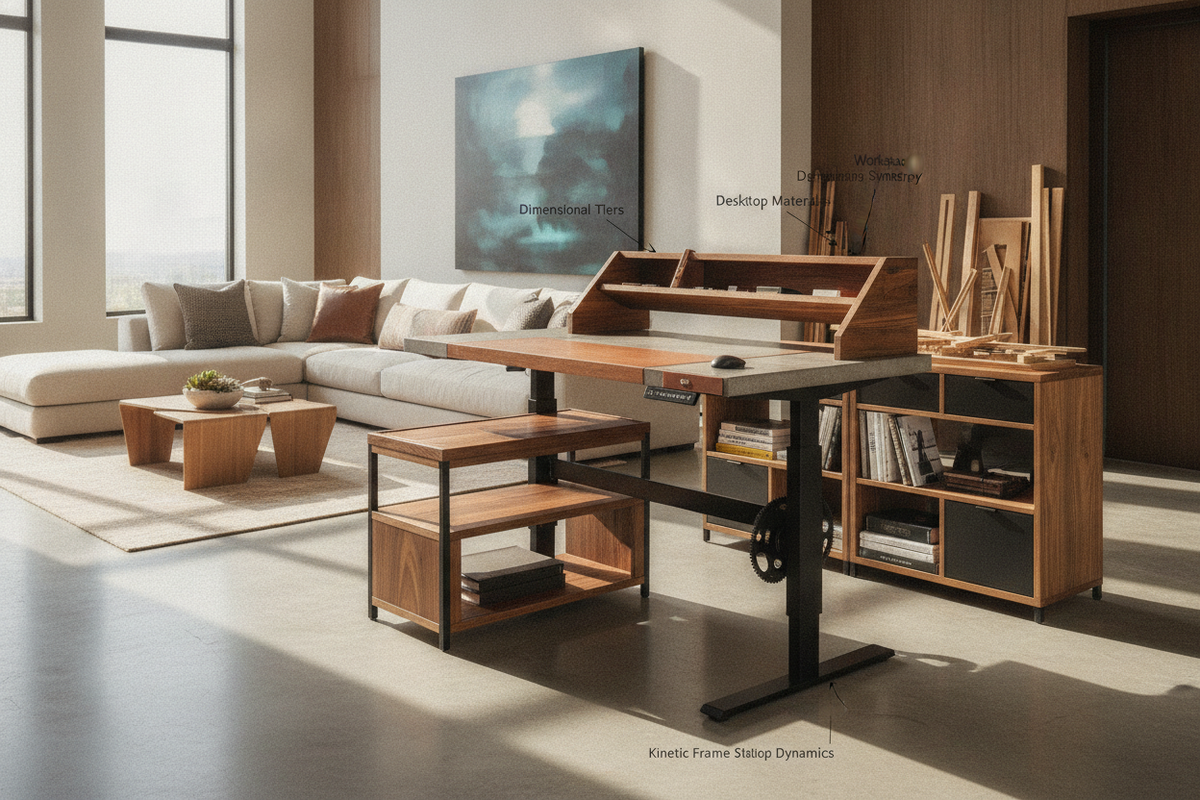
When comparing different build profiles using a comprehensive big-box desk selection framework, inspect the underside framing system. High-performance models pair engineered wood tops with heavy-gauge, powder-coated steel leg assemblies. Look for desks equipped with diagonal cross-bracing struts and steel reinforcement corner plates where the two surfaces connect. This structural reinforcement prevents center-joint sagging and eliminates lateral wobble during vigorous typing or multi-screen adjustment.
Storage Integration: Balancing Legroom Clearance with Cabinetry and Shelving
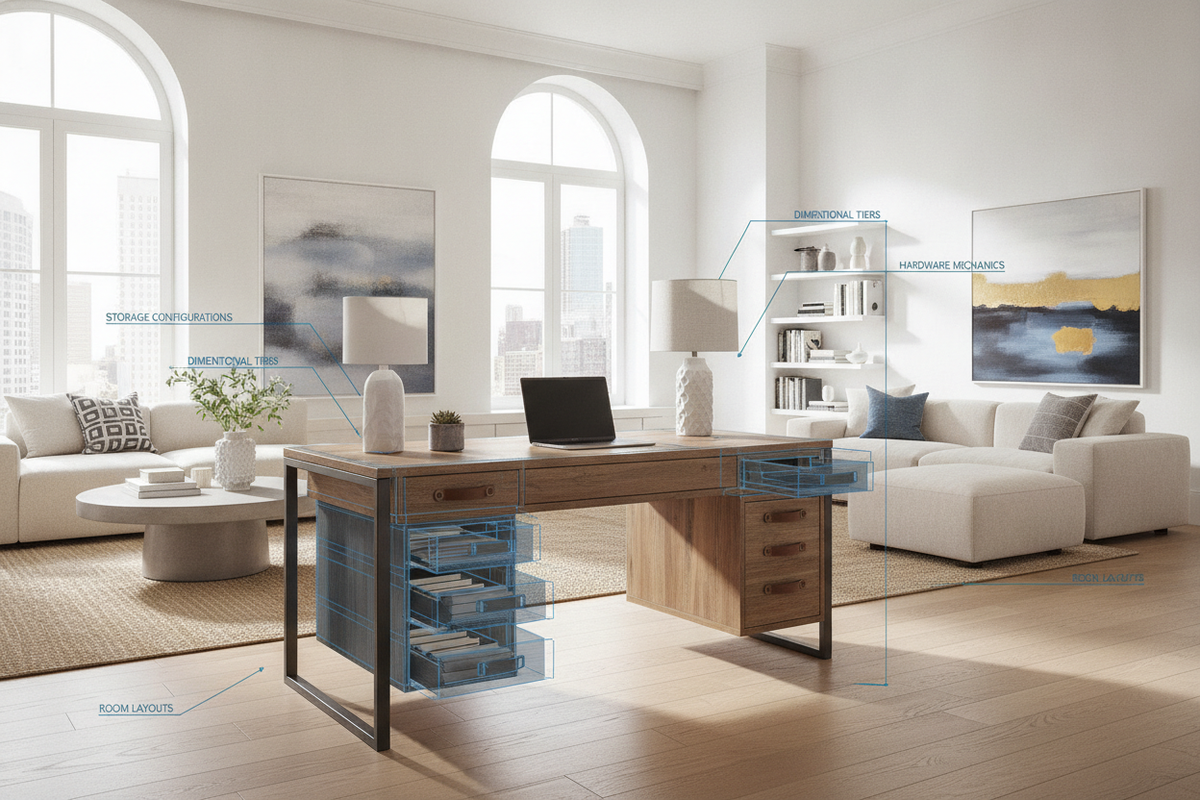
Storage management is a vital factor when evaluating home depot desks l-shaped options. Integrated organization must be balanced carefully against ergonomic legroom to prevent feeling boxed in during extended work sessions. Desk storage configurations typically range from open modular shelving to integrated file pedestals and elevated hutch additions.
Selecting an option like an L-shaped corner desk with integrated storage allows you to keep central processing units, peripheral docks, and reference binders neatly tucked beneath the non-primary return wing. When evaluating storage layouts, keep these trade-offs in mind:
- Open Lower Bookshelves: Maximize airflow around electronic devices and provide swift access to everyday office supplies while maintaining an open aesthetic.
- Closed Filing Pedestals: Conceal sensitive paperwork and small hardware, though they permanently occupy one side of the lower leg channel.
- Overhead Hutches: Utilize vertical wall space for display and document storage, but require careful placement away from window sightlines to prevent blocking natural daylight.
Assembly Protocols and Hardware Mechanics for Flat-Pack L-Desks
Assembling a multi-piece corner desk requires methodical staging to ensure perfectly level joints and rigid stability. Because corner units consist of intersecting panels and modular legs, rushing the assembly process can lead to uneven seams or misaligned screw threads. Consulting an ergonomic desk and chair pairing guide before you begin will also help ensure your seating height matches your assembled desktop clearance.
To achieve a seamless build, follow these assembly staging practices:
- Dry Layout and Orientation Confirmation: Unpack all components on a clean, carpeted surface to verify whether your room configuration calls for a left-handed or right-handed return assembly.
- Sub-Assembly of Frameworks: Assemble the steel support framework and leg columns first, leaving the final tightening bolts slightly loose to allow micro-adjustments.
- Desktop Alignment and Cam-Lock Tensioning: Place the primary and secondary desktop surfaces face down to fasten the center joining plates securely, ensuring a flush surface seam before locking structural hardware in place.
- Leveling Glide Calibration: Once upright, adjust the threaded floor glides on each leg base to compensate for uneven flooring or thick carpeting, eliminating any remaining frame rocking.
Use-Case Workflows: Dual-Zone Productivity, Gaming Hubs, and Creative Suites
The primary advantage of a home depot l desk is its natural capacity for dual-zone workflow zoning. Rather than crowding all tasks onto a single horizontal line, the ninety-degree split allows you to establish distinct physical environments for focused computing and auxiliary activities.
For remote professionals, one wing easily accommodates an array of monitors, webcams, and docking stations, while the adjacent wing remains clear for physical note-taking, document review, or sketching. For smaller multipurpose rooms where an L-shaped configuration might overwhelm the available square footage, comparing your layout requirements against a compact writing desk with drawer helps determine whether dual-zone corner architecture or a streamlined linear desk best supports your daily workflow.
By prioritizing structural integrity, measuring room clearances accurately, and selecting the right return orientation, you can turn any corner into an organized, ergonomic, and highly productive home workspace.

Dejar un comentario
Este sitio está protegido por hCaptcha y se aplican la Política de privacidad de hCaptcha y los Términos del servicio.