










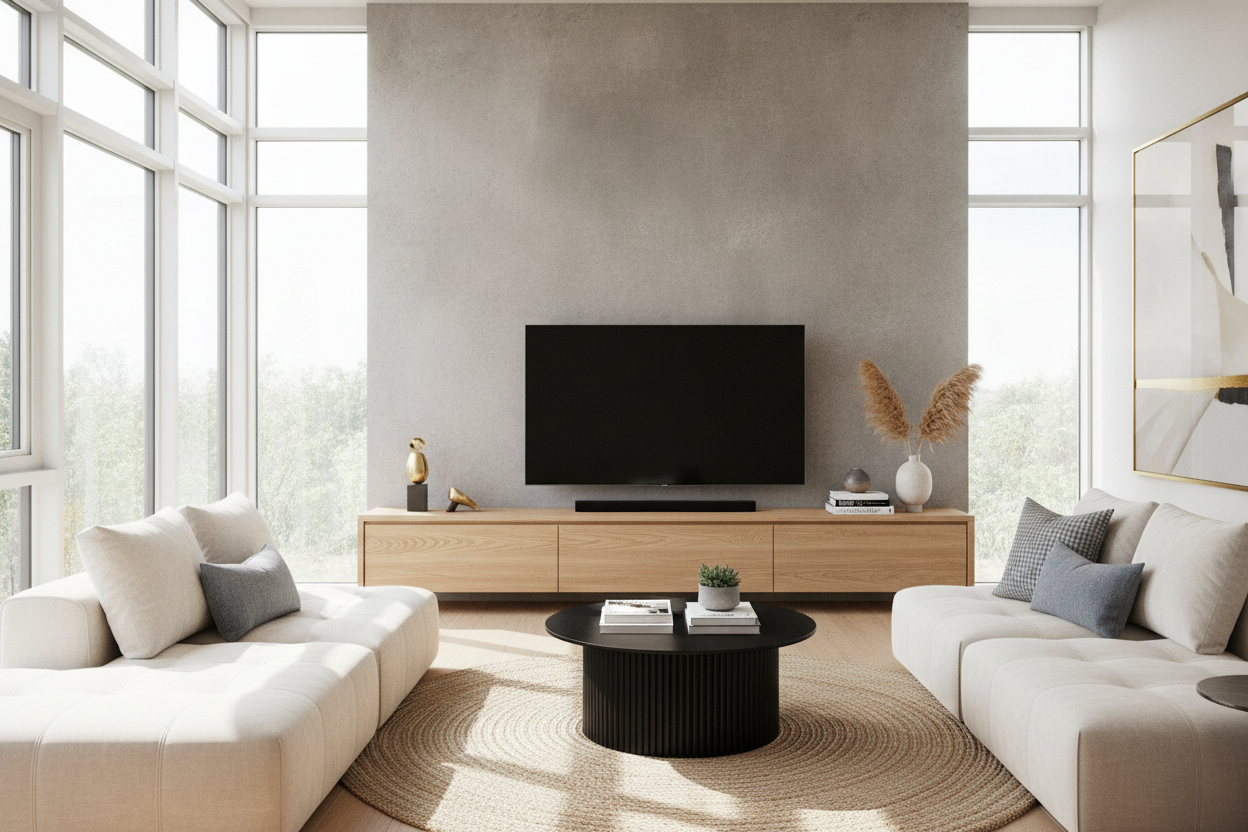
I remember the day my 65-inch TV arrived. I had been staring at the empty wall in my 12x15 living room for weeks, measuring and re-measuring with that blue painter's tape that never actually stays on the wall. But seeing that massive cardboard box leaning against my entryway was a total reality check. I had this mid-century console I’d found at a vintage market—beautiful tapered legs, solid walnut—and I was convinced it could handle the upgrade. I was wrong. Once I got that screen out of the box and onto the stand, my living room didn't look like an 'upgrade.' It looked like a giant lollipop. It was a massive, 4K head on a tiny, fragile stick that felt like it would snap if someone sneezed too hard.
Finding the right rack para tv 65 polegadas isn't just about weight capacity; it's about visual weight. If your stand is the same width as your TV, your living room starts to feel like a sports bar or a tech showroom. It loses that 'homey' vibe and starts feeling like a shrine to Netflix. You need a piece of furniture that can actually anchor that big black rectangle so it feels like a design choice rather than an intrusion.
- The 'Golden Rule': Your stand should be at least 25% wider than the TV screen.
- Actual Width: A 65-inch TV is about 57 inches wide; aim for a 72-inch to 80-inch console.
- Depth Matters: Ensure the unit is at least 16-18 inches deep for stability.
- Ventilation: If you have a console with doors, make sure the back is open or vented for electronics.
The 'Best Buy Display' Effect (And Why Your Living Room Looks Like One)
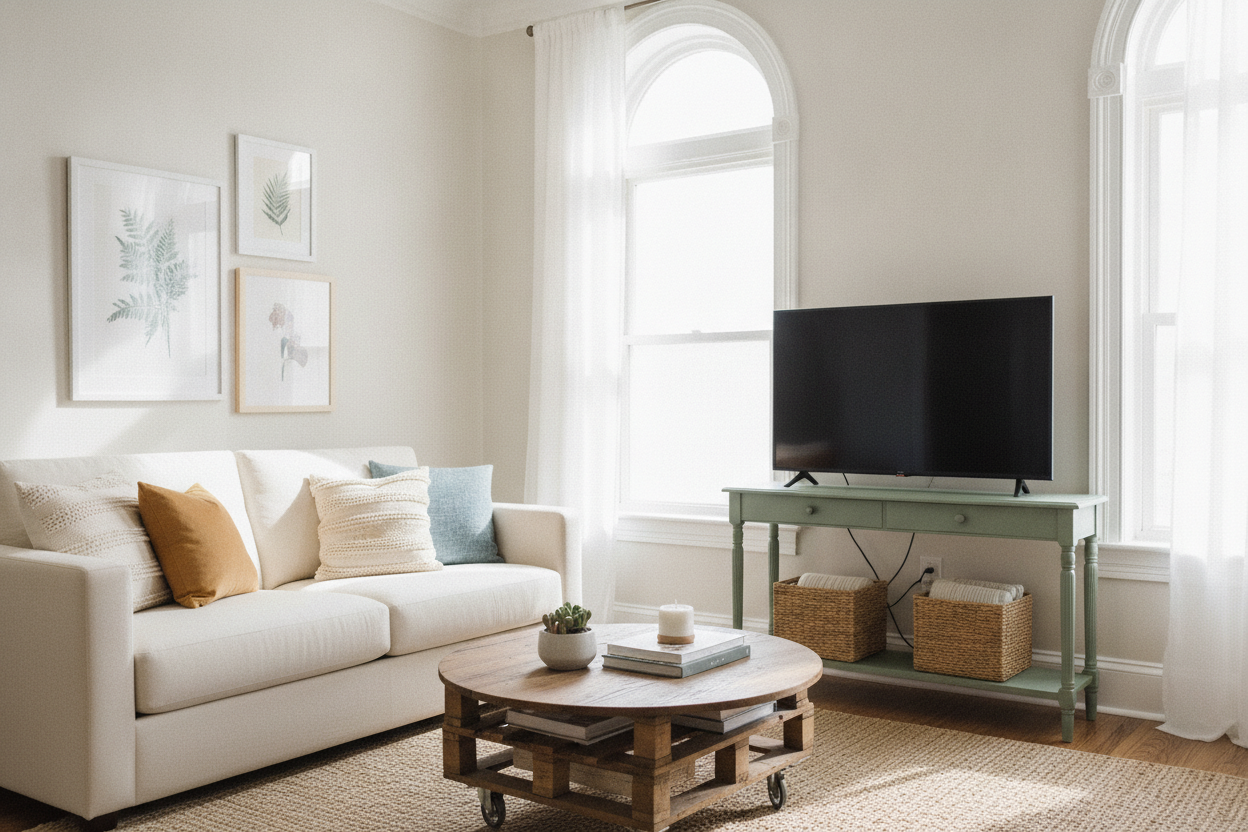
We’ve all seen it. You walk into a friend's house and they have this glorious, 4K beast of a screen perched precariously on a stand that’s clearly meant for a 42-inch TV from a decade ago. It creates a top-heavy look that makes the room feel cramped and chaotic. The TV dominates the space because there’s no horizontal line underneath to anchor it. It looks like a temporary setup, even if they've lived there for five years.
When the TV overhangs the edges of the console, your eyes go straight to the corners of the screen. It feels precarious. To fix this, you need a rack para tv 65 polegadas that provides a solid foundation, extending well beyond the glass. This creates a sense of permanence and balance that calms the room down. Without that extra width, you're just looking at a monitor on a pedestal, not a curated living space.
The Golden Rule for Sizing a Rack Para TV 65 Polegadas
The math is simple but non-negotiable: add 25 percent. A 65-inch TV (which is actually about 57 inches wide) needs a console that is at least 72 inches long. Personally, I prefer an 80-inch unit if the wall can handle it. That extra space on the ends creates a 'buffer' that makes the screen look like it fits into the decor. It gives the eye a place to land that isn't just glowing pixels.
Beyond the look, you have to consider the physical build. I’ve seen cheap MDF units buckle under the weight of a premium OLED or a heavy-duty LED panel. You want to ensure the base is sturdy enough for a 65-inch screen, especially if you aren't wall-mounting. Look for center support legs—if a 72-inch stand only has four legs at the corners, it will sag in the middle within six months. I've seen it happen to high-end brands and budget pieces alike. Solid wood or a heavy-gauge steel frame is the way to go here.
Why a standard rack tv 65 usually isn't wide enough
Furniture retailers are notorious for 'optimistic' labeling. They will label a piece as a rack tv 65 simply because the TV technically fits on top without falling off. But 'fitting' and 'looking good' are two different things. Most '65-inch' stands are exactly 58 or 60 inches wide. This leaves you with an inch of space on either side. It looks cramped, cheap, and completely lacks the breathing room that a larger room requires. If you want that high-end look, you have to shop for stands labeled for 75-inch or 85-inch TVs.
Don't Forget the Receiver and the Cable Mess
If you're buying a TV this big, you probably have a soundbar, a PlayStation, or a chunky AV receiver. Most stylish 'minimalist' consoles are only 12 to 14 inches deep. That is a disaster for cables. You’ll end up with HDMI cords smashed against the back panel, eventually ruining the ports on your expensive gear or preventing the console from sitting flush against the wall.
When finding a stand for TV receiver setups, look for a depth of at least 18 inches. This gives you room for the plugs and the inevitable 'cable nest' that lives behind the scenes. Also, check for ventilation. If you put a hot receiver inside a closed wooden box with no airflow, you're basically slow-cooking your electronics. I always look for units with slatted doors or removable back panels to keep the air moving.
Styling the Edges So the Screen Doesn't Dominate
Once you have that extra 10-12 inches of space on each side of the TV, use it. This is where you reclaim your living room from the 'tech' vibe. I usually put a stack of oversized coffee table books on one side and a textured ceramic vase or a small lamp on the other. This breaks up the hard, flat lines of the screen. It makes the TV feel like part of a 'vignette' rather than just a monitor sitting on a shelf.
Avoid putting anything too tall right next to the screen—it gets distracting while you're watching movies. A low, wide bowl or a tray for remotes works wonders. The goal is to create a composition where the TV is the center, but not the only thing worth looking at. If you do it right, the screen actually feels smaller and more integrated into the room's architecture.
Personal Experience: My Particle Board Regret
I once bought a 70-inch 'wood-look' stand for $150 because I spent my whole budget on the TV itself. Within two months, the weight of the screen caused the top to bow so badly that the cabinet doors wouldn't close. It was embarrassing. I ended up spending more money to replace it than if I’d just bought a solid acacia or high-grade plywood unit to begin with. If it's light enough for one person to carry comfortably, it's probably too flimsy for a 65-inch investment. Go for the heavy stuff; your floor (and your TV) will thank you.
FAQ
Can I use a 60-inch stand for a 65-inch TV?
Technically yes, if the legs fit, but it will look terrible. The TV will hang over the edges or sit flush with them, making the room feel unbalanced and top-heavy. Always aim for a stand wider than the screen.
Is wall-mounting better than using a rack?
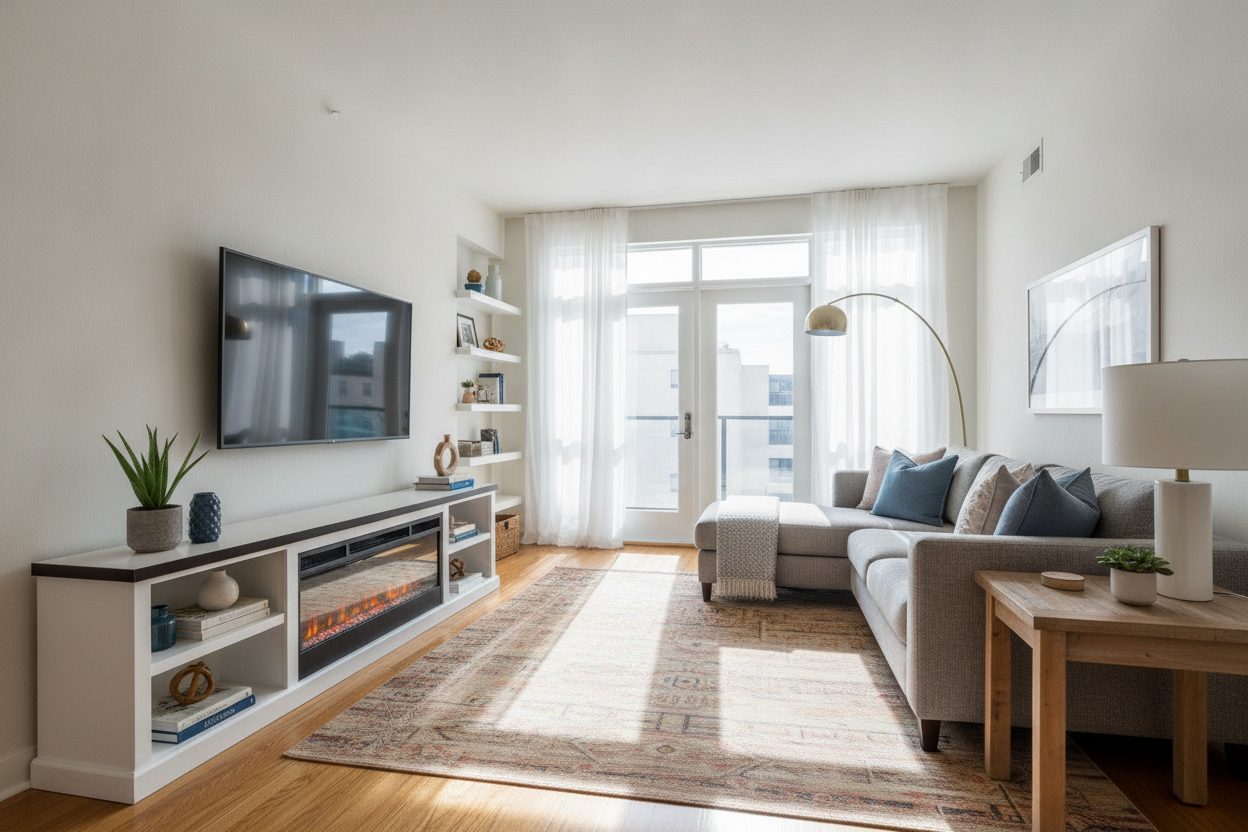
Wall-mounting is great for height control, but you still need a console underneath to hide the wires and house your gear. A floating TV without a piece of furniture below it often looks 'lost' on a large wall and leaves your cables exposed.
What height should the rack be?
For a 65-inch screen, look for a 'low-profile' rack between 18 and 24 inches tall. If the stand is too high, you'll be crane-necking like you're in the front row of a movie theater. Eye level should be roughly the middle of the screen when you're seated.

Dejar un comentario
Este sitio está protegido por hCaptcha y se aplican la Política de privacidad de hCaptcha y los Términos del servicio.