










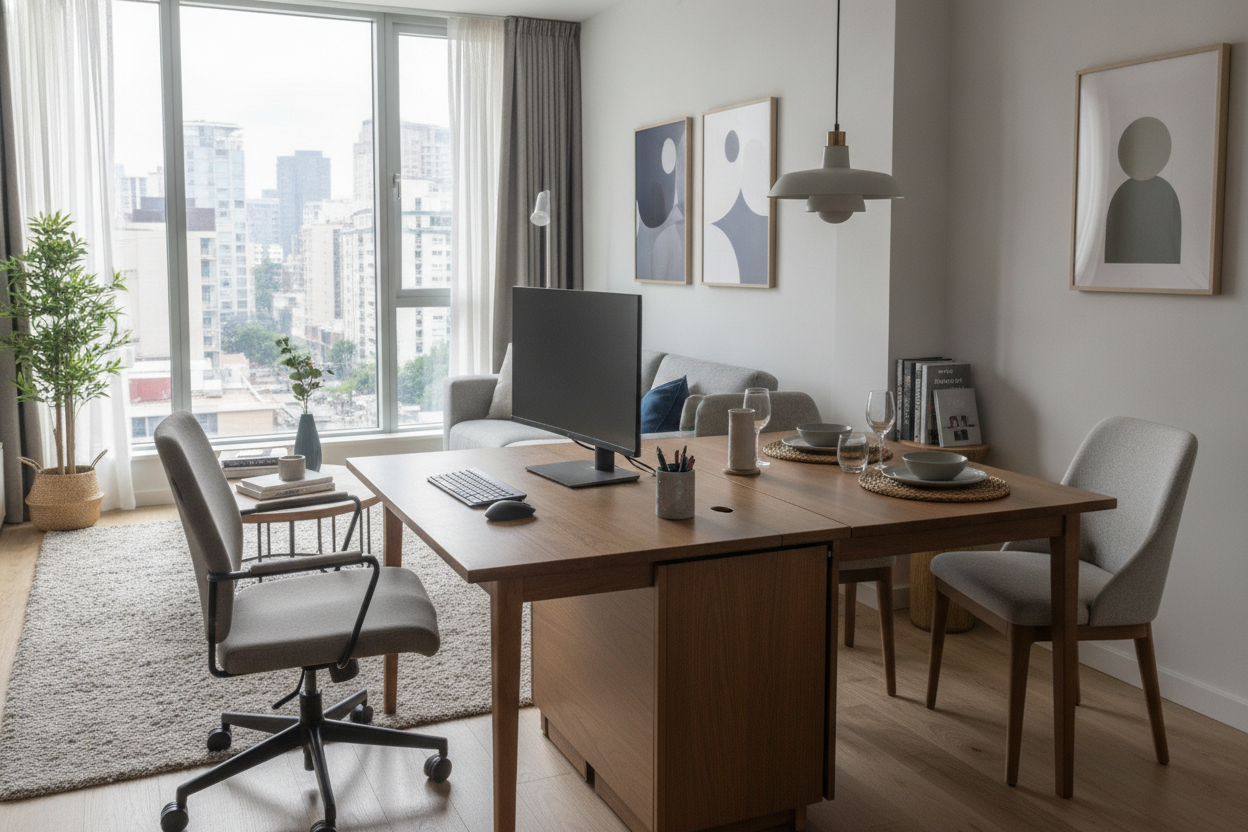
I remember the Tuesday I hit my breaking point. I was eating a lukewarm bowl of ramen while staring at a spreadsheet I’d been wrestling with for nine hours. My elbow hit a soy sauce packet, and suddenly, my 'office' was a sticky disaster. That is the unglamorous reality of the desk and dining table life. When you live in a studio apartment where every square inch is a premium, you don’t get the luxury of a separate library. You get a hybrid.
- Depth is King: A standard 24-inch desk is too shallow for a dinner plate and a monitor; aim for 30 inches.
- Cable Management: If you can see a power strip while eating steak, you’ve failed at interior design.
- Hardwood or Bust: Avoid cheap veneers; they won't survive the constant friction of a mouse and hot coffee mugs.
- The 5 PM Ritual: Physically hiding your laptop is the only way to stop your brain from thinking about work during dinner.
The Reality of Working Where You Eat
Let’s be honest: the psychological toll of a desk dining table combo is real. When your workspace is your eating space, your brain never truly 'clocks out.' I spent months feeling like I was living in a cubicle that just happened to have a stove. The trick isn't just finding a table; it's about intentionality. If you leave your monitor stand and keyboard out while you're trying to host a Friday night dinner, you aren't a host—you're a coworker hosting a meeting.
You also have to deal with the crumb-in-keyboard incidents. I’ve lost count of how many times I’ve had to shake out my mechanical keyboard because of a stray piece of sourdough. If you’re going to use a desk to dining table setup, you need to be a neat freak. There is no middle ground.
What Makes a Table Actually Good for Both?
Most people think any flat surface works as a desk dining room table combo, but they’re wrong. Standard dining tables are usually 29 to 30 inches high. This is fine for a fork, but it’s an ergonomic nightmare for a keyboard. You’ll find yourself shrugging your shoulders and courting a repetitive strain injury within a week. You need a chair that can bridge the gap, or better yet, a table that adjusts.
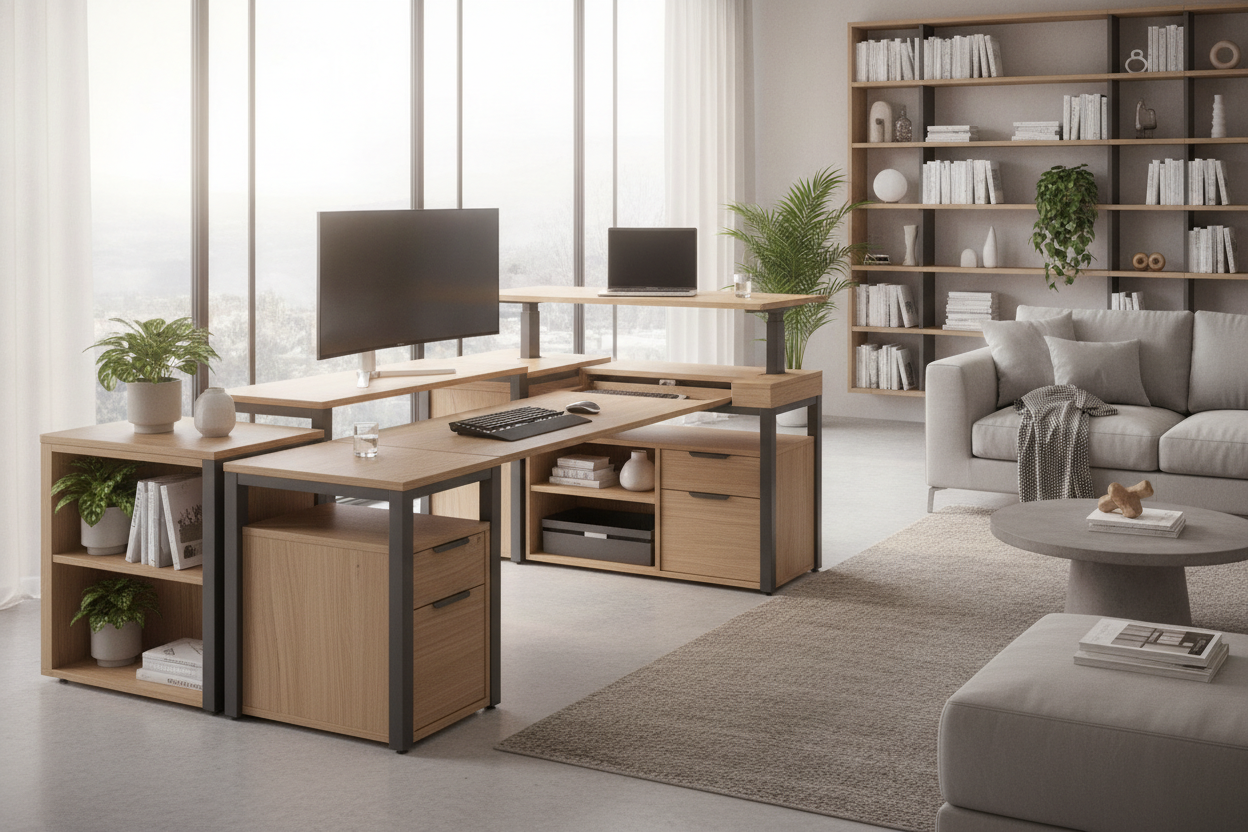
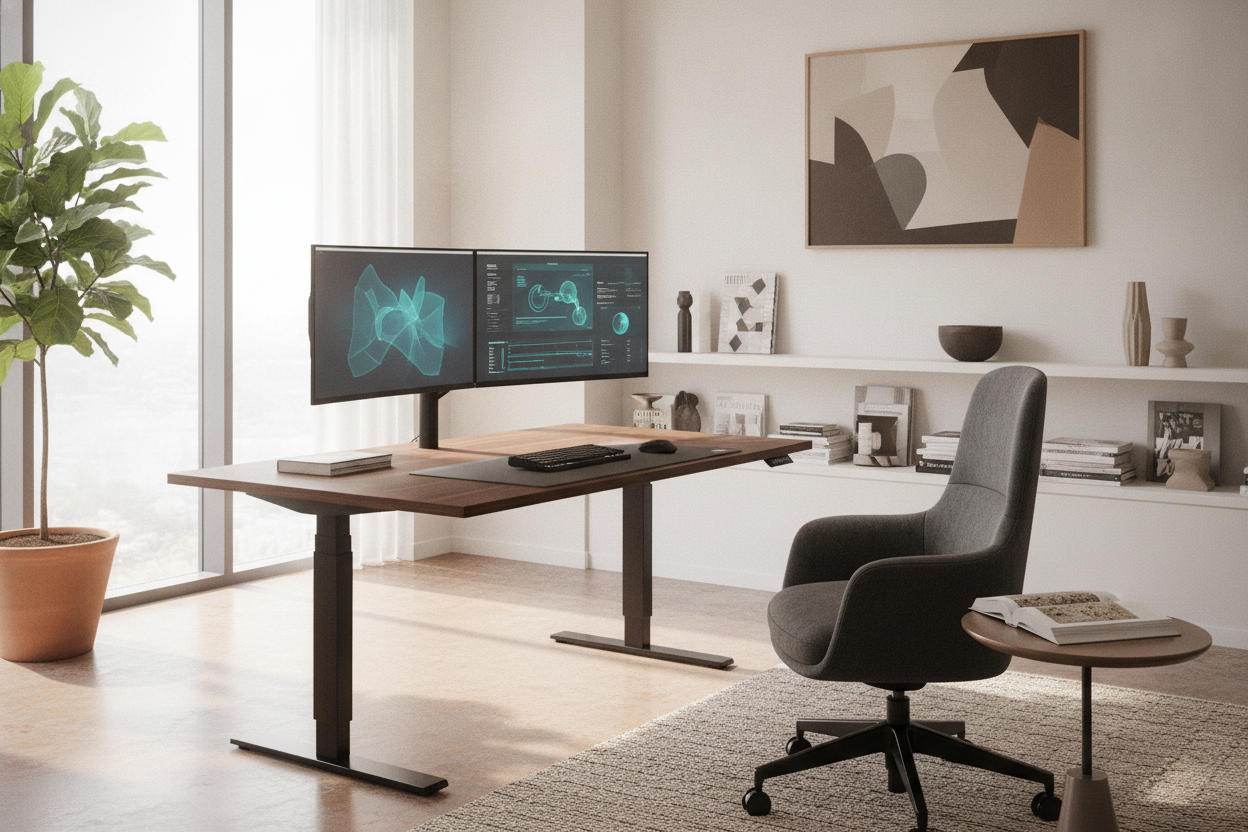
If you have the budget, an adjustable motorized standing desk is the ultimate cheat code. You can set it to the perfect typing height during the day and then raise or lower it to standard dining height when the laptop is tucked away. It solves the ergonomic puzzle that a fixed dining table desk combo usually creates.
Why Surface Material Matters (Spills vs. Mousepads)
I once bought a beautiful reclaimed wood table with deep, rustic grooves. It was a disaster. Trying to write a thank-you note on a single sheet of paper was impossible because the pen kept poking through. Plus, those grooves are magnets for dust and spilled wine. For a desk kitchen table, you want a smooth, sealed surface. Solid oak or walnut with a polyurethane finish is the gold standard. It’s tough enough for a 27-inch iMac but wipes clean after a messy pasta night.
Clever Ways to Hide Your 'Office' at 5 PM
The secret to a successful desk and dining table combo is the 'disappearing act.' I use a small rolling file cabinet that fits under the table to stash my laptop, mouse, and headset at the end of the day. If you use a monitor, put it on a heavy-duty arm so you can swing it out of the way or against the wall. Using a table as a desk only works if you can reclaim the 'home' vibe in under sixty seconds.
Cable management is your best friend here. I use J-channels and Velcro ties to route everything down a single table leg. If you have cables dangling like spaghetti, your dining room table desk will always look like a tech support center. Invest in a nice linen tablecloth to throw over the surface when guests come over; it hides the minor scuffs that inevitable office work creates.
Convertible Options That Don't Look Corporate
If you refuse to spend a fortune on those high-end Italian transforming tables that cost $3,000, look for gate-leg or drop-leaf designs. These are the original 'table that turns into desk' solutions. You can keep one leaf down while you work and flip it up when you need to seat four people for dinner. It’s a classic move for a reason.
Another option is a large library table. These are designed to be sturdy and deep, which is exactly what you want for a computer desk and dining table. They lack the 'office' look of a T-leg desk but offer the surface area needed for a dual-monitor setup. Just make sure there isn't a thick apron under the tabletop, or your thighs won't fit when you're sitting in an ergonomic chair.
My Final Verdict: Should You Combine Them?
After two years of using a dining table as a computer desk, I’ve learned that it’s a compromise of convenience. If you live in a studio or a tiny one-bedroom, a combination desk and dining table is a smart, minimalist move. It forces you to declutter and keeps your living space from being swallowed by furniture. However, if you have a spare corner—even a tiny 40-inch wide nook—you are almost always better off getting a dedicated writing computer desk. Having a spot that is *only* for work creates a mental boundary that no fancy convertible table can replicate.
FAQ
Can I use a dining chair as an office chair?
Only for an hour or two. If you're pulling an eight-hour shift, your back will hate you. Look for a 'task chair' that has a low profile so it can tuck completely under the table when not in use.
What is the ideal size for a desk-dining combo?
Aim for at least 60 inches long and 30 inches deep. Anything smaller and you'll feel cramped when you try to set a place for dinner next to your monitor stand.
How do I protect the table from laptop heat?
Use a large felt or leather desk mat. It protects the wood finish from the heat of your laptop and doubles as a giant mousepad, making the 'work' side of the table feel distinct.

Dejar un comentario
Este sitio está protegido por hCaptcha y se aplican la Política de privacidad de hCaptcha y los Términos del servicio.