











I spent three weeks staring at 47 open browser tabs, watching the price of a generic MDF console fluctuate like the stock market. My current setup was a pair of milk crates and a prayer, which looked less 'industrial chic' and more 'I have given up on adulthood.' I wanted something that wouldn't wobble when a cat sneezed, but I wasn't about to drop $800 on a piece of furniture that arrives in a box labeled 'fragile' only to be made of compressed sawdust.
That is when I decided to pivot. Instead of scrolling through the same three major retailers, I drove down to a local closeout warehouse to hunt for a job lot tv stand. It was a chaotic, dusty gamble, but I walked away with a solid piece of furniture for less than the cost of a fancy dinner. Here is how it went down.
Quick Takeaways
- Job lot finds are often overstock from high-end brands, but the boxes are usually beat up.
- Always check the weight: if the box is under 50 pounds for a 60-inch stand, it is probably flimsy.
- Hardware is the weak point; be prepared to buy your own screws or wood glue.
- You can save 40-60% off MSRP if you are willing to dig through a messy aisle.
The Breaking Point: Why I Ditched the Big Online Retailers
The breaking point came when I almost hit 'buy' on a unit that had a $150 shipping fee for a $300 stand. That is highway robbery. I had spent hours trying to browse traditional tv stands online, only to realize that most of what I was seeing was the exact same product rebranded by five different companies. It is a shell game of marketing where you pay for the name, not the wood density.
I was tired of the 'disposable furniture' cycle. You know the one: you buy a piece, move once, and the cam-locks rip out of the side panels because they have the structural integrity of a wet cracker. I wanted something with a bit more heft. I realized that if I wanted quality on a budget, I had to stop looking where everyone else was looking. I needed to go where the 'misfit' furniture lives.
Local discount and closeout stores are the wild west of home decor. There is no curated showroom or mood lighting. It is just you, a flatbed cart, and a stack of boxes that may or may not contain your dream console. But the potential for a deal is too high to ignore.
Wait, What Exactly Is a Job Lot Furniture Find?
Buying a 'job lot' piece basically means you are buying insurance leftovers or overstock. When a major retailer orders 5,000 units of a console and only sells 4,000, the remaining 1,000 get sold off in 'lots' to secondary discount stores. This is why you will see a high-end brand name on the box, but the price tag is slashed by half.
You have to manage your expectations, though. These boxes have been through the ringer. They might have forklift punctures or layers of dust. The return policy is usually 'you bought it, you keep it,' unless the thing is literally snapped in half. You are trading the safety net of a 30-day trial for a massive discount. It is a high-stakes game for people who know their way around an Allen wrench.
Sifting Through the Aisles: How I Spotted 'The One'
The store was a maze of air fryers and off-brand snacks, but in the back corner, I found the furniture graveyard. The trick to finding the good stuff is simple: use your hands. I started lifting the corners of boxes. If I could lift a 60-inch console box with one hand, I walked away. Light means thin panels and hollow cores. I was looking for something that felt like it was made of actual trees.
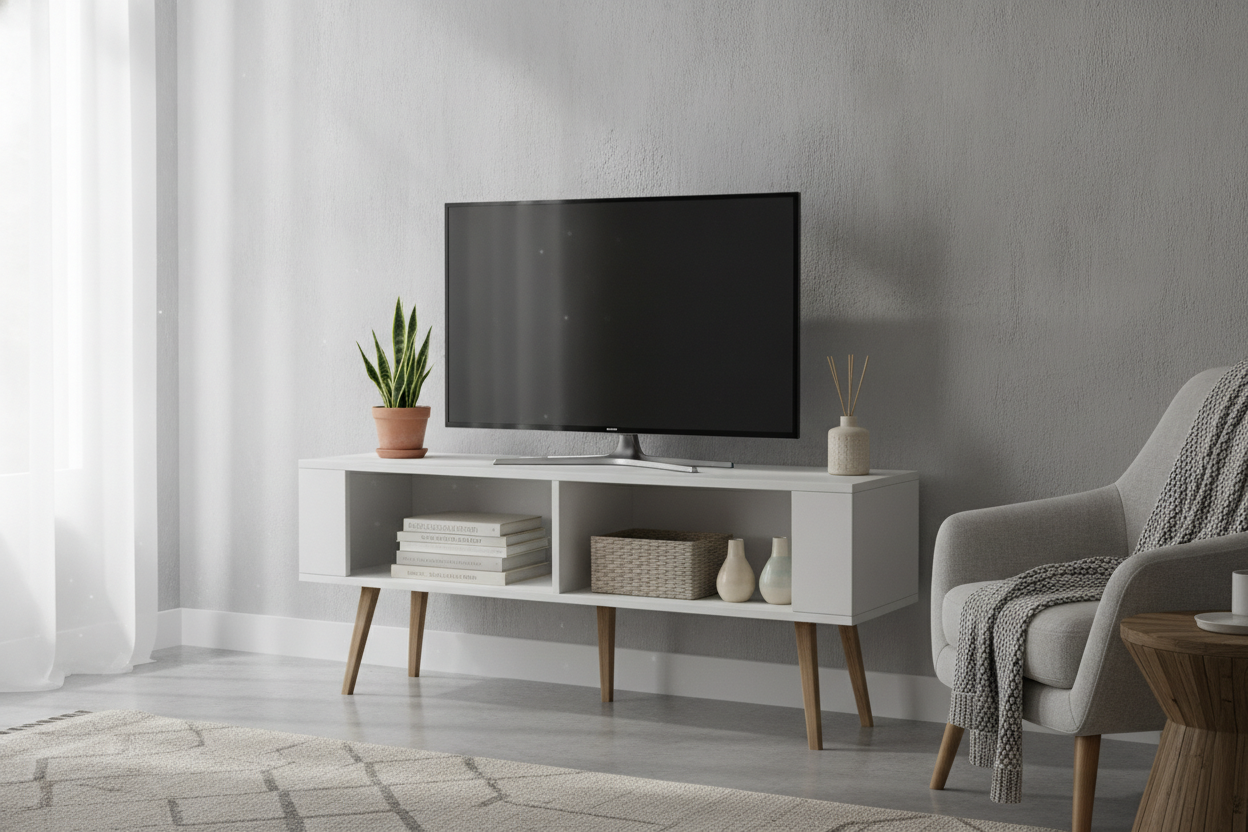
I had a specific aesthetic in mind. I wanted a mid century modern tv stand with those clean lines and slatted doors that hide the messy cable nest of my gaming consoles. Most of the 'premium' versions of this style are $500 minimum. Then, I saw it: a heavy, long box with a faded label from a high-end boutique I recognized. The corner of the box was crushed, but the wood inside looked untouched.
I checked the specs on the side. 85 pounds. Solid wood legs. Real walnut veneer. The price tag? $180. I didn't even think; I just hauled it onto my cart before anyone else could see the brand name peeking through the tape.
The Assembly Reality Check (Did It Come With All the Screws?)
Unboxing a job lot find is like a game of Operation. You are constantly holding your breath, hoping you don't find a massive crack in the top panel. Luckily, the crushed box corner was just empty space. The actual components were pristine. However, the instructions looked like they had been photocopied by someone running away from a fire—blurry, vague, and missing page three.
The hardware was... okay. I have assembled enough flat-pack stuff to know that the included wood glue is usually just white water. I grabbed my own bottle of Titebond and a real screwdriver. Never use the 'free' tools that come in the bag unless you want blisters and a stripped screw head. I spent about two hours piecing it together, and I did have to raid my own junk drawer for two washers that were missing from the kit.
The biggest hurdle was the door alignment. On budget pieces, the pre-drilled holes for hinges are often suggestions rather than rules. I had to do some minor 'field adjustments' with a drill to get the doors to hang straight. If you aren't comfortable making a new hole in a piece of wood, job lot furniture might give you a panic attack. But for $300 in savings, I'll happily drill a hole.
Would I Actually Trust It With a Massive Screen?
Once it was built, the moment of truth arrived. I have a 65-inch OLED that cost more than my first car, and I wasn't about to let it take a header onto the floor because of a cheap shelf. Finding the best 65 inch tv stand is usually an exercise in checking weight capacities, and this one claimed it could handle 120 pounds.
I did the 'lean test' first. I put my full weight on the center of the stand. No creaking. No bowing. No swaying. Because this was a closeout from a higher-end brand, it had a center support leg—a feature often missing from the ultra-cheap stuff you find online. That fifth leg is the difference between a flat surface and a slow-motion disaster over the next six months. It felt rock solid. The veneer was thick enough that I didn't worry about the TV's feet scratching it immediately.
3 Cheap Tricks to Make Budget Furniture Look Expensive
The stand looked great, but you could still tell it wasn't a $2,000 heirloom piece. To bridge the gap, I used a few tricks I have picked up over the years. First, I ditched the cheap plastic knobs it came with. I spent $15 on heavy, brushed brass hardware from a local hardware store. The weight of a metal handle makes the whole door feel more expensive when you pull it open.
Second, I used the 'book stack' method. There was a tiny finish flaw on the left side—a little scuff from the shipping mishap. I placed a few oversized coffee table books right over it. Not only does it hide the damage, but it adds height and texture. Finally, I used adhesive cable clips on the back to keep the wires from drooping. Nothing screams 'cheap furniture' like a tangle of black cords hanging out the bottom.
FAQ
Is job lot furniture always damaged?
Not always, but the boxes almost always are. Most of the time, the damage is 'cosmetic box wear,' meaning the cardboard is ugly but the furniture inside is fine. Just be sure to inspect the panels before you start building.
Can I return it if it’s missing parts?
Usually, no. Most closeout stores sell 'as-is.' If you are missing a screw, you are better off going to a hardware store than trying to get a refund. It is the trade-off for the low price.
How do I know if the wood is real?
Check the weight and the edges. If the edge looks like a sticker is peeling off, it is low-grade laminate. If you can see a grain pattern that continues around the corner, it is likely a wood veneer, which is much more durable.

Dejar un comentario
Este sitio está protegido por hCaptcha y se aplican la Política de privacidad de hCaptcha y los Términos del servicio.