










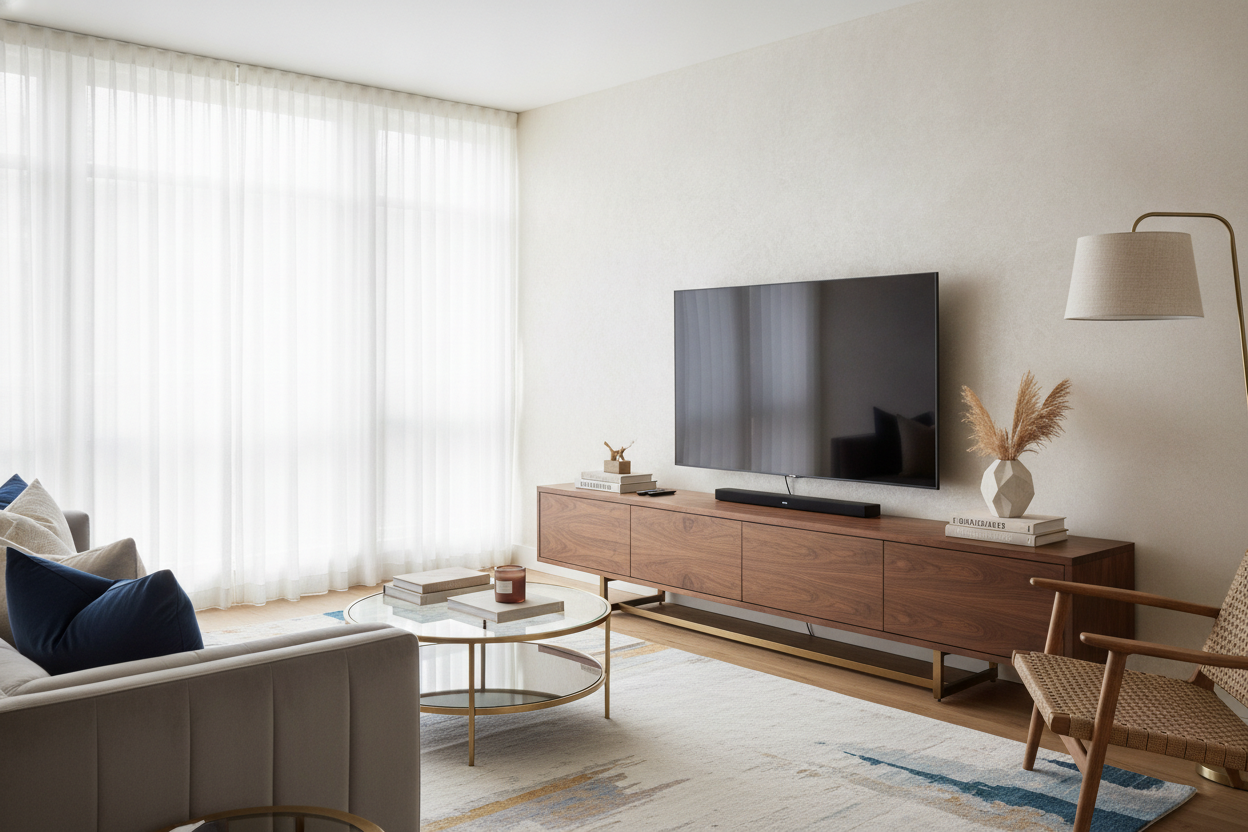
I spent three weeks staring at a pile of tangled HDMI cables and a TV perched precariously on a stack of oversized art books. Every time I searched for an elegance tv stand, I was met with thousands of results that looked like they belonged in a college dorm or a generic hotel lobby. It is the ultimate living room struggle: you want something that looks like a piece of high-end furniture, but it also has to hide the plastic-heavy reality of your gaming consoles, soundbar, and that router you hate looking at.
- Avoid anything with visible plastic grommets for cord management; they look cheap instantly.
- Solid wood or high-quality veneers win over paper-thin laminate every single time.
- Leg height matters—aim for at least 6 inches of clearance to keep the room feeling airy.
- Hardware is the easiest thing to swap if the bones of the unit are good but the knobs feel like plastic.
The Problem With Most Modern Media Furniture
Scrolling through endless pages of Tv Stands is a special kind of hell. Most of what you find is either 'rustic farmhouse' blocks that weigh 200 pounds or flimsy particleboard units that sag under the weight of a 55-inch screen within six months. Finding elegant tv stand furniture that feels grown-up shouldn't be this hard, yet here we are, drowning in a sea of gray-washed oak and fake industrial pipes.
I wanted something that complemented my velvet sofa, not something that looked like it was held together by hopes, dreams, and a single Allen wrench. The issue is that most manufacturers prioritize 'tech storage' over aesthetics, resulting in bulky boxes that dominate the room. You shouldn't have to sacrifice your entire design vibe just because you want to watch Netflix on something larger than a laptop.
What Actually Makes a Console Look Expensive?
It comes down to the details that most big-box retailers skip to save five dollars on production. An elegant media console usually features mitered joints where the corners meet at a perfect 45-degree angle. This creates a seamless look that screams quality. Look for 'soft-close' hinges—there is nothing less sophisticated than a cabinet door that slams with a hollow, metallic thud when you're just trying to put away a controller.
Proportions are also key. A unit that is too short makes your TV look like a giant black hole sucking the life out of the wall. I always look for something at least 10-12 inches wider than the TV itself to create a balanced silhouette. When the stand is the same width as the screen, the whole setup looks cramped and accidental. Real materials like kiln-dried walnut or oak provide a depth of grain that contact paper just cannot replicate.
My Hunt for the Elusive 'Elegance TV Stand'
I finally realized my mistake was using the word 'stand' at all. Once I shifted my search to Media Console vs. Credenza: What Does TV Stand For Anymore?, the quality of my results skyrocketed. I stopped looking for 'tech furniture' and started looking for storage furniture that happened to have wire management. I eventually landed on a walnut unit with slatted doors, which is the ultimate hack for a clean setup.
The slats are the secret: they let infrared signals from my remote pass through while keeping the ugly black boxes completely out of sight. I did make one mistake—I didn't measure the depth of my vintage receiver, and it barely fits with the cables plugged in. Always add two inches to your deepest component's measurements for cable clearance. Despite that hiccup, it’s the only thing in my living room I don't want to replace after a year.
Pro Tip: Always Look at the Legs
If a piece sits flat on the floor, it is just a box. If it is raised on tapered wood or brass legs, it becomes a classy entertainment center. Elevating the unit allows you to see the floor underneath, which tricks the eye into thinking the room is larger than it actually is. I personally prefer brass-tipped legs for a bit of mid-century flair, but even simple solid oak pegs do wonders for the visual weight of the piece.
Should You Just Mount It and Forget It?
If your living room is the size of a postage stamp, a Floating Tv Stand Wall Mounted Media Console Entertainment Center might be your best bet. It removes the footprint entirely and gives you back that precious floor space. It is the ultimate minimalist move, especially if you can run your wires behind the drywall for a totally 'invisible' look.
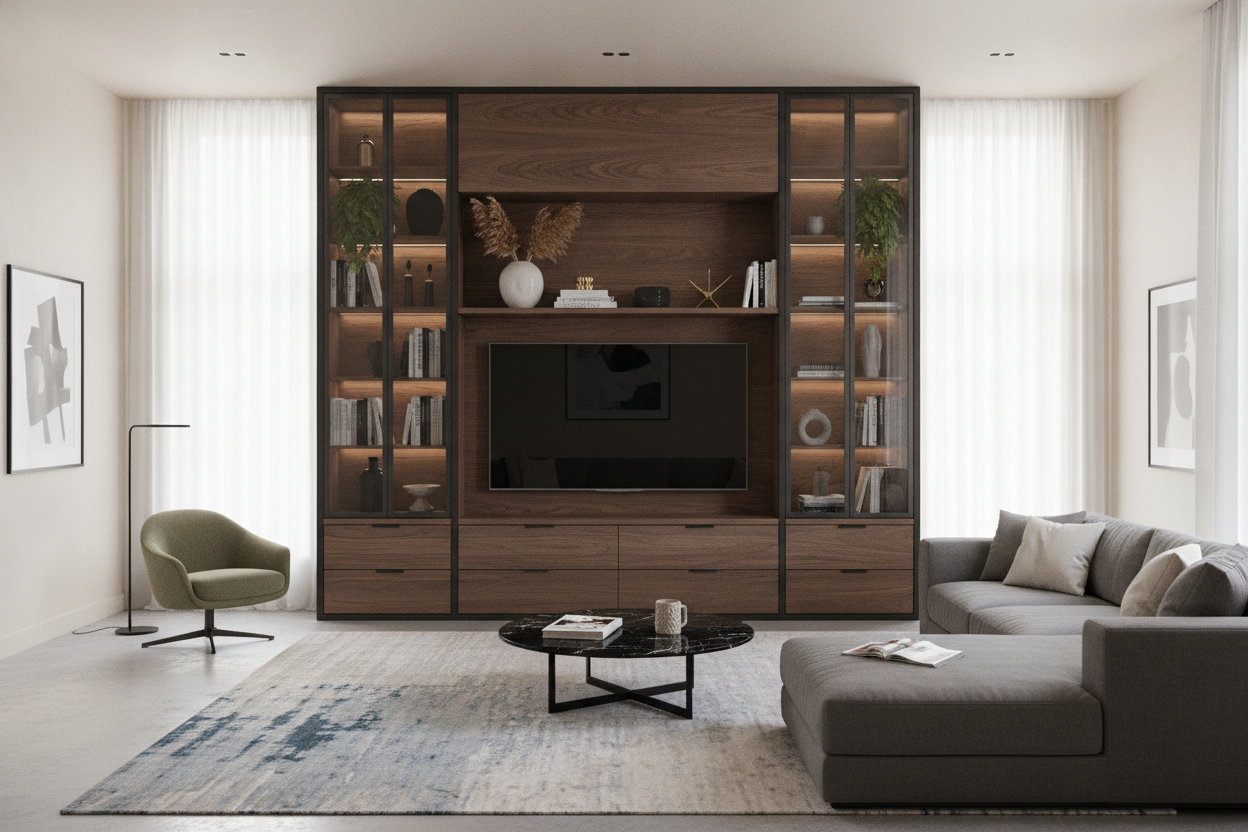
However, I am a fan of the grounded look. There is something intentional about a freestanding piece that holds your curated books and a ceramic vase next to the screen. It turns the TV into part of the decor rather than just a screen hanging in a void. If you have the room, go for the furniture; it adds a layer of texture that a bare wall just can't provide.
How wide should my TV stand be?
It should be at least 6-10 inches wider than the TV on both sides. A TV that overhangs the edges of the stand looks top-heavy and unstable.
Is solid wood worth the extra cost?
Yes, if you plan on keeping it for more than two moves. Particleboard is fine for a guest room, but it won't survive a cross-town truck ride without the screws stripping out of the soft core.
How do I hide cables if the stand doesn't have holes?
Buy a 2-inch hole saw bit for your drill. It takes five minutes to cut a clean circle in the back panel of a high-quality credenza, turning it into a custom media unit without ruining the front aesthetic.

Dejar un comentario
Este sitio está protegido por hCaptcha y se aplican la Política de privacidad de hCaptcha y los Términos del servicio.