










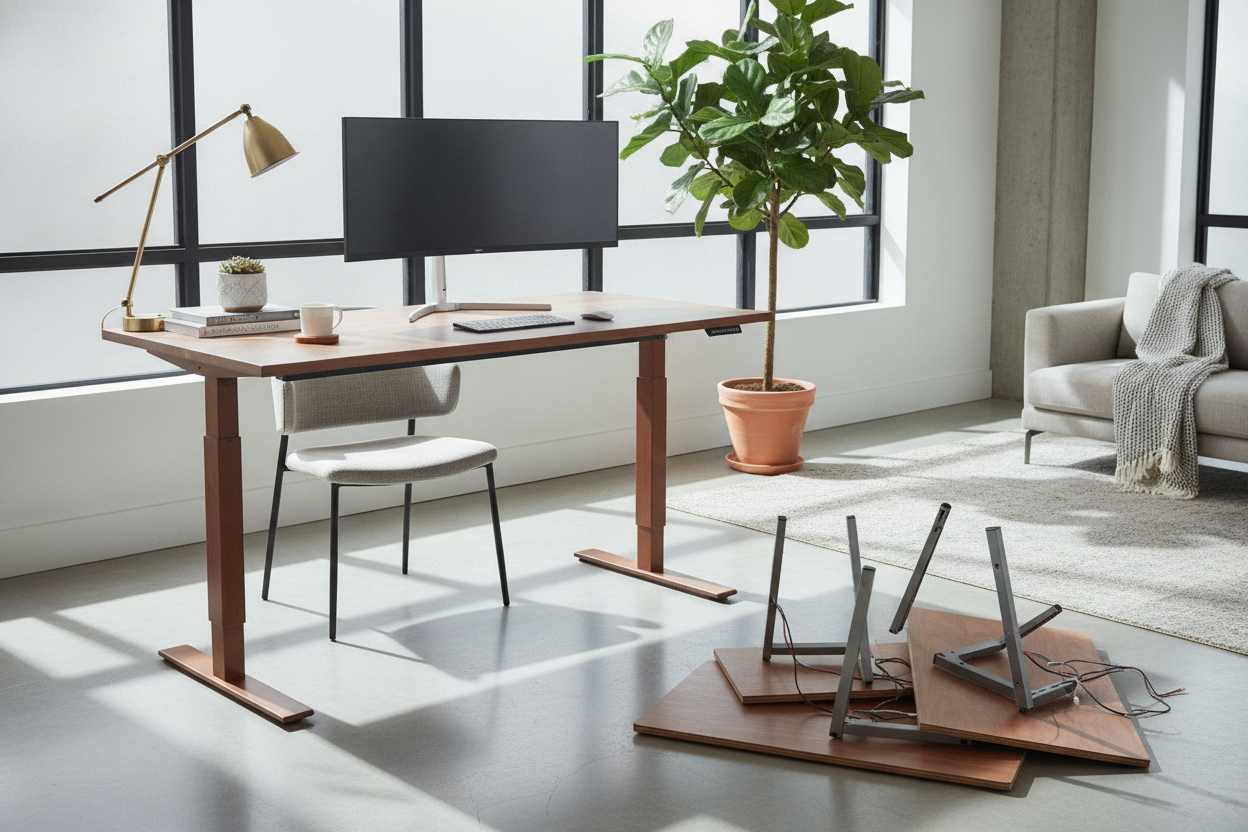
I remember the exact sound my last desk made before it died. It was a sharp, sickening crack as a mounting screw pulled right through the underside of a $200 laminate top. I was leaning a bit too hard during a stressful Zoom call, and suddenly, my dual-monitor setup was tilting at a 15-degree angle like a sinking ship. That was desk number three in four years.
I was stuck in a cycle of 'disposable' ergonomic furniture. I’d buy something with a thin particleboard top and a frame that shook every time I hit the backspace key. After the third collapse, I finally stopped being cheap and invested in a flomotion standing desk. I wanted something made of actual trees, not sawdust and glue, that wouldn't shimmy like a leaf in the wind.
Quick Takeaways
- The stability is unmatched; even at 115cm, there is zero monitor wobble.
- Solid wood tops mean every desk has unique grain patterns and knots.
- The motor is a quiet, low-frequency hum rather than a high-pitched whine.
- Assembly requires two people because the desktop weighs a ton.
The Laminate Graveyard (How I Got Here)
Before I went down the rabbit hole of motorized frames, I stuck to standard writing and computer desk setups that were static and reliable. But as my lower back started protesting my eight-hour sit-a-thons, I migrated to the world of cheap standing desks. It was a mistake.
The first one wobbled so much I got motion sickness just looking at my screen. The second one had a motor that sounded like a blender full of gravel. The third, as I mentioned, literally snapped under the weight of my elbows. I realized I was spending $250 every eighteen months on junk. The math didn't add up anymore. I needed a 1-inch thick slab of real timber and a frame that didn't feel like it was made of recycled soda cans.
Why I Narrowed It Down to a Flomotion Desk
When you start looking for a premium flomotion desk, you realize most 'luxury' brands are just selling the same generic Chinese-made frames with a slightly better marketing budget. Flomotion felt different. They focus heavily on locally sourced, sustainable wood—oak, walnut, ash—not that weird 'wood-effect' plastic that peels at the corners after six months.
I wanted a desk that felt like a piece of furniture, not a piece of office equipment. The appeal of a heavy, solid wood slab is that it ages with you. If I scratch it, I can sand it. If I want a different vibe in five years, I can re-oil it. You can't do that with a laminate top from a big-box retailer.
The Wobble Test: Typing Like an Angry T-Rex
The real test of any standing desk happens at full extension. Most desks are fine when they are low, but once you raise them to standing height, they become top-heavy. I am a 'heavy' typist—I tend to hammer the keys like an angry T-Rex when I'm on a deadline. On my old desks, this caused my monitors to dance. It was distracting and felt cheap.
The Flomotion frame is a beast. It’s heavy-duty steel with a wide footprint that anchors the whole setup. Even when I’m standing and aggressively typing, my coffee stays perfectly still. I’ve even caught myself leaning my full body weight on the front edge while reading a long document, and the motor didn't even groan when I hit the 'down' preset. That rigidity is what you’re actually paying for.
Making a Slab of Wood Look Chic in My Office
One danger of buying a massive solid wood desk is that it can easily look like a lumberjack’s workbench if you don't style it right. It’s a lot of visual weight for one room. I had to be intentional about the layout to make sure it didn't swallow my spare bedroom whole. I found that pairing the natural grain with some softer textures—like a wool desk mat or a few plants—really balanced the industrial feel of the legs.
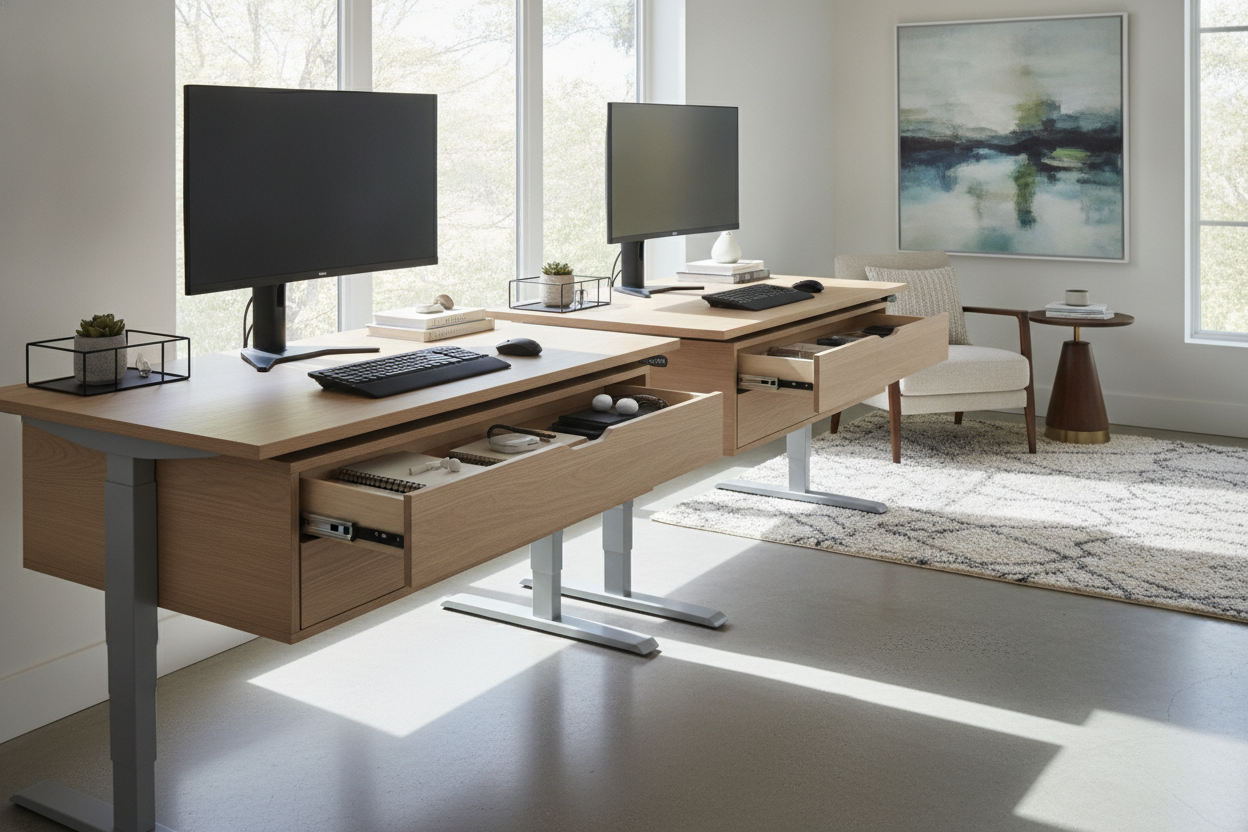
If you're struggling with the 'office' look, I highly recommend looking at designer ideas for standing desk layouts to see how to tuck these larger pieces into a corner without making the room feel cramped. I kept my cable management hyper-organized using the under-desk tray, which is a must-have because nothing ruins a beautiful wood top faster than a 'spaghetti mess' of black power cables hanging off the back.
The Final Verdict: Is the Price Tag Justified?
Look, a Flomotion setup isn't cheap. You’re going to pay significantly more than you would for a basic motorized desk from an assembly-line brand. But after destroying three cheap desks, I’ve learned that 'saving money' on furniture you use for 40 hours a week is a lie. You either pay now, or you pay three times over the next five years.
If you have a massive amount of gear or just want the absolute largest surface possible, you might consider a large 71-inch height adjustable standing desk as an alternative. But for me, the tactile feel of the solid wood and the absolute lack of wobble makes the Flomotion worth every cent. It’s the last desk I’ll ever need to buy, and my monitors finally stopped shaking.
FAQ
Is the desk hard to assemble?
The instructions are clear, but the wood is incredibly heavy. Do not try to flip this desk over by yourself unless you want to end up in physical therapy. Get a friend to help with the heavy lifting.
How loud is the motor?
It’s a very quiet, smooth hum. You could definitely adjust it while on a call without anyone noticing. It’s much quieter than the cheaper dual-motor desks I've owned in the past.
Does the wood require maintenance?
Since it's real wood, it can dry out over time. I plan to hit mine with a light coat of furniture oil once a year just to keep the grain looking deep and to prevent any cracking from the dry office air.

Dejar un comentario
Este sitio está protegido por hCaptcha y se aplican la Política de privacidad de hCaptcha y los Términos del servicio.