










Navigating IKEA Desk Selections Across Canadian Living Spaces
Selecting a workstation for a Canadian home requires balancing room dimensions, daily workflow requirements, and interior aesthetic preferences. Whether arranging a compact home office in an urban condo or outfitting an expansive studio room, choosing an appropriate desk configuration impacts daily productivity, posture, and spatial harmony.
When browsing through the catalog of an ikea canada desk, shoppers typically encounter two primary design paths: modular mix-and-match systems and integrated freestanding units. Modular systems allow you to combine separate tabletops, leg supports, and drawer units to match unique architectural dimensions. Freestanding desks offer all-in-one profiles with pre-configured drawers, cable channels, and fixed frames. Determining which path suits your space begins with evaluating work equipment, daily tasks, and floor clearances.
Dimension Categories: Sizing Your Desk for Function and Flow
Workstations generally fall into distinct size categories designed for specific floor plans and utility demands. Selecting the correct footprint ensures comfortable legroom without crowding walkways or blocking natural light.
- Compact Profiles: Ideal for secondary bedrooms, living room nooks, and urban apartments. These desks offer sufficient depth for a laptop and notepad while maintaining a slender perimeter. For tight floor plans, consulting a dedicated ikea desk guide can help prioritize compact spatial efficiency.
- Standard Mid-Size Workstations: Suited for dedicated home offices and remote professionals using external monitors, keyboards, and task lamps. These dimensions balance generous working depth with manageable length along standard residential walls.
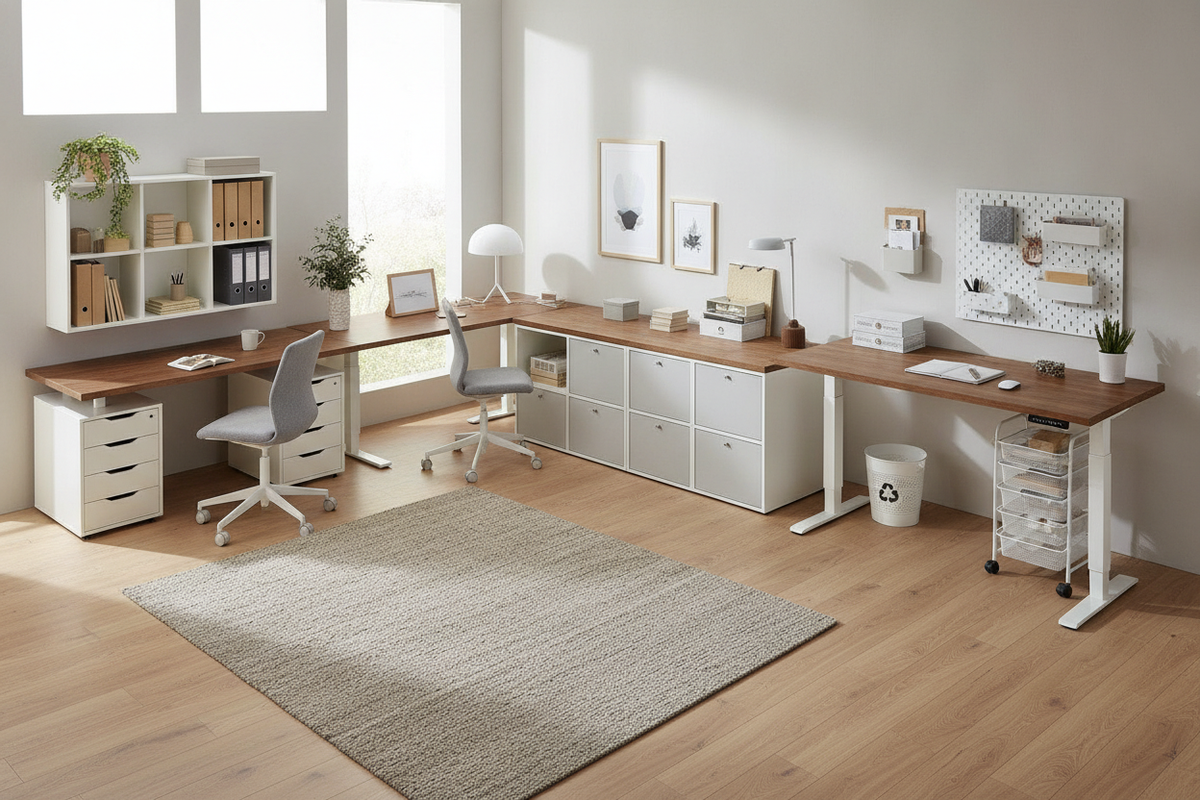
- Extended and Corner Spans: Designed for multi-monitor setups, drafting projects, or shared workstations. Corner configurations utilize underused perimeter angles to expand usable desktop real estate without encroaching on central room flow.
Material Profiles and Construction Considerations
Desktop construction influences longevity, scratch resistance, structural weight, and maintenance. Understanding core materials helps set realistic expectations for daily use.
Many popular desk lines utilize engineered wood tops with lightweight paper honeycomb fills. This construction method keeps furniture lightweight and easy to maneuver through hallways and stairwells, making it practical for rental spaces and seasonal rearrangements. However, concentrated loads from heavy monitor arms or dense equipment should be positioned carefully over support legs or reinforced brackets.
For heavier duty demands, solid veneer surfaces, thick particleboard cores, and high-pressure laminate finishes offer heightened resistance to surface wear, pens, and warm mugs. Pairing these tops with solid steel frames, powder-coated metal legs, or wooden trestles creates a sturdy base that minimizes wobble during intensive typing or drafting.
Modular Storage Integration: Drawers, Units, and Vertical Towers
A functional workstation relies on effective organization to keep tabletop surfaces clear of paperwork, digital peripherals, and daily clutter. Integrating compatible modular storage pieces creates a clean, streamlined environment.
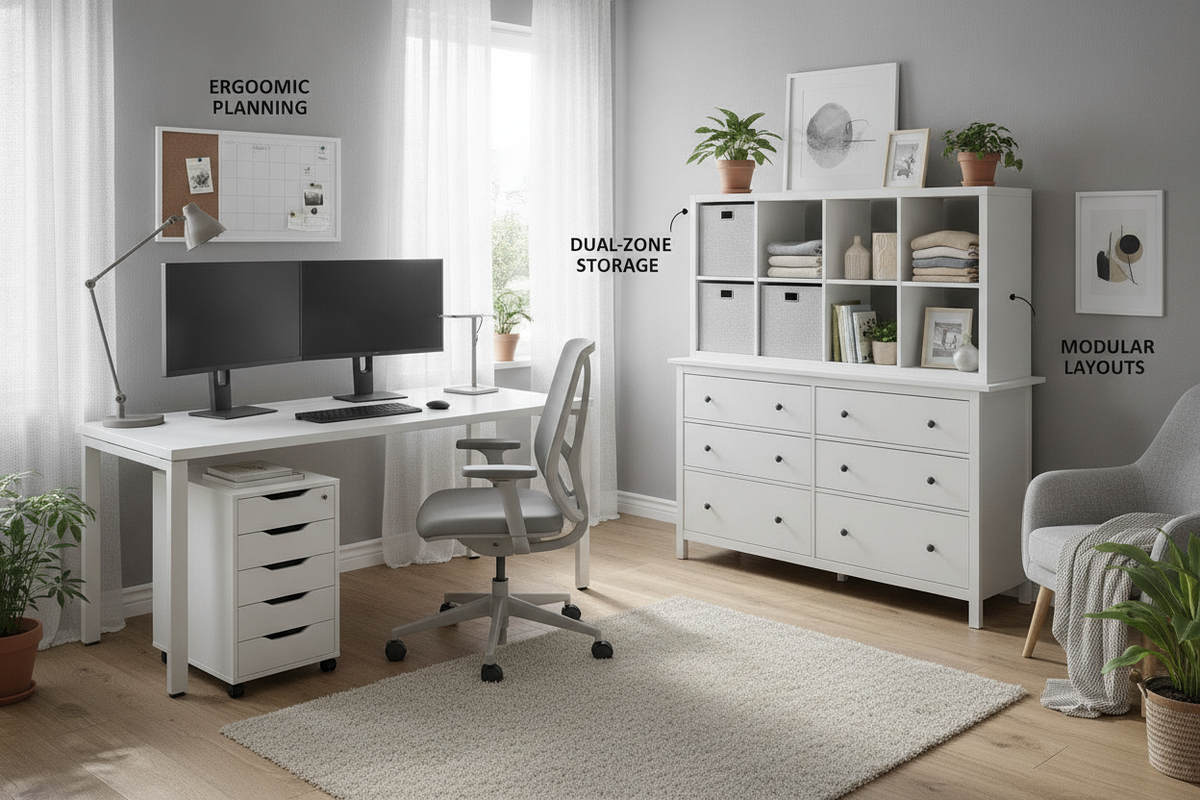
Under-desk drawer pedestals serve a dual role in many configurations, acting as both dedicated storage and a supportive base for tabletop spans. Wide filing drawers accommodate hanging folders, while shallow upper drawers keep stationery, external hard drives, and cables within arm's reach. For those looking to combine multi-tier wall cabinetry with matching desktop spans, exploring an architectural desk ikea guide offers creative insight into seamless perimeter installations.
Vertical additions, such as add-on desktop shelving bridges and wall-mounted pegboard systems, utilize empty wall height above the work surface. Installing under-desk cable baskets and power-strip brackets prevents cord tangles, protecting connectivity hardware while maintaining visual tidiness.
Room Layout Strategies and Workstation Placement
The positioning of a desk dictates natural light management, background aesthetics for virtual meetings, and room circulation.
- Perimeter Wall Alignment: Placing the desk flush against an interior wall maximizes open floor area in the center of the room and simplifies direct wall outlet access for electronics.
- Floating Island Placement: In larger rooms, orienting the desk toward the center creates an open, executive atmosphere while keeping sightlines clear toward entryways or windows.
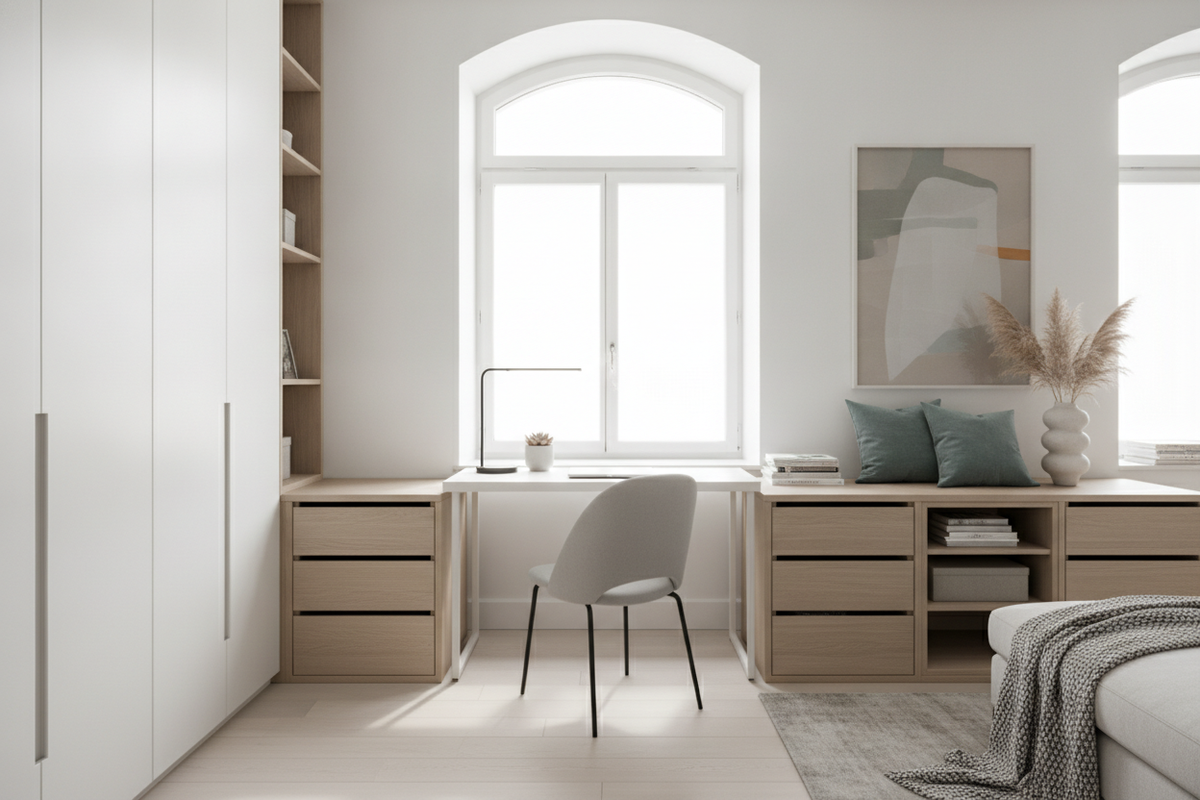
- Concealed Office Nooks: Multi-functional living rooms or guest suites often benefit from concealed workstations, where desks can be enclosed within existing architectural niches or closet spaces. You can consult a specialized desk ikea guide to assess how enclosed cabinetry can conceal office essentials outside working hours.
Assembly, Care, and Long-Term Workspace Maintenance
Assembling flat-pack office furniture smoothly requires methodical preparation. Clear an adequate floor area, lay down protective cardboard or blankets to avoid surface scuffs, and organize fasteners before tightening frame joints. Periodically checking and tightening structural bolts prevents joint loosening over seasons of active use.
Routine maintenance preserves surface finishes. Wipe laminate and veneer tops with a damp, soft cloth followed immediately by a dry towel to prevent moisture accumulation around edge banding. Using desk pads beneath keyboards and mice shields high-contact areas from friction, ensuring your workspace remains practical, durable, and visually appealing over years of productive use.

Dejar un comentario
Este sitio está protegido por hCaptcha y se aplican la Política de privacidad de hCaptcha y los Términos del servicio.