










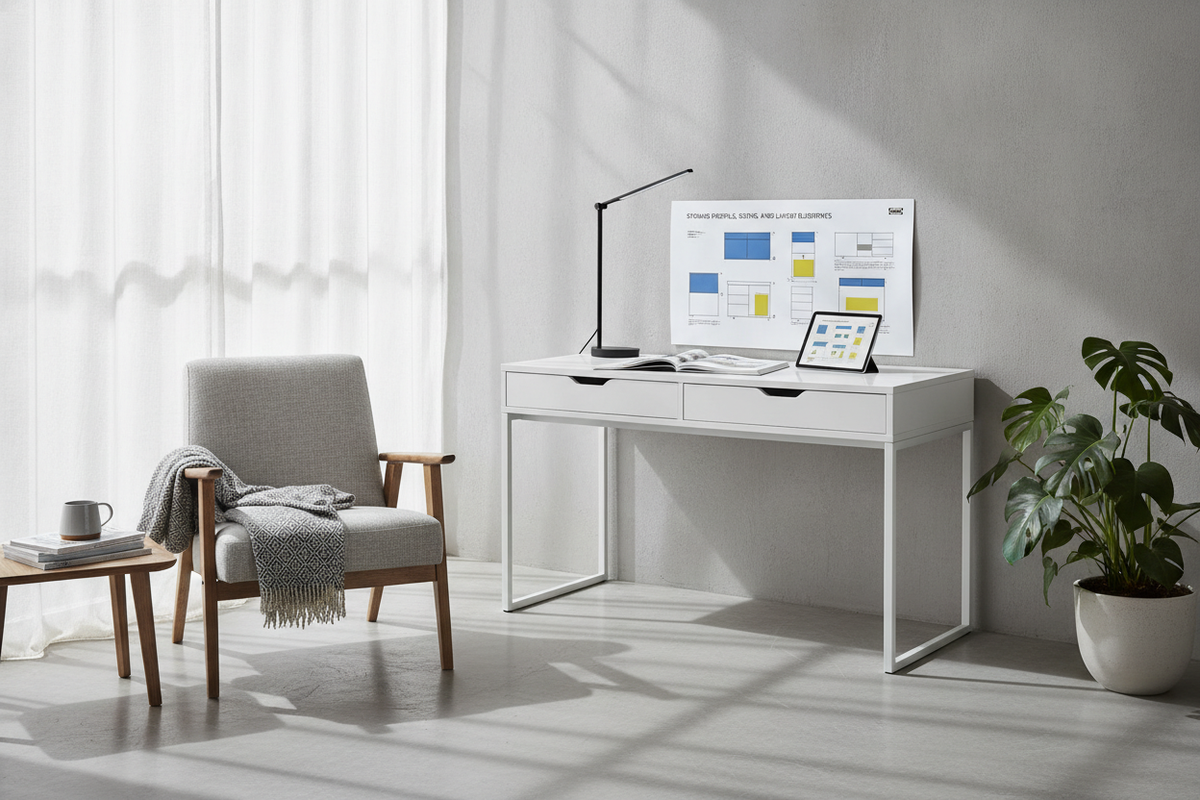
Choosing the right desk layout requires balancing surface space, organized storage, and ergonomic seated comfort. An ikea two drawer desk configuration typically appears in two distinct design formats: a streamlined writing table with horizontal drawers mounted directly beneath the main desktop, or a broader table supported by pedestal units positioned on both sides. Understanding how these variations function within different room footprints helps you create an efficient home office or study nook that prevents clutter while keeping essential supplies within reach.
Understanding Two-Drawer Desk Architectures
When shopping for an ikea desk with two drawers, the first consideration is the physical placement of the storage compartments relative to your seating posture. The structural configuration directly influences how much legroom is available and how you interact with your work tools throughout the day.
- Horizontal Side-by-Side Under-Top Drawers: In this design, two shallow drawers sit directly beneath the tabletop across the front apron. This layout preserves open floor space underneath the entire desk span, giving you complete freedom for chair movement, footrests, and wide seated postures. Dedicated options like a double drawer desk product illustrate how horizontal storage maintains a light visual footprint while organizing notebooks, writing implements, and slim tech accessories.
- Dual-Sided Pedestal Configurations: Often referred to as an ikea desk with drawers on both sides, this layout features vertical storage units flanking a central knee opening. While it creates a wider profile and requires a larger room footprint, it provides greater vertical compartment depth for bulky files and office gear.
- Asymmetric Single-Pedestal Builds: Some workspaces pair a two-drawer stack on one side with slender support legs on the opposite end, creating a compact work zone suitable for corner placement.
Dimensional Footprints and Ergonomic Knee Clearances
Selecting an ikea 2 drawer desk requires careful evaluation of both vertical and horizontal clearances. A common ergonomic pitfall with integrated under-desk drawers is reduced clearance between the seat cushion, the user's thighs, and the bottom of the drawer casing.
To ensure comfortable long-term seating, account for the height of your office chair's armrests and the thickness of the desk frame. When an ikea desk 2 drawer profile features deep under-top compartments, armrests may not tuck smoothly beneath the table edge when the workstation is not in use. Verifying that the lower edge of the drawer casing sits comfortably above your seated knee height prevents awkward posture adjustments.
For horizontal drawer desks, tabletop width plays a major role in seating comfort. A wider surface ensures that the central dividing rail between the two drawers does not restrict your natural leg positioning. If you prefer crossing your legs or using an ergonomic footrest, an open-span desk with shallow side-by-side drawers offers the least restrictive lower clearance.
Pairing Two-Drawer Layouts with Dedicated Storage Accessories
While an ikea desk two drawers layout excels at managing everyday stationery and charging cords, heavy paperwork and bulky hardware can quickly overwhelm compact compartments. Supplementing a minimalist desk with auxiliary organizers preserves a clean, distraction-free tabletop.
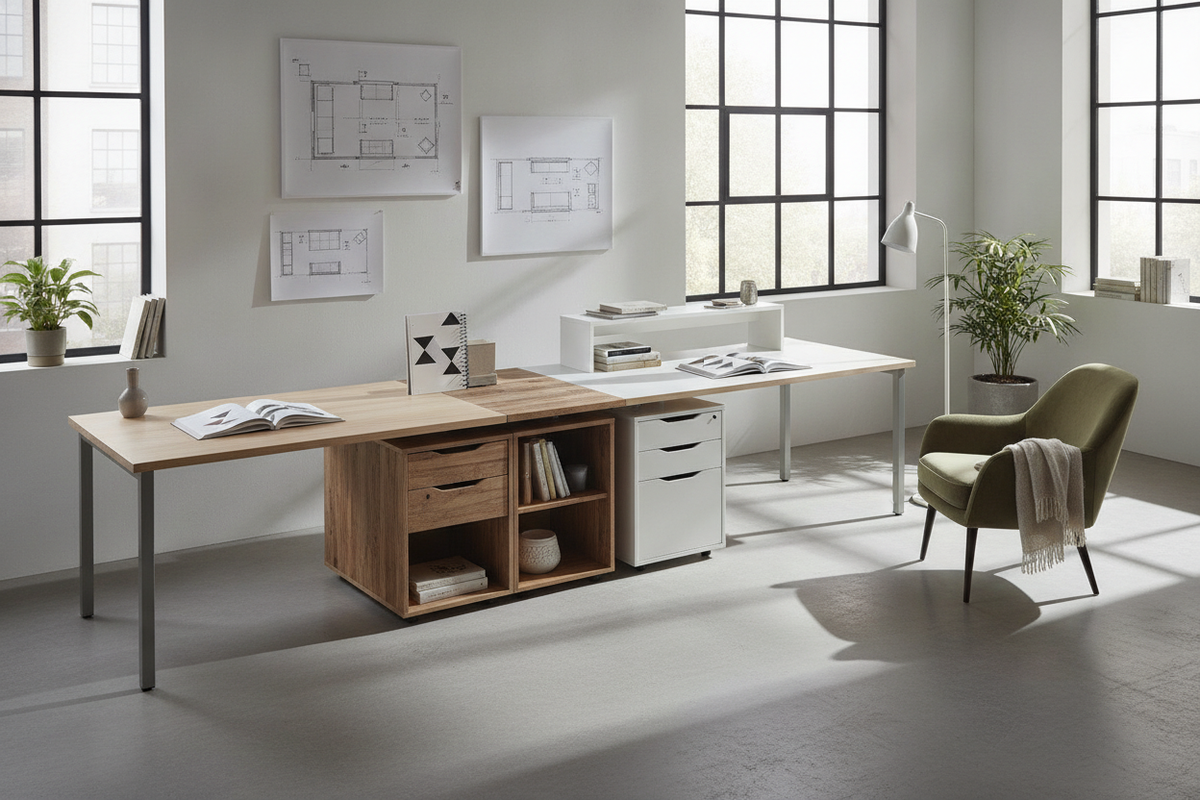
Pairing your desk with freestanding units, such as a mobile file chest or a secondary storage unit featuring double drawers product, allows you to offload archival binders, printers, and heavy paper stacks. Rolling cabinets can be stationed alongside the desk or tucked into an adjacent corner to keep high-capacity storage separate from your primary writing surface.
Maintaining material and color continuity between your main desk and secondary cabinets helps unify the room. Matching clean laminate tones or natural wood grains creates a cohesive aesthetic that makes smaller home offices feel intentional and uncluttered.
Room Fit and Workstation Layout Blueprints
The overall floor plan determines whether an ikea double drawer desk should be placed against a wall, nested into an alcove, or positioned as a freestanding peninsula.
- Linear Wall Placement: Positioning a slim two-drawer desk flush against a flat wall is ideal for guest bedrooms and multi-purpose living rooms. It minimizes intrusion into active traffic lanes while allowing wall-mounted shelving or task lighting directly above the workspace.
- Window Alcove Setup: Placing an ikea desk with 2 drawers beneath a window takes advantage of natural light. Because horizontal drawers do not block lower wall vents or baseboard heaters as heavily as solid side pedestals, air circulates freely around the work area.
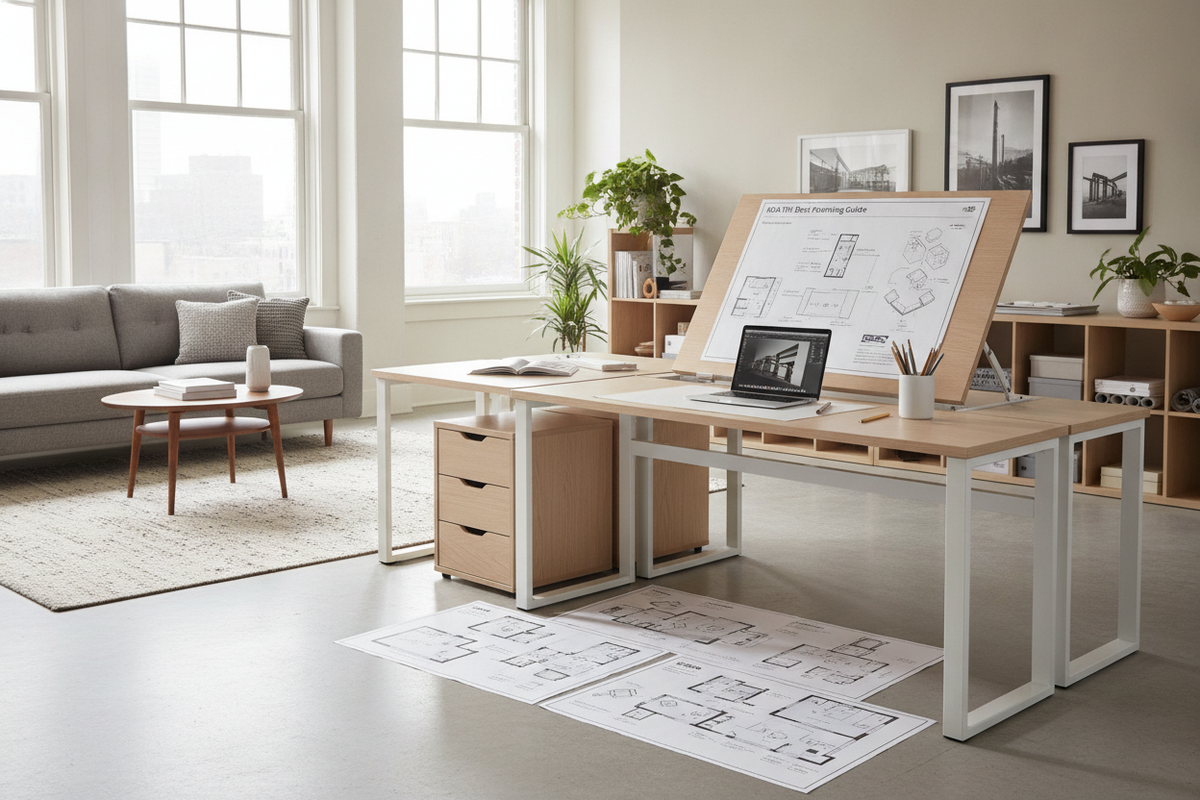
- Tandem Workstations: In shared home offices, placing two desks side-by-side or back-to-back establishes distinct zones for each user. For expansive setups, consulting an ikea double desk guide can provide layout inspiration for managing shared perimeter power and dual seating arrangements.
Cable Routing, Organization, and Assembly Best Practices
To maximize the utility of your desk, implement smart interior organization and wire management during the initial assembly phase.
Because horizontal drawers occupy the space directly beneath the desktop, power cords from monitors, task lamps, and laptop chargers should be routed cleanly behind the drawer backboards. Using adhesive cable clips or an under-desk cable tray prevents loose cords from tangling in the drawer glides when opening and closing the compartments.
Inside the drawers, modular drop-in trays help categorize small items like pens, flash drives, and charging cables. Distributing weight evenly between both drawer boxes maintains smooth glide alignment over time and keeps your daily work tools neatly categorized without cluttering the main desktop surface.

Dejar un comentario
Este sitio está protegido por hCaptcha y se aplican la Política de privacidad de hCaptcha y los Términos del servicio.