










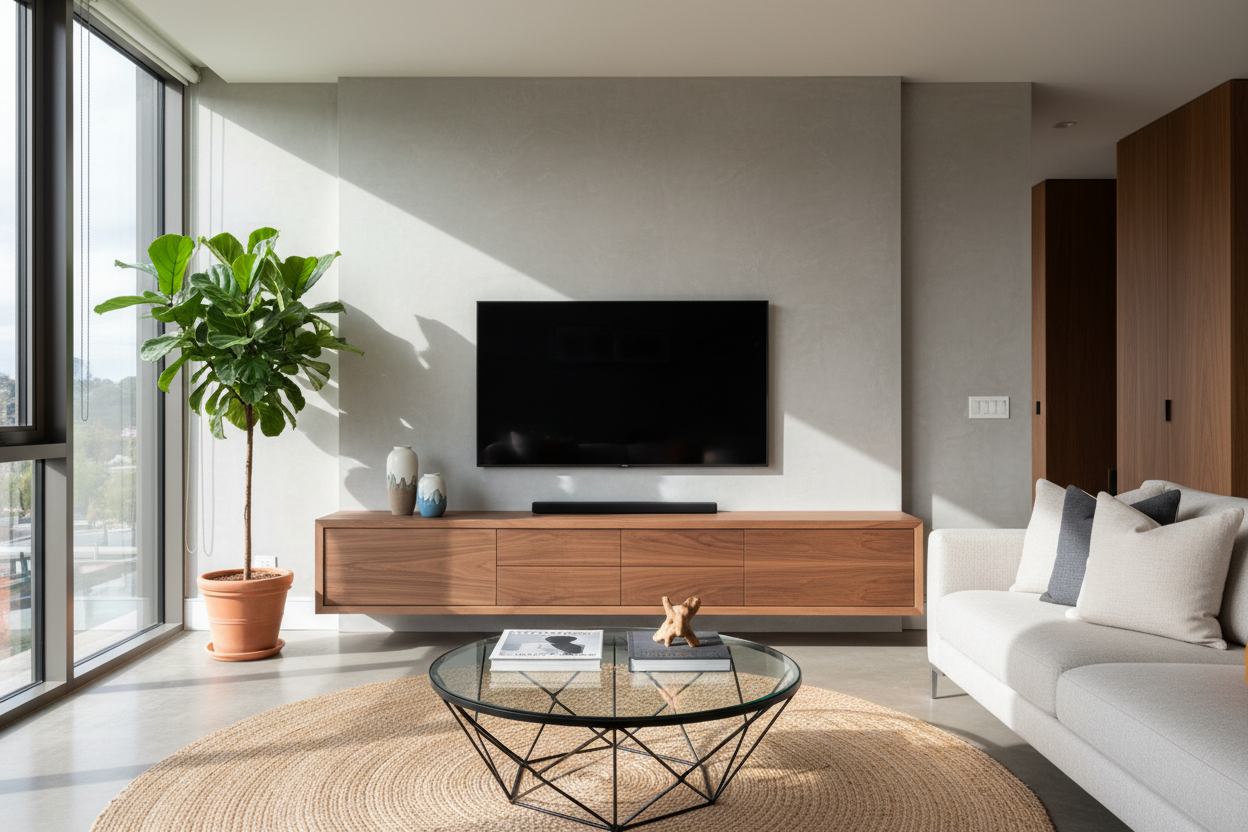
We have all seen it: a beautifully decorated living room dominated by a massive, floating black rectangle that sucks the life out of the space. Grounding that technology is one of the most common challenges I face in residential design. If you want to bridge the gap between cold electronics and a warm, inviting home, a walnut tv stand is arguably your strongest asset.
Walnut brings an inherent richness and organic texture that softens the harsh lines of modern televisions. But not all consoles are created equal. By the end of this guide, you will know exactly how to choose the right proportions, spot quality construction, and avoid the sizing mistakes that plague most living rooms.
Quick Decision Guide
- Scale matters most: Your walnut media console should be at least 6 to 8 inches wider than your television on both sides to avoid a top-heavy, precarious look.
- Know your materials: A solid walnut tv console is incredibly durable, but high-quality wood veneers over MDF often provide better stability against warping in climate-controlled homes.
- Tone dictates vibe: A dark walnut media console anchors large, bright rooms, while a light walnut tv stand keeps smaller spaces feeling airy.
- Wire management is non-negotiable: Always check the back panel of a walnut entertainment center for adequately sized, routed cutouts.
Material Realities: What Are You Actually Buying?
When clients ask for a solid wood walnut tv stand, they are often surprised by the price tag. Genuine solid walnut is a premium hardwood. It resists dents, ages beautifully, and carries significant visual weight. If you are investing in a forever piece, it is hard to beat.
However, do not dismiss a well-crafted walnut wood tv console made from wood veneer. In North American homes with central heating and air conditioning, indoor humidity fluctuates wildly. Solid wood expands and contracts, which can lead to cracking. A walnut tv cabinet built with a thick slice of real walnut over an engineered core is often more structurally sound, budget-friendly, and visually indistinguishable from solid wood.
Sizing Your Walnut TV Console Like a Professional
The biggest mistake I see in living rooms is a walnut tv bench that is exactly the same width as the television. It creates a visually anxious focal point. Proportion is everything when integrating technology into your living room layout.
The Golden Rules of Width
If you have a standard 55-inch TV, look for a walnut tv stand 60 inch model at minimum. Stepping up to a 65-inch screen? You need a walnut tv stand 70 inch or even a walnut tv stand 75 inch unit to maintain proper negative space. For expansive walls, a walnut media center that stretches 80 inches or more acts as an architectural feature, not just a piece of furniture.
Height and Viewing Angles
A tall walnut tv stand works well in bedrooms where you watch from a high mattress. For a living room with standard sofa seating, you want a modern tv stand walnut that sits lower to the ground—usually between 18 and 24 inches high—to keep the center of the screen at eye level and reduce neck strain.
Styling Your Entertainment Unit Walnut
Walnut is incredibly versatile. A mid century modern walnut tv stand with tapered legs and slatted doors brings immediate retro character to a stark apartment. If your home leans contemporary, a modern walnut media console with a waterfall edge and push-to-open flat-panel doors offers a sleek, minimalist silhouette.
Do not be afraid to mix wood tones. A walnut brown tv stand pairs beautifully with white oak flooring. The rich, chocolate undertones of a dark walnut tv console create a striking contrast against lighter rugs, neutral upholstery, and matte black hardware.
Designer's Honest Take: The Reality of Walnut
Over my 15 years designing living spaces, I have specified dozens of walnut tv stands. I love them, but I need to share an unpolished truth: walnut shows dust. Fast.
A few years ago, I installed a gorgeous, solid walnut media console in a client's sun-drenched suburban family room. The rich grain looked incredible in the natural light. But within a week, the client called to say the surface looked like a dust magnet. The darker the walnut color tv stand, the more frequently you will be wiping it down. I also learned the hard way that slatted walnut media stand doors—while excellent for remote control signals and ventilation—are a nightmare to dust individually. If you hate chores, opt for a walnut tv unit contemporary design with flat, solid doors and a slightly lighter matte finish.
Frequently Asked Questions
Is a walnut tv stand good for small spaces?
Yes, but choose a small walnut tv stand with legs rather than a solid plinth base. Seeing the floor underneath the walnut media unit creates an illusion of more square footage and keeps the room from feeling heavy.
How do I clean and maintain my walnut wood media console?
Avoid silicone-based sprays, which leave a cloudy residue over time. Use a slightly damp microfiber cloth for weekly dusting. If you have a solid walnut tv stand with an oil finish, reapply a high-quality furniture oil once a year to keep the wood from drying out.
Can I put a heavy TV on a walnut tv table?
Absolutely. Both solid wood and high-quality veneer walnut tv stands can support significant weight. Just ensure the tv stand walnut wood has a center support leg if it spans wider than 60 inches to prevent the top from bowing over time.


Dejar un comentario
Este sitio está protegido por hCaptcha y se aplican la Política de privacidad de hCaptcha y los Términos del servicio.