










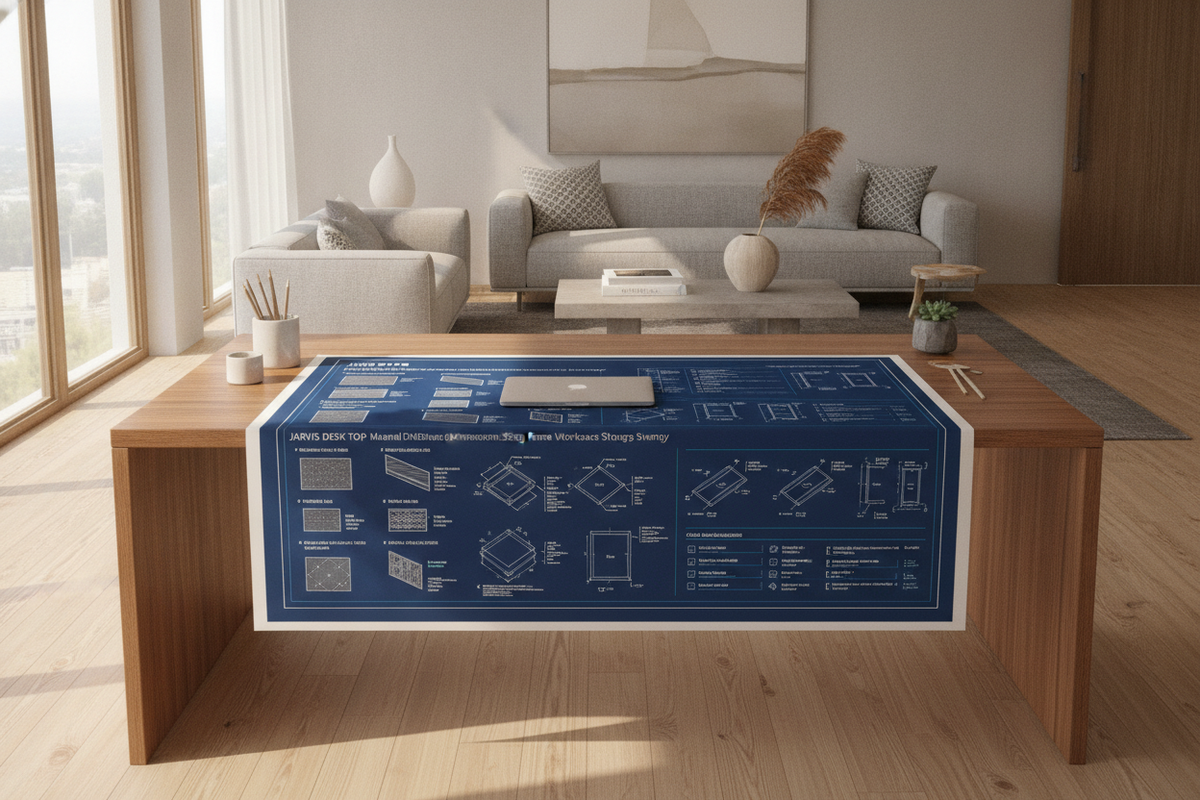
Upgrading a dedicated workstation often begins by evaluating the primary work surface. Sourcing a standalone surface like a jarvis desk top allows home office planners and remote professionals to customize their physical interface independently of their motorized or fixed desk frame. Whether replacing an aged worktop or building a custom sit-stand system from the ground up, selecting a standalone surface offers control over material selection, dimensional scale, and aesthetic integration.
The Standalone Surface Paradigm: Sourcing a Fully Desktop Only
Choosing a standalone desktop rather than an all-in-one desk package provides substantial architectural flexibility. Workstation builders often search for a fully desktop only option to match specific decor themes or adapt to bespoke room constraints.
Why Workstation Builders Select Standalone Tops
Separating the surface from the understructure gives designers freedom to pair dense, high-grade tops with existing motorized dual-motor frames or heavy-duty static legs. It also simplifies modular updates over time; if room layouts evolve, swapping only the top preserves the underlying mechanical investment.
Assessing Structural Density and Frame Support
Standalone surfaces must offer sufficient core density to resist center sagging across wide frame spans. When heavy display mounts and multiple computing devices sit along the perimeter, high-density wood composites, solid hardwoods, or layered bamboo structures help distribute weight evenly across the frame top-rails.
Material Architecture: Dark Bamboo, Hardwoods, and Composite Durability
The tactical feel and long-term durability of an office surface depend heavily on its internal material construction and exterior protective coatings.
Laminated Bamboo Grain and Multi-Ply Core Dynamics
Bamboo tops have earned a widespread reputation for balanced tensile strength and subtle natural graining. Often engineered with multi-ply layered cores, high-quality bamboo surfaces resist seasonal warping caused by ambient humidity shifts, making them a dependable choice for climate-controlled indoor offices. For those curating a refined work environment, consulting a comprehensive desk guide can provide inspiration for blending rich wood textures with elevated decor.
Edge Contours: Beveled Versus Squared Comfort Profiles
The front perimeter profile directly influences forearm ergonomics during sustained keyboard operation. A softly beveled or contoured front edge eliminates sharp pressure points against the wrists, whereas a crisp squared edge offers a structured, minimalist appearance suited for clean architectural aesthetics.
Surface Finishes and Everyday Scratch Resistance
Protective polyurethane or UV-cured topcoats protect darker stains from surface scuffs, coffee rings, and keyboard friction. Routine maintenance generally involves gentle wipe-downs with damp microfiber cloths, avoiding harsh chemical solvents that might strip protective seals.
Dimensional Tiers and Ergonomic Reach: Sizing the 60" x 27" Footprint
Selecting surface dimensions requires balancing usable physical real estate against available room pathways and natural human reach zones.
The Balanced Mid-Size Footprint: Proportions of 60x27 Surfaces
A 60-inch width paired with a 27-inch depth is widely considered a balanced mid-size surface. It provides ample room for side-by-side monitors and compact studio monitors while preserving an uncluttered central writing area. Planners seeking inspiration on balancing desk dimensions within tight floor plans can explore a historical desk guide to see how functional zones evolved over time.
Primary, Secondary, and Tertiary Ergonomic Reach Zones
Efficient workstation layout relies on organized zoning:
- Primary Zone: The immediate semi-circle in front of the user, reserved for keyboards, mice, and active notepads without extending the elbows.
- Secondary Zone: The area within easy arm reach, accommodating secondary input devices, reference books, or beverages.
- Tertiary Zone: The rear and outer perimeter, ideal for monitor arms, stationary desk lamps, and auxiliary organizers.
Room Clearance and Kinetic Travel Pathways
Because sit-stand desks move vertically, users must verify that the desktop edge maintains generous clearance from adjacent walls, window ledges, and stationary bookshelves to prevent binding or surface abrasions during movement.
Mechanical Interface: Pre-Drilled Pilot Holes, Threaded Inserts, and Custom Mounting
Attaching a standalone top to a dynamic frame demands attention to fastener hardware and underlying frame crossbar positions.
Aligning Frame Crossbars with Under-Desktop Anchors
Many specialized standalone tops arrive with pre-drilled pilot holes or factory-installed threaded brass inserts designed for specific frame brackets. When pairing with third-party frames, measuring the crossbar footprint ensures that pre-drilled positions align with the frame mounting points without interference.
Threaded Inserts Versus Direct Wood Screws for Reassembly
Threaded machine screw inserts permit repeated assembly and disassembly without stripping the core material, an advantage for frequent movers. If using self-tapping wood screws on non-pre-drilled surfaces, drilling accurate pilot holes beforehand prevents top splitting and ensures a firm mechanical grip.
Load Distribution and Weight Balance Considerations
Centering the desktop evenly over the frame lifting columns maintains stability. Uneven front-to-back overhang can create balance shifts that place unnecessary strain on lifting mechanisms during elevation adjustments.
Clamping Dynamics, Cable Channels, and Under-Desk Accessory Integration
Modern desk configurations incorporate numerous undermounted peripherals and heavy clamp-on accessories that interact directly with the surface structure.
Monitor Arm Clamp Pressure and Surface Integrity
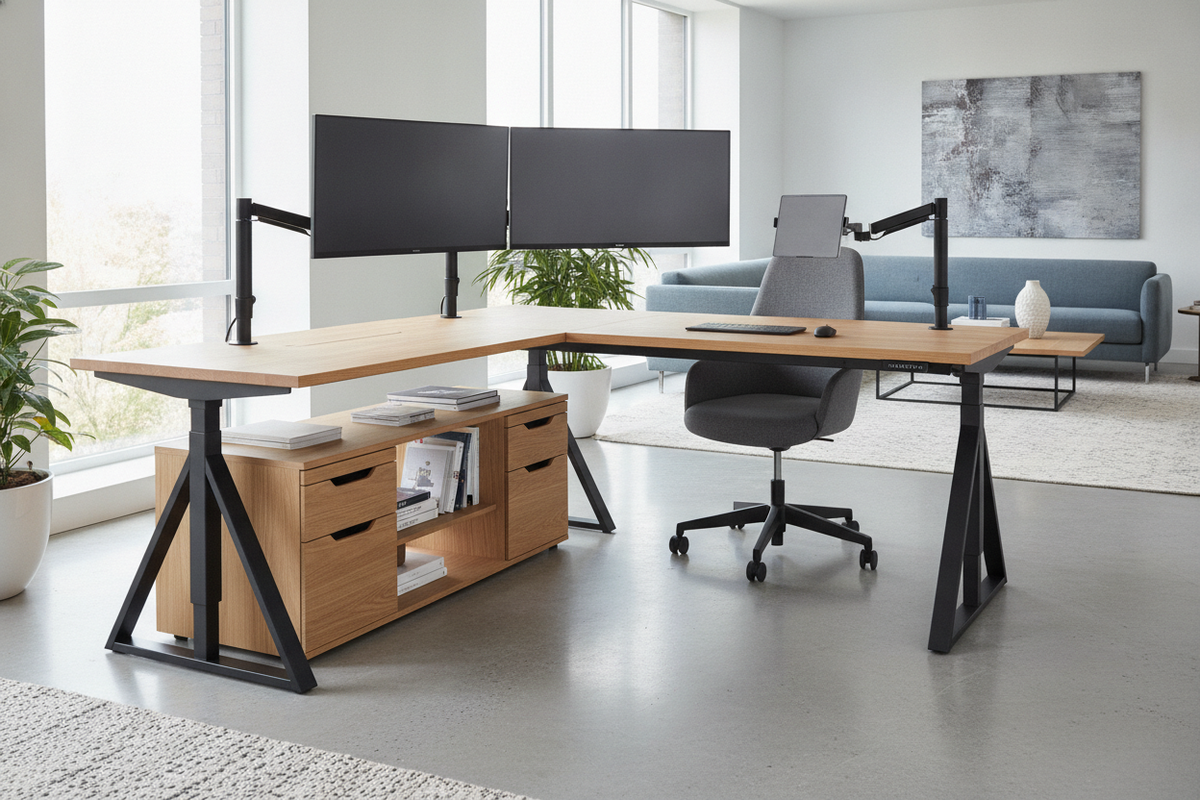
Heavy multi-display monitor arms focus significant downward and rotational torque onto a narrow surface section. Solid hardwood or thick multi-ply bamboo tops withstand clamp pressure well, though using wide reinforcement plates under the surface helps distribute clamping stress over a broader surface area.
Grommet Hole Sizing for Clean Wire Routing
Top surfaces with built-in grommet cutouts allow display cables and power cords to drop vertically through the surface rather than spilling over the rear edge, preserving a tidy presentation against walls.
Undermount Power Strips and Cable Management Trays
Securing wire trays, power strips, and power bricks directly to the underside of the desktop ensures that all cords travel together as the desk ascends or descends. For specialized multi-functional workstations, such as a specialized desktop product, integrated compartments offer a practical blueprint for concealing accessories beneath clean lines.
Auxiliary Storage Synergy: Coordinating Mobile Pedestals and Lateral Credenzas
A minimalist sit-stand surface functions best when paired with dedicated auxiliary storage that does not overload the moving frame.
Decoupling Storage from Dynamic Lifting Columns
Mounting heavy storage cabinets directly to height-adjustable frames adds dead weight that can stress lifting motors. Decoupling storage into standalone or mobile units keeps the primary work surface light and nimble while maximizing under-desk knee clearance.
Mobile File Carts and Under-Desk Caddy Sizing
Low-profile rolling file pedestals fit neatly beneath the desktop when parked at seated height, rolling out smoothly to serve as auxiliary side tables during standing work sessions.
Perimeter Bookshelves and Wall-Mounted Organization
Surrounding the core desk with modular bookcases, credenzas, and wall shelving creates an organized workspace architecture. By keeping archival paperwork, reference manuals, and surplus gear in perimeter storage, your primary desktop remains an open, focused workspace built for productive daily output.


Dejar un comentario
Este sitio está protegido por hCaptcha y se aplican la Política de privacidad de hCaptcha y los Términos del servicio.