










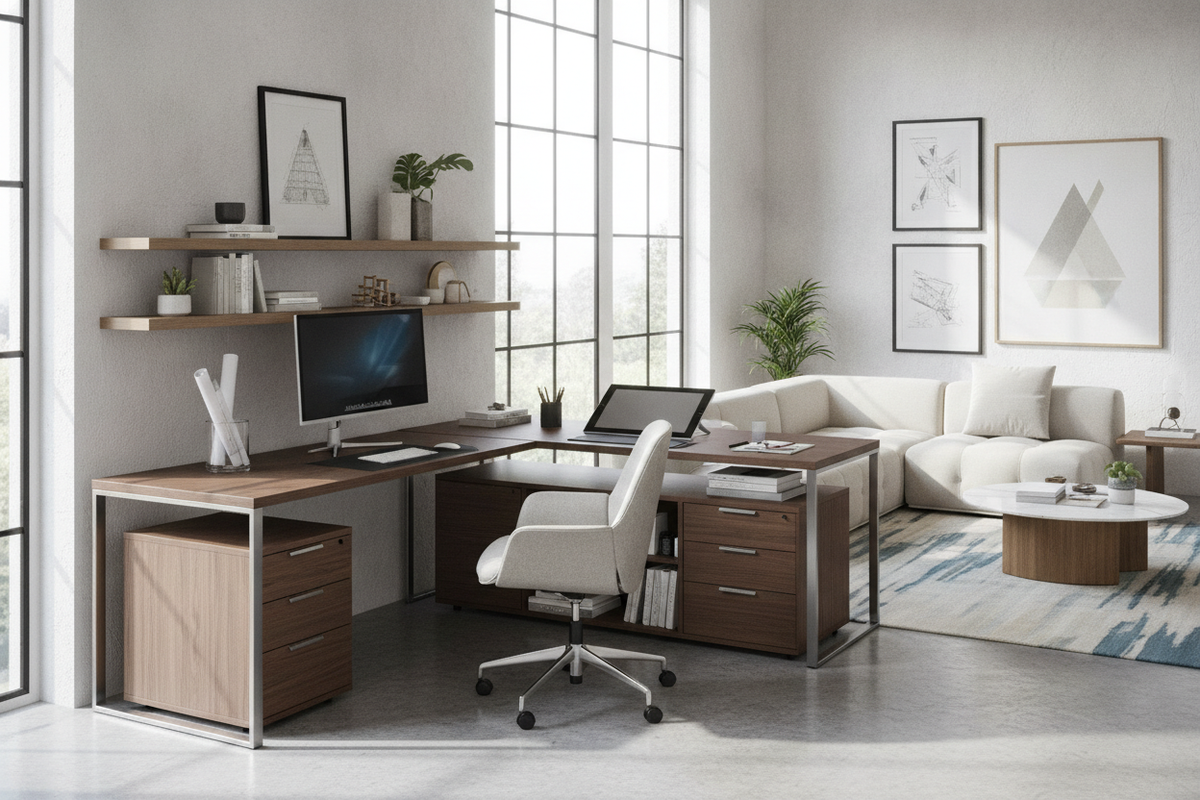
A well-planned workstation serves as the foundation for daily productivity, focus, and organization. Among various office furniture configurations, the l shape desk design stands out for its structural versatility and efficient use of room geometry. By joining two working planes at a right angle, an L-shaped arrangement establishes dedicated task zones while maintaining everything within comfortable arm reach.
Foundations of L-Shape Desk Design: Form, Wings, and Spatial Dynamics
At its core, an l desk design consists of two distinct segments: a primary desktop surface and a secondary return. The primary surface typically accommodates central tasks such as computer monitors, laptop stands, and primary input peripherals, while the return provides supplementary space for writing, paperwork, secondary displays, or office machinery.
The geometric advantage of this layout lies in its rotational efficiency. Rather than moving back and forth along an extended linear table, you can pivot in a swivel chair between tasks. This setup reduces physical reach and keeps clutter divided logically between active and passive zones.
Wing Proportions and Symmetry: Selecting the Right Structural Profile
When selecting an l shape desk design, the balance between the two wings dictates both workflow and room circulation. Desks generally fall into two broad structural categories:
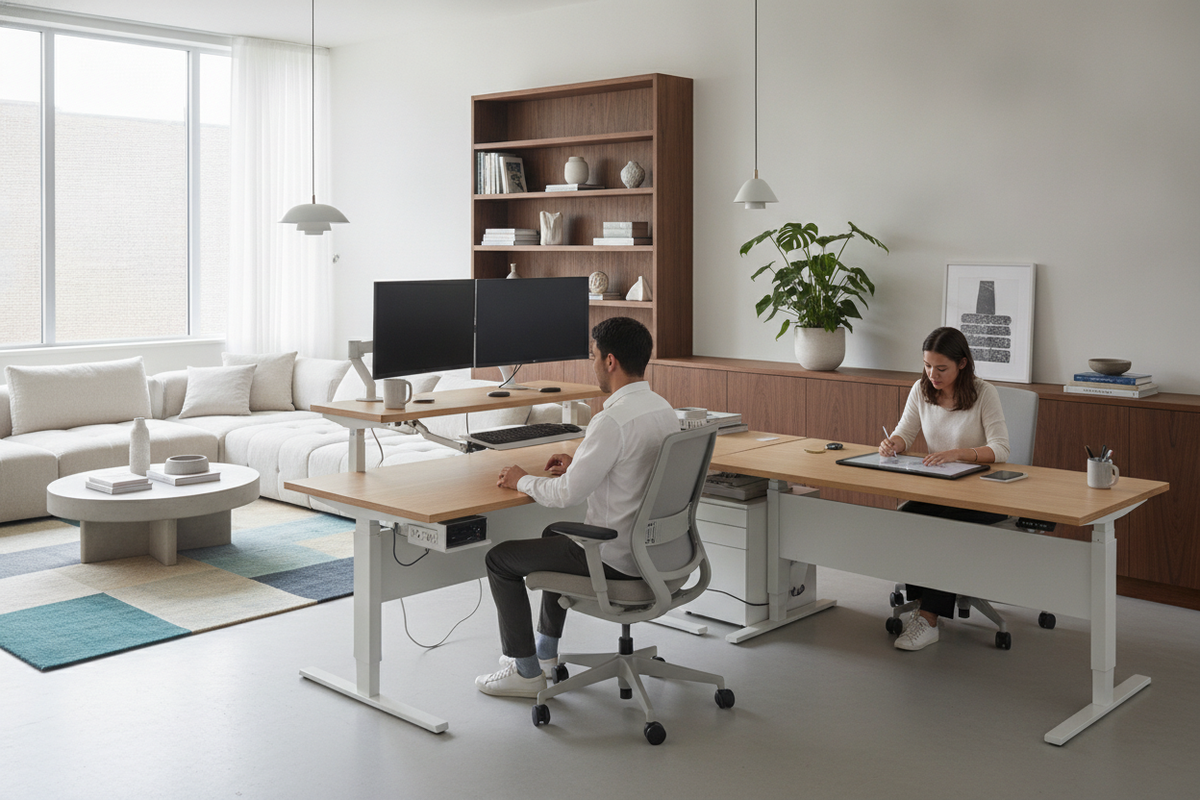
- Symmetrical Configurations: Both wings share identical lengths and depths. This layout creates a balanced, uniform look suitable for square rooms or dual-monitor setups where both work surfaces require equal visual importance.
- Asymmetrical Main-and-Return Formats: One primary table section is paired with a narrower, shorter return. This format is ideal for rectangular rooms or spaces where the secondary wing serves mainly for accessory storage or notebook writing.
For more insights on evaluating desktop dimensions and avoiding spatial mistakes, review our home computer desk design guide.
Room Placement Architectures: Corner Hugging vs. Peninsula and Floating Layouts
An l desk design provides flexibility across different room layouts, allowing you to tailor the positioning to your room's natural traffic patterns:
- Corner Placement: Aligning both desk wings against perpendicular walls maximizes usable floor area. This setup is ideal for compact offices or multi-use guest bedrooms, leaving the central room area open.
- Peninsula Arrangement: One wing sits flush against a wall while the other extends outward into the room. This serves as an organic room divider in open-concept living spaces, cleanly separating the work area from relaxation zones.
- Floating Executive Position: Positioning the desk away from walls with the user facing the room entrance creates a commanding, open feel. It allows for visitor seating on the opposite side, making it well-suited for larger private offices.
Integrated Storage Architectures: Drawers, Hutches, and Open Shelving
Storage integration is a key consideration in any l shape desk design. Because the desk occupies two spatial planes, it offers multiple options for built-in organization:
- Under-Desk Pedestals: Drawer units placed beneath the return or main surface provide filing space and conceal smaller stationery items without compromising legroom at the central corner pivot.
- Vertical Overhead Hutches: Stacking vertical shelving on top of the return wing utilizes wall height for books, reference binders, and decorative items.
- Open Utility Shelving: Open lower shelves accommodate computer towers, baskets, or external drives while preserving a lighter, airy aesthetic.
To explore how storage units interact with surface area, consult our integrated desk storage and shelf guide.
Material Palettes and Aesthetic Styling: Balancing Durability with Interior Harmony
The materials chosen for an L-shaped desk affect both durability and visual weight within a room. Common design approaches include:
- Engineered Wood with Melamine or Laminate: Delivers high resistance to scratches, heat, and moisture while offering versatile wood-grain and solid color finishes that blend seamlessly into contemporary interiors.
- Solid Wood and Natural Veneers: Provides organic grain warmth and a classic, durable feel suitable for traditional, transitional, or executive office settings.
- Metal Sub-Frames: Powder-coated steel frames provide structural rigidity with minimal bulk, making them an excellent choice for modern industrial or minimalist aesthetics.
If you appreciate unique architectural silhouettes, you might also be inspired by a distinctive modern desk design that incorporates clean lines and functional geometry.
Assembly, Cable Routing, and Ergonomic Workflow Planning
A successful setup requires careful attention to cable organization, leg clearance, and functional zoning:
- Corner Joint Leg Clearance: Look for frames engineered without obstructive central support legs inside the corner arc, ensuring smooth chair pivoting.
- Wire Management Pathways: Routing cables along the inner structural rails or through grommets keeps power cords organized and out of foot-traffic areas.
- Workflow Zoning: Designate one wing purely for digital peripherals and the adjoining wing for analog reading, planning, or physical documentation.
For more recommendations on optimizing drawer setups and table ergonomics, check out our comprehensive desk and drawer configuration guide.

Dejar un comentario
Este sitio está protegido por hCaptcha y se aplican la Política de privacidad de hCaptcha y los Términos del servicio.