










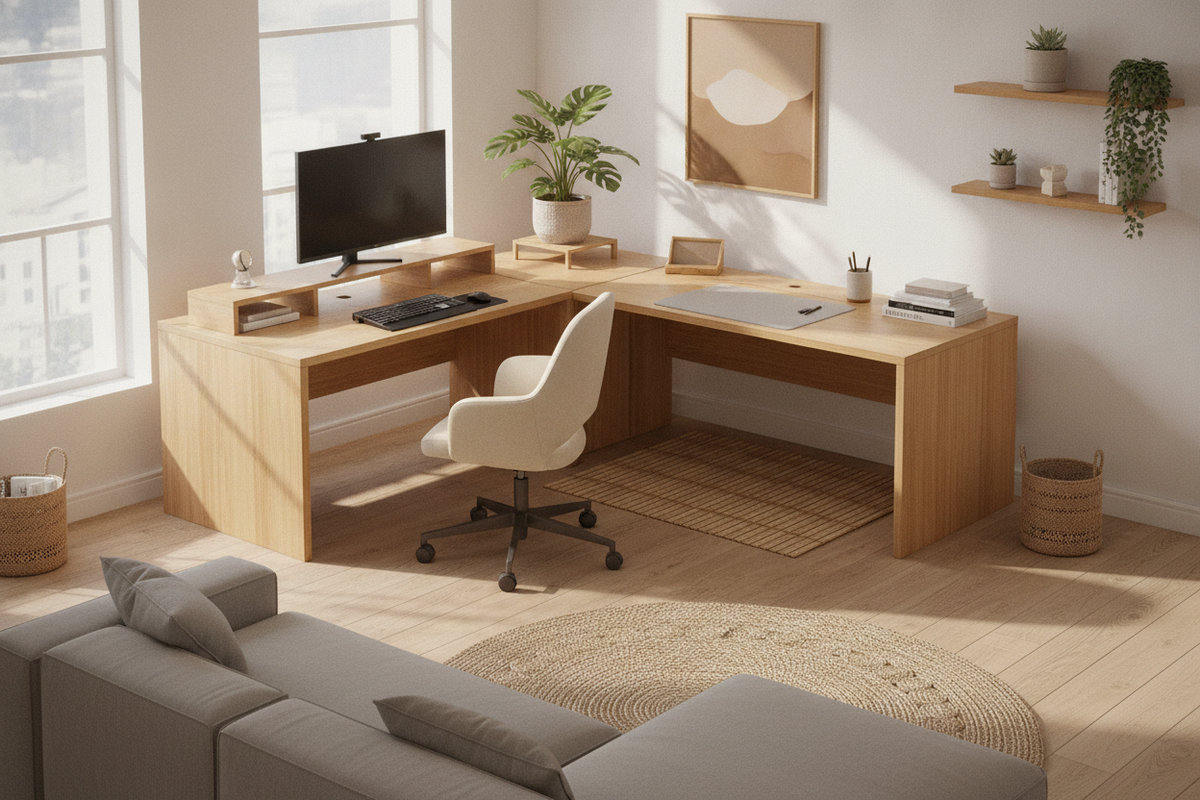
Introduction: The Appeal of an L-Shaped Bamboo Desk
Modern workspaces demand both visual calm and physical efficiency. An l shaped bamboo desk combines the functional geometry of a corner workstation with the warmth, organic grain, and structural resilience of natural bamboo. For professionals spending long hours navigating screens, paperwork, and creative materials, integrating a dual-wing bamboo desk provides expansive surface area without overwhelming the footprint of the room.
Bamboo has established itself as an attractive choice for contemporary interior design. Fast-growing and naturally durable, bamboo yields dense, resilient desktop surfaces that pair well with a wide spectrum of office aesthetics, ranging from Scandinavian minimalism to warm transitional decor. Selecting the right setup involves balancing surface structure, room flow, base support, and daily task zoning.
Bamboo Surface Characteristics and Material Profiles
Understanding how bamboo surfaces are manufactured helps clarify their everyday performance and aesthetic appeal. Unlike traditional solid hardwood boards cut directly from broad tree trunks, bamboo tops are engineered from laminated bamboo strips or compressed fibers.
- Horizontal Grain: Constructed with wider bamboo strips placed flat, horizontal surfaces prominently display the natural nodes, rings, and organic characteristics of the bamboo stalk, offering a classic organic texture.
- Vertical Grain: Formed by turning narrow bamboo strips on their edge before pressing, vertical grain desktops feature clean, parallel linear lines for a sleek, contemporary look.
- Strand-Woven Bamboo: Created by shredding bamboo fibers and compressing them under high pressure with adhesive resins, strand-woven surfaces achieve a dense composition with subtle wood-grain patterning.
In addition to grain construction, color variations typically arise from carbonization processes. Natural bamboo carries a pale, honeyed tone, while caramelized or rich amber shades are achieved through controlled heat treatments that steam the natural sugars within the fibers without requiring artificial topical stains.
Sizing and Spatial Geometry: Fitting Bamboo Workstations to Room Layouts
An L-shaped configuration offers flexibility, yet successful room integration requires careful evaluation of proportions and walking paths. For detailed strategies on planning functional corner pathways, consult our comprehensive shaped desk guide.
When measuring your room, consider the following layout dynamics:
- Symmetric vs. Asymmetric Wings: Symmetric desks feature equal wing lengths, ideal for square rooms or dedicated corner stations. Asymmetric desks provide one long primary side and a shorter return, making them easier to position along rectangular room perimeters.
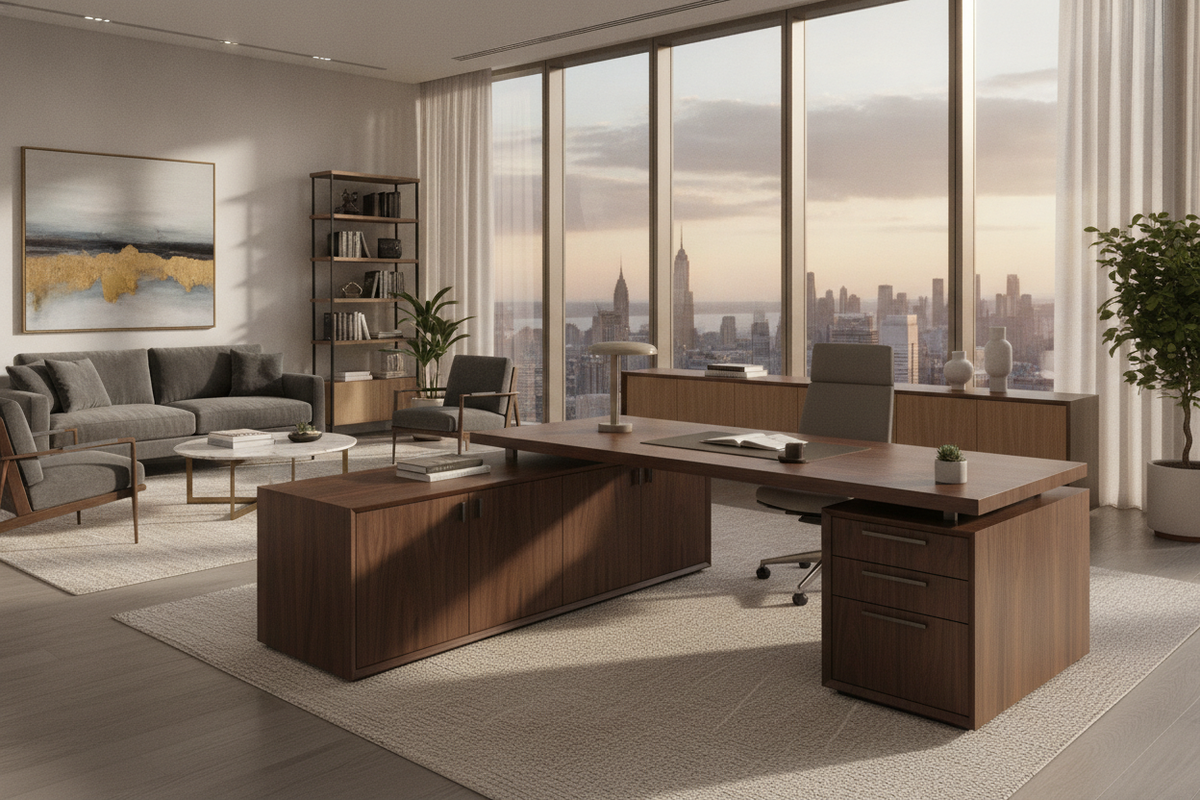
- Corner vs. Floating Island Layouts: While tucking a desk into a corner maximizes open floor space, positioning the primary wing facing outward into the room creates an open executive setup that keeps sightlines clear to entryways.
- Perimeter Clearances: Ensure ample clearance behind the main seating area to accommodate ergonomic chair movement, alongside adequate clearance near doors, windows, and shelving units.
Workflow Architecture: Dual-Wing Zoning on Bamboo Desks
The primary advantage of an L-shaped layout is the seamless separation of distinct daily workflows. Dividing the desktop into dedicated operational zones keeps focus sharp and clutter minimized.
A practical method is establishing a primary digital hub alongside an auxiliary task surface:
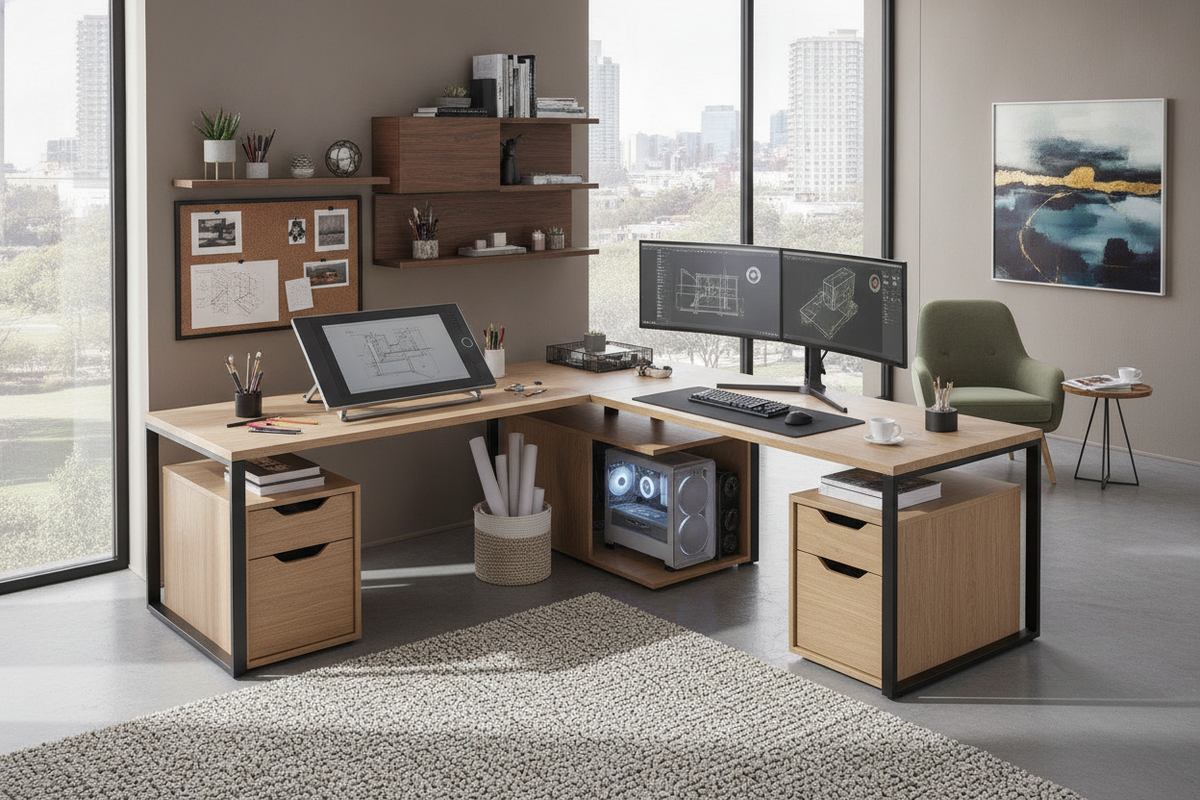
- Primary Work Zone: Reserve the main wing for central visual tasks. Place primary monitors, an external keyboard, a mouse, and an ergonomic task light directly within your natural line of sight.
- Secondary Utility Zone: Dedicate the adjacent wing to secondary tasks. This area easily accommodates a laptop docking cradle, physical notebooks, drawing tablets, reference folders, or desktop audio equipment.
- Corner Transition Space: The inner corner vertex can house larger hardware components, such as wide-screen monitor arms, peripheral hubs, or decorative planters, keeping the direct work surfaces clear.
Frame Structures, Lift Mechanisms, and Under-Desk Storage
Bamboo worktops must be supported by robust frames capable of handling hardware weight while maintaining stability across both wings. When selecting a base, decide whether a fixed-height frame or a height-adjustable system best matches your daily working habits.
If you prefer an all-in-one station with integrated organizational modules, exploring a dedicated shaped desk product offers built-in shelving to keep supplies off the central surface. Alternatively, active professionals who alternate between sitting and standing throughout the day often opt for a motorized shaped desk product that blends dynamic sit-stand adjustments with lower drawer capacity.
When planning your leg layout and storage pedestals, ensure your primary seating area provides generous knee clearance. Open frame designs maintain an airy, uncluttered feel while allowing mobile file cabinets or CPU stands to slide underneath as needs evolve.
Surface Maintenance, Humidity Management, and Longevity
While bamboo is naturally resilient, taking sensible care of your desktop finish preserves its smooth feel and warm luster over years of use.
- Daily Cleaning: Wipe down the surface using a soft microfiber cloth lightly dampened with water or a mild, pH-neutral wood cleaner. Avoid abrasive pads, bleach, or harsh chemical sprays that can degrade the protective topcoat.
- Managing Environmental Humidity: Natural fibers react to severe ambient humidity fluctuations. Maintaining stable indoor conditions and keeping the desk away from direct heat vents helps minimize seasonal expansion or contraction.
- Protecting Against Scratches and Heat: Use desk pads under keyboards and writing instruments, and always place coasters beneath hot mugs or cold drinks to prevent surface condensation marks.
- Sunlight Considerations: Prolonged exposure to intense, direct sunlight can subtly shift the coloration of natural bamboo over time. Positioning the desk slightly offset from unshaded south-facing windows preserves even tonal depth.
Conclusion: Designing a Productive, Sustainable Home Office
An l shaped bamboo desk unites sustainable material appeal with functional corner spatial management. By selecting a grain profile that complements your decor, mapping out intentional workflow zones, pairing the top with a sturdy base, and practicing routine surface care, you create a balanced, organized work environment built for lasting productivity.

Dejar un comentario
Este sitio está protegido por hCaptcha y se aplican la Política de privacidad de hCaptcha y los Términos del servicio.