











Why the 24-Inch Depth Profile Serves as the Modern Workspace Benchmark
Choosing the right worktop depth is one of the most critical decisions when furnishing a dedicated workspace. An l-shaped desk 24 inches deep represents a balanced standard in modern office design. While shallower surfaces can feel cramped once a keyboard and display are placed, oversized profiles often overwhelm residential floor plans and push peripheral items beyond comfortable reach.
A depth of approximately two feet provides ample surface depth for contemporary computer displays, laptop stands, and task lighting without forcing the user to lean forward. When applied across both sides of an L-shaped workstation, this depth provides consistent reach across the entire work zone, creating a unified platform for daily multitasking.
- Balanced Focal Depth: Accommodates standard desktop monitors and laptop docks while leaving comfortable room for forearm rest.
- Proportional Scale: Fits neatly into domestic spaces such as guest rooms, bedroom corners, and dedicated studies without intruding excessively into walkways.
- Consistent Surface Area: Offers uniform space across both the primary surface and the connecting return wing.
Spatial Planning and Room Flow for 24-Inch Deep Corner Layouts
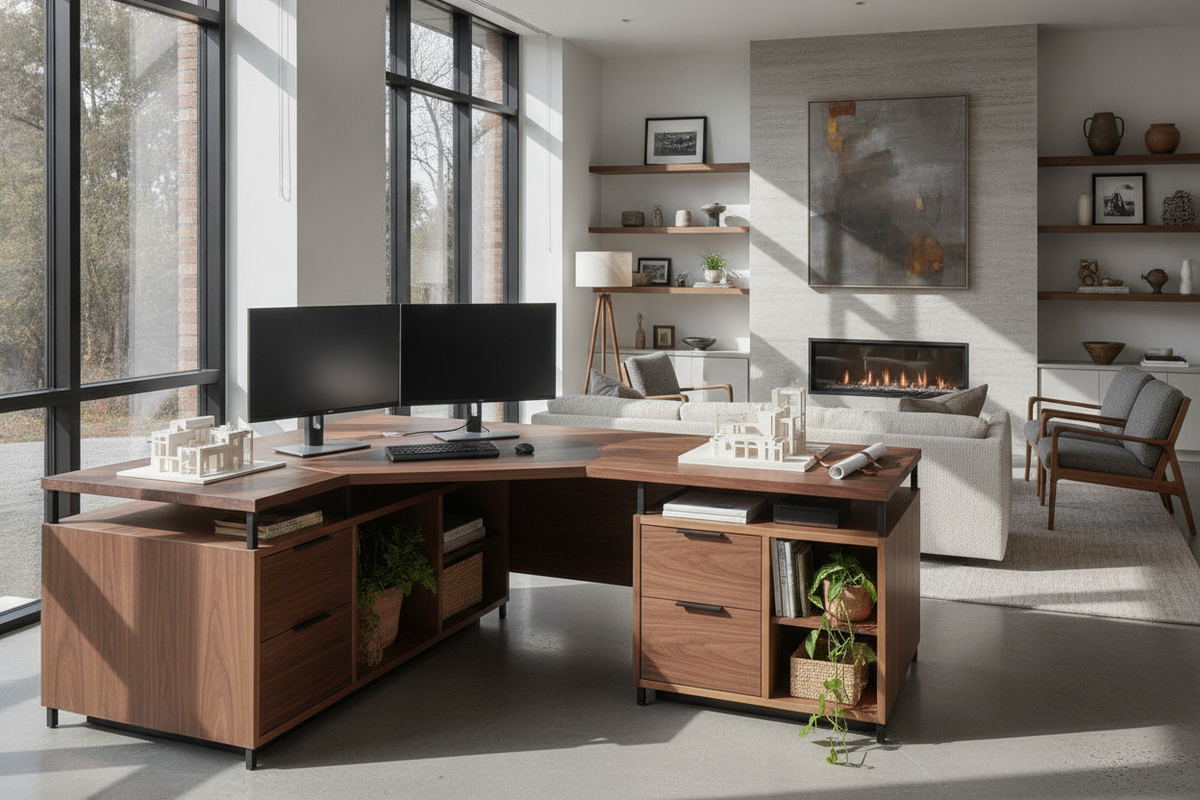
Integrating an l shaped desk 24 inches deep into a room requires thoughtful floor planning. Because the 24-inch profile is neither overly narrow nor excessively deep, it can be positioned flush against corner walls or oriented outwards into the room as a functional peninsula. Reviewing a practical shaped desk guide can help you evaluate circulation paths and task lighting options before placing your furniture.
When planning perimeter clearances, ensure there is ample clearance behind the main seating area so an office chair can roll and swivel without hitting walls or credenzas. In shared multi-use rooms, aligning the longer side of the desk against an unbroken wall preserves sightlines, helping the room maintain an open and airy feel.
Dual-Zone Surface Geometry: Configuring Primary and Return Wings
The true utility of an L-shaped configuration lies in its natural capacity for task separation. With a uniform 24-inch depth along both wings, users can assign distinct workflows to each section without sacrificing comfort.
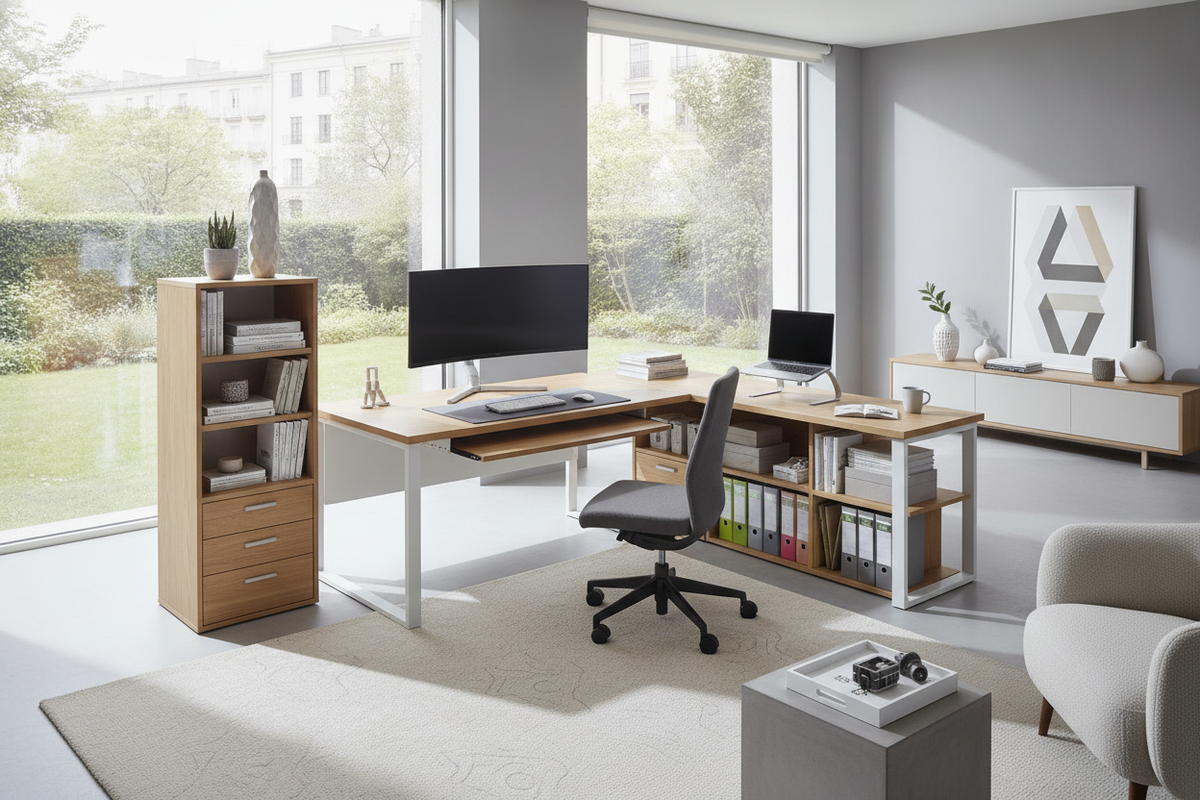
For instance, one wing can be dedicated to your computer workstation, centralizing monitors, mouse pads, and input hardware. The adjoining return wing can serve as an analog zone for paperwork, physical notebooks, reference materials, or crafting tools. Selecting a dedicated shaped desk product helps establish clear functional zones while maintaining a clean, cohesive visual aesthetic across both wings.
Corner Transition Considerations
Pay close attention to the intersection where the two tabletops meet. A square 90-degree corner maximizes usable square footage for desktop accessories such as task lamps, monitor risers, or desktop plants. Alternatively, curved inner corners provide a smooth pivot path for users who prefer to sit directly in the corner angle.
Storage Architectures Compatible with 24-Inch Deep Desks
Effective storage planning preserves legroom while keeping daily supplies accessible. Because a 24-inch depth provides generous lower framing depth, it easily accommodates matching storage units beneath or beside the work surface.
When evaluating storage solutions, consider modular pedestals, integrated file drawers, and lower utility shelving. Choosing a well-engineered desk product with built-in cabinetry ensures that paperwork, hard drives, and office supplies stay neatly organized without cluttering the main desktop.
- Under-Desk Pedestals: Keep drawers positioned to the outer sides of the return to maintain an unobstructed knee well.
- Vertical Hutch Additions: Take advantage of vertical wall space above the desk to store books and decor without consuming valuable surface area.
- Side Credenzas: Extend storage outward along an adjacent wall for additional organizational capacity.
Material Construction and Frame Stability Considerations
The structural framework of an L-shaped workstation must provide dependable support across its extended span. Robust engineered panels, high-pressure laminates, and powder-coated metal legs are frequently chosen for their durability and everyday resistance to wear.
When reviewing larger multi-segment desks or executive options such as a commercial-grade desk shaped product, look for reinforced connection brackets at the desk seam. Adjustable leveling feet are also valuable for compensating for minor floor variations, ensuring the work surface remains stable and level during use.
Assembly, Cable Routing, and Daily Workspace Maintenance
Assembling an L-shaped desk is easiest when approached systematically. Build the main structural frames in their designated room to avoid moving heavy, wide furniture through narrow doorways. Fasten the structural joints loosely at first, align the tabletop seam so it sits completely flush, and then tighten all structural hardware securely.
Cable management is equally important for maintaining a clean aesthetic. Utilize adhesive cord clips, under-desk cable baskets, and power strips mounted to the underside of the 24-inch surface to keep wires elevated and organized. For regular maintenance, dust surfaces with a microfiber cloth and wipe spills promptly to protect composite finishes.
Decision Checklist: Is a 24-Inch Deep L-Shaped Desk Right for Your Setup?
Before making your final choice, evaluate your workspace needs against the following practical considerations:
- Room Footprint: Have you verified perimeter clearance for your chair, nearby doors, and windows?
- Workflow Needs: Does your work require distinct digital and analog zones that benefit from two connected surfaces?
- Storage Integration: Will your filing cabinets and storage drawers fit comfortably without crowding leg space?
- Seating Preference: Do you plan to face one wing directly, or do you prefer sitting centered at the inner corner?
An L-shaped desk with a 24-inch depth offers an ideal balance of practical desktop space, ergonomic comfort, and spatial efficiency, making it an excellent centerpiece for any modern workspace.

Dejar un comentario
Este sitio está protegido por hCaptcha y se aplican la Política de privacidad de hCaptcha y los Términos del servicio.