










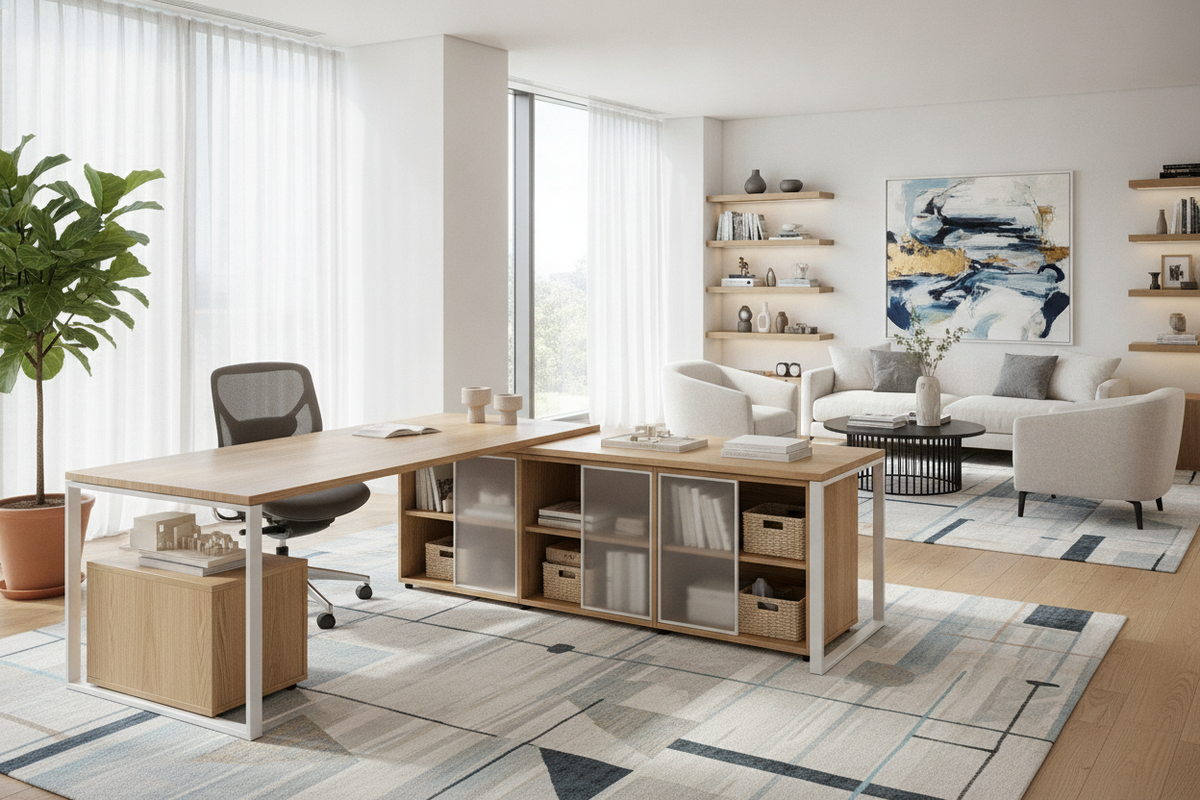
The Appeal of an L-Shaped Desk with No Drawers
Choosing an l-shaped desk no drawers model transforms the way a workspace feels and functions. Traditional executive desks often incorporate heavy side pedestals, bulky modesty panels, and built-in filing drawers. While functional for paper-heavy operations, fixed storage units anchor the furniture visually and physically, limiting how you position your legs, chair, and equipment.
An open-frame l shaped desk without drawers prioritizes visual lightness and operational flexibility. By eliminating rigid drawer boxes, these desks allow light to pass through the lower frame, helping smaller home offices and corner nooks feel significantly less crowded. Furthermore, the absence of fixed cabinetry makes the entire span of both desktop wings adaptable for multiple monitors, drafting pads, audio gear, or dual-worker setups.
Ergonomic Advantages: Maximizing Corner Leg Clearance and Swivel Radius
The primary functional benefit of an l shaped desk no drawers layout is unrestricted lower-body mobility. In corner configurations, fixed pedestals often create narrow knee wells that force you into a single rigid posture. When transitioning between computer tasks on one wing and analog writing or reviewing documents on the other, your chair caster wheels and knees frequently collide with side cabinetry.
With a drawerless structure, your seated movement remains fluid:
- Continuous Swivel Range: You can rotate smoothly through the inner curve or angle without hitting drawer handles or sharp wooden corners.
- Flexible Chair Positioning: Sit centered in the corner apex or shift freely toward the outer edge of either wing based on your immediate focus.
- Accommodating Varied Postures: Stretch your legs, use an ergonomic footrest, or shift seating height without being blocked by under-desk drawers.
Frame Architecture and Stability in Open Corner Desks
A common consideration with drawer-free corner desks is structural rigidity. Traditional desks rely partly on the mass of solid drawer boxes to anchor the frame. In an l-shaped desk no drawers design, stability is achieved through smart frame engineering rather than dense cabinetry.
When assessing open-frame workstations, consider these structural elements:
- Steel Sub-Frames: Tubular steel or reinforced metal legs provide robust support while keeping the lower perimeter open.
- Corner Gussets and Crossbars: Triangular corner bracing and low-profile horizontal stretchers under the desktop prevent lateral swaying during typing or collaborative work.
- Multi-Point Desktop Fastening: Durable engineered wood or solid composite surfaces secured at multiple frame points ensure the corner seam remains flush and level.
- Adjustable Leveling Glides: Independent leveling feet compensate for uneven flooring, ensuring the open frame remains steady without wobbling.
Modular Storage Strategies for Drawer-Free Workstations
While an open perimeter provides excellent comfort, daily office essentials still need a home. Planning an intentional organization system prevents desktop clutter from accumulating on your open surface.
To avoid common spatial clutter issues outlined in our desk without drawers guide, consider adding modular and vertical organization tools:
- Mobile Rolling Pedestals: Tuck a slim filing cart under one wing when needed, and roll it away or position it beside the desk to preserve primary legroom.
- Monitor Risers with Shelves: Elevate screens to eye level while utilizing the space beneath the riser for notebooks, keyboards, and pens.
- Vertical Wall Shelving: Mount floating shelves or pegboards above the desk wings to store books, reference binders, and decorative items off the work surface.
- Desktop Organizers: Low-profile trays, pencil cups, and desk pads keep immediate stationery contained in a dedicated zone.
For additional perspective on balancing minimalist surfaces with practical storage needs, review our review on planning around drawer-free desks.
Open-Frame vs. Integrated Storage: Choosing the Right Configuration
Deciding between an open-leg workstation and a desk with built-in cabinetry depends heavily on your daily workflow, file volume, and room proportions.
An open l-shaped desk no drawers setup is ideal if you:
- Rely primarily on digital documents and require minimal physical paper filing.
- Need unencumbered knee clearance for active seating, gaming pedals, or musical instruments.
- Want the flexibility to reconfigure modular under-desk components over time.
- Prefer an airy, modern aesthetic that keeps open-plan rooms feeling spacious.
Conversely, if your daily routine requires immediate, high-volume physical document filing within arm's reach, an integrated storage option such as an l-shaped corner desk with drawers or an l-shaped desk with 3 drawers may better suit an administrative, paper-centric workflow.
Cable Management and Room Placement for Open-Leg Desks
Because an l-shaped desk no drawers leaves the underside completely visible, wire management and room placement play a major role in achieving a clean look.
When positioning an open desk against walls or floating in the center of an office, practical wire routing maintains a tidy environment:
- Under-Desk Cable Trays: Mount horizontal wire baskets or raceways directly beneath the desktop to keep power strips and adapters off the floor.
- Leg Channel Routing: Use adhesive clips or magnetic channel covers along the inner edge of metal legs to guide power cords straight to wall outlets.
- Desk Grommets: Utilize built-in surface pass-through ports to direct peripheral cords downward in tight bundles.
- Zoned Layout Planning: Position high-cable electronics (such as desktop towers and docking stations) near wall corners to minimize exposed wiring spans across the open frame.

Dejar un comentario
Este sitio está protegido por hCaptcha y se aplican la Política de privacidad de hCaptcha y los Términos del servicio.