










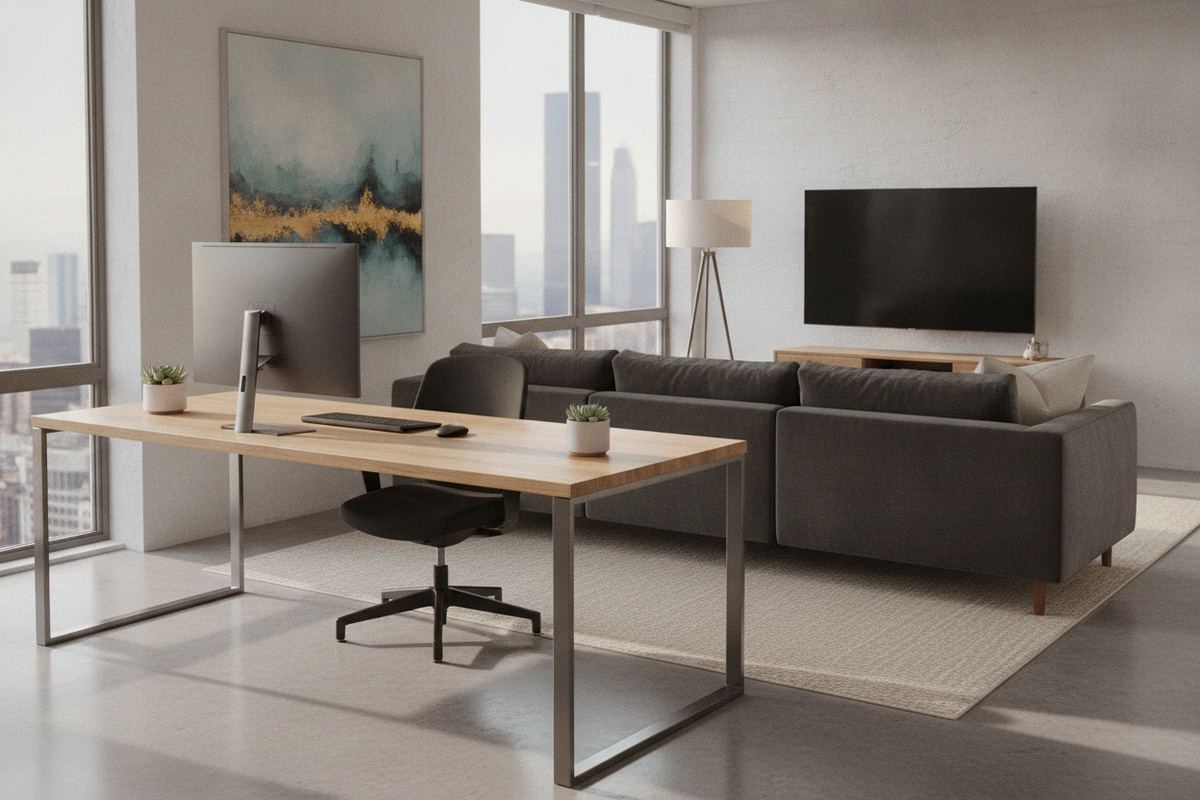
When planning a productive home office or creative studio, spatial balance is often the deciding factor between a cramped work area and an efficient, open room. While symmetrical corner setups offer equal surface length on both arms, an l shaped desk one side shorter provides a targeted architectural solution. By pairing a primary working surface with a condensed secondary wing, asymmetrical desks adapt to room constraints while maintaining expansive desktop utility.
Understanding Asymmetrical L-Shaped Desk Architecture
Asymmetrical corner desks are engineered specifically for spaces where an equal-sided desk would obstruct traffic or overwhelm the room's visual scale. Instead of requiring two equally long walls, this configuration creates a clear hierarchy across your workstation, offering ample workspace where it is needed most while keeping secondary functions compact.
Primary vs. Secondary Wing Dynamics
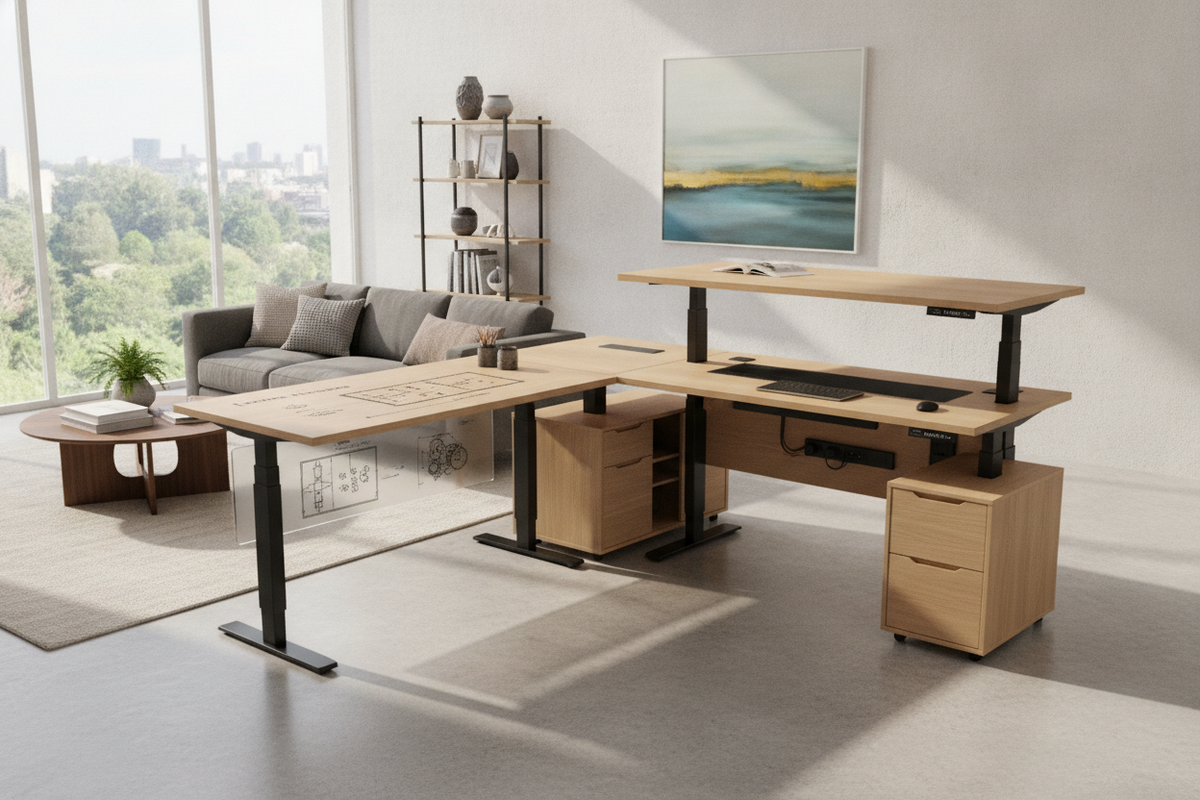
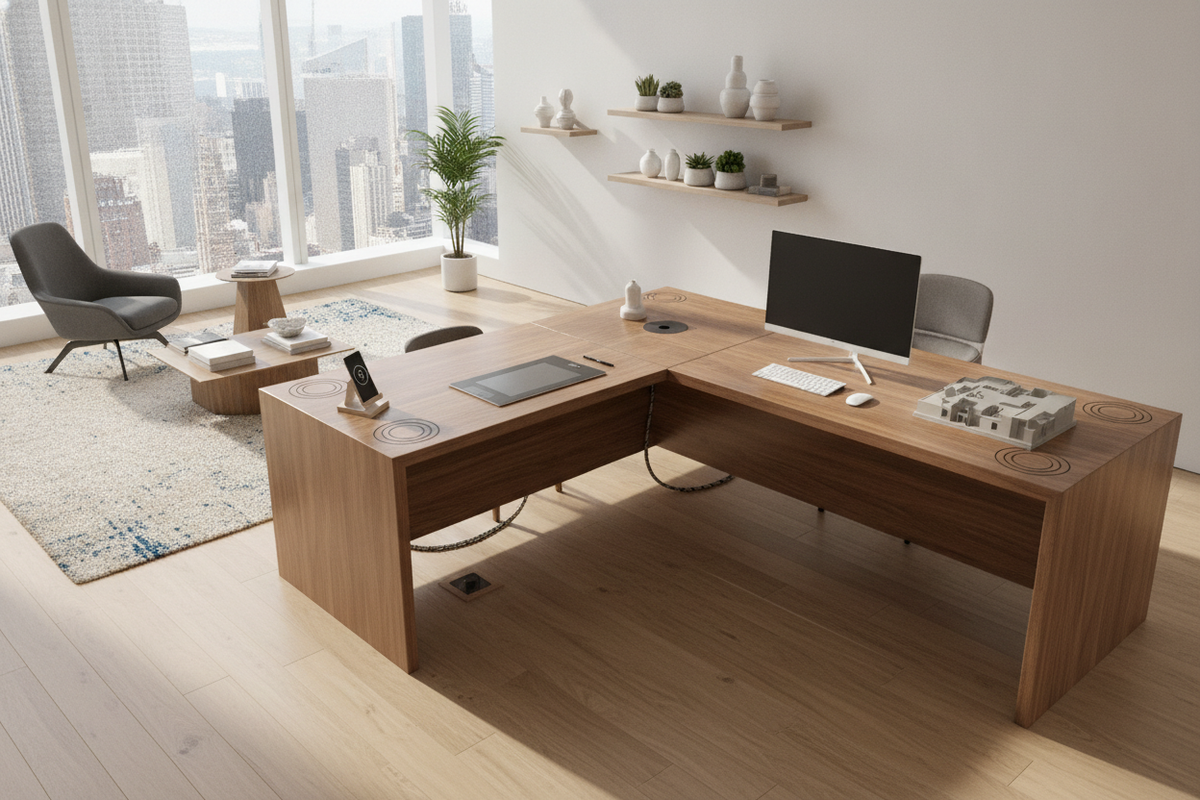
The primary wing of an asymmetrical desk is typically designed to host core computing hardware, such as central monitors, keyboard trays, and daily work materials. Because this surface receives the highest concentration of use, it generally features greater depth and length. Conversely, the shorter return wing serves as a dedicated support zone. It accommodates peripheral devices, reference books, analog drafting pads, or organizational caddies without intruding deeply into the center of the room.
Determining Left-Side vs. Right-Side Orientation
Choosing between an l shaped desk short right side or a short left return depends largely on your room's physical layout and dominant work habits. For right-handed professionals who write notes or manage paperwork alongside digital tasks, placing the shorter wing on the right keeps essential documents within natural reaching distance. However, architectural features such as heating vents, wall outlets, and window frames may ultimately dictate which side must remain compact to keep the room functional.
Room Spatial Planning and Clearance Corridors
A well-proportioned workspace preserves natural circulation paths throughout the room. When evaluating alternative workspace layouts, balancing functional surface area with open perimeter space is key to long-term comfort and ease of movement.
Managing Door Swings, Closets, and Walkways
One of the primary benefits of choosing an l-shaped desk with short right side or left return is its ability to bypass physical obstacles. Placing the shorter side along entry walls prevents the edge of the desk from interfering with opening door frames, sliding closet tracks, or low windowsills. This tapered profile protects natural walkways, ensuring that entering and exiting the room remains seamless.
Corner Placement vs. Peninsular Divider Layouts
An asymmetrical desk offers distinct layout options depending on room architecture:
- Flush Corner Placement: Fitting both wings snugly against intersecting walls maximizes open floor space in small to medium rooms. A clean option like a white L-shaped corner desk can brighten corners while maintaining a sleek, unobtrusive profile.
- Peninsular Room Division: In open-concept rooms or shared spaces, aligning the longer side against a wall while extending the shorter return outward creates a functional room divider. This separates the office zone from living or sleeping areas without requiring tall partition walls.
Workflow Zoning and Ergonomic Alignment
Dividing an office setup into distinct functional zones minimizes visual clutter and enhances daily focus. An asymmetrical surface naturally establishes two separate work hubs, allowing you to transition between digital tasks and manual projects effortlessly.
Primary Computing Zone Configuration
The extended wing functions best as your primary screen and input center. Centering your main monitor along this longer section ensures proper viewing distance and alignment with your chair, reducing neck strain. This dedicated length also allows multi-monitor users to arrange displays comfortably without cutting off corner reach or crowding task lighting.
Secondary Surface Roles: Printers, Writing, and Docking Stations
The shorter return is ideal for secondary hardware and non-digital tasks. Position items such as desktop printers, audio interfaces, charging hubs, or tablet stands along this wing. For those who frequently switch between typing and handwriting, dedicating the shorter side to analog work keeps your main keyboard zone free of stray notebooks. If your space cannot accommodate an extended return wing, exploring a standalone compact writing desk design can offer a streamlined alternative for focused task management.
Storage Architectures and Legroom Clearance
Effective storage planning is crucial when choosing an asymmetrical desk. Because the two sides differ in length, balancing storage modules with open knee clearance ensures comfortable mobility throughout the day.
Under-Desk Drawers and Open Shelf Placement
To preserve maximum legroom where you sit most frequently, integrate storage elements beneath the shorter wing. Utilizing an integrated unit such as a 55-inch L-shaped corner desk with storage places file cabinets, open display shelves, or CPU towers under the secondary surface. This organization strategy keeps supplies close at hand while leaving the area under the main desk entirely open for your chair.
Support Beams, Diagonal Bracing, and Knee Clearance
When selecting a corner desk frame, pay attention to the inner corner design. Open-frame metal legs or recessed center supports allow your office chair to swivel smoothly between the primary and secondary desks. Diagonal crossbars and support beams should sit high against the underside of the desktop to prevent knee contact during lateral movement.
Material Profiles, Reversible Builds, and Assembly Strategy
The build quality and assembly versatility of an asymmetrical desk directly impact its longevity and adaptability to future room rearrangements.
Reversible Frame Configurations vs. Fixed Orientation Desks
Modular, reversible desks allow you to assemble the shorter return on either the left or right side during initial setup. This versatility is valuable if you rent your home or anticipate rearranging your office in the future. Fixed-orientation desks, by contrast, offer dedicated, rigid structural joints tailored specifically to one direction, which can simplify assembly and increase overall frame stability.
Surface Durability and Cable Management Routing
Dual-wing desks host multiple electronic devices, making cable routing an essential part of setup. Look for surfaces with durable, scratch-resistant laminate or engineered wood finishes that resist daily wear. Desktops equipped with built-in grommet holes, under-mounted cable trays, or discrete rear channels keep power cords organized and prevent tangles across the intersecting corner seam.
Buyer Decision Framework for Asymmetrical L-Desks
Before purchasing an asymmetrical L-shaped desk, review the following practical checkpoints:
- Measure Room Clearances: Verify doorway swings, window heights, and electrical outlet positions against both the long and short desk dimensions.
- Determine Functional Priority: Decide whether your auxiliary gear fits best on a left-hand or right-hand return based on your daily workflow.
- Check Inner Legroom: Ensure the inner corner transition is free of low-hanging support bars for smooth chair rotation.
- Evaluate Storage Needs: Choose integrated drawers or open shelving that sit beneath the shorter wing to maximize open space under the primary monitor station.

Dejar un comentario
Este sitio está protegido por hCaptcha y se aplican la Política de privacidad de hCaptcha y los Términos del servicio.