




The right litter box furniture has an interior a few inches larger than your litter box on every side, an entry your cat can use comfortably but a dog can't, ventilation, and a door wide enough to make daily scooping easy. Measure your box first: the enclosures in our range offer interiors from about 22 inches wide for a single standard box up to 33.4" H x 28.7" W x 26.1" D for an automatic litter box.
This guide covers sizing, odor control, dog-proofing and how to help indoor cats accept an enclosed box, then recommends four enclosures from the FUFU&GAGA cat furniture collection.
Key takeaways
- Measure the box, then add space: allow at least 2 in on each side and 3 in above the rim or hood so your cat can turn around and you can slide the litter pan out.
- Entry size: cat holes around 9 to 10 in wide let most cats in while keeping out medium and large dogs.
- Odor: a litter box enclosure hides the box, but daily scooping and ventilation are what control odor.
- Self-cleaning litter box: needs a much larger interior, a cord path and clearance for its moving parts.
- Introduce it slowly: some cats dislike an enclosed design, so keep the old setup available during the switch.
What is litter box furniture, and is it worth it?
Litter box furniture is a cabinet, bench, side table or pet house with an enclosed compartment for a cat's litter box and a cat-sized entry hole. From the outside it looks like a regular piece of furniture that fits your home decor; inside, it hides the box, catches some stray litter and keeps dogs and toddlers out.
For most homes it is worth it when the litter box has to live in a shared room such as a living area, bedroom or entryway. The enclosure turns the litter area into usable furniture: the top works as an accent table, TV stand, plant stand or cat bed, and some models add storage space for pet supplies.
It is not the right choice for every cat. The Merck Veterinary Manual notes that some cats like the privacy of a hooded box while others avoid enclosed spaces, and recommends at least one more litter box than the number of cats (Merck Veterinary Manual). If your cat already has litter box problems, the ASPCA suggests removing covers from boxes (ASPCA), so solve that first before adding a cat litter box enclosure.
How big should litter box furniture be?
Size the enclosure from the litter box, not the other way around. Measure your box's length, width and height, including any hood or high back. Then add at least 2 inches on each side and 3 inches above. That margin gives your cat room to turn and dig, and lets you lift the box out without scraping litter onto the floor. Big cats and a large litter box need more.
The table shows real interior and entry sizes from FUFU&GAGA enclosures, so you can compare them with your box.
| Enclosure | Interior or overall size | Entry | Fits |
|---|---|---|---|
| Double-door enclosure | Interior 21.5" H x 22.3" W x 19" D | 9.4" x 9.4" cat holes on both sides | One large standard litter box |
| Sisal-door enclosure | 31" wide interior; 35.4" H x 31.5" W x 19.7" D overall | Two cat doors | A wide or high-sided box, with an adjustable shelf above |
| Tall enclosure with perch | Interior 33.4" H x 28.7" W x 26.1" D | Openings on both sides | Most automatic litter boxes (check your model) |
| Cat condo with roof | 43.3" H x 21.7" W x 19.7" D overall | Lower compartment plus side steps | A compact box in small spaces |
Which type of hidden litter box furniture fits your home?
| Type | Typical footprint | Best for | Watch out for |
|---|---|---|---|
| End table or nightstand cabinet | About 20 to 32 in wide | One cat, one box, living room or bedroom | Low headroom for hooded boxes |
| Bench or TV stand enclosure | 40 in wide and up | A larger litter box or a box plus storage | Needs a long wall |
| Tall cabinet for an automatic litter box | About 30 in wide, 70 in tall | Self-cleaning boxes, supplies on shelves above | Must be anchored to the wall |
| Cat condo or cat tree combo | About 22 in wide | Small spaces and cats that love height | Smaller litter compartment |
Does a litter box cabinet control odor?
An enclosure helps keep odors contained, but it can also trap them if the box isn't cleaned. Odor control comes from routine: Merck advises scooping every day and cleaning the entire box at least once a week. Ventilation holes or ventilation slots let air move so smells don't build up inside, and a moisture-resistant interior is easier to wipe down.
A few habits help: use a litter mat at the entry to cut down litter tracking and litter dust, line the floor of the cabinet with a plastic litter liner, and leave the cabinet door open for a few minutes after a deep clean so the panels dry. An air purifier in the room can help; skip heavily scented sprays, since strong smells can put some cats off the box.
How do you keep dogs out of the litter box?
Most hidden cat litter cabinets rely on a small entry. A cat hole of about 9.4 inches square, as on our double-door enclosure, admits most cats but blocks medium and large dogs. Small dogs may still fit, so add a second line of defense: an entry on the side facing a wall, a raised step-up entry, or a cabinet with a lockable door. The secure lock on our sisal-door model also stops a curious dog from nosing the doors open.
What about a self-cleaning litter box?
An automatic litter box is usually larger and taller than a traditional litter box, and it needs power and space around it for its moving parts and waste drawer. Check the manufacturer's dimensions, then compare them with the interior, not the exterior, of the cabinet. Look for openings on the left or right side so you can choose the entry direction, a cord path to an outlet and something that stops the unit from sliding, such as baffle strips.
Where should you put a cat washroom cabinet?
Merck recommends a secluded, low-traffic area that your cat can easily access. In practice that means away from food and water bowls, not next to a noisy appliance and not behind a door that can close. If you have two cats or more, spread the boxes across different rooms so one cat can't guard them all, and give each a quiet, private spot.
How do you get your cat to use an enclosed box?
- Place the new piece of furniture next to the current box for a few days, with its doors open.
- Put the litter box inside with some used litter so it smells familiar.
- Keep the old open box available nearby until your cat uses the enclosure consistently.
- Remove the old box gradually, then close the doors.
Litter box furniture buying checklist
- Interior: at least 2 in wider and longer than your box on each side, 3 in taller.
- Entry: about 9 to 10 in for most cats; larger cats may need more.
- Cleaning access: a front door or lid that opens fully so the box slides straight out.
- Ventilation: visible vent holes, slots or an open back panel.
- Surface: water- and stain-resistant interior panels or a plastic litter liner.
- Dog-proofing: small entry, side placement or lockable doors.
- Top load: check the weight rating if the top will hold a lamp, plant or TV.
- Stability: anti-tip hardware for anything taller than about 40 in.
- Room fit: floor space measured with the doors open, not closed.
Our picks: litter box furniture from FUFU&GAGA
These four enclosures cover the most common situations: one standard box, a wide box, an automatic litter box and a small apartment.
31.5" Modern Cat Litter Box Enclosure with Lock and Sisal Doors

The 31-inch-wide interior leaves room for a wide or high-sided box, and the removable, adjustable shelf lets you set up the inside to suit your cat or store supplies. The sisal-faced door panels give cats a designated scratching spot, ventilation holes keep air moving, and a door lock prevents accidental openings.
Key facts: 35.4" H x 31.5" W x 19.7" D, 31" interior width, two cat doors, top holds 22 lb, solid wood legs, anti-tipping mechanism, wood, black or white.
Best for: living rooms where the top doubles as a display shelf or plant stand.
Modern Cat Litter Box Enclosure with Double Doors
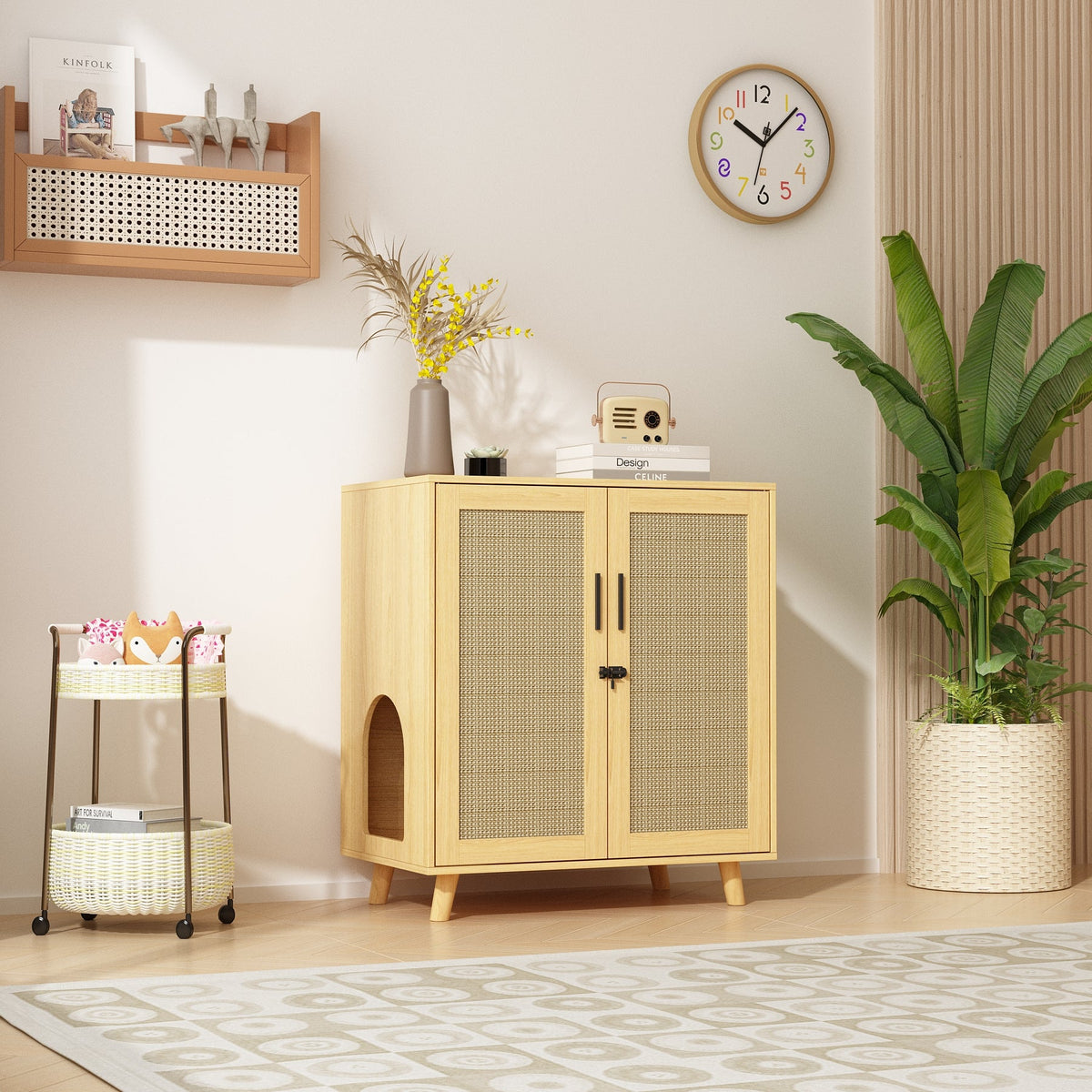
A low, bench-height litter box enclosure with 9.4-inch cat holes on both sides, so cats can come and go while most dogs stay out. Magnetic doors open quietly, a hanging hook keeps the scoop close, and the manufactured wood is water-, stain- and mildew-resistant. The top works as an end table or a spot for a cat bed.
Key facts: 23.6" H x 19.7" D, interior 21.5" H x 22.3" W x 19" D, cat holes 9.4" x 9.4", magnetic doors, scoop hook, white or black.
Best for: homes with both cats and dogs.
30.8" Walnut Wood-Grain Litter Box Enclosure with Cat Perch and Shelves

Built for a large or self-cleaning litter box, this tall enclosure has openings on both sides so the box's entrance can face the left or right side, plus baffle strips that stop a smart litter box from shifting. Two shelves above hold pet supplies, and a cat hole at the top turns the upper level into a resting spot.
Key facts: 70.5" H x 30.8" W x 28.3" D, interior 33.4" H x 28.7" W x 26.1" D, side openings, two storage shelves, manufactured wood.
Best for: automatic litter boxes and multi-cat supply storage.
21.7" Modern White Cat Condo with Roof and Litter Box Enclosure

This house-shaped piece stacks a hidden litter box cabinet under a cozy upper loft, so a single 21.7-inch footprint gives your cat a private washroom, a raised hideaway and a scratch pad, saving the floor space a separate scratching post and cat bed would take. Two front doors open wide for scooping, and side steps help smaller or older cats climb between levels.
Key facts: 43.3" H x 21.7" W x 19.7" D, two front doors, upper loft, side steps, sisal scratch pad, water-resistant white finish.
Best for: apartments and small spaces with one cat.
Compare the picks
| Product | Size (H x W x D) | Standout feature | Best for |
|---|---|---|---|
| Sisal-door enclosure | 35.4 x 31.5 x 19.7 in | 31" interior, lock, scratching doors | Living rooms |
| Double-door enclosure | 23.6 in H x 19.7 in D | 9.4" cat holes, magnetic doors | Cats plus dogs |
| Tall enclosure with perch | 70.5 x 30.8 x 28.3 in | Large interior, side openings | Automatic boxes |
| Cat condo with roof | 43.3 x 21.7 x 19.7 in | Litter cabinet plus loft | Small spaces |
Mistakes to avoid
- Measuring the outside only: panels and door frames make the interior smaller than the exterior, so always compare interior sizes.
- Treating the enclosure as odor control: without daily scooping, a closed cabinet concentrates smell.
- Skipping the anchor on tall units: a 70-inch cabinet with shelves should be secured to the wall; the CPSC's Anchor It! guidance recommends anchoring furniture with doors and shelves.
- Placing it next to food bowls: cats prefer to eat away from where they eliminate.
- Removing the old box on day one: a gradual switch prevents accidents elsewhere in the house.
FAQ
Is litter box furniture worth it?
Yes, if your litter box has to sit in a living area, bedroom or entryway. The enclosure hides the box, contains some stray litter, keeps dogs out and gives you a usable surface on top. It is less useful if your cat avoids covered boxes or already has litter box problems; in that case solve the behavior first and introduce an enclosure gradually.
Are covered litter boxes okay for cats?
For many cats, yes, but it varies. The Merck Veterinary Manual says some cats like the privacy of a hooded box while others avoid enclosed spaces. Watch for signs of avoidance, such as going next to the box or leaving quickly. Offering an enclosure alongside an open box for a while lets your cat show you which it prefers.
How do I keep my house from smelling like the litter box?
Scoop every day and wash the whole box at least weekly, which is what Merck advises. Choose an enclosure with ventilation holes, keep the interior dry, and place a litter mat at the entrance to catch tracked litter. Replacing worn, scratched plastic boxes also helps, because scratches hold odor.
Will a self-cleaning litter box fit in litter box furniture?
Only in a cabinet sized for it. Compare the automatic box's dimensions with the enclosure's interior, leaving room for moving parts, the waste drawer and the power cord. Our tall enclosure for automatic boxes has an interior of 33.4" H x 28.7" W x 26.1" D and openings on both sides, but always confirm against your model.
How can I make my own cat litter box furniture?
You can convert a cabinet or bench by cutting an entry hole about 9 to 10 inches across, adding ventilation holes and sealing the inside with a moisture-resistant liner. The hard parts are getting the interior size right and finishing raw edges so they don't absorb urine. A ready-made enclosure with water-resistant panels saves that work.
Want to compare more sizes and styles? Browse our full cat furniture collection. Orders ship free to the contiguous US, and unused, unassembled items can be returned within 35 days.

Dejar un comentario
Este sitio está protegido por hCaptcha y se aplican la Política de privacidad de hCaptcha y los Términos del servicio.