










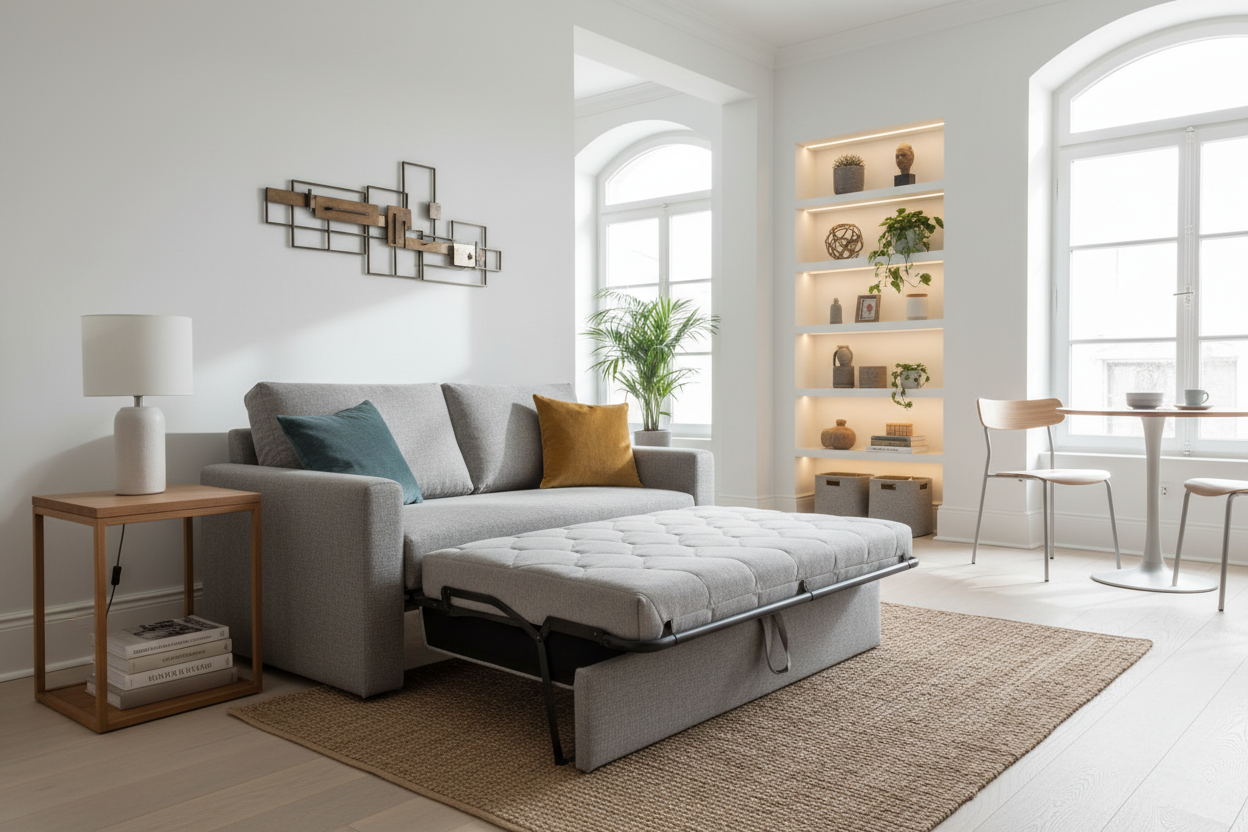
We have all faced the classic spatial standoff: you need a home office or a chic reading nook, but you also need a guest bed for the holidays. Dedicating precious square footage to a permanent queen bed that sees use three times a year feels wasteful. This is where the foldout loveseat bridges the gap between high-end aesthetic appeal and pragmatic utility. It is no longer just a dormitory staple; modern iterations offer sleek silhouettes and tactile fabrics that can anchor a living room while secretly harboring a comfortable sleeping solution.
Key Features to Look For
- Mechanism Quality: Prioritize smooth, metal-on-metal glides over plastic components to ensure the folding loveseat sleeper lasts for years.
- Frame Construction: Kiln-dried hardwood frames prevent warping and provide the necessary weight to keep the piece stable when unfolded.
- Mattress Density: Look for high-density foam (at least 1.8 lbs) or hybrid coil systems to avoid the dreaded "bar-in-the-back" sensation.
- Upholstery Durability: For high-traffic areas, seek performance fabrics with a double-rub count of 30,000 or higher.
Balancing Form and Function
When selecting a foldable loveseat bed, the visual weight of the piece is just as critical as its dimensions. In smaller apartments, a chunky, overstuffed sofa can swallow the room. As a designer, I always steer clients toward designs with exposed legs—lifting the furniture off the floor allows light to pass underneath, creating the illusion of more floor space.
Pay close attention to the silhouette. A track arm or a tuxedo style offers clean lines that modernize a space, whereas rolled arms can add unnecessary bulk. If your aesthetic leans towards mid-century modern, a fold down loveseat with tapered wooden legs often integrates seamlessly without screaming "this is a bed."
Material Selection & Durability
The fabric you choose dictates the longevity of the piece. A folding loveseat bed involves moving parts and friction. If you opt for a delicate silk or a loose-weave linen, the mechanism's movement can cause premature wear or snagging. Instead, consider tight-weave chenilles, velvets, or crypton fabrics.
The Comfort Factor
Ergonomics change when a piece serves two purposes. A deep seat depth is excellent for lounging, but ensure the back pitch isn't so aggressive that it becomes difficult to sit upright. When converted to a sleeper, the mattress thickness matters. I often recommend models that accommodate a separate topper, or those utilizing memory foam, to isolate motion transfer if two people are sleeping.
Space Planning & Layout
The most common error I see is failing to measure the fully extended footprint. A foldout loveseat requires significant clearance. You need to account for the bed length (usually around 72 to 85 inches) plus an additional 24 inches of walking room around the foot of the bed. If you plan to place a coffee table in front of it, choose a lightweight nesting table or an ottoman on casters to make the transition from lounge to bedroom effortless.
Lessons from My Own Projects
I learned a hard lesson early in my career while furnishing a third-floor walk-up in San Francisco. I specified a stunning, heavy-duty folding loveseat sleeper with a solid steel mechanism. It looked incredible on the mood board. However, the pivot point of the sleeper mechanism added so much weight that we physically couldn't maneuver it around the tight stairwell corner.
We had to hire a specialized hoist team to bring it through the window, blowing the budget. Since then, I always check if the unit is modular or if the back can be removed for delivery. Also, a small livability note: check the glides on the legs. I once had a client scratch their newly refinished oak floors because the metal mechanism scraped the ground when the weight shifted. I now insist on heavy-duty felt pads or a low-pile rug underneath every foldout piece I install.
Conclusion
Integrating a convertible sofa into your home doesn't mean compromising on elegance. By focusing on structural integrity, fabric resilience, and accurate space planning, you can curate a room that works hard and looks effortless. It is about making your furniture serve your lifestyle, not the other way around.
Frequently Asked Questions
How comfortable is a foldout loveseat for everyday sleeping?
While modern technology has improved them significantly, most are designed for occasional guest use. For everyday sleeping, look for a model specifically marketed as a "permanent sleeper" with a mattress thickness of at least 5 inches.
What is the difference between a fold down loveseat and a pull-out?
A fold-down model (often called a click-clack) uses the back cushion as part of the mattress, laying flat like a futon. A pull-out houses a separate mattress folded inside the frame. Pull-outs generally offer better separation between the seating and sleeping surfaces.
Do standard sheets fit a folding loveseat bed?
Not always. Loveseat sleepers often fall between "Twin" and "Full" sizes (sometimes called a "Twin XL" or "Apartment Size"). It is best to check the specific mattress dimensions and buy jersey knit sheets, which have enough stretch to accommodate non-standard sizes.

Dejar un comentario
Este sitio está protegido por hCaptcha y se aplican la Política de privacidad de hCaptcha y los Términos del servicio.