










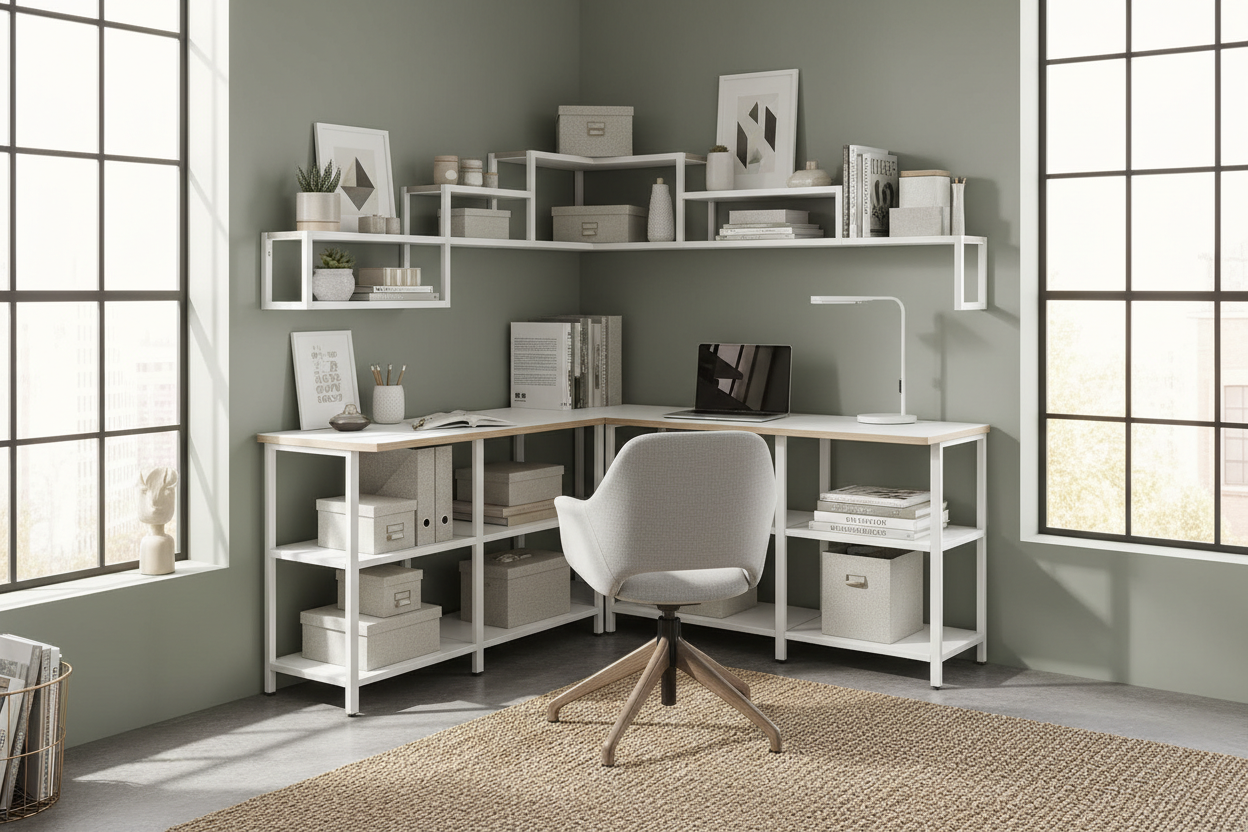
In interior design, the corner is often referred to as 'dead equity'—valuable square footage that typically gathers dust rather than serving a function. For clients working with compact home offices or multipurpose guest rooms, integrating an ikea corner desk shelf is frequently the most pragmatic solution to reclaim that space. However, simply buying the unit isn't enough; the success of the design lies in how you integrate it into the room's existing architecture and lighting scheme.
Quick Decision Guide: Key Features to Look For
Before heading to the warehouse, consider these critical factors to ensure the piece serves your workflow rather than hindering it:
- Vertical Clearance: Ensure the shelf height accommodates your monitor setup; standard add-on units often limit screen size to 24 inches.
- Baseboard Compatibility: Check if the legs or side panels are cut to clear your skirting boards, or you will end up with an unsightly gap behind the desk.
- Material Density: Distinguish between hollow-core (honeycomb structure) and particleboard; the latter holds clamp-mount accessories much more securely.
- Cable Management: Look for pre-drilled grommets or open-back designs to maintain a clean visual profile.
Selecting the Right Material and Finish
When selecting ikea corner desk shelves, you are generally choosing between melamine foil finishes and wood veneers. From a design perspective, this choice dictates the visual weight of the piece. In smaller rooms, I almost always recommend the white or light birch finishes. These surfaces reflect ambient light, making the corner feel less oppressive. Darker finishes, while sophisticated, can create a 'black hole' effect in a corner unless you have dedicated task lighting installed directly onto the shelving unit.
Ergonomics and Vertical Storage
The primary advantage of a corner shelf add-on is verticality. It draws the eye upward, creating an illusion of height. However, you must balance storage with ergonomics. A common error is overloading the lower shelves with books or decor, which encroaches on your active workspace.
Keep the immediate desk surface clear. Reserve the shelves within arm's reach for daily essentials, and use the upper tiers for decorative elements or archival storage. This zoning technique maintains a 'clean desk' aesthetic essential for mental clarity.
Styling for a Bespoke Look
To avoid the showroom look, you need to disrupt the uniformity of the mass-produced grid. We often achieve this by swapping out standard hardware. Replacing basic knobs with brushed brass or matte black pulls can instantly elevate the perceived value of the unit. Furthermore, consider using shelf inserts or fabric bins that match your room's textile palette. This softens the hard lines of the laminate and integrates the furniture into the broader design scheme.
Lessons from My Own Projects
I want to share a specific challenge I encountered while installing a corner workstation for a client in a pre-war apartment. We selected a popular IKEA corner unit, assuming it would slide perfectly into the alcove. We were wrong.
The issue wasn't the width, but the walls themselves. Older homes rarely have perfectly 90-degree corners. The desk fit, but the shelf unit highlighted the wall's imperfection, leaving a tapered gap that grew from flush at the bottom to two inches wide at the top. It drove me crazy.
My fix? We actually shimmed the back of the unit and used a small piece of scribe molding painted the same color as the wall to conceal the gap. Another thing to note: the finish on these shelves is durable, but I've noticed that the matte versions tend to hold onto finger oils more than the semi-gloss options. If you are someone who touches the shelving often to grab files, keep a microfiber cloth handy, or the area around the handles will start to look polished over time.
Conclusion
Transforming a cramped corner into a functional command center is entirely possible with the right approach. By paying attention to lighting, vertical organization, and customized details, your IKEA setup can look less like a budget compromise and more like a deliberate design choice. It is about making the furniture work for the room, not the other way around.
Frequently Asked Questions
Can I paint my IKEA corner desk shelf to match my walls?
Yes, but preparation is key. Because the surface is typically a laminate or foil, you must use a shellac-based primer (like BIN) before applying paint. Without this bonding layer, your topcoat will scratch off easily.
How much weight can the upper shelves typically hold?
Most standard IKEA add-on units are rated for approximately 15-20kg (33-44lbs) distributed weight. They are designed for books and binders, not heavy machinery or large printers. Always check the specific assembly manual for the exact model.
Can I mount a monitor arm to the shelf unit?
It depends on the construction. If the shelf is solid particleboard, a clamp mount usually works. However, many thicker shelves are hollow 'honeycomb' structures. Clamping a heavy monitor arm to these can crush the interior structure. In those cases, a through-bolt mount with a reinforcement plate is safer.


Dejar un comentario
Este sitio está protegido por hCaptcha y se aplican la Política de privacidad de hCaptcha y los Términos del servicio.