










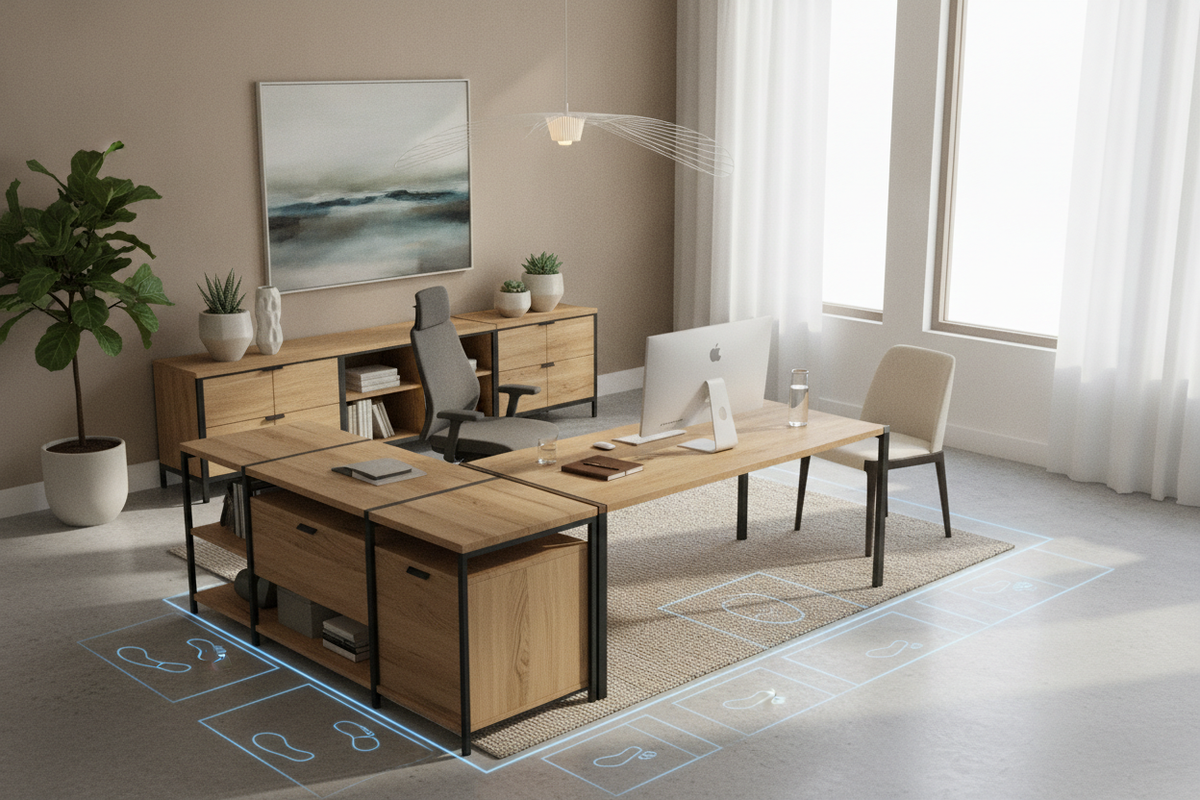
The Strategic Value of Modern L-Shaped Desks in Contemporary Workspaces
Working across multiple screens, reference texts, and active paperwork can quickly overwhelm a standard linear work surface. A modern l shaped office desk addresses this workflow bottleneck by establishing a continuous right-angle workstation. Rather than forcing primary monitors, laptop stands, writing tools, and desk lamps onto a single straight plane, an L-shaped layout distributes activities into two distinct surfaces while keeping every essential within arm's reach.
This dual-surface geometry naturally supports clear task separation. The primary desk length easily hosts active computing hardware, keyboards, and primary task lighting. The adjacent return surface accommodates secondary activities, such as handwritten note-taking, printing equipment, or reference folders. In multi-use rooms and open floor plans, the angled footprint acts as an architectural boundary that defines a dedicated zone for focused tasks. For styling ideas that balance decorative elements with productive surface zoning, consult our modern office desk guide.
Dimensional Planning and Spatial Clearances for L-Shaped Layouts
Selecting the right desk requires balancing practical work area against the overall proportions of the room. Because an L-shaped desk extends along two perpendicular directions, careful spatial planning ensures the furniture enhances the room layout without restricting circulation or crowding adjacent entryways.
Primary Surface vs. Return Surface Proportions
Workstation footprints generally divide into symmetrical configurations and asymmetrical return designs. Symmetrical designs provide equal depths and lengths along both wings, creating a balanced setup well suited for expansive multi-screen setups or creative workstations that require broad physical materials. However, these models require substantial corner wall space on both sides.
Asymmetrical designs feature a deeper primary desk paired with a narrower, elongated return wing. The deeper primary side provides proper viewing distance for large monitors and comfortable arm support, while the narrower return accommodates notebooks, tablets, and desktop accessories without protruding far into walking paths. When designing larger administrative areas or open executive offices, substantial layouts such as a modern desk shaped product illustrate how extended counter proportions define functional workstation perimeters.
Room Circulation, Swivel Radius, and Knee-Well Clearance
Beyond measuring desktop surfaces, thoughtful spatial planning accounts for daily movement and clearance zones:
- Perimeter Pathways: Maintaining clear passage between the edges of the desk and nearby walls or bookcases prevents visual congestion and supports natural foot traffic.
- Chair Swivel and Recline: The central intersection must provide ample clearance so that rolling task chairs can pivot easily between both working surfaces without colliding with corner posts.
- Knee-Well Clearance: Pay attention to the joint where the desktop sections connect. Cantilevered framing and recessed support legs leave the interior angle open, facilitating smooth seated transitions across both surfaces.
Room Placement Strategies: Corner Anchors vs. Open Room Dividers
How an L-shaped desk is placed in relation to nearby walls influences both visual focus and room ergonomics. Layouts typically follow either a perimeter corner approach or a floating divider approach.
Maximizing Floor Space with Corner Orientation
Placing an L-shaped desk into an interior room corner allows the two desk wings to trace existing perimeter walls. This orientation reserves central floor space for walking pathways and helps align equipment cables alongside baseboards. For dedicated studies and compact office spaces, corner-oriented options like this modern office desk product show how a perimeter setup can provide ample working surfaces while maintaining an open interior flow.
Floating Executive Configurations for Architectural Balance
In spacious home offices and executive suites, placing the primary surface forward while extending the return toward a side wall produces an authoritative room presence. This floating configuration positions the user toward the entrance of the room, providing an unobstructed line of sight while establishing a tangible barrier between the working area and the rest of the room. When choosing a floating setup, prioritize desks designed with finished rear panels and integrated wire management, as the structural back remains visible to guests.
Storage Architecture: Choosing a Modern L-Shaped Desk with Drawers
Ample surface area works best when supported by thoughtful organization. A practical workspace incorporates dedicated storage architecture to keep office sundries, extra cables, and physical documents neatly contained.
Drawer Configuration: Pedestals, Lateral Files, and Utility Trays
Selecting a modern l-shaped desk with drawers transforms an expansive surface into an organized productivity center. Common storage layouts incorporate a vertical pedestal positioned beneath the return or secondary wing. Upper utility drawers keep daily stationery, charging leads, and small peripherals organized, while deeper bottom drawers frequently feature hanging rails for folders and paper documents. Relying solely on bare open-frame desks can lead to persistent surface clutter, an experience examined in our desk office drawers guide.
Hybrid designs integrate drawer units alongside enclosed cabinets or accessible shelving. Versatile options like this shaped desk drawers product illustrate how combining drawer banks with adjacent storage compartments keeps essential technology and files accessible while preserving uncluttered desktop space.
Balancing Leg Clearance and Enclosed Storage Cabinets
While integrated storage brings practical benefits, its placement should protect seated comfort. Pedestals and storage cabinets serve users best when positioned at the outer ends of the desk wings. Placing heavy drawer modules too close to the central corner restricts leg space, making it difficult to turn or stretch comfortably during extended work sessions.
Materials, Structural Stability, and Cable Routing Details
The durability and stability of an L-shaped desk depend heavily on solid frame construction and quality materials. Because the tabletop spans two directions, sturdy support components are essential to keep surfaces aligned over time.
- Frame Support: Sturdy steel legs, corner gussets, and rigid crossbars provide reliable stability across wide desk spans. Adjustable leveling glides allow simple alignment on uneven floors.
- Durable Surfaces: Engineered wood substrates protected with durable laminate or wood veneer finishes provide dependable resistance to everyday surface wear while remaining straightforward to clean.
- Cable Organization: Practical L-shaped workstations often incorporate desktop grommets, modesty panel cutouts, or under-desk wire trays to guide power cords and display cables neatly toward wall outlets.
Decision Framework: Selecting the Right Modern L-Shaped Office Desk
To identify the best desk configuration for your room and daily routine, consider this structured decision checklist:
- Assess the Room Layout: Check wall dimensions, taking note of window sills, door clearances, and the locations of power receptacles.
- Select Return Orientation: Decide whether your workflow calls for a left-hand or right-hand return, or choose a reversible frame design that can be reassembled to suit future room changes.
- Review Your Hardware: Map out your computer monitors, docking stations, and tabletop peripherals to ensure the primary surface offers adequate depth and support.
- Determine Storage Requirements: Decide whether your daily materials require built-in file drawers, storage cupboards, or minimalist open cubbies.
- Harmonize Finishes: Choose colors, metal frames, and wood grain tones that complement surrounding shelving and seating to establish a cohesive interior aesthetic.

Dejar un comentario
Este sitio está protegido por hCaptcha y se aplican la Política de privacidad de hCaptcha y los Términos del servicio.