


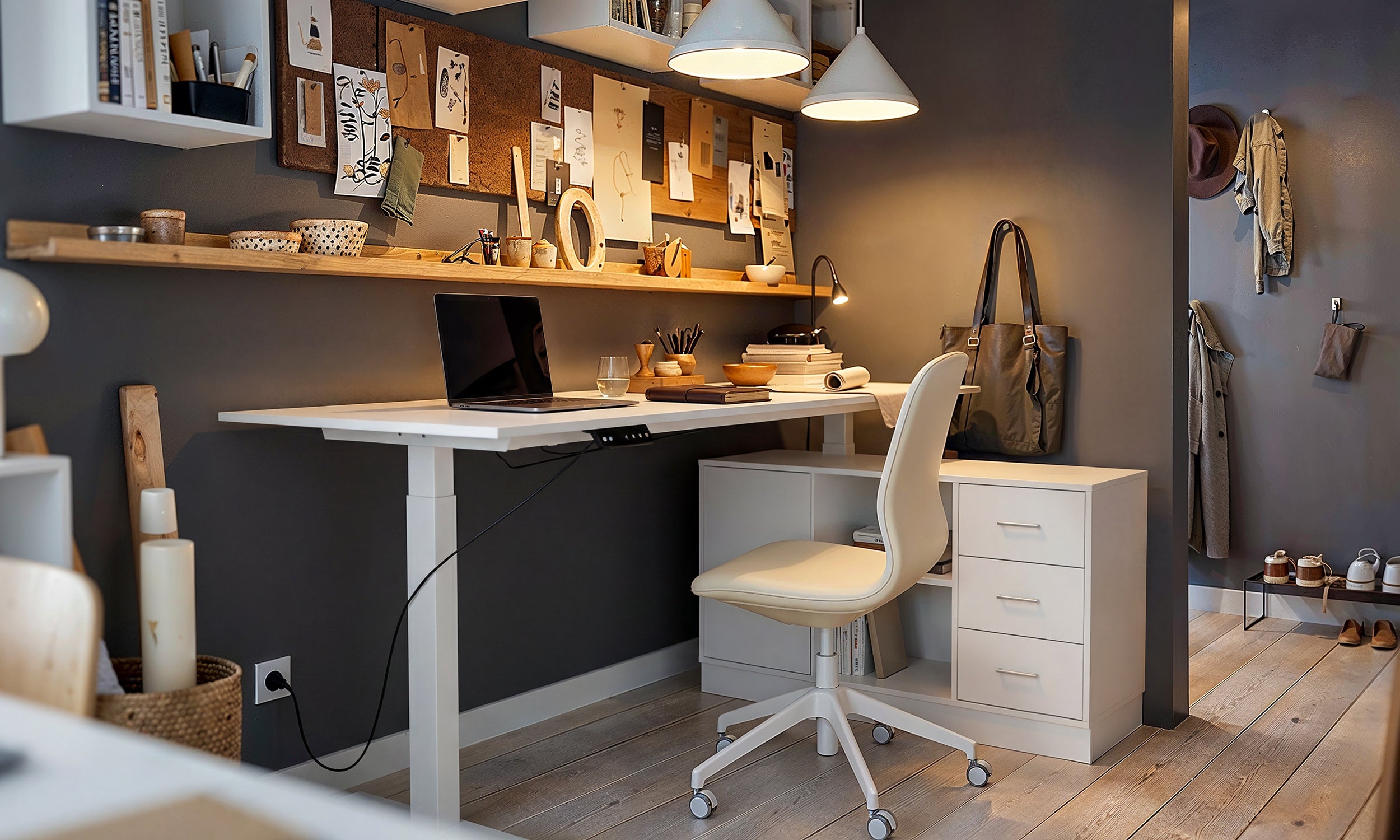
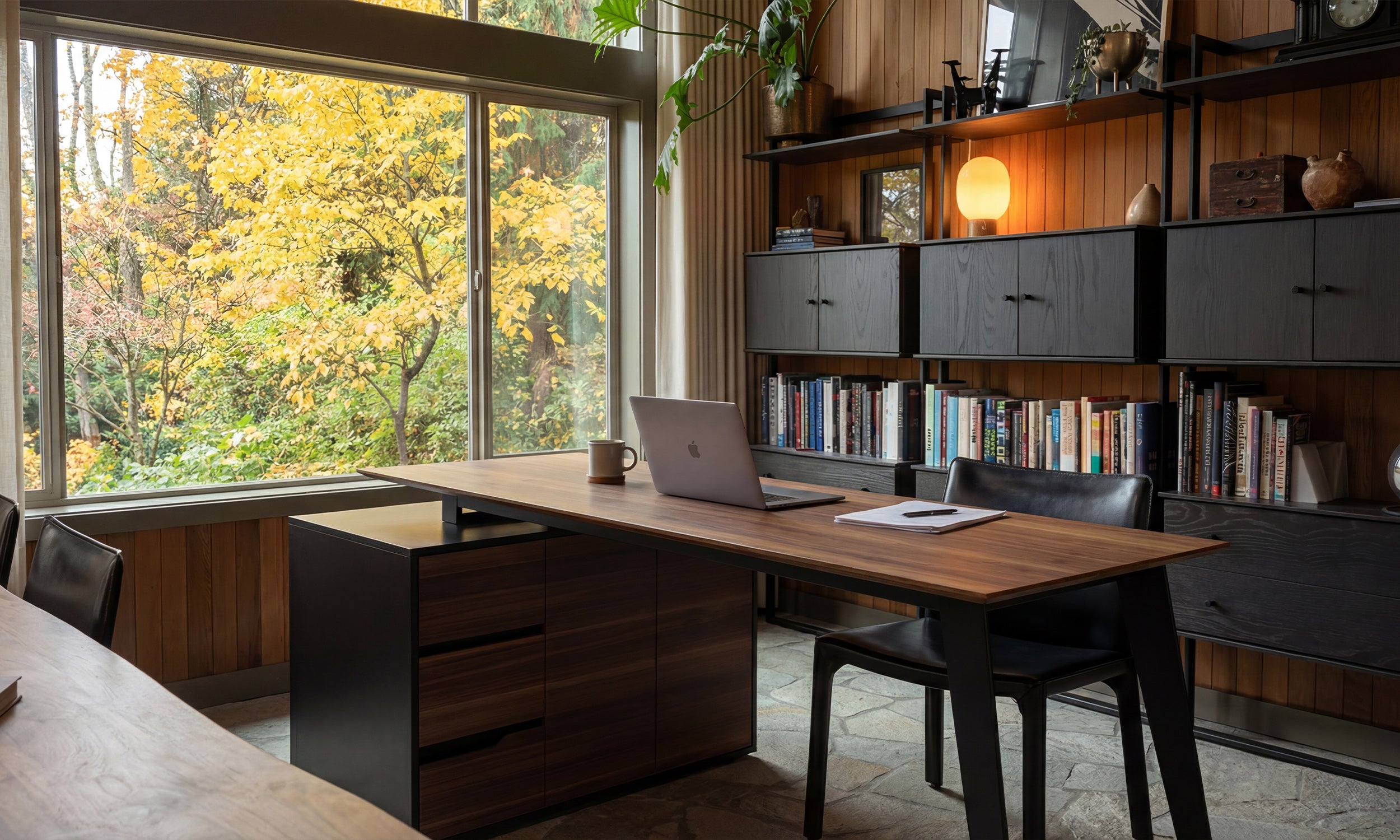


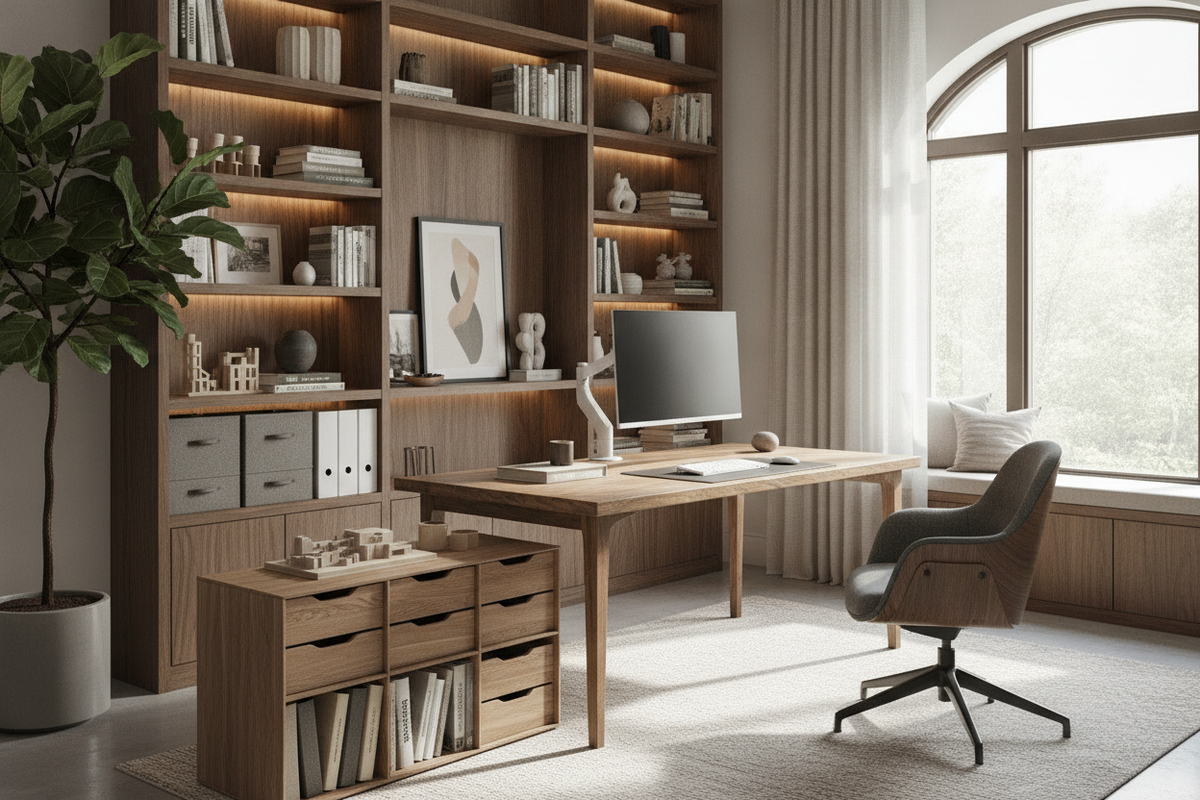
Creating an effective workspace requires more than choosing a flat surface and placing a chair in front of it. A cohesive office desk and storage system operates as an interdependent environment where daily computing tasks, document management, and auxiliary equipment coexist without creating visual chaos. When evaluating how to furnish a study, bedroom nook, or dedicated studio, coordinating your working perimeter with matching cabinetry prevents desktop surfaces from becoming permanent collection points for displaced accessories.
The Desk and Storage Dynamic: Designing a Balanced Workstation
The relationship between work surface area and storage density dictates day-to-day productivity. When storage is insufficient, desktop surfaces become cluttered with paperwork, charging cords, and peripherals, which encroaches on the primary typing and writing envelope. Conversely, overly bulky storage units can restrict leg clearance, compromise natural lighting, or overpower a multifunctional living area.
Achieving harmony begins by identifying which items require immediate desktop reach and which items belong in secondary or tertiary storage zones. Active task materials benefit from shallow drawers directly beneath the desktop, while historical documents, backup tech hardware, and reference binders function best inside deeper lower drawers or vertical shelving.
Evaluating Workstation Footprints and Room Fit
Room proportions and circulation paths set realistic boundaries for any room office desk plan. A workstation needs adequate space behind the desk for chair movement, as well as enough clearance to allow cabinet doors and file drawers to open fully without striking neighboring walls or doors.
Simple Home Desk vs. High-Capacity Storage Workstations
A streamlined table-style framework, often chosen as a simple home desk, relies on four open legs to provide an airy aesthetic suitable for tight bedrooms or secondary nooks. While these minimalist desks preserve visual space, they require separate organizers to manage loose items. By contrast, a high-capacity unit such as an office storage desk product combines work surfaces with dedicated banks of drawers and cupboards, consolidating filing capacity and task space into a single coordinated footprint.
Corner and L-Shaped Configurations for Dual Zones
When positioning furniture in corners or along intersecting walls, an L-shaped layout effectively separates computing equipment from tactile writing or project assembly. Using an office desk storage product enables you to keep monitors and keyboards along one wing while reserving the secondary run for books, printers, and immediate reference paperwork.
Storage Architecture: Integrated Cabinetry vs. Modular Support
Homeowners often weigh fixed, built-in cabinetry against adaptable freestanding pieces. Exploring a dedicated office storage collection helps you examine how coordinated sideboards, mobile filing pedestals, and shelving hutches can adapt to evolving spatial requirements without demanding custom architectural alterations.
Drawer Typologies and Filing Capabilities
Drawer storage functions best when separated into specific compartments. Shallow utility drawers keep pens, sticky notes, and small electronics from tangling, while deep hanging file drawers accommodate standard letter or legal documents. To optimize compartmentalization inside these compartments, reviewing a detailed desk storage office guide offers practical advice on dividing interior drawer volumes to prevent smaller essentials from sliding out of reach.
Concealed Cupboards and Architectural Shelving
Combining concealed cabinet doors with open display shelving creates a balanced aesthetic. Opaque cupboard fronts hide computer towers, backup storage drives, paper supplies, and sensitive paperwork, maintaining a clean visual profile. Open display tiers offer spaces for select reference books, framed art, or personal keepsakes that bring warmth to your remote office setting.
Material Composition and Long-Term Durability
Because home workspaces experience daily wear from keyboard movement, writing instruments, and resting items, material resilience is an essential consideration:
- Engineered Wood with Melamine or Laminate: Delivers reliable resistance against surface scratches, moisture rings, and everyday scuffs, offering an easy-to-clean finish for busy family offices.
- Wood Veneers: Provides the warm grain patterns of natural timber over stable core boards, requiring occasional dusting and gentle cleaning solutions to preserve its finish.
- Powder-Coated Steel Frames: Adds rigid structural support and modern contrast when paired with engineered panels, preventing desk surfaces from bowing under heavy display equipment.
Where to Buy Home Office Desks: Sourcing Channels Compared
Navigating where to buy office desks can be overwhelming given the wide variety of retailers, marketplace platforms, and contract office suppliers. Identifying the best place to buy a home office desk depends on your priorities regarding spatial customization, assembly preferences, and matching furniture suites.
Direct Furniture Brands and Workstation Specialists
Shopping directly through specialized furniture providers gives buyers access to coordinated design suites where matching finishes bridge desks, credenzas, and side cabinets. In my experience reviewing workstation layouts, coordinating finishes across your desk and surrounding cabinetry is the simplest way to establish visual order. If your office shares room with a bedroom or lounge, consulting a buy storage office guide can help you source pieces with warm residential finishes rather than clinical corporate aesthetics.
General Retailers vs. Commercial Office Outlets
When exploring where to buy a desk for home office needs, general mass-market retailers often present budget-conscious options, though these pieces may lack deep filing drawers or integrated wire passages. Commercial contract suppliers deliver robust durability, but their industrial dimensions and styling can feel out of place in residential settings. Evaluating where to buy home office desks requires balancing domestic styling, integrated organization, and practical assembly considerations.
Assembly, Cable Routing, and Ergonomic Commissioning
Once your desk and storage units arrive, proper setup ensures safe, comfortable daily use:
- Leveling Glides: Adjust the leveling feet under desk legs and drawer pedestals to eliminate wobbling on uneven carpets or wood floors.
- Cable Integration: Thread monitor cables, laptop chargers, and peripheral wires through built-in desktop grommets or attach under-desk wire trays to prevent hanging cords.
- Knee Clearance: Confirm that your chair armrests glide smoothly beneath the desk perimeter and that pedestal drawers leave ample leg space for comfortable movement throughout the workday.
- Wall Anchoring: Secure tall shelving units, credenzas, and vertical hutches to wall studs using anti-tip hardware to ensure structural stability.


Dejar un comentario
Este sitio está protegido por hCaptcha y se aplican la Política de privacidad de hCaptcha y los Términos del servicio.