










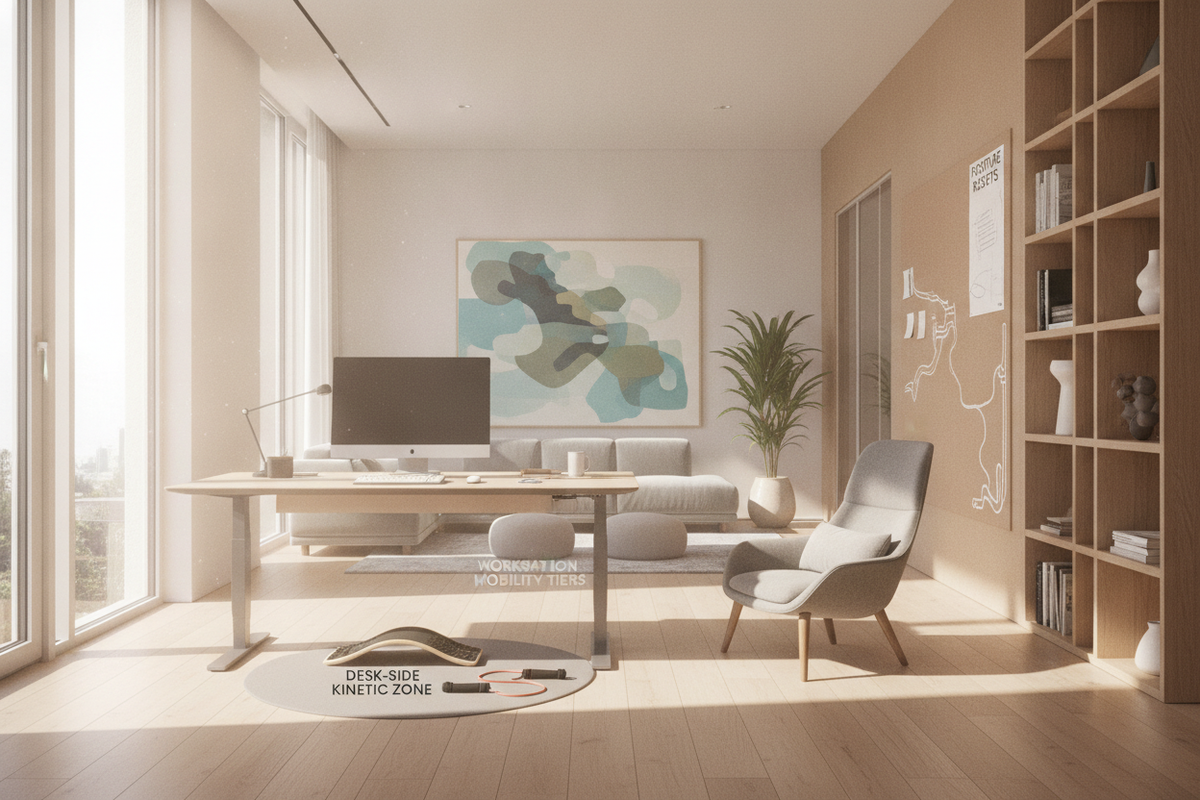
Introduction: Transforming the Sedentary Workday Through Kinetic Office Workouts
Modern desk work often encourages prolonged periods of static sitting, leading to physical fatigue, stiff joints, and reduced alertness. Introducing structured office exercises into the working routine helps maintain mobility and engagement throughout the day. Rather than treating physical activity as an isolated event that happens only before or after business hours, integrating deliberate movement into regular breaks bridges the gap between focused computer tasks and physical well-being. Practicing thoughtful working out in the office does not require athletic apparel or specialized equipment; it begins with an awareness of body alignment, regular posture shifts, and intelligent workstation organization. For broader strategies on establishing a productive and balanced home office layout, reviewing an office tips work guide can help align functional furniture choices with physical comfort goals. Developing an active mindset transforms simple desk breaks into opportunities for physical renewal, supporting sustained concentration and comfortable everyday work habits.
Workstation Kinetic Zoning: Three Tiers of Desk-Side Movement
To implement an effective at work workout without disrupting workflow or displacing office tools, it is helpful to organize physical activity into three distinct spatial and intensity zones. Structuring movements into progressive tiers allows professionals to select the right exercise based on their schedule, meeting commitments, and immediate surroundings. Exploring a comprehensive working office guide offers valuable perspective on how workspace architecture influences daily ergonomic habits.
- Tier 1: Seated Micro-Movements: These are discrete exercises you can do at work directly in your task chair without moving away from the screen. Examples include gentle ankle circles, seated spinal rotations, and shoulder rolls that encourage circulation during intensive computer tasks.
- Tier 2: Desk-Supported Active Stretches: These intermediate routines involve rising from the chair and utilizing a sturdy desktop or partition wall for stability. When engaging in workout while working intervals, desk-supported calf raises, standing quad stretches, and incline surface push-offs provide gentle muscular engagement.
- Tier 3: Perimeter Dynamic Drills: Stepping completely clear of the desk footprint into an open perimeter zone allows for broader range-of-motion drills. These active intervals promote general flexibility and joint ease across the entire body.
By categorizing movements across these zones, professionals can tailor their fitness in office routines to match the rhythm of their daily tasks without creating visual distraction or physical clutter.
Seated and Desk-Supported Movement Catalog for Workday Agility
Establishing a dependable routine requires practical, low-impact movements that can be performed in business attire. When planning a workout to do at work, focus on controlled repetitions, steady breathing, and smooth transitions between poses. Here is a catalog of foundational movements designed for workstation agility:
- Seated Torso Spiral: Sit upright with feet flat on the floor. Place your right hand on the outside of your left knee and gently rotate your upper torso to the left, holding for several breaths before alternating sides. This seated rotation relieves lower back tension.
- Scapular Retraction and Chest Opener: Interlace your fingers behind your back or reach behind your chair, rolling your shoulders back and drawing your shoulder blades together. This reset counters the forward-slumping posture often caused by typing.
- Wrist Extensor and Flexor Release: Extend one arm forward with the palm facing out, using the opposite hand to gently draw the fingertips back toward your body. Reverse the motion with the palm facing inward to ease forearm tension.
- Desk-Supported Incline Push-Offs: Place your palms firmly along the edge of a stable table, step back into an angled plank, and lower your chest toward the desk edge before pressing back to the start position.
- Standing Heel Raises and Glute Holds: Stand behind your chair with light fingertip contact on the backrest for balance. Rise onto the balls of your feet, hold briefly at the top of the movement, and slowly lower down.
Mastering how to exercise at work centers on moderation and consistency. Integrating these gentle movements ensures that physical activity complements, rather than interrupts, daily responsibilities.
Spatial Clearance, Floor Safety, and Workstation Stability
Safe physical movement within an office requires proper spatial planning. Leaning against unsteady furniture or navigating around tangled floor cords can create unnecessary hazards. Before initiating any workout at workplace routine, evaluate the perimeter surrounding your primary work surface.
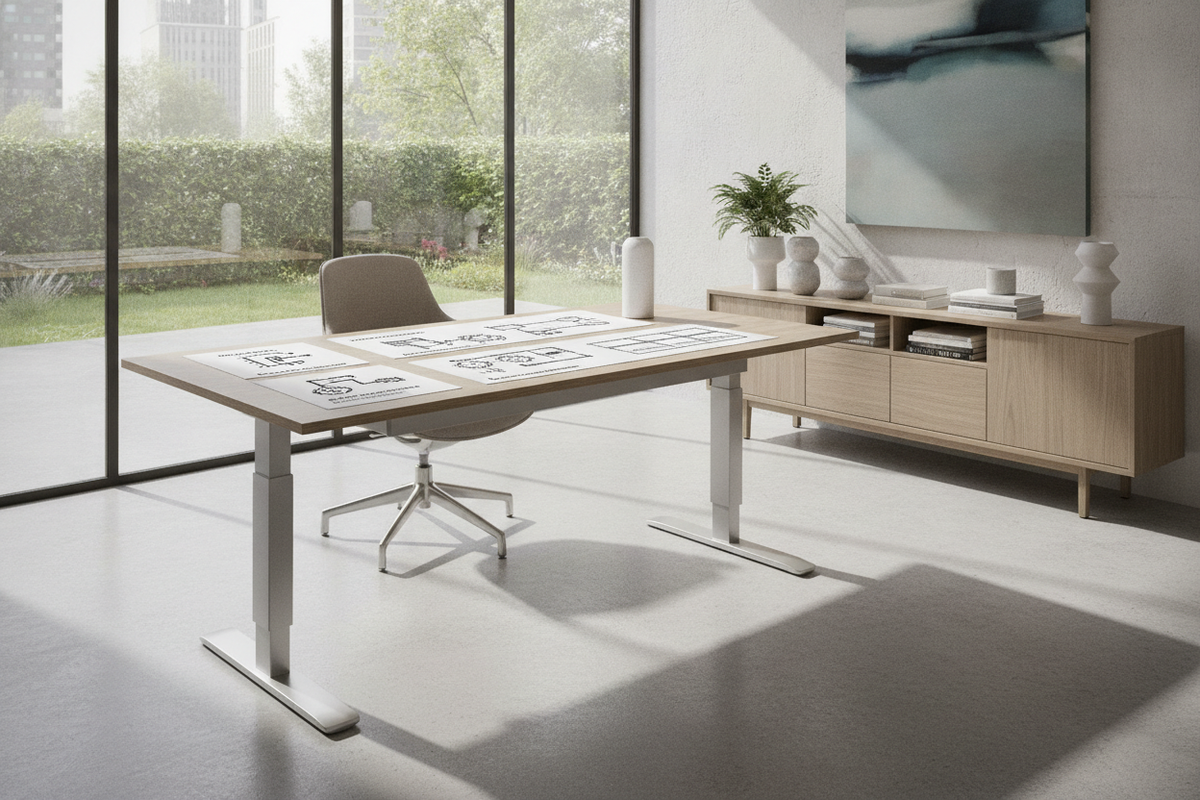
Ensure your task chair can be pushed completely back or tucked beneath the tabletop to create an unobstructed movement zone. Sturdy furniture construction is essential; an anchored desk or an expansive working product provides the structural stability required when supporting body weight during standing stretches or desk push-offs. In my view, an uncluttered floor area framed by a solidly built table instantly invites more spontaneous movement throughout the business day. In addition, verify that floor surfaces offer adequate traction, whether using low-pile commercial carpeting or a non-slip floor mat, allowing for confident, stable foot placement during all exercises.
Pacing, Habit Stacking, and Structured Daily Routines
Consistency is the core element of sustainable office fitness. Rather than attempting lengthy exercise sessions that take valuable time away from deliverables, implement short movement breaks throughout the day. Habit stacking—linking a physical stretch to an existing daily trigger—is an effective way to establish this routine effortlessly.
- The Post-Meeting Stretch: Whenever a video conference or phone call concludes, stand up immediately and perform two minutes of shoulder rolls and standing calf raises.
- Hydration Habit Pairing: Each time you refill your water bottle, take an extra lap around the perimeter of the room or complete a set of desk-supported incline push-offs.
- The Midday Mobility Block: Dedicate five minutes before your lunch break to seated spinal mobility and wrist stretches.
Adopting structured breaks and knowing when to step away from task management is explored further in this out office working guide. Systematically pacing your day ensures physical activity becomes a natural, refreshing complement to focused work.
Workspace Storage Architecture and Clutter Mitigation for Active Offices
A cluttered office is a significant obstacle to physical movement. Loose computer cords, misplaced storage bins, and scattered reference materials restrict floor clearance and introduce tripping hazards. Establishing an organized storage architecture ensures your room remains open and ready for physical activity.
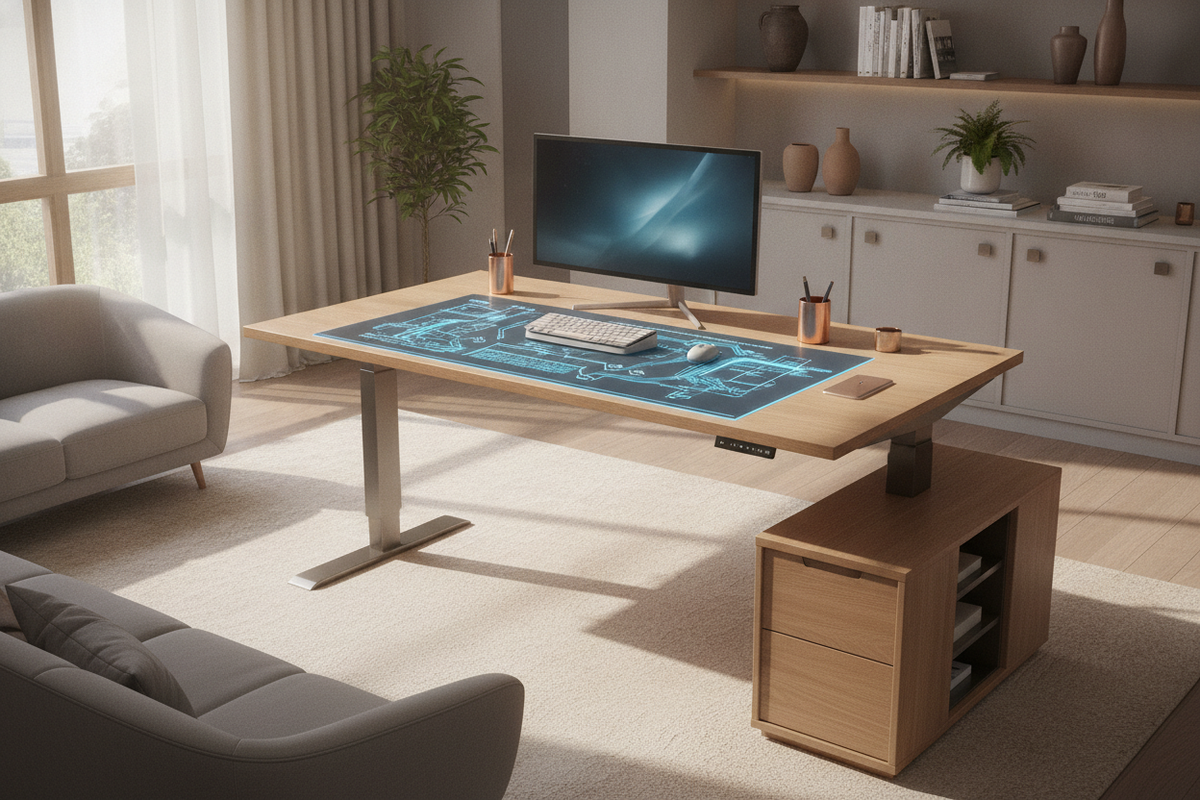
Utilize under-desk cable management trays to lift power strips and connection cords away from foot traffic zones. Mobile pedestal cabinets and modular credenzas should be positioned along peripheral walls rather than in central pathways, preserving valuable floor space for dynamic stretches. For practical methods on harmonizing modern office hardware with clean aesthetic organization, consult this tips working guide. Maintaining an orderly workspace creates an open environment where you can seamlessly transition between seated productivity and active movement resets.

Dejar un comentario
Este sitio está protegido por hCaptcha y se aplican la Política de privacidad de hCaptcha y los Términos del servicio.