


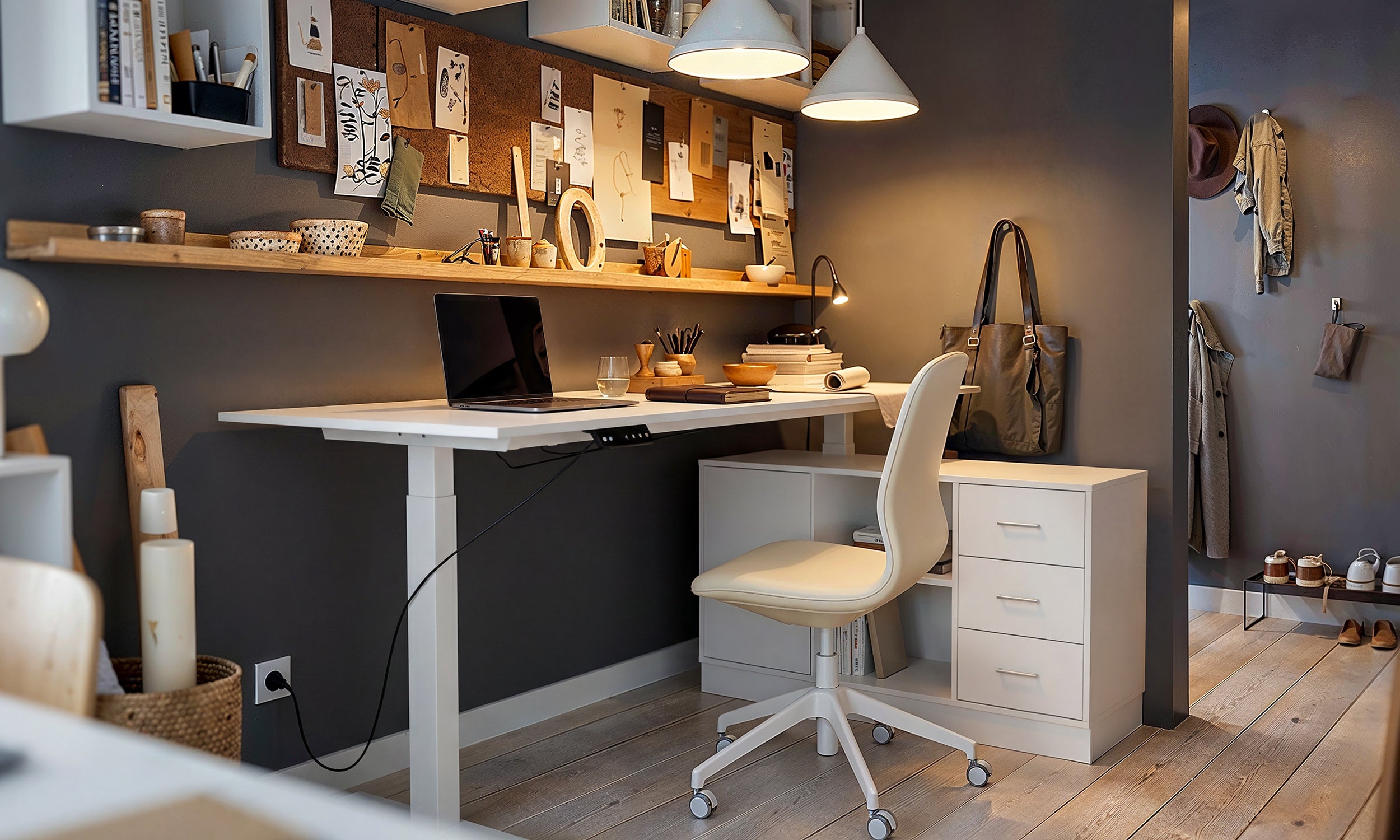
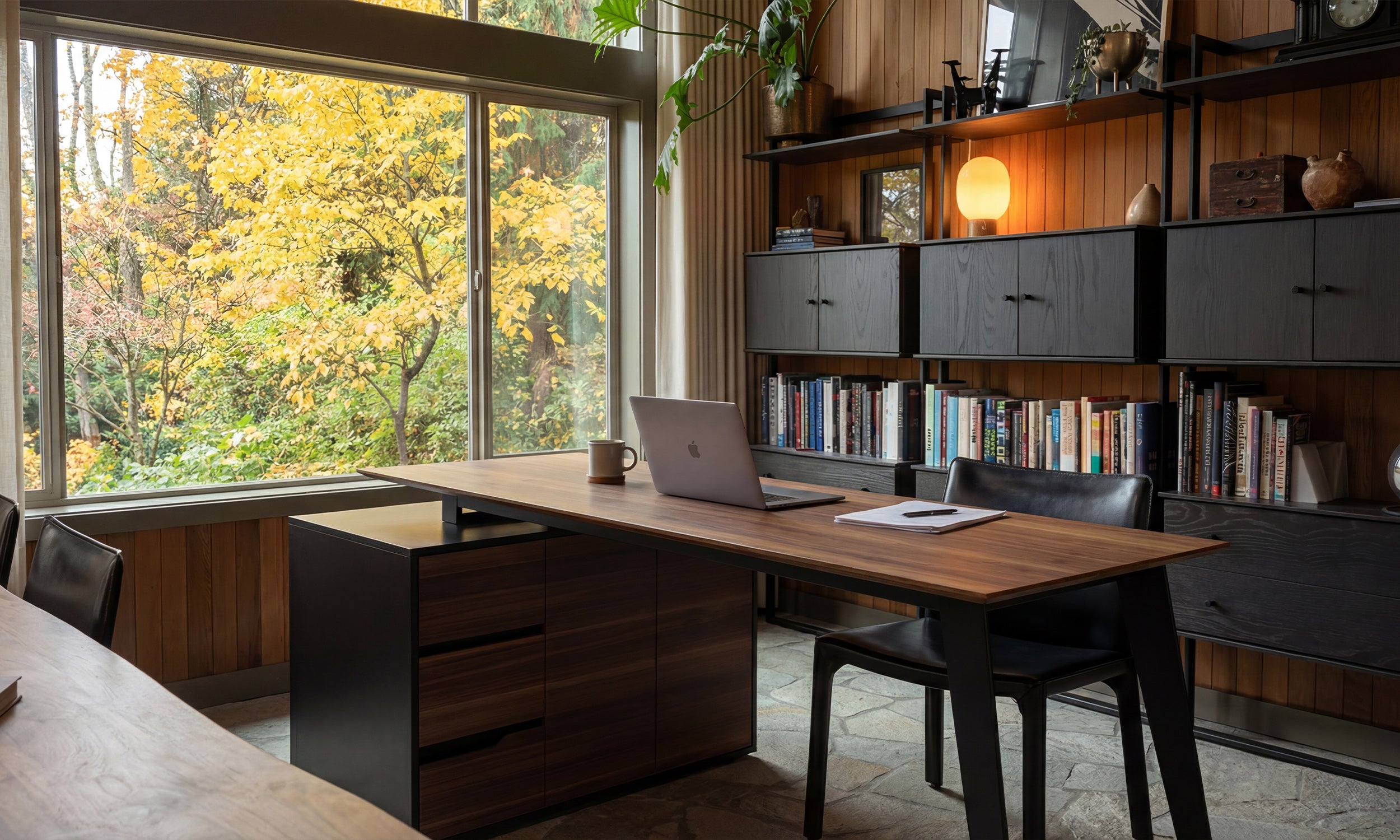


Integrating a dedicated work surface into a residential environment requires balancing everyday professional demands with domestic interior style. Unlike commercial cubicles engineered purely for utility, an office table at home must serve multiple roles: functioning as a stable workstation during working hours while harmonizing with surrounding furnishings during downtime. Achieving this balance depends on selecting an appropriate architectural silhouette, understanding room clearances, and establishing secondary organization systems that prevent clutter from overwhelming shared living quarters.
The Role of an Office Table at Home: Redefining Residential Workspaces
Traditional corporate desks often feature solid side panels, integrated metal filing pedestals, and industrial finishes that can appear visually heavy inside bedrooms, apartments, or open-plan living rooms. Conversely, standard dining tables offer expansive surfaces but frequently lack the ergonomic proportions, cable management accommodations, and modesty considerations required for sustained computer work.
An office home table bridges this gap by utilizing open-frame architecture. Characterized by slender leg profiles, continuous under-desk clearance, and unobstructed floor visibility, these tables preserve a feeling of spaciousness within compact domestic footprints. This airy structure makes them adaptable across diverse rooms, supporting intensive computing without dominating the aesthetic character of the home.
Dimensional Decision Categories: Matching Table Footprints to Room Clearances
Selecting the right table proportions requires evaluating both functional tabletop needs and surrounding floor space. Rather than focusing solely on absolute measurements, consider sizing categories relative to user workflow and residential traffic patterns:
- Compact Footprint Workstations: Best suited for multi-use bedroom alcoves, hallway landings, or unused living room corners. These tables accommodate a single laptop, essential stationery, and a compact task light while occupying minimal floor depth.
- Medium-Scale Utility Surfaces: Designed for standard daily productivity, these surfaces support an external monitor alongside a laptop, peripheral accessories, and active paperwork without feeling cramped. They represent a versatile middle ground for hybrid professionals.
- Expansive Executive and Shared Surfaces: Ideal for dedicated studies, creative project work, or multi-user arrangements where two people work side by side. These wider, deeper tables accommodate multi-screen displays, reference binders, and auxiliary tabletop organization.
Beyond the surface footprint, perimeter clearance dictates everyday comfort. Ensure sufficient space behind the table to push an office chair fully back and exit without striking walls, bookcases, or doorways. Similarly, preserve primary walkways so household traffic moves freely without disrupting active video meetings or concentrated tasks.
Storage Needs and Organizational Architecture
Because an office table emphasizes an open silhouette, managing documents, cords, and office supplies requires deliberate organizational planning. Relying purely on tabletop stacking quickly compromises both functional efficiency and room aesthetics.
Decoupled Storage Systems
Pairing an open-frame table with a separate mobile pedestal provides substantial flexibility. A rolling file cart or low cabinet can rest beneath the table during standard work routines and tuck neatly away into a nearby closet or corner when additional legroom is preferred. This modularity maintains visual lightness while keeping files accessible.
Integrated Apron Drawers
Some office table designs feature slim, integrated drawers concealed directly beneath the desktop surface. These low-profile compartments house writing utensils, charging cables, and flat notebooks without intruding upon thigh clearance. They offer quick access to immediate supplies while preventing loose items from accumulating on the primary surface.
Vertical and Perimeter Organization
When floor area is constrained, vertical organization preserves open working spans. Floating wall shelves, adjacent credenzas, or wall-mounted pegboards position books, decorative items, and peripheral tech equipment off the primary surface. Managing electronic cords using under-mount trays or discrete leg clips further preserves the clean, architectural silhouette of the table.
Material Selection and Surface Durability for Daily Living
The materials chosen for an office home table influence structural stability, ongoing maintenance, and tactile comfort throughout the workday.
- Engineered Wood and Wood Grain Finishes: Warm wood tones integrate smoothly with residential living furniture, softening the technical appearance of monitors and keyboards. Durable surface finishes protect against daily surface friction while resisting everyday wear.
- Melamine and High-Pressure Laminates: Highly practical for active households, laminate tops resist moisture rings from coffee mugs, ballpoint pen marks, and subtle surface scratches. They clean quickly with a damp cloth, making them dependable for multi-purpose rooms.
- Steel and Aluminum Framing: Metal legs and structural subframes provide substantial rigidity without the bulk of solid wooden side panels. Powder-coated finishes offer long-term resistance to scuffs from shoe contact and office chair casters.
Layout Strategies: Placing an Office Home Table Across Different Room Types
Where a table sits within the home influences both focus during work sessions and relaxation after hours.
Living Room Integration
In shared family or living areas, placing the table directly behind a floating sofa creates a functional room divider while preserving sightlines across the space. Alternatively, anchoring the table against an accent wall or within an architectural recess helps demarcate a clear productivity zone distinct from lounge seating.
Bedroom Nook Workstations
When working within a bedroom, positioning the workstation away from the immediate sightline of the bed supports psychological boundary setting between rest and business. Selecting a light-toned finish and keeping cords concealed prevents technological clutter from disrupting the calm atmosphere of a sleeping sanctuary.
Dedicated Study Arrangements
In a private home office, a floating layout—positioning the table centrally facing the doorway—offers an executive presence and natural lighting advantages. For smaller private rooms, positioning the table adjacent to a window provides natural task lighting while keeping wall perimeters open for complementary storage credenzas and bookcases.
Assembly, Stability, and Everyday Maintenance Framework
Ensuring that your office table remains stable and wobble-free requires careful initial setup and sensible daily care:
- Leveling on Varied Flooring: Many residential floors exhibit slight unevenness, particularly across area rug borders, transitions between tile and wood, or older flooring. Utilize adjustable leveling feet to stabilize all contact points before loading heavy electronics.
- Framing Alignment: During assembly, loosely fasten all structural screws and crossbars before applying final torque. Squaring the frame components prior to tightening prevents torsional stress and eliminates micro-wobbles during typing.
- Surface Care and Load Distribution: Distribute weight across the tabletop by centering heavy monitor stands rather than concentrating mass along outer cantilevers. Using desk pads, coasters, and soft felt bumpers beneath desktop accessories preserves surface sheen and guards against minor abrasions over years of daily productivity.
Decision Checklist: Selecting Your Ideal Office Table at Home
Before finalizing a furniture selection, review these core considerations to ensure the table satisfies both immediate utility and long-term home design goals:
- Equipment Footprint: Does the surface comfortably support your primary screen setup, keyboard, and task lighting with room left for notes?
- Movement Clearances: Is there adequate floor room to pull out your chair, open adjacent room doors, and walk past unobstructed?
- Storage Complement: Have you accounted for where reference documents, personal electronics, and daily office accessories will live when the workday ends?
- Aesthetic Cohesion: Do the leg finishes, surface tones, and overall silhouette complement existing residential furniture in the surrounding space?
By assessing spatial dimensions, material durability, and organizational pairing collectively, an office table at home transforms any available alcove or dedicated room into a productive, visually harmonious work environment.


Dejar un comentario
Este sitio está protegido por hCaptcha y se aplican la Política de privacidad de hCaptcha y los Términos del servicio.