










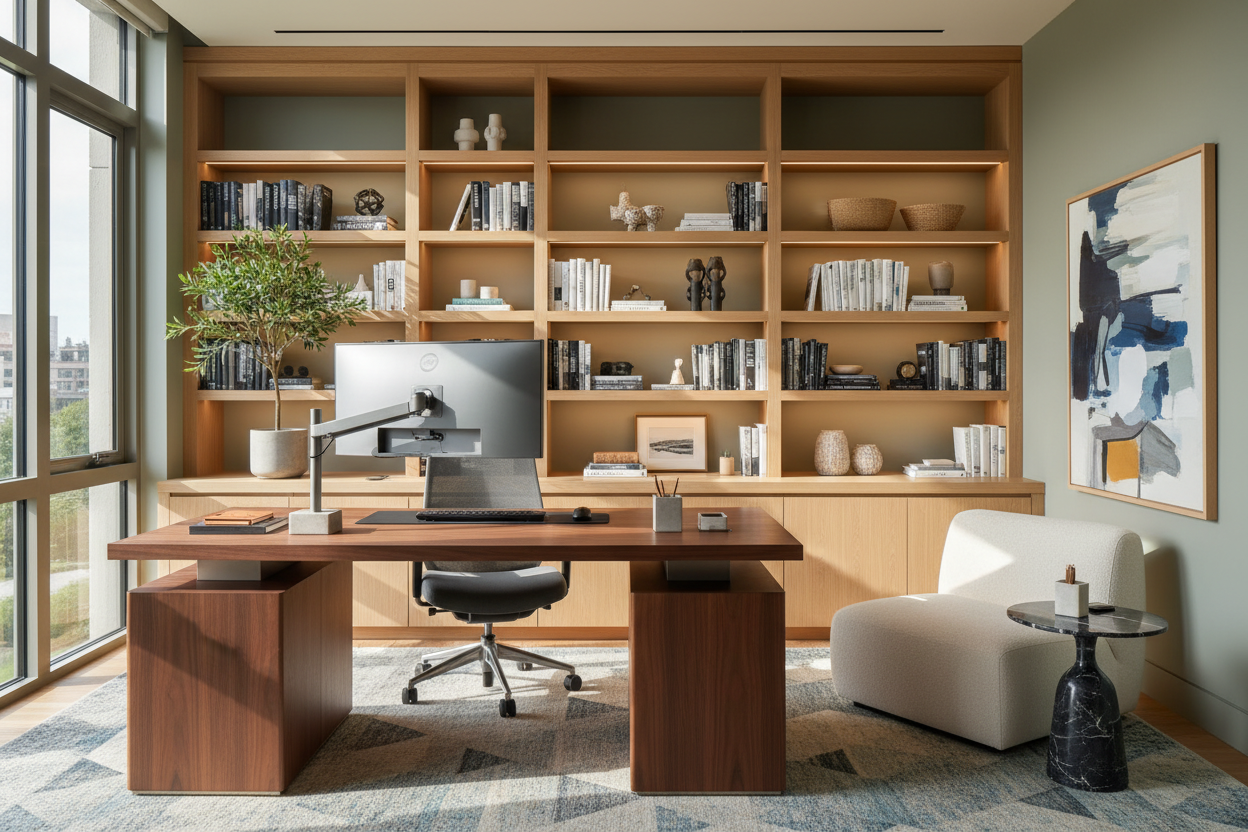
Designing a workspace isn't just about filling a room with a desk and chair; it's about curating an environment that supports your workflow and physical health. We have all experienced the frustration of a drawer that sticks or a chair that loses its cushion support by noon. Finding true quality office furniture is the difference between a space that drains you and one that energizes you. Whether you are outfitting a corporate suite or a corner of your living room, the principles of durability, ergonomics, and aesthetic balance remain the same.
Key Features to Look For
Before committing to a purchase, use this checklist to distinguish investment-grade pieces from fast furniture:
- Material Integrity: Look for kiln-dried hardwoods, high-pressure laminates (HPL), or architectural-grade veneers rather than paper-thin foils.
- Joinery Techniques: Dovetail or mortise-and-tenon joints in drawers indicate longevity compared to staples and glue.
- Ergonomic Certification: Chairs should meet BIFMA standards for safety, durability, and structural adequacy.
- Hardware Quality: Test drawer slides for full extension and soft-closing mechanisms; check that hinges are adjustable.
- Warranty Depth: A 10-12 year warranty is standard for the best quality office furniture; anything less than 5 years signals a lack of manufacturer confidence.
Decoding Material Composition
As a designer, the first thing I inspect is the substrate. Many home office furniture brands use terms like "wood finish" to mask the use of low-density particle board. While particle board isn't inherently bad, it must be high-density industrial grade to prevent bowing under the weight of monitors and equipment.
Solid Wood vs. Veneer
While solid wood offers a luxurious tactile experience and can be refinished, it is susceptible to humidity changes. High-end veneers over a stable MDF core are often superior for large desk surfaces as they resist warping. When browsing the best office furniture stores, run your hand along the underside of the desk. If it feels rough or unfinished, the manufacturer cut corners where they thought you wouldn't look.
The Ergonomics of Excellence
Office furniture quality is largely defined by how the piece interacts with the human body. A chair might look stunning in a catalog, but if it lacks a synchro-tilt mechanism—where the seat and back move in a ratio to support your posture—it will lead to fatigue.
Visual Weight and Balance
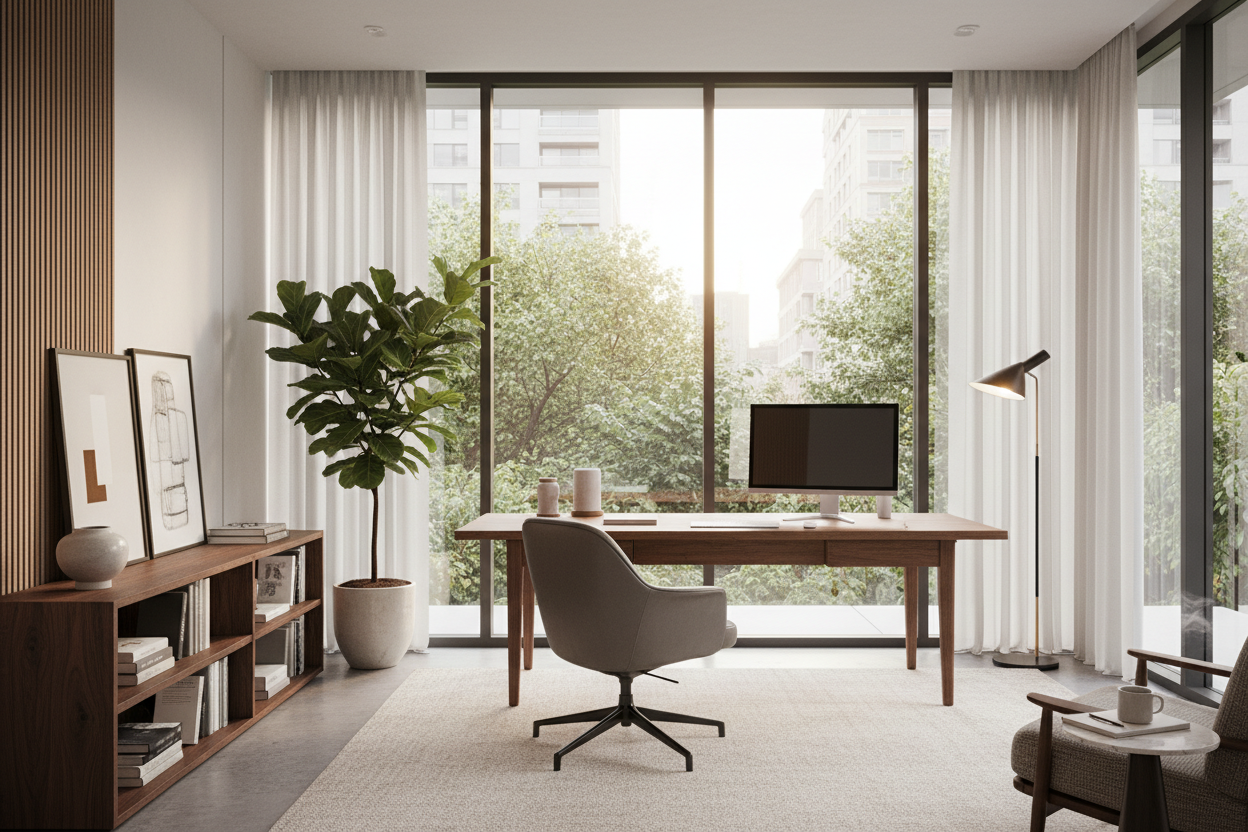
When selecting top rated home office furniture, consider the "visual weight" of the piece. In smaller home offices, a heavy, dark mahogany desk can make the room feel claustrophobic. Opt for pieces with exposed legs or glass elements to maintain an airy silhouette. This allows the eye to travel through the furniture, making the room appear larger.
Sourcing the Best Brands
Navigating the market can be overwhelming. The best home office furniture brands typically specialize in contract-grade furniture—pieces designed for 8+ hours of daily use in corporate settings—adapted for residential aesthetics. Avoid buying purely based on style trends. The best office furniture stores will encourage you to sit in a chair for at least 15 minutes before buying, allowing your body heat to settle into the foam to reveal the true comfort level.
My Personal Take on Quality Office Furniture
I want to share a specific detail I learned the hard way early in my career. I once specified a stunning, sleek desk for a client based solely on its glossy aesthetic. It looked incredible in photos. However, within three months, the client called me complaining about their wrists.
The issue wasn't the height—it was the edge banding. The desk had a sharp, 90-degree PVC edge that dug into the user's forearms while typing. True quality isn't just about durability; it's about the "touch points." Now, whenever I evaluate a desk, I perform the "lean test." I lean my full weight on the front edge. If there isn't a subtle radius or a waterfall edge to soften the contact point, I walk away. It’s a small, unpolished detail that you won't see in a showroom photo, but you will absolutely feel at 3:00 PM on a Tuesday.
Conclusion
Investing in your workspace is investing in your own output and well-being. By focusing on superior materials, proper joinery, and human-centric design, you create a space that serves you for decades, not just seasons. Take your time, test the hardware, and choose pieces that resonate with both your body and your style.
Frequently Asked Questions
How do I maintain the finish on a wood executive desk?
Dust weekly with a microfiber cloth and use a high-quality paste wax every six months. Avoid silicone-based sprays, which can build up over time and dull the finish. Always use coasters and leather desk pads to protect the primary work zone.
Is commercial office furniture too large for a home office?
Not necessarily. While traditional corporate desks can be bulky, many manufacturers now offer "resimercial" lines. These offer the durability of commercial grade but with scaled-down footprints (e.g., 48" or 60" widths) suitable for residential floor plans.
Why is there such a price gap in office chairs?
The price difference lies in the mechanism and foam quality. High-end chairs use molded foam that retains its shape for 10+ years and mechanisms that support dynamic movement. Cheaper alternatives use cut foam that flattens quickly and static plates that lock you into a single, often poor, posture.

Dejar un comentario
Este sitio está protegido por hCaptcha y se aplican la Política de privacidad de hCaptcha y los Términos del servicio.