




Short answer: yes, a sideboard works well in a living room. It can serve as a TV or media console, a bar or coffee station, an entryway drop zone, storage behind a sofa or a focal point on a blank wall. The size rules change with the job: under a TV it should be wider than the TV, low enough to keep the screen near eye level and rated for the TV's weight; behind a sofa it should sit no higher than the sofa back; in an entry it should be shallow enough to leave a 36-inch walkway.
Most sideboard guides focus on the dining room, but a living room sideboard often works harder: it offers ample storage space, hides visual clutter, holds electronics, displays decor and anchors the seating area. A dining room sideboard you already own can often move straight into the living space. This guide covers each living room use with practical measurements, the checks to make before you buy and what to store inside. You can compare widths, heights and weight capacities across our sideboards and buffet cabinets as you go.
Sideboard in Living Room: Size Rules by Use
| Use | Width | Height | Depth | Key check |
|---|---|---|---|---|
| TV or media console | Wider than the TV itself | About 24–32" | 15–20" | Top weight capacity, cable routing |
| Bar or coffee bar | 47–63" | 34–36" for standing use | 15–18" | Nearby outlet, shelf capacity |
| Entryway or hallway | 31.5–55" | 30–36" | 13.8–16" | 36" walkway left clear |
| Behind the sofa | Shorter than the sofa | At or below the sofa back | 13.8–16" | Finished back, walkway behind |
| Blank wall focal point | 60–75% of the wall | 30–36" | 15–18" | Art sized to about two-thirds of the width |
For walkways, a useful benchmark is the 36-inch minimum walkway width in the National Kitchen & Bath Association's planning guidelines. They are written for kitchens, but the same width keeps a living room comfortable to walk through.
Using a Sideboard as a TV Stand or Media Console
A sideboard makes a good TV unit because it offers more enclosed storage than many TV stands and looks like furniture rather than equipment. Check four things before you put a TV on one:
- Width: measure the TV body, not the screen size. A 16:9 TV is about 0.87 times its diagonal in width, so a 55-inch TV is roughly 48 inches wide and a 65-inch TV about 57 inches. Choose a sideboard wider than the TV, ideally several inches on each side, so the feet sit fully on the top.
- Height: many sideboards are 30 to 36 inches tall, which can put the screen higher than a typical TV stand. For a TV on top, a lower sideboard of about 24 to 32 inches usually keeps the screen closer to seated eye level. Taller sideboards suit a wall-mounted TV hung above them.
- Weight: find the TV's weight (with its stand) on the manufacturer's spec sheet and compare it with the sideboard's listed top weight capacity, leaving margin for a soundbar and decor. Most cabinet-style sideboards in our range list a top capacity between 120 and 350 lb, and some list less, so always check the product page.
- Cables and ventilation: plan a path for cables and give consoles and receivers airflow. Closed cabinets may need a cord opening in the back panel or doors left ajar while devices run.
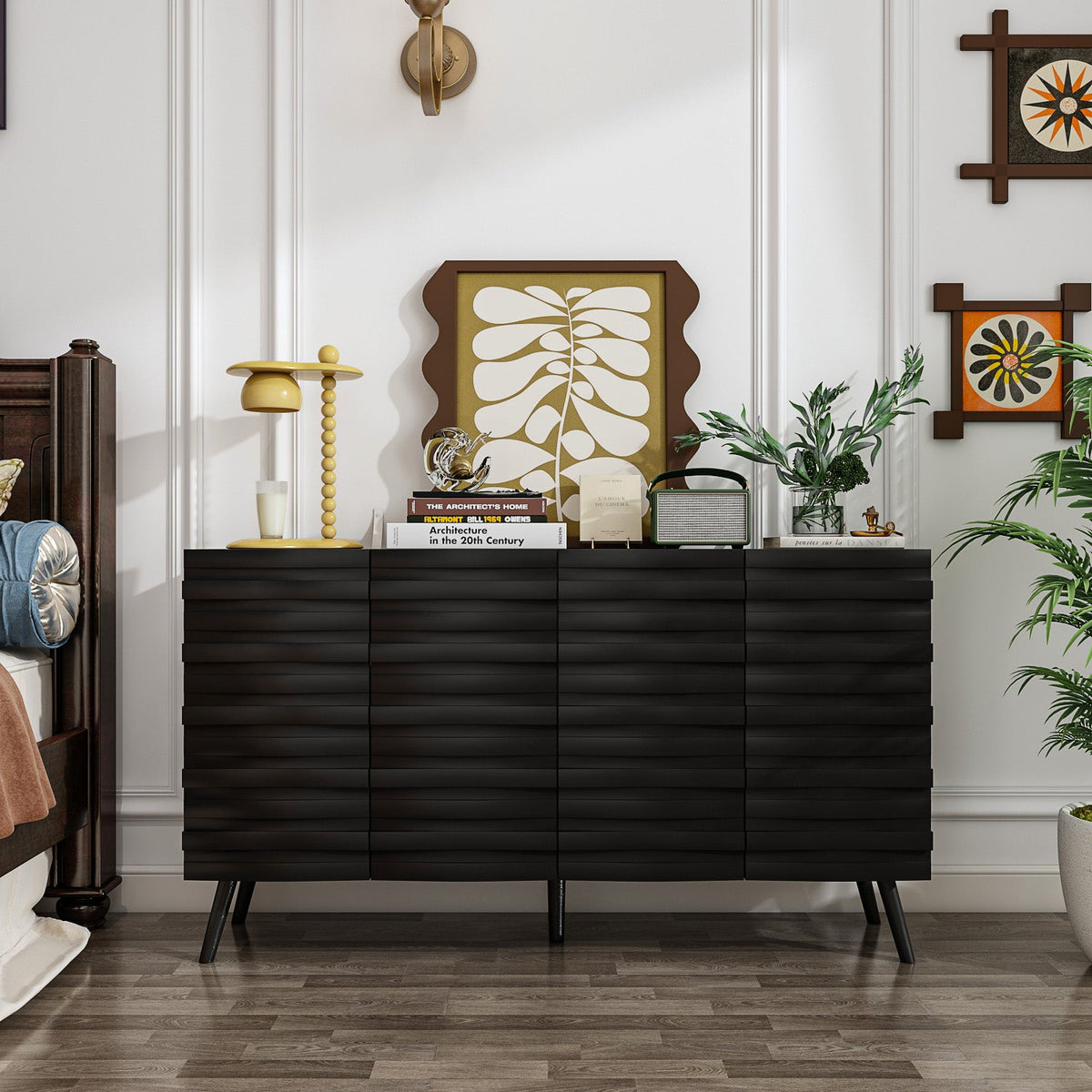
Good candidates include the 55.1" black buffet cabinet (31.4 inches tall, rated for 350 lb on top) and the 63" sideboard with gold legs and fluted doors (31.5 inches tall, 300 lb). For a long media wall under a wall-mounted TV, our 94.5" six-door cabinet adds cable management and adjustable shelves.
Whatever you choose, secure both pieces. The CPSC's Anchor It! campaign recommends anchoring all furniture with drawers, doors and shelves to the wall, and anchoring TVs, to prevent tip-overs. If you are deciding between a sideboard and dedicated media furniture, our guide to TV stand vs media console vs entertainment center compares them, and our TV stands list the TV sizes each model fits.

Sideboard as a Home Bar or Coffee Bar With Glass Doors
A sideboard turns a corner of the living room into a bar or coffee bar with storage underneath. For standing use, a top of about 34 to 36 inches is comfortable for pouring and mixing. Keep a tray on top to corral bottles, glasses or the coffee setup so the rest of the surface stays clear.
- Power: a coffee maker or kettle needs an outlet. The 59.1" sideboard with an integrated track socket is 36 inches tall with power built into the cabinet.
- Display: glass doors with built-in lighting show off glassware. The 63" black and brown sideboard with LED lights stands 37.4 inches tall with 4 drawers for bar tools.
- Weight: bottles are heavy. Shelves are commonly rated around 22 lb in our range, so spread bottles across shelves and keep the heaviest on the bottom.
Entryway Sideboard: Storage Where You Walk In
In homes where the front door opens into the living room, a sideboard creates an entry zone. Choose a shallow model, 13.8 to 16 inches deep, so the walkway stays at least 36 inches wide, and check that cabinet doors can open without blocking the door swing. The 55" mid-century sideboard with rattan doors is only 13.9 inches deep and stands on 7.3-inch legs, which keeps it visually light. Add a mirror above, a lamp for evening arrivals and a tray or bowl for keys; use drawers for gloves, sunglasses and dog leashes.
Storage Behind the Sofa: Sideboard or Console Table?
When a sofa floats in the middle of the room, a low sideboard behind it adds storage and a surface for lamps without taking wall space. In an open-plan layout, it also defines the edge of the living area. Follow three rules:
- Height: keep the top at or slightly below the height of the sofa back, so it does not tower over seated guests. Measure your sofa first.
- Length: choose a sideboard shorter than the sofa, so it does not stick out past the arms.
- Finished back: the back will be visible from the other side of the room. Most of our sideboards (58 of the 67 that list this spec) have a finished back; check the product page before you buy.
A console table is the lighter alternative behind a sofa: it is narrower and leaves more floor visible, but it offers little enclosed storage. Choose a sideboard when your storage needs include board games, throws or media, and a console table when you only need a surface for a table lamp and a few framed photos.
Leave about 36 inches of walkway behind the sideboard if people pass there, and because a sideboard behind a floating sofa cannot be anchored to a wall, choose a low, stable model and keep heavy items on the lower shelves.
A Focal Point on a Blank Wall or in Awkward Spaces
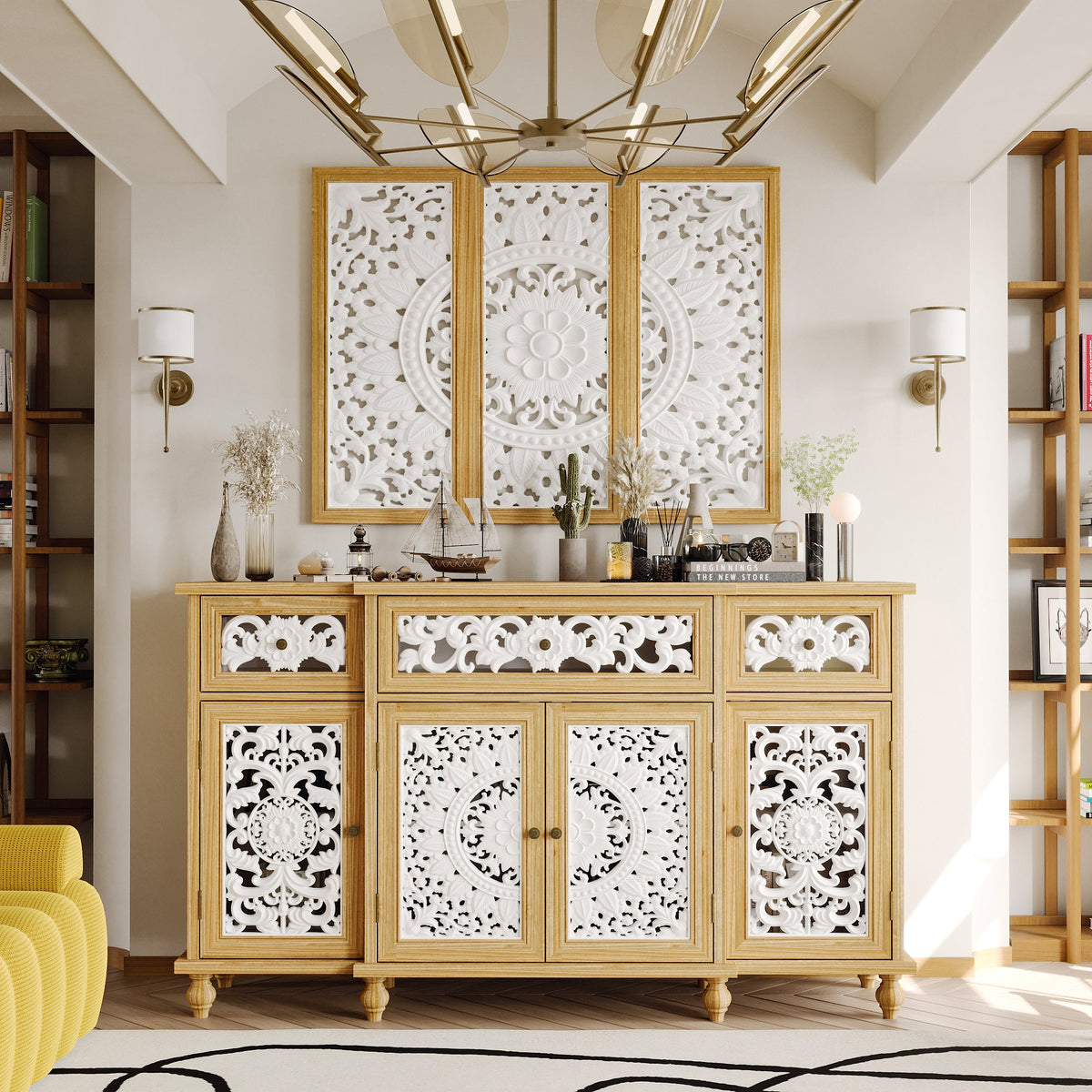
A sideboard can transform a blank wall into a focal point. Size it to about 60 to 75 percent of the wall's length, then hang art or a mirror about two-thirds of the sideboard's width above it. For exact art height, see our sideboard height and size guide. Low sideboards also fit under a window as long as the top stays below the sill, and a compact 31.5- to 47-inch cabinet can make use of an alcove, a corner or the wall beside a fireplace.

The 63" white four-door storage cabinet is 30.7 inches tall with adjustable shelves behind four doors, an easy way to give a long wall storage and a surface for decor.
Sideboard Features to Compare for Living Room Use
A sideboard is a versatile piece, but the right storage solution depends on the features behind the doors. Compare these on each product page:
- Doors vs drawers: four cabinet doors give tall, open interiors for consoles and board games; spacious drawers suit remotes, chargers and small items that otherwise end up on the top.
- Adjustable shelves: adjustable or removable shelves make room for a receiver, a soundbar subwoofer or tall vases. Our range lists adjustable shelves on 14 models.
- Door clearance: make sure the cabinet doors open fully without hitting the sofa, a rug edge or a side table. Sliding doors need no swing room, which helps in tight spaces.
- Glass doors: show off display pieces, and clear glass usually lets a remote reach devices inside.
- Cable management and finished back: essential for media use and for any sideboard seen from behind.
Open-plan layouts
In an open-plan interior layout, a sideboard pairs well between zones: placed behind the sofa or along the wall where the living area meets the dining table, it keeps the space organized and gives both zones storage. Keep it low, around table height, so it marks the boundary without blocking sightlines.
Choosing Materials and Style for a Living Room Sideboard
In a living room, the sideboard is seen from the sofa all day, so finish and shape matter as much as storage. Most of our models combine solid and engineered wood (manufactured wood such as MDF) for stable panels, plus a solid wood option, the 60.2" rustic sideboard. Warm wood tones and visible wood grain soften a room full of upholstery and screens; white or black fronts with crisp lines keep a modern living space calm.
- Fluted doors or rattan: add texture to a plain wall without extra decor.
- Raised legs: show more floor, so a long sideboard looks lighter in a small room.
- Floating sideboard look: a wall-mounted floating sideboard frees floor space but needs solid wall fixings; a low cabinet on short legs gives a similar clean-lined silhouette without wall mounting.
- Families: look for rounded edges or pulls, closed doors instead of open shelving for clutter, and always use the tip-over kit.
What to Store: Drawers, Adjustable Shelves and Glass Doors
- Behind doors: board games, media devices, photo albums, spare throws and cushions, seasonal decor, and serving trays or table linens if the sideboard also supports a nearby dining area.
- In drawers: remotes, chargers, batteries, candles, coasters and everyday essentials.
- On adjustable shelves: books, speakers and baskets that keep small items organized.
- Behind glass doors: glassware, collectibles or fine china you want on display.
To keep the top as tidy as the inside, layer decor in odd-numbered groups, add a sculptural lamp or table lamp for height and leave negative space so the surface does not look cluttered. Our step-by-step guide on how to style a sideboard covers lamps, art and seasonal changes. If you are unsure whether you need a sideboard or a credenza, see sideboard vs buffet vs credenza.
FUFU&GAGA sideboards ship free to the 48 contiguous states and DC, and most include a tip-over restraint kit. Explore living room friendly sizes in our sideboard collection.
Need Help Choosing? Customer Service Contact
Our customer service team can help with dimensions and weight capacities before you order: email customerservice@fufugaga.com, Monday to Friday 10am to 6pm EST and weekends 10am to 2pm EST.
FAQ
Are sideboards still in style?
Yes. Sideboards remain a popular choice for living rooms because they combine concealed storage with a display surface. Fluted fronts, rattan doors, natural wood and slim legs are common modern takes on the classic shape.
How do you style a sideboard in a living room?
Anchor it with art or a mirror, add a lamp or tall plant for height, group a few objects in threes and keep part of the top clear. If a TV sits on it, keep decor low and to the sides.
Where should a sideboard go in a living room?
Common spots are the TV wall, a blank wall opposite the sofa, behind a floating sofa, beside the entry or under a window. Choose the spot first, then size the sideboard to that wall and walkway.
Should a sideboard match the coffee table or TV unit?
It does not have to. Repeat one element, such as wood tone, hardware finish or leg style, so the pieces feel related without looking like a matched set.

Dejar un comentario
Este sitio está protegido por hCaptcha y se aplican la Política de privacidad de hCaptcha y los Términos del servicio.