










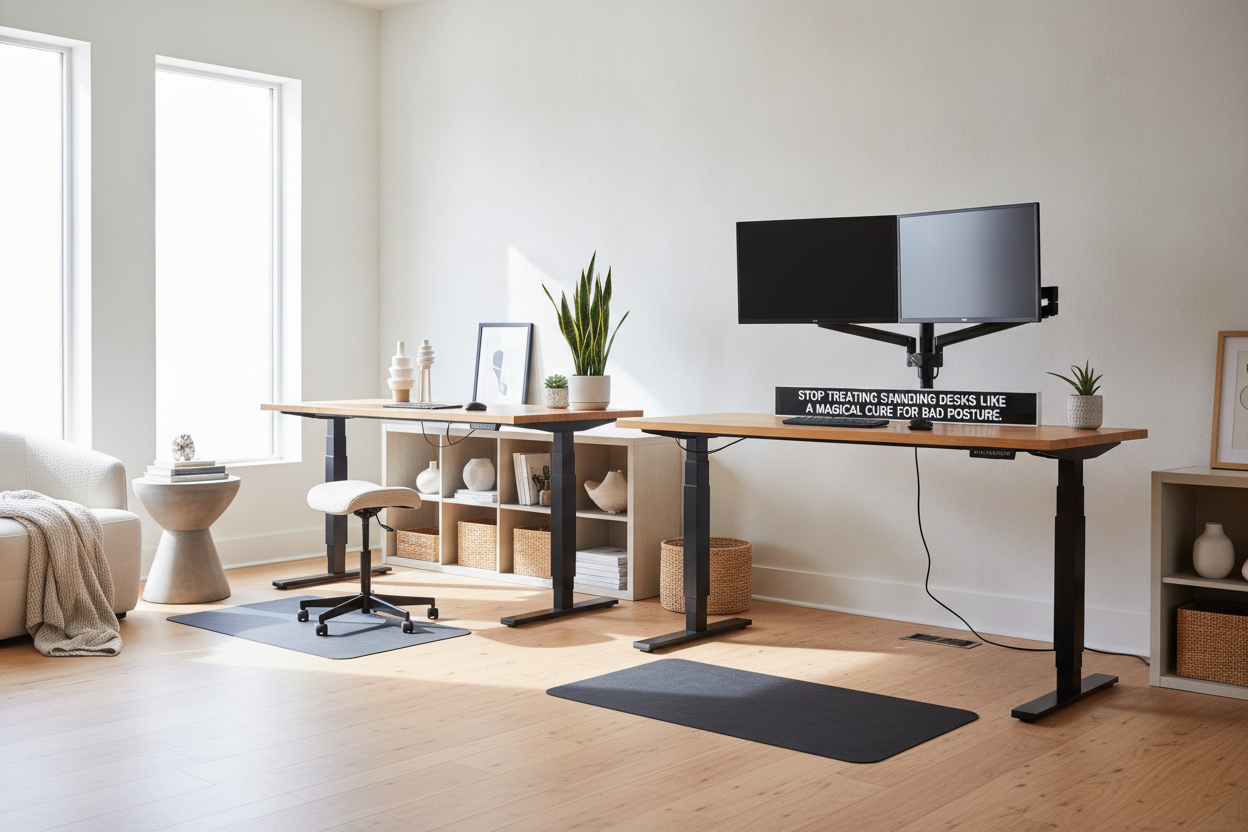
I remember the day I finally clicked 'buy' on my first sit and stand desk. My lower back felt like a crumpled receipt, and I was convinced that standing desks were the ergonomic equivalent of a green juice cleanse. I imagined myself standing tall, focused, and miraculously pain-free by Friday. Spoiler alert: I ended up with swollen ankles and a very expensive place to lean my elbows.
Quick Takeaways
- Standing all day is just as exhausting as sitting all day—the key is frequent switching.
- Stability is everything; a wobbly desk will drive you insane within twenty minutes of typing.
- Electric motors and memory presets are worth every extra penny.
- Anti-fatigue mats aren't optional; they are required equipment for your feet.
The 'Stand All Day' Myth (And Why My Feet Hated Me)
When I first got my stand up desk, I went cold turkey on my chair. I stood for seven hours straight. By the time I clocked out, my heels felt like they had been hammered into the floorboards. It is one of those classic home office setup mistakes to think a sit-stand desktop is a replacement for sitting. It is not.
The real magic of movement desks is the movement part. You should be switching every 30 to 60 minutes. If you lock your knees and stay static, you are just trading back pain for varicose veins. A stand up desk adjustable height system is there to keep you from getting stuck in one posture for too long. My advice? Start with 15-minute standing intervals and work your way up.
Why So Many Adjustable Height Desks Shake When You Type
There is nothing more annoying than a monitor that wobbles every time you hit the 'Enter' key. I have tested cheap desk height adjustable frames that felt like they were made of recycled soda cans. When you extend a desk to its full height, the center of gravity shifts. If the legs are not heavy-duty steel, that vertical desk becomes a tuning fork for every keystroke.
If you are tall, this is even more critical. A tall desk at 45 inches high needs a wide footprint and serious weight in the base to stay still. Do not cheap out on the frame just to get a prettier desktop. A stable standing office desk is a heavy standing office desk. Look for dual-motor systems; they handle the weight of multiple monitors much better than single-motor alternatives.
Memory Presets Save You From the Awkward 'In-Between' Height
I once had a manual crank sit stand desk. I used the standing feature exactly three times before I got tired of the literal workout required to raise it. Powered standing desks are the only way to ensure you actually use the thing. But even then, you need a desk with memory preset controller.
Without presets, you spend three minutes every morning tapping a button, trying to find that sweet spot where your elbows are at a perfect 90-degree angle. It sounds lazy, but that friction is enough to make you stay seated all day. An adjustable workstation should feel seamless. One touch, and you are at your standing computer desk height while you go grab a coffee. If you have to guess the height every time, you will never be truly ergonomic.
Making a Sit-Stand Desk Look Like Actual Furniture
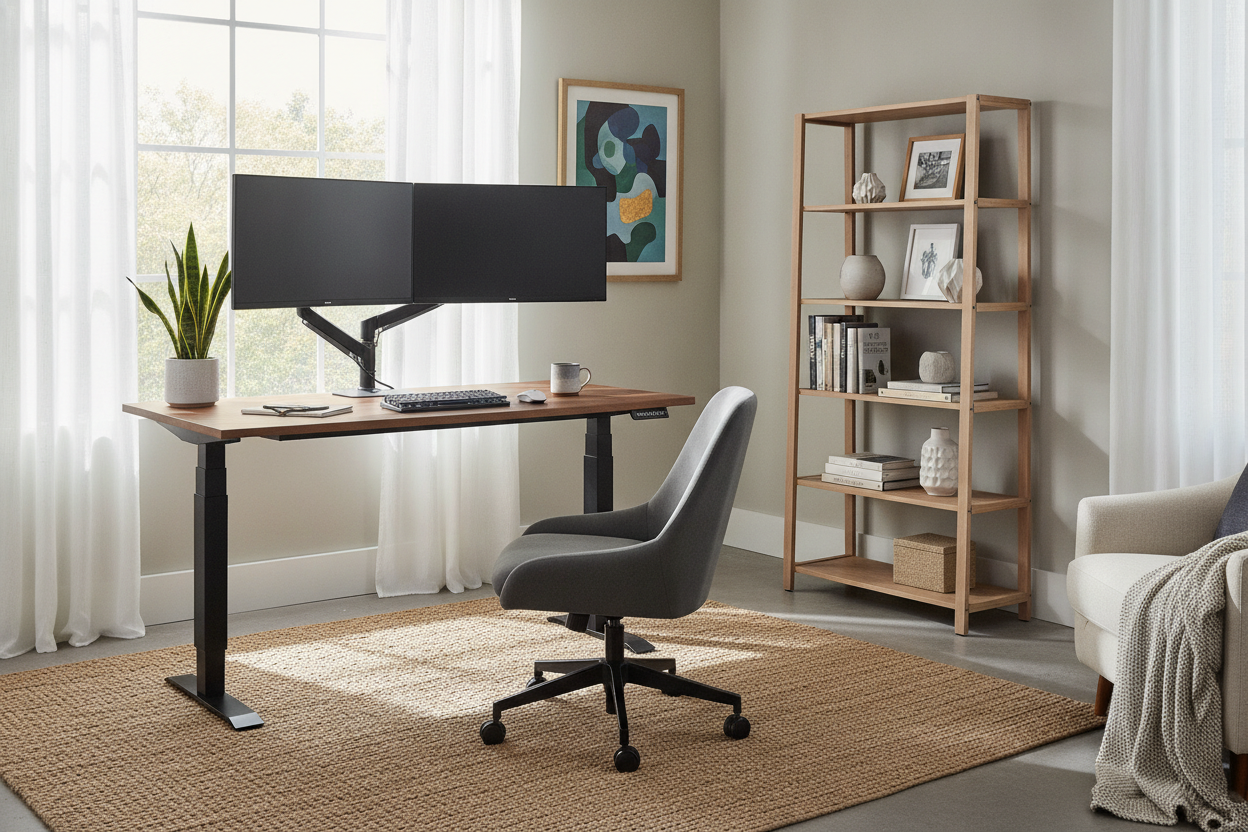
Most height adjustable computer desks look like they were stolen from a corporate call center. They are all white laminate and silver T-legs. If you want to maintain your home decor style, you have to be intentional. I am a fan of pairing a heavy-duty industrial frame with a custom wood top—think solid walnut or reclaimed oak rather than that flimsy particle board.
A wfh standing desk does not have to look like a piece of medical equipment. Hide your cables using a snake or a tray mounted underneath the desktop. When you lower it to a sitting desk height at the end of the day, it should look like a normal, stylish piece of furniture. Avoid the 'gaming' look with the neon accents unless you are actually a professional streamer.
My Verdict: Is the Upgrade Actually Worth the Hype?
So, did it fix my back? Not entirely. But it did fix my 2 PM brain fog. Switching to a sit to stand desktop forced me to be more mindful of how I was holding my body. The benefit is not the standing itself; it is the freedom to not be a statue. If you have the budget, ditch the static seated desk. Just do not expect it to do the work of a physical therapist. It is a tool, not a cure.
FAQ
How often should I switch between sitting and standing?
Aim for a 2:1 or 1:1 ratio. Stand for 30 minutes, sit for 30 or 60. Your body will tell you when it is time to move—usually when you start shifting your weight from foot to foot.
Do I really need an anti-fatigue mat?
Yes. Standing on a hard floor in socks or even sneakers will kill your joints. A high-quality mat makes a four-hour standing session feel like twenty minutes on your knees and ankles.
Are manual crank desks worth the savings?
Usually, no. Unless you really want the arm workout, you will find yourself leaving it in one position because the effort to change it is too high for a quick transition.

Dejar un comentario
Este sitio está protegido por hCaptcha y se aplican la Política de privacidad de hCaptcha y los Términos del servicio.