











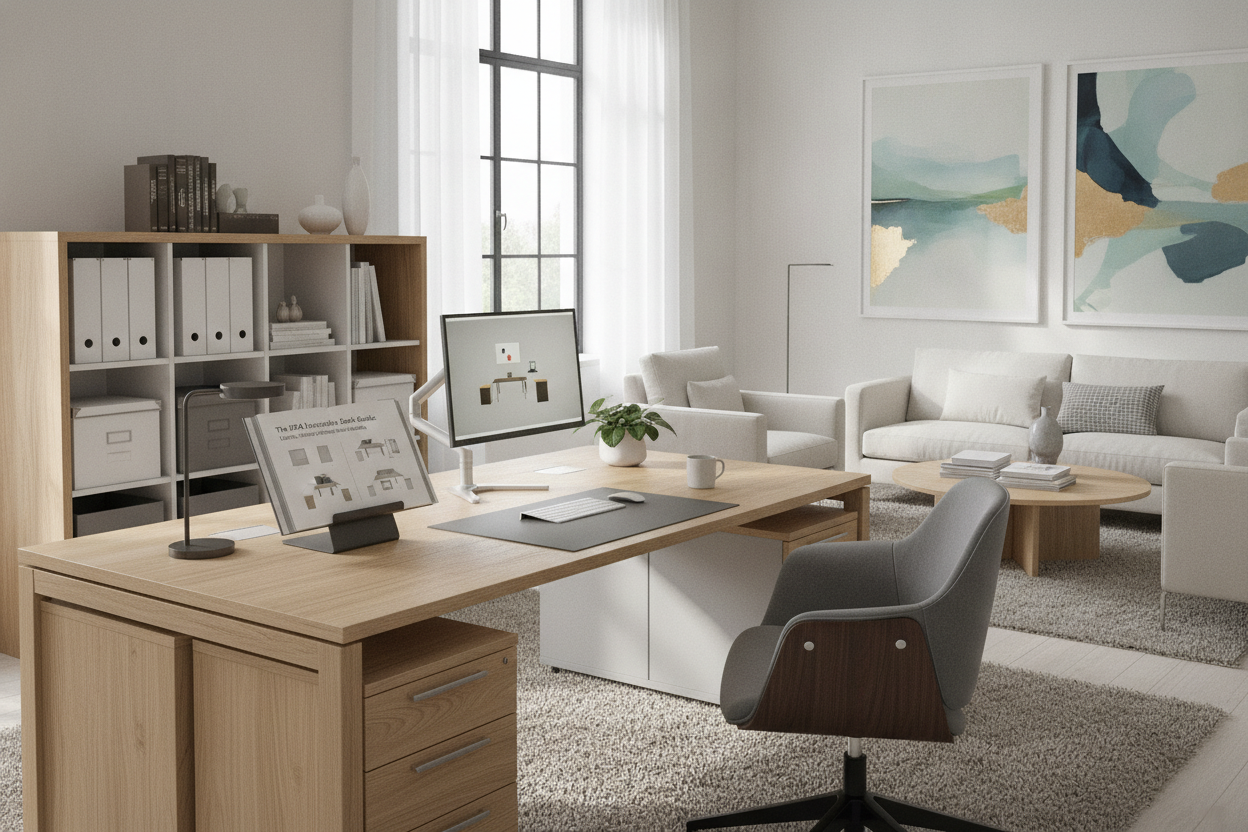
A 60 x 20 desk represents a specialized geometric footprint in modern workspace planning: a five-foot lateral surface paired with a slender twenty-inch front-to-back profile. While conventional office desks typically favor deeper platforms ranging from twenty-four to thirty inches, a slim-depth workstation solves specific spatial constraints. It creates an elongated zone for multi-device setups while leaving room walkways open and unobstructed.
Successfully integrating a wide yet shallow desk requires balancing horizontal expanse with targeted equipment placement, structural support across the long span, and careful ergonomic alignment.
The 60 x 20 Desk Proportion: Anatomy of a Wide, Shallow Footprint
Why Choose 60 Inches Wide with 20 Inches of Depth?
The primary advantage of a five-foot width combined with a twenty-inch depth is lateral separation without spatial encroachment. In shared living spaces, studio apartments, or compact guest rooms, deep desks often protrude awkwardly into primary footpaths. A twenty-inch depth keeps the front edge closer to the wall, preserving open floor area while still offering ample side-by-side room for laptops, secondary displays, notebooks, and audio gear.
When comparing wide-span footprints with standard office sizes, refer to our comprehensive desk dimensions guide to see how shallow desks contrast with square and deep rectangular alternatives.
Balancing Lateral Reach and Forward Space
Because forward surface area is limited, workflow on a 60 x 20 desk naturally moves horizontally rather than vertically. Users can establish distinct functional stations along the desktop:
- Primary Computing Zone: Centered laptop or monitor with keyboard and mouse.
- Secondary Digital Zone: A tablet stand, vertical dock, or reference screen situated to one side.
- Analog Reference Zone: A notebook, planner, or sketchpad positioned on the opposite flank.
Room Layouts and Spatial Fit for Narrow Workstations
Perimeter Wall and Hallway Placements
A twenty-inch depth allows a desk to sit along wide hallways, entryway alcoves, or long accent walls without dominating the room. This makes it an attractive choice for multi-use living rooms where the desk can double as a console table or slim credenza when not in active use.
For additional room layout strategies, check out our favorite desk ideas for small spaces.
Window-Facing and Nook Installations
Placing a wide, shallow desk beneath a bank of windows maximizes natural daylight without pushing seating too far back into the room. When positioning a desk across a window span, ensure monitor placement does not produce harsh direct backlighting or surface glare.
Clearance and Traffic Flow Rules
Even with a slim desk profile, functional room planning requires factoring in chair movement. Leaving adequate clearance behind the desk edge allows task chairs to roll back smoothly and swivel without bumping against adjacent furniture or walls.
Ergonomics and Peripheral Layout on a 20-Inch Depth
Sightline and Screen Distance Management
Managing focal distance is essential on a shallow work surface. Bulky factory monitor stands can consume substantial desktop depth, pushing screens too close to the user's eyes. Utilizing low-profile desk clamps, monitor mounting arms, or wall mounts positions the display directly against the back boundary, freeing the entire twenty-inch plane for comfortable keyboard and wrist positioning.
Keyboard and Mouse Alignment
Maintaining neutral wrist alignment is critical when forward workspace is compact. To preserve surface space, consider compact mechanical keyboards or tenkeyless models that leave ample lateral room for continuous mouse travel.
If you need more surface area for accessories, discover creative ways to extend your desk space using modular add-ons and under-desk trays.
Structural Integrity and Frame Selection Across a 5-Foot Span
Preventing Center Sagging on Wide Surfaces
A sixty-inch span is long enough that poorly supported desktop materials may experience center deflection or sagging over time if loaded with heavy monitors, books, or tabletop accessories. When selecting a 60 x 20 desk, prioritize frames that incorporate full-length longitudinal support rails or rigid under-table crossbeams beneath the top surface.
Leg Styles and Base Geometries
Frame geometry influences both lateral stability and knee clearance:
- Four-Leg Perimeter Frames: Offer balanced corner stability, leaving the entire center open for legroom.
- T-Frame and C-Frame Legs: Common in modern minimalist designs; look for heavy gauge steel feet to prevent wobble across the five-foot width.
- Trestle Bases: Provide architectural character but can consume lateral foot space if the trestle supports are spaced too closely toward the center.
Explore different leg geometries and structural supports in our in-depth 2-leg desk guide.
Material Considerations
Thicker solid wood, high-density engineered fiberboard, or reinforced laminate tops provide greater rigidity across wide spans than thin hollow-core boards. Ensuring rigid hardware fasteners and tight joint tolerances helps keep the elongated frame wobble-free during daily typing and writing.
Storage Strategies and Under-Desk Organization
Slim Drawers vs. Pedestal File Cabinets
Because a twenty-inch depth limits how far storage units can extend backward, standard deep office file pedestals may protrude beyond the front desk legs. Instead, choose shallow-depth mobile pedestals or slim drawer units positioned at one far end of the sixty-inch span, preserving the remaining width for open legroom.
Vertical and Wall-Mounted Storage Additions
When working with a shallow desktop, keeping daily clutter off the horizontal plane is key. Pairing the desk with vertical wall accessories maintains an open surface:
- Wall-Mounted Shelves: Keep reference books, speakers, and decorative items above the workstation.
- Pegboards or Slatwalls: Hold headphones, charging cables, and small office supplies within arm's reach.
- Under-Desk Cable Channels: Conceal power strips and adapter bricks neatly beneath the rear frame.
Buying & Assembly Decision Checklist for 60 x 20 Desks
Step-by-Step Selection Framework
- Measure the Wall Span: Confirm that the sixty-inch width clears baseboards, door swings, and electrical outlets.
- Assess Equipment Depth: Check whether monitor stands or laptop docks can fit within twenty inches without crowding the keyboard.
- Verify Frame Reinforcement: Ensure the desk includes under-top support beams to maintain a flat surface across the full span.
- Plan Cable Routing: Look for integrated grommets, rear cutouts, or wire trays that accommodate slim-profile setups against a flat wall.
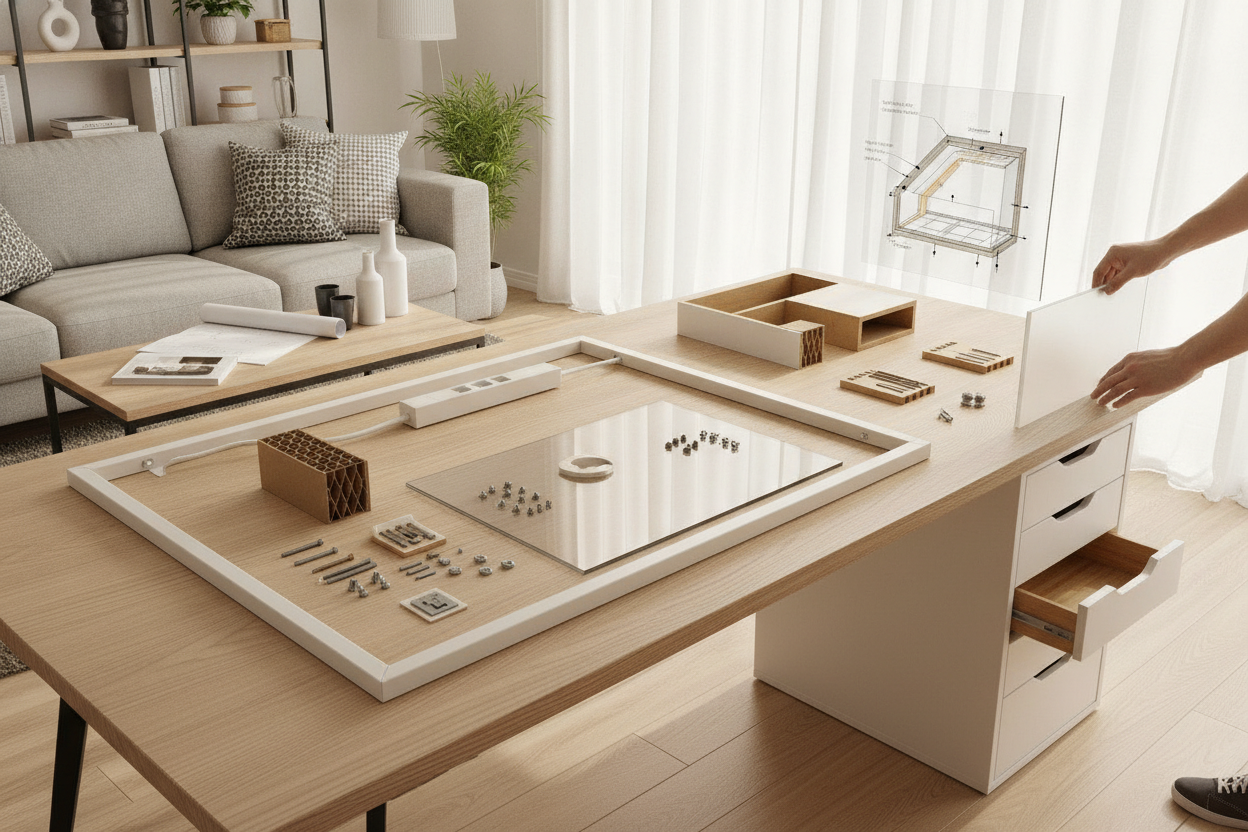
Assembly and Placement Practical Checklist
- Assemble the frame on a soft surface to prevent scratching the elongated tabletop.
- Tighten structural crossbars evenly before fully securing the desktop surface to avoid frame twist.
- Adjust built-in leveling feet to ensure stability on uneven flooring surfaces.
- Consider anchoring the desk frame to wall studs if placed in high-traffic zones or dynamic multi-use rooms.

Dejar un comentario
Este sitio está protegido por hCaptcha y se aplican la Política de privacidad de hCaptcha y los Términos del servicio.