










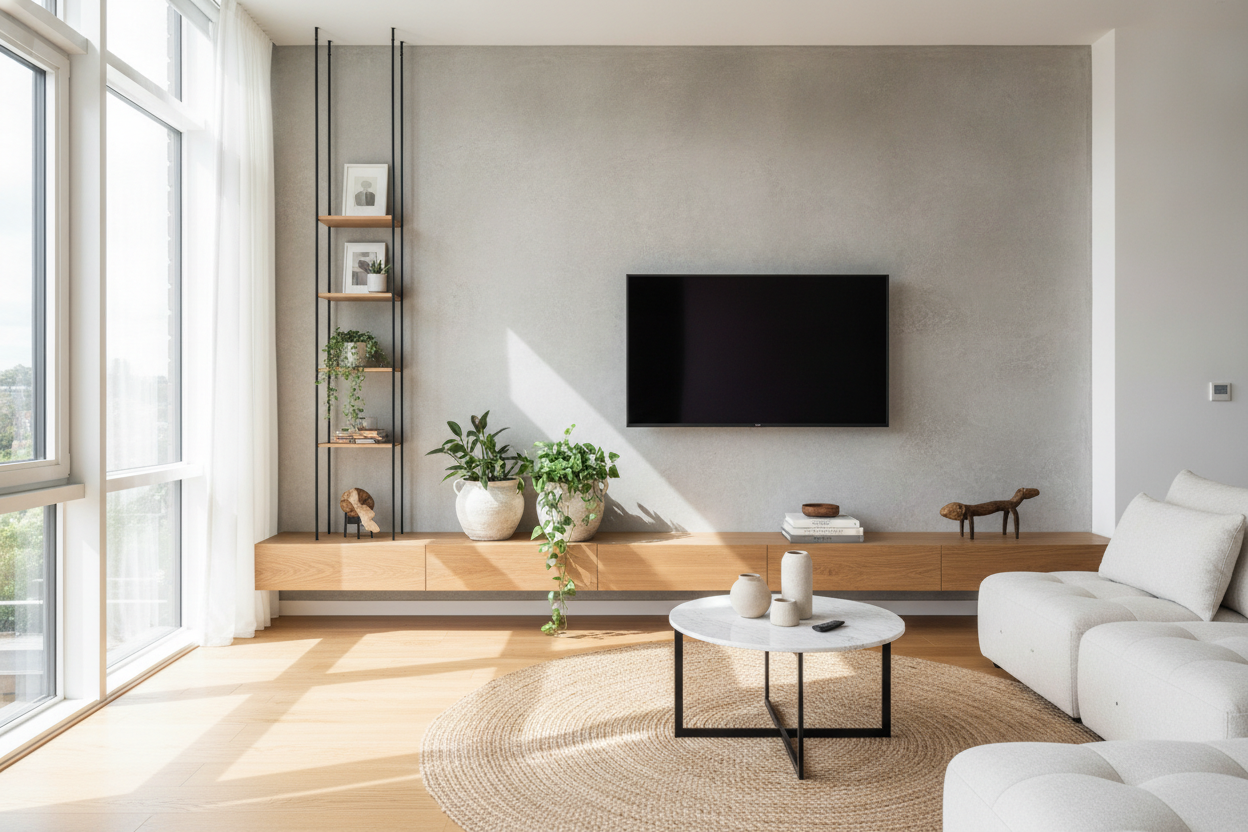
I remember the first time I mounted a TV. I was so proud of myself for clearing the clutter and finally getting that 'clean' look I'd seen in architectural magazines. But once the drill was put away and the screen was centered, I sat on my sofa and realized I'd made a huge mistake. My living room didn't look modern; it looked like a sterile hospital waiting room. There was this giant, hovering black rectangle and a vast, empty wasteland of drywall beneath it. I spent the next three hours scrolling through Pinterest at 1 AM, trying to figure out what to put below wall mounted tv setups that wouldn't just bring back the bulk I was trying to escape.
Quick Takeaways
- Always choose a piece wider than the TV to avoid a top-heavy look.
- Floating consoles are the best middle ground for small apartments.
- Low seating like poufs can ground the space without adding visual weight.
- Large plants or baskets work for minimalists who hate furniture.
- Cable management is non-negotiable—exposed 'spaghetti wires' ruin any design.
Why That Bare Wall Space Is Driving You Crazy
The 'floating black box' effect is a real design killer. When you mount a TV, you’re essentially hanging a large piece of dark art that has significant visual weight. If there is nothing underneath it to 'anchor' it to the ground, the room feels unbalanced. It’s like wearing a heavy winter parka with no pants—you just look top-heavy and unfinished.
Most people mount their TVs to save space, but they forget that the eye needs a place to land. Without something below the screen, the wall feels cavernous. This empty void also makes the TV look like it was an afterthought rather than a deliberate design choice. Plus, unless you’ve done some serious behind-the-wall wiring, you’re likely staring at a mess of hanging black cords that look like a tech-themed horror movie. Grounding that space isn't just about aesthetics; it's about making the room feel lived-in and intentional.
Furniture Below Wall Mounted TV Setups (That Isn't a Basic Stand)
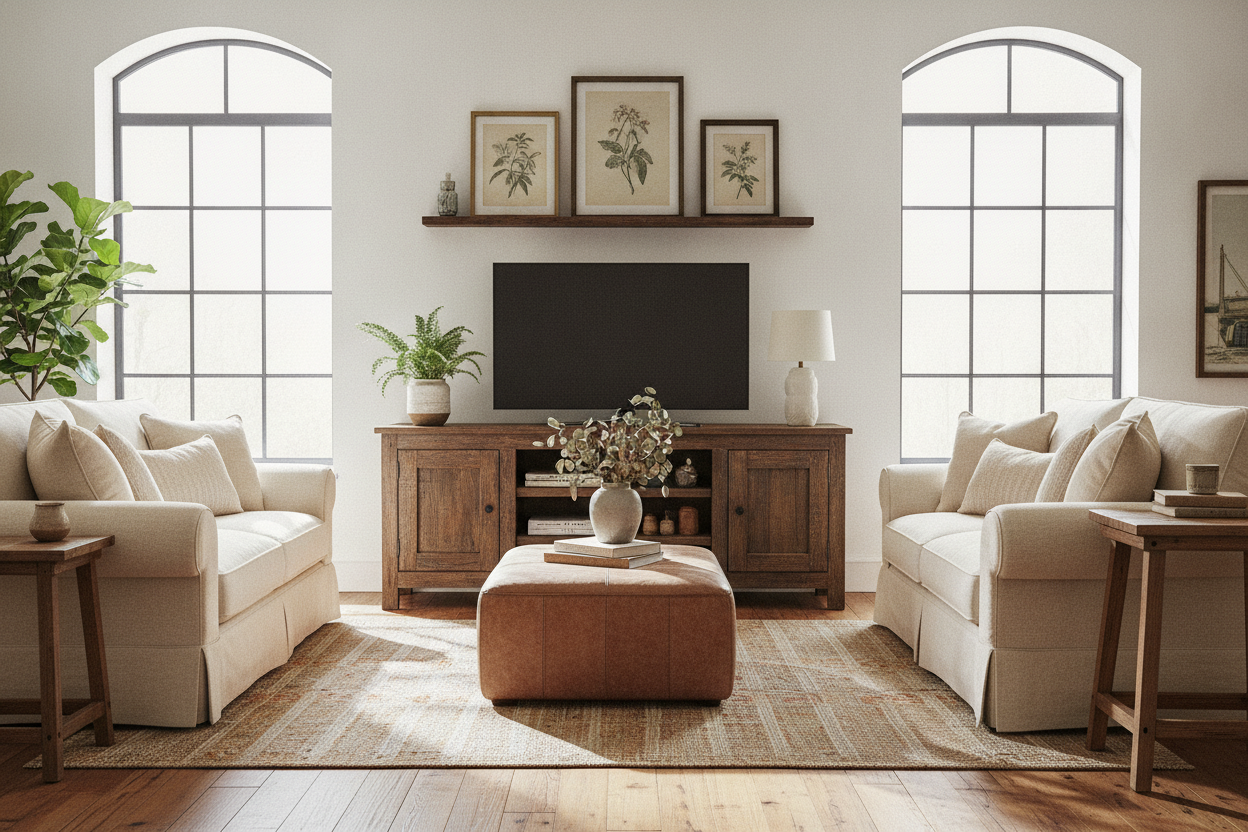
If you want to keep things functional but hate the look of traditional TV stands, think about length and profile. A common mistake is picking a piece that is the same width as the TV. You want your furniture to be at least 6 to 12 inches wider than the screen on both sides. This creates a pleasing pyramid shape that keeps the setup from looking precarious.
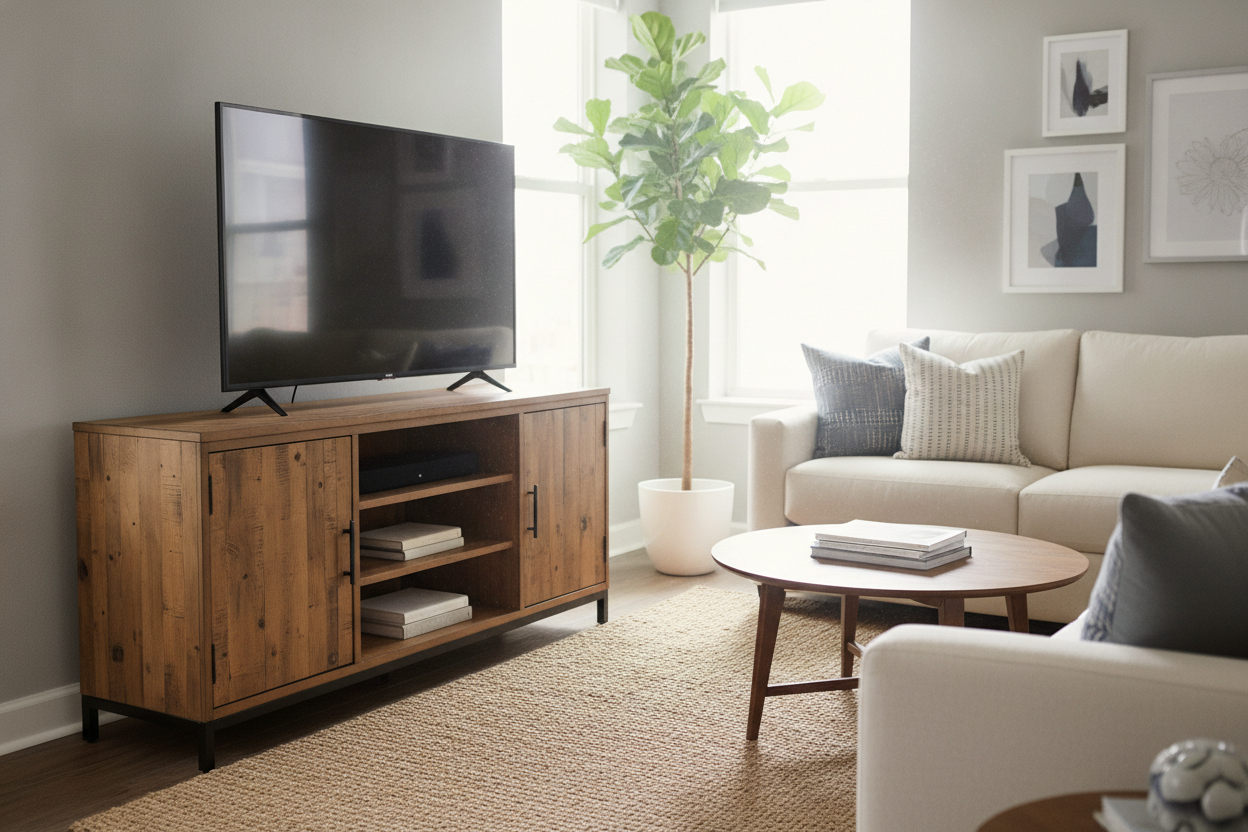
A long, low-slung credenza or a vintage sideboard is my personal favorite. I once found a 1960s teak sideboard that was about 80 inches long. Even though my TV was only 55 inches, the extra length allowed me to place a ceramic lamp on one end and a stack of books on the other. It turned the 'TV area' into a 'styled zone.' A solid wood credenza for under wall mounted tv screens also provides massive storage for things you actually use—board games, extra linens, or the three different gaming consoles you swear you're going to play. Just make sure the piece is low enough; you don't want to be straining your neck because your 'stand' pushed the TV too high up the wall.
The Floating Illusion: Adding Storage Under Mounted TV Screens
For those who live in tiny apartments where every square inch of floor space is a commodity, the floating wall mounted media console is a literal lifesaver. By keeping the floor clear, the room feels significantly larger. It's a trick I've used in every 600-square-foot rental I've ever lived in. You get the storage for your remote and Apple TV, but you don't lose the floor space for your robot vacuum to do its thing.
When you install one of these, the height is everything. You want it low enough that it feels like a base, but high enough to allow light to pass underneath it. Once it's up, you can style a wall mounted TV stand for a high-end look by adding a few meaningful objects. Avoid the urge to clutter it with tiny knick-knacks. One large bowl or a single sculptural object is usually enough. If you go too heavy on the decor, it starts to compete with the screen, which is distracting when you're actually trying to watch a movie.
Can You Put Seating Under Wall Mounted TV Layouts?
It sounds counterintuitive—why would you put a chair where someone might block the screen? But in a small living room, placing low seating under the TV is a brilliant move. I’m talking about low-profile ottomans, leather poufs, or even a pair of small backless benches. These pieces provide 'overflow' seating for when friends come over, but they tuck away neatly when it's just you.
This setup works best if the TV is mounted slightly higher than eye level (though don't go full 'sports bar' height). The seating fills the 'void' perfectly and adds a soft texture to a wall that is usually full of hard angles and glass. I currently have two woven seagrass stools under my bedroom TV. I never sit on them to watch the news, but they are great for putting on shoes in the morning, and they make the TV look like it's part of a cozy nook rather than just a screen bolted to the wall.
How Do You Decorate Under a Mounted TV Without Any Furniture?
If you’re a true minimalist and the idea of more furniture makes you break out in hives, you still need to address the gap. You can do this with texture and height. A large, high-quality woven basket filled with extra-thick throw blankets is a classic for a reason. It’s soft, it’s functional, and it hides the wall-to-floor transition beautifully.
Another option is the 'leaning art' trick. Take a large framed print—something at least 24x36—and lean it against the baseboard slightly off-center from the TV. Pair this with a tall floor plant like a Bird of Paradise or a Fiddle Leaf Fig on the other side. The organic lines of the plant break up the harsh geometry of the TV. Just be careful with the plant placement; you don't want a stray leaf poking into your view of the subtitles. The goal is to create a layered look that feels like a gallery, not a tech showroom.
My Personal Experience: The 'Too Small' Mistake
I once bought a gorgeous, expensive marble-topped console for my living room. It was 48 inches wide, and my TV was 50 inches wide. I thought, 'It's fine, it's only two inches!' It was not fine. It looked ridiculous. The TV looked like a giant mushroom growing out of a tiny stem. I ended up having to return it (and paying a 20% restocking fee, which hurt) to get a 72-inch unit. Learn from my expensive mistake: always go wider than you think you need. Scale is the difference between a room that looks 'designed' and a room that looks like you just moved in and haven't finished unpacking.
FAQ
How high should I mount my TV?
The center of the screen should be at eye level when you are sitting on your sofa. For most people, that’s about 42 inches from the floor. If you have to tilt your head back, it's too high.
How do I hide the wires if I don't want to cut into the wall?
Use a paintable cord cover (D-Line is a good brand). You can paint it the exact color of your wall, and it becomes almost invisible. It’s a ten-minute fix that changes everything.
Can I put a fireplace under a mounted TV?
Yes, but check the heat clearance. Most electric fireplaces are fine, but real wood or gas units need a mantel or a specific distance to keep from melting your TV's internals.

Dejar un comentario
Este sitio está protegido por hCaptcha y se aplican la Política de privacidad de hCaptcha y los Términos del servicio.