




Architectural Geometry and Visual Weight in a Black Desk and Chair Suite
Integrating a black desk and chair into a home workspace introduces an immediate sense of gravity, definition, and structural focus. In interior design, dark tones inherently carry substantial visual weight, drawing the eye and anchoring the room. When poorly configured, however, a dark suite can overwhelm modest floor plans or feel visually monolithic. Achieving a balanced composition requires careful calibration between massing, surrounding negative space, and furniture silhouettes.
Balancing Dark Massing and Spatial Proportions in Home Workspaces
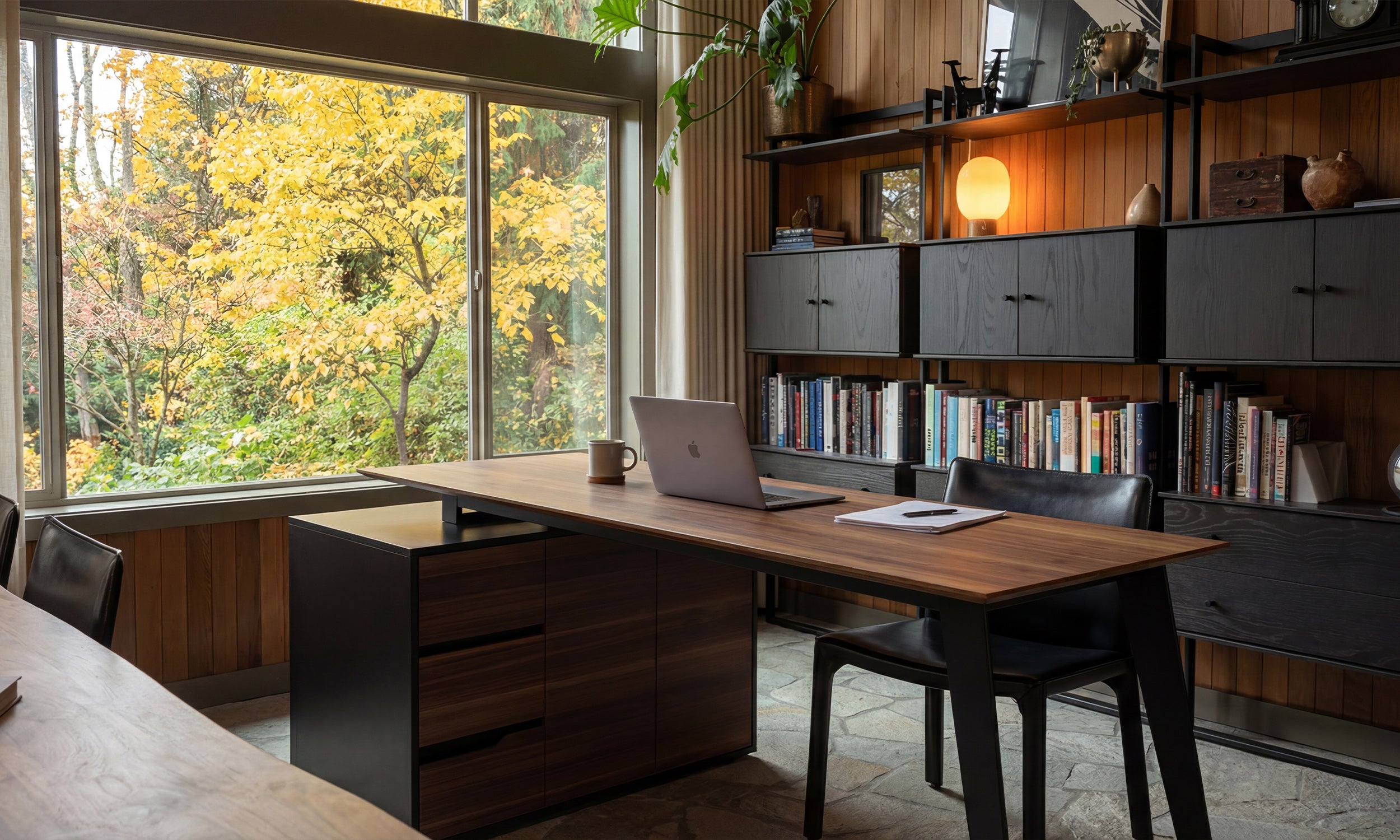
To keep a black desk with chair arrangement from visually crowding an interior, consider the balance between solid casework and open leg structures. Desks with elevated bases, open metal frames, or slender cantilevers allow light to pass underneath the desktop, significantly softening the visual footprint. If you choose a solid executive or double-pedestal desk, offset its density by selecting a chair with an airy silhouette or open back architecture. For deeper insights on balancing darker case goods across various room sizes, review our comprehensive black desk guide.
Clearance Envelopes: Armrest Height, Knee Space, and Seat Travel Dimensions
Spatial geometry extends beyond appearance into daily ergonomic comfort and flow. A cohesive setup requires seamless physical interaction between seating and table surfaces:
- Armrest and Apron Clearance: Verify that chair armrests can smoothly slide under the desktop or drawer apron when tucked in, preventing unnecessary obstruction in walkways.
- Knee Well Depth: Maintain adequate open depth within the knee well so your legs can shift comfortably without colliding with back modesty panels or cable trays.
- Seat Travel Envelope: Allow generous perimeter floor space behind the primary seating zone to accommodate rolling out, turning, and standing up without scraping baseboards or adjacent cabinetry.
Material Textures and Surface Pairings for Black Workstations
A completely monochrome workspace risks appearing flat or utilitarian if all materials share an identical finish. Introducing textural variance across the desk surface, frame, and task chair creates visual depth while preserving a unified black palette.
Matte vs. Satin Finishes: Balancing Glare, Fingerprint Resistance, and Light Reflection
The desktop finish dramatically shapes both daily utility and room ambience. Ultra-matte finishes deliver a contemporary architectural look and disperse overhead lighting to reduce glare. However, they can show skin oils more readily depending on surface coatings. Satin and fine-textured woodgrain finishes introduce subtle sheen, gentle light diffusion, and enhanced resistance to minor surface smudges. Exploring varied selections through our designer-focused chair desk guide helps pinpoint finishes that withstand daily workflow demands while maintaining refined aesthetics.
Seating Textures: Leather, Breathable Mesh, and Upholstered Accents
Pairing a desk with appropriate seating upholstery prevents the workstation from feeling sterile:
- Top-Grain Leather or Vegan Leather: Adds smooth, tailored structure and rich tonal depth that complements minimalist wood or metal desks.
- Breathable Technical Mesh: Provides an open weave pattern that breaks up solid black planes, enhancing airflow and creating a lighter silhouette.
- Textured Woven Fabrics: Infuses warmth, tactile softness, and subtle acoustic dampening, ideal for transitional and residential workspaces.
Dimensional Sizing Tiers and Layout Planning for a Black Desk with Chair
Aligning furniture dimensions with room proportions ensures the black workstation feels intentionally curated rather than shoehorned into available square footage.
Compact Workstations: Slim Profiles and Minimalist Seating Footprints
In multifunctional rooms or urban spaces, select a writing desk with a narrow depth and open metal trestles. Pair it with an armless task chair or a low-profile swivel chair. This preserves traffic aisles while keeping sightlines clear across the wider room.
Mid-Size Standard Offices: Credenza Backing and Ergonomic Chair Clearance
In dedicated offices, a medium-format black desk pairs seamlessly with an adjustable mid-back ergonomic task chair. Positioning a low credenza or file pedestal along an adjacent wall establishes an efficient workflow zone. You can explore structured shopping comparisons in our detailed desk chair guide to evaluate modular layouts effectively.
Executive and Large-Format Suites: Dual Pedestals, High-Back Silhouettes, and Perimeter Flow
Expansive rooms can easily accommodate a substantial black executive desk paired with a high-back ergonomic or executive chair. Ensure the desk is positioned floating within the room, maintaining ample circulation around the perimeter to showcase the architectural lines from multiple viewing angles.
Storage Architecture and Organization to Prevent Monochrome Clutter
Dark surfaces accentuate loose papers, stray stationery, and desktop disarray. Implementing integrated storage systems preserves the tailored, monolithic appeal of a black desk and chair.
Integrated Pedestal Drawers and Credenza Sideboards
Incorporate under-desk drawer pedestals with matching dark hardware or discrete integrated pulls. Hidden file glides and shallow utility drawers keep daily stationery off the primary desktop, preserving clean horizontal sightlines and uncluttered surface area.
Vertical Wall Units and Floating Shelving to Relieve Ground Visual Density
To prevent floor space from becoming too dark and visually dense, utilize vertical storage solutions:
- Install floating wall shelves above the desk to display reference materials, curated ceramics, or soft plant accents.
- Select tall shelving with open backs so wall colors show through, creating breathing room within the vertical plane.
- Use matte storage boxes or fluted document bins to keep miscellaneous loose items neatly concealed.
Lighting, Cable Management, and Ambient Contrast Strategies
Dark furniture absorbs light, making thoughtful illumination and tidy wire management essential components of the overall architectural scheme.
Layered Task and Ambient Lighting to Prevent Flat Dark Silhouettes
Avoid relying on a single overhead fixture, which can cast harsh shadows over a black workstation. Layering lighting softens harsh dark edges and emphasizes material textures:
- Directional Task Lighting: Use an articulated desk lamp with warm light diffusion to highlight active writing and reading zones directly.
- Under-Shelf or Bias Lighting: Position soft LED strips behind monitors or below wall shelving to gently illuminate perimeter boundaries.
- Curated Accent Pieces: Consider incorporating subtle tonal contrasts or textured seating accents, as outlined in our supplemental desk chair guide, to inject balanced visual interest into monochrome settings.
Concealed Cable Routing and Wire Channel Integration
White, gray, or disorganized cables create glaring contrast against black desktops and frames. Integrate under-desk cable management trays, magnetic raceways along table legs, and black split-sleeve wire wrap. Channeling power strips and cords beneath the desk frame ensures your black desk and chair suite retains its crisp, professional silhouette from every angle in the room.


Dejar un comentario
Este sitio está protegido por hCaptcha y se aplican la Política de privacidad de hCaptcha y los Términos del servicio.