










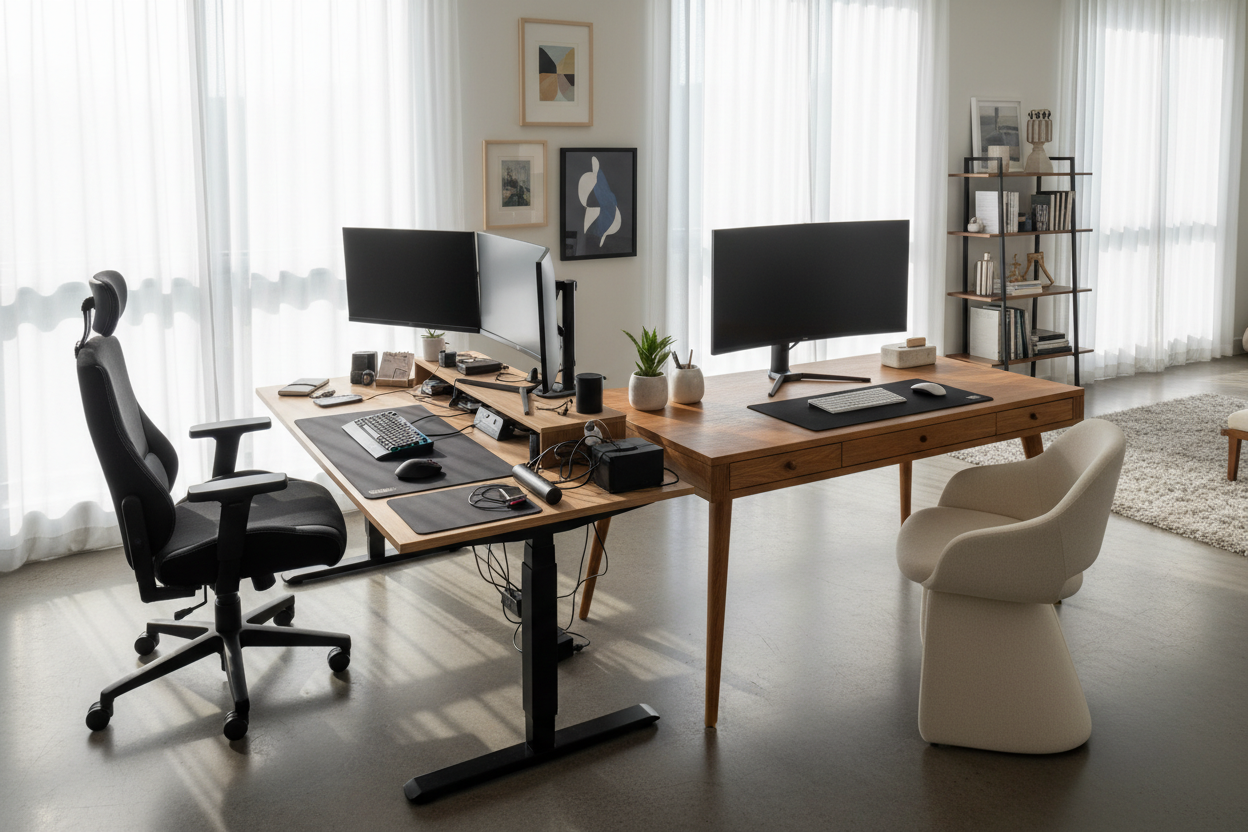
We have all been there: trying to conduct a Zoom meeting from the dining table or balancing a laptop on a stack of books. The makeshift office was acceptable for a month, but as remote work becomes permanent, the need for a dedicated workspace is undeniable. However, selecting the right piece isn't just about buying a flat surface with four legs. In this comprehensive work from home desk review, I will guide you through the architectural and functional nuances that separate a temporary fix from a long-term investment in your productivity.
Key Features to Look For
Before committing to a purchase, use this checklist to evaluate if a desk meets professional interior design standards:
- Material Density: Does the desk use solid wood, high-grade plywood, or honeycomb cardboard? (Crucial for monitor arm stability).
- Ergonomic Depth: A minimum depth of 24–30 inches is required for proper focal distance to your screen.
- Visual Weight: Does the desk's silhouette overwhelm the room, or does it allow light to pass through?
- Cable Management: Look for integrated grommets or hidden channels to maintain visual calm.
- Finish Durability: Resistance to heat (coffee cups) and friction (mouse movement) is non-negotiable.
Analyzing Material Integrity and Tactility
When conducting a wfh desk review, the first thing I examine is what lies beneath the surface. Many mass-market desks utilize a honeycomb paper core sandwiched between laminate. While cost-effective, these cannot support heavy clamp-on accessories like microphone booms or dual monitor arms without crushing.
For a piece that ages gracefully, look for solid hardwoods like walnut or white oak. If budget is a constraint, high-quality MDF with a thick wood veneer is a respectable alternative. The tactile experience matters; you will be touching this surface for eight hours a day. A cheap laminate feels cold and plastic, whereas natural grain offers warmth and develops a rich patina over time.
The Ergonomic Equation: Beyond Height
While sit-stand mechanisms are trending, a comprehensive work from home desks review must consider the static ergonomics of the piece. The most overlooked dimension is depth. A narrow console desk (under 20 inches) is beautiful for a hallway, but disaster for a workstation. You need enough depth to rest your forearms comfortably while keeping your monitor at an arm's length to reduce eye strain.
Balancing Visual Weight in Residential Spaces
Unlike a corporate cubicle, your home office likely shares space with a bedroom or living area. As a designer, I look at the "visual weight" of the furniture. If your room is small, avoid heavy pedestal desks with drawers extending to the floor; they make the room feel boxy and smaller. Instead, opt for a desk with a slender silhouette and open legs (parsons style or trestle). This allows sightlines to travel under the desk, creating a sense of airiness and flow.
Lessons from My Own Projects
I want to share a specific detail that rarely makes it into a standard marketing brochure. Last year, I designed a home office for a client who insisted on a trendy, matte-black laminate desk they found online. It looked sleek in the photos.
However, within three weeks, I got a call. The issue wasn't stability; it was skin oils. The specific finish on that desk acted like a magnet for fingerprints and palm prints that were nearly impossible to wipe off without leaving streaks. It drove my client crazy. Since then, I always perform the "friction test" on any desk I recommend. I run my fingernail lightly across the surface and press my thumb down hard. If it mars easily or traps oil, it doesn't matter how beautiful the joinery is—it’s a pass. Real life is messy; your desk needs to be forgiving.
Conclusion
Your workspace is the cockpit of your career. Don't settle for a piece that wobbles or chips after a few months of use. By prioritizing material density, appropriate depth, and a finish that suits your lifestyle, you create an environment that invites focus rather than frustration. Treat this purchase as an investment in your daily mental clarity.
Frequently Asked Questions
What is the ideal height for a fixed desk?
The standard industry height is between 29 and 30 inches. However, if you are under 5'4", you may need a footrest or a height-adjustable chair to ensure your elbows remain at a 90-degree angle while typing.
How do I protect a solid wood desk from scratches?
I always recommend a high-quality leather or felt desk pad. It defines the workspace visually and protects the primary work zone from mouse friction and pen indentations while adding a layer of acoustic softening.
Can I use a dining table as a desk?
You can, but be wary of the apron (the wood panel connecting the legs beneath the top). Dining tables often have deep aprons that prevent you from crossing your legs or sliding an ergonomic office chair armrest underneath.


Dejar un comentario
Este sitio está protegido por hCaptcha y se aplican la Política de privacidad de hCaptcha y los Términos del servicio.