


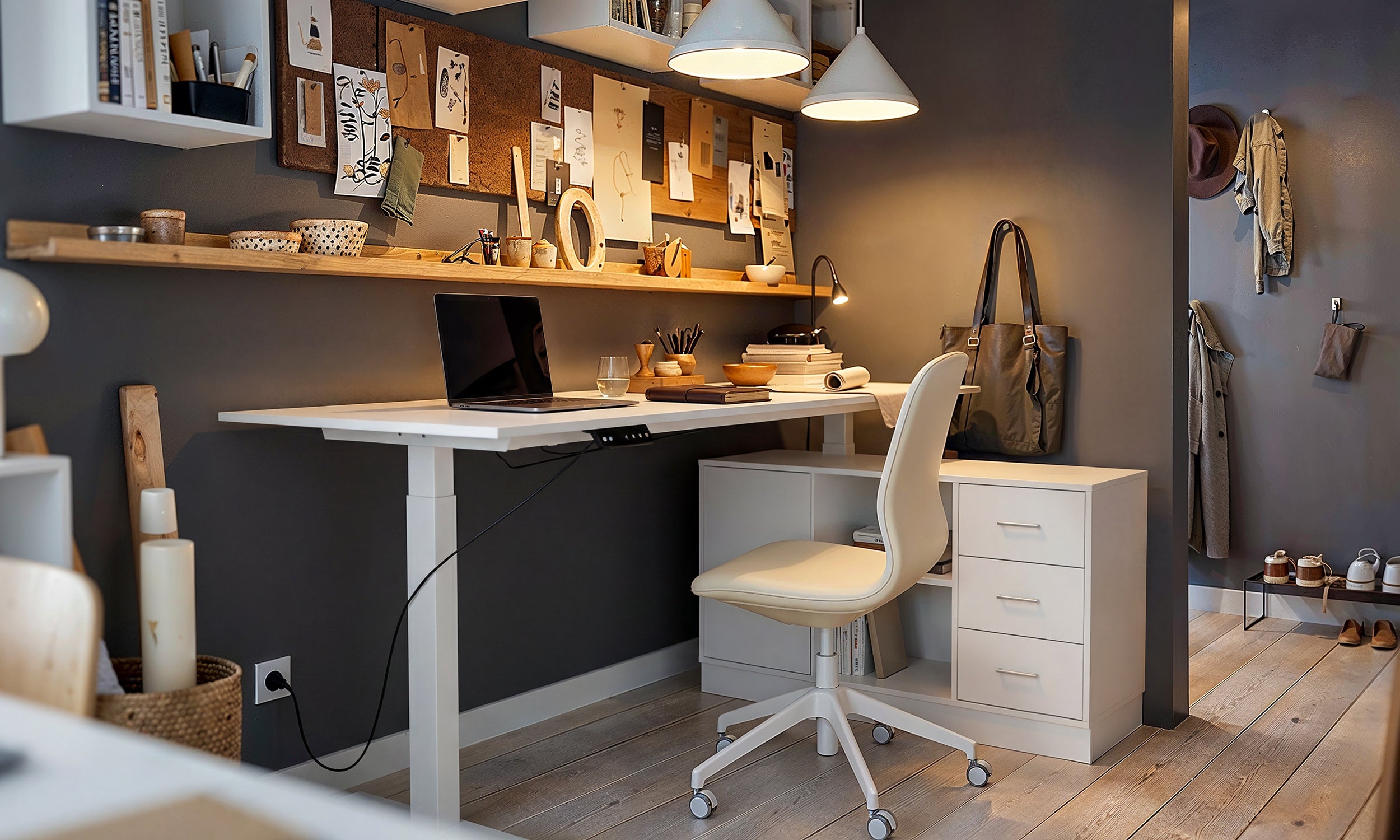
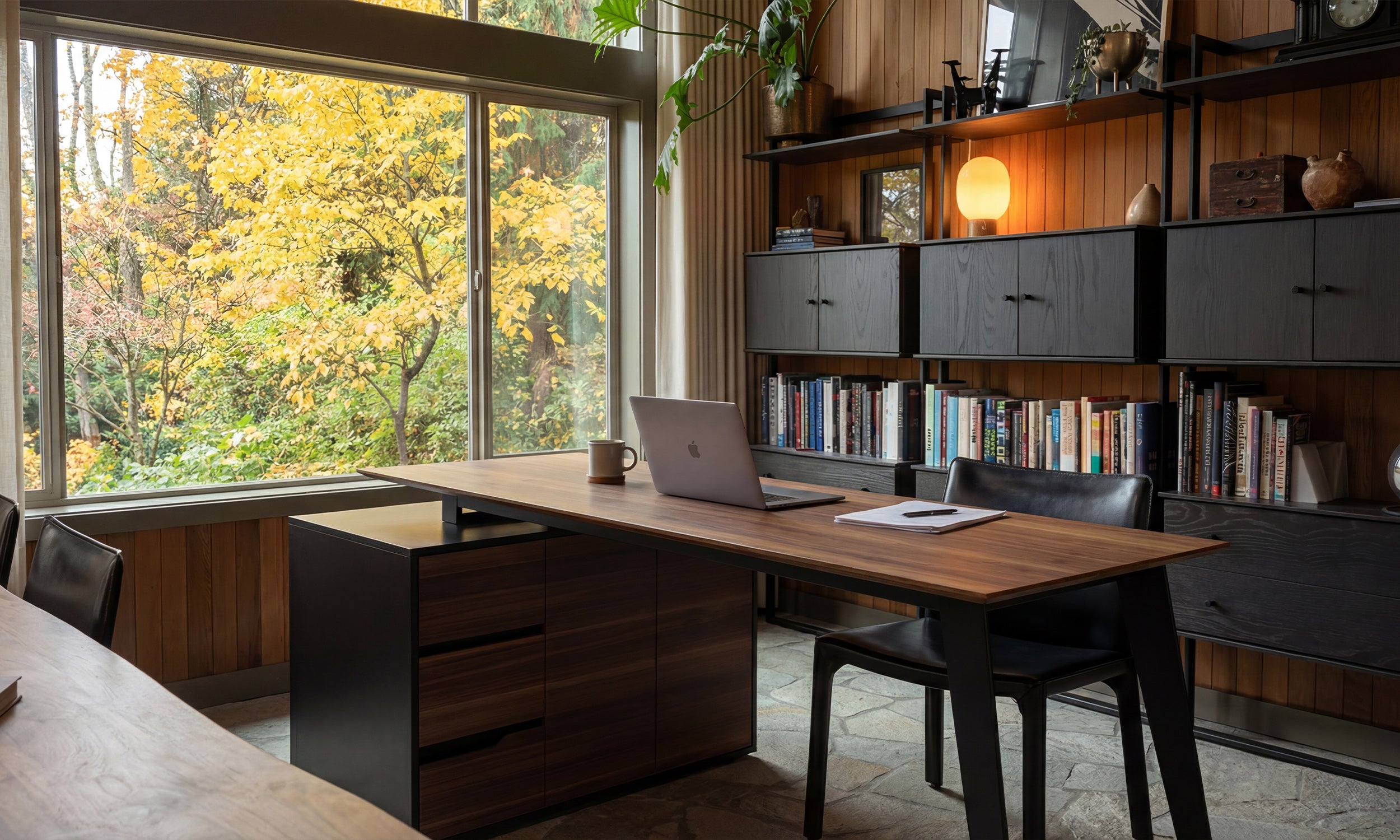


Designing a productive home office in a limited footprint requires careful spatial coordination. Standard rectangular tables often leave corner square footage underutilized, while oversized executive suites can overwhelm room proportions and restrict walking paths. A well-designed compact l shaped desk with storage resolves this tension by anchoring into corner perimeters, delivering generous tabletop surface area across two axes, and integrating dedicated compartments for hardware and paperwork.
Spatial Footprint Tiers: Sizing Compact L-Shaped Desks for Tight Corners
When selecting a compact l desk, evaluating the exact geometry of your floor plan ensures the furniture supports natural room circulation rather than obstructing it.
Micro-Corner Layouts vs. Extended Return Proportions
Corner workstations generally fall into two structural profiles: symmetrical corner units and asymmetrical main-desk-with-return models. Symmetrical designs feature equal desktop depths and wing lengths on both sides, making them ideal for square study nooks and tight alcoves. In contrast, asymmetrical configurations combine a deeper main working surface with a shallower secondary return. This setup allows you to position primary monitors along the main desk while maintaining a slim side profile that keeps adjacent walkways clear.
Chair Clearance Envelopes and Perimeter Flow
A frequent oversight in small office layouts is failing to reserve an adequate chair clearance envelope. To move comfortably between both wings of a small l shaped home office desk, ensure sufficient clearance behind the desk edge to accommodate your task chair’s turning radius. Pay equal attention to nearby architectural elements: leave ample breathing room away from inward-swinging room doors, closet panels, low-profile window sills, and heating vents.
Storage Architecture: Balancing Drawers, Open Shelving, and Knee Clearance
Integrated storage transforms an ordinary corner surface into an all-in-one workstation. Exploring coordinated furniture within a broader home office and study storage collection helps you determine the right ratio of open display bays to concealed drawers for your workflow.
Integrated Pedestal Drawers and Filing Units
Enclosed storage modules are essential for concealing sensitive documents, office tools, and tech peripherals. Selecting a desk with an integrated pedestal or a dedicated storage cabinet with built-in desk unit provides hanging file rails and stationery drawers directly beneath the side return. Placing these heavy storage blocks on the outer edge of the return preserves open knee clearance directly under the primary corner junction.
Vertical Risers, Hutch Shelves, and Open Lower Bays
When floor area is constrained, building upward preserves vital legroom. Incorporating above-desk storage strategies such as raised monitor platforms, perimeter hutches, or open lower cubbies keeps desktop real estate open for active tasks. For lower open bays, organizing open shelves with storage bins provides a streamlined, uniform aesthetic while keeping cables, reference books, and auxiliary hardware structured and accessible.
Configuration Mechanics: Reversible Returns and Dual-Zone Workflows
Flexibility is paramount when outfitting studio apartments or multifunctional guest rooms where furniture layouts may evolve over time.
Modular Adaptability for Left- or Right-Hand Corners
A reversible return allows you to assemble the secondary wing on either the left or right side of the main desk frame. This structural flexibility lets you adapt the workstation to room corners, position the return perpendicular to windows to reduce monitor glare, and ensure natural light falls comfortably across your primary writing area.
Primary vs. Secondary Task Zoning
The continuous surface of an L-shaped layout naturally creates two distinct functional zones. The primary desk surface easily accommodates desktop displays, keyboard trays, and core computer peripherals. Meanwhile, the return surface serves as an analog task zone for sketching, taking notes, sorting mail, or operating peripheral equipment like printers and document scanners. For multi-monitor workstations and hybrid executive functions, an executive L-shaped workstation design provides the partitioned surface area needed to separate daily digital computing from client interactions or paperwork.
Material Selection, Structural Framing, and Finish Durability
Corner desks must handle uneven weight distribution across their extended surfaces. Look for workstations constructed with high-density engineered wood boards paired with durable melamine or laminate veneers. These surfaces resist micro-scratches, daily wear, and moisture rings from beverage containers. Beneath the surface, powder-coated steel leg frames and diagonal corner brackets deliver rigidity, preventing frame deflection. Adjustable foot levelers on all support legs are equally vital to keep the dual surfaces flush and stable on uneven flooring.
Assembly Planning, Cable Routing, and Small-Office Ergonomics
Installing an L-shaped corner desk in a compact room requires thoughtful staging:
- Assembly Clearance: Build the primary frame components near their final corner location, as maneuvering a fully assembled L-frame through tight doorways can be difficult.
- Wire Management: Route cables before pushing the desk flush against the wall. Utilize grommet holes, under-desk wire trays, and adhesive clips to bundle power cords along the interior frame.
- Ergonomic Alignment: Position your main screen directly in front of your natural seated eyeline on the primary desktop, using the return wing for secondary screens or auxiliary equipment to prevent constant neck twisting.
Room Integration Strategies: From Studio Nooks to Small Executive Suites
A small l-shaped executive desk can serve as a sophisticated centerpiece across various residential layouts. In open-concept living rooms, positioning the return outward creates a functional room divider that delineates your work zone from living areas. In dedicated study rooms and guest bedrooms, setting the desk tightly into a recessed corner leaves the remainder of the room open for storage credenzas, seating, or reading areas. By combining an efficient corner footprint with purposeful storage modules, a compact L-shaped desk delivers long-term organizational efficiency and elevated day-to-day comfort.


Dejar un comentario
Este sitio está protegido por hCaptcha y se aplican la Política de privacidad de hCaptcha y los Términos del servicio.