







Selecting the right white/brown desk is one of the easiest ways to bring balance, warmth, and visual interest into your workspace. While monochromatic furniture can feel clinical or heavy, blending crisp white elements with natural wood tones creates an inviting atmosphere suited for long working hours. Whether you need a simple writing desk for occasional bills or a high-capacity computer workstation for daily tasks, understanding how to pair finishes, evaluate layouts, and select built-in storage will help you make a confident decision.
Why Choose a White/Brown Desk for Your Home Office?
A white/brown desk combines the brightness of a clean white base with the earthy richness of warm wood tones. This combination keeps a room feeling open and airy while introducing organic texture that softens sharp monitor screens and electronic equipment. In a small home office, dark furniture can sometimes absorb light and make the room appear cramped, but a white desk with wood top reflects ambient light around the base while offering a grounded, durable desktop surface for your gear.
What decor styles work best with a white/brown desk?
A white/brown desk coordinates naturally with modern farmhouse, transitional, Scandinavian, and coastal interiors due to its dual neutral palette. If you admire a rustic farmhouse desk aesthetic, the contrast of painted cabinetry with a stained brown top provides vintage charm without feeling dark. For rooms inspired by cottage style interiors, the pairing softens modern electronics with friendly, homey character. In modern minimalist homes, a streamlined two tone desk keeps the aesthetic uncluttered while preventing the room from feeling stark or cold.
Room Layout and Space Planning Considerations
Before buying any white and brown desk, take precise room measurements to ensure comfortable movement throughout the workday. Think carefully about where doorways, windows, and closets sit in relation to your planned workstation. A smart room layout preserves open pathways so you can walk past the desk without squeezing against walls or side tables.
Equally critical is calculating adequate chair clearance behind the desk. You need enough floor depth to roll backward comfortably, stand up, and push the chair back in without bumping into bookshelves or baseboards. For deeper insights into arranging multiple workstations or planning complex floor plans, consulting a desk office layout guide can help you visualize spacing before moving heavy furniture into place.
Finally, factor in natural window lighting. Positioning a brown top white desk perpendicular to a window prevents harsh glare on your monitor screens while keeping your writing area bright and pleasant during daylight hours.
Desk Formats: Straight Surfaces vs. L Shaped Desk Options
Choosing the correct silhouette for your white and brown office desk directly affects how effectively you can organize your daily responsibilities. Desks generally fall into two primary structural categories: linear straight designs and spacious corner configurations.
How do I choose between an L-shaped and straight white and brown desk?
Choose an L-shaped setup if you juggle multiple monitors and physical paperwork, or choose a straight linear desk if you work primarily from a laptop in a compact room. A linear writing desk offers a modest footprint that fits flush against an accent wall or tucks neatly into a multipurpose guest bedroom. It keeps your setup focused and discourages unnecessary clutter from piling up around your computer workstation.
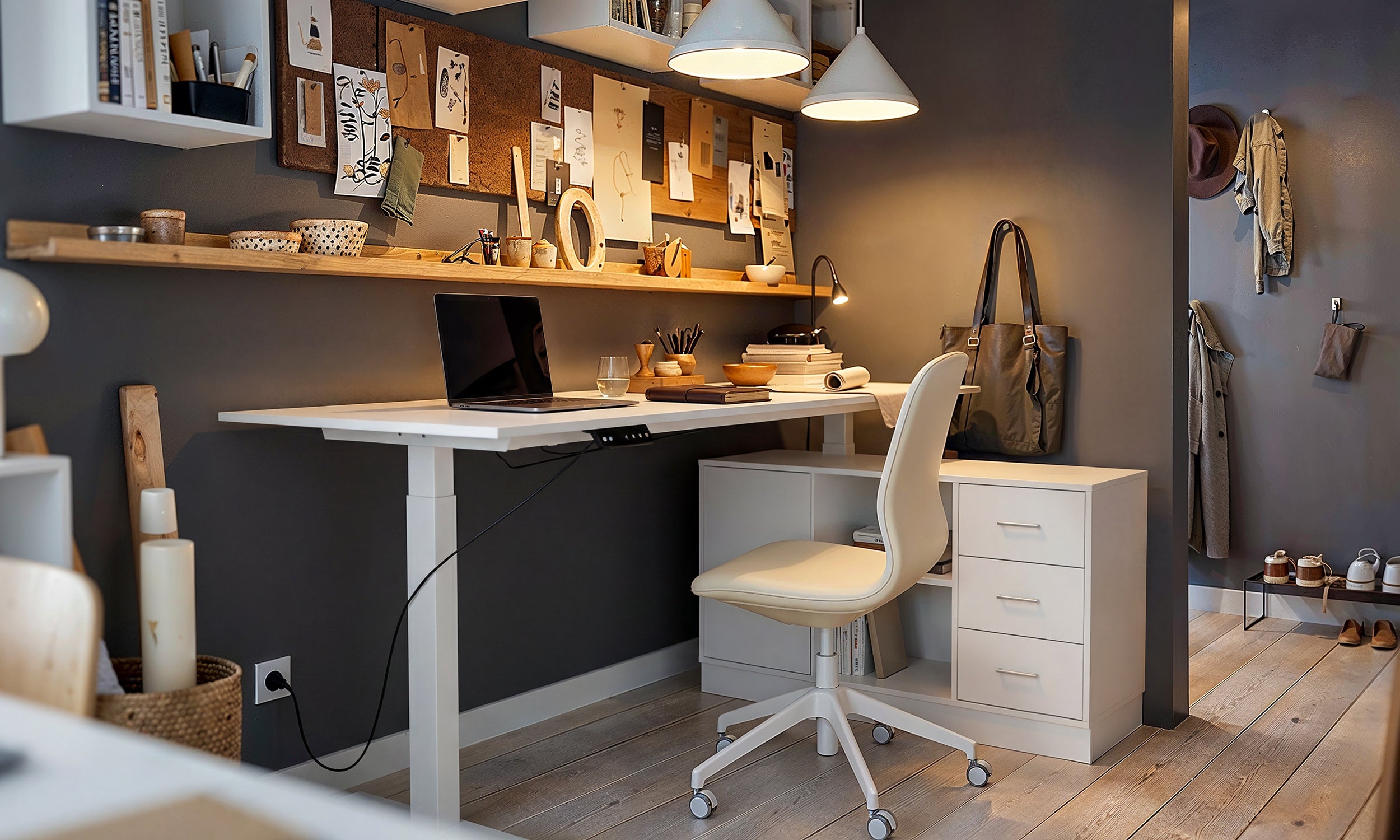
On the other hand, an l shaped desk provides distinct zones for separate tasks. You can dedicate one wing to monitors and input devices, while the secondary wing remains open for notebooks, reference materials, or desktop printing. An l shaped desk also maximizes unused corners through efficient corner placement, transforming tight room angles into productive work areas. Shoppers seeking dedicated corner efficiency often explore designs like a minimalist white home office computer corner desk to expand their usable workspace without crowding central walkways.
Integrated Storage: Evaluating Drawers and Shelving
Maintaining a neat desktop surface requires dedicated storage solutions tailored to your specific workflow. A two tone desk often incorporates cabinetry directly into its frame, alternating between white drawer faces and wood grain accents.
What type of storage should I look for in a white/brown office desk?
Look for a combination of smooth-gliding storage drawers for daily supplies and enclosed file drawers for long-term document organization. Storage drawers located directly under the primary work surface keep pens, charging cables, and notepads within arm's reach but out of view. If you manage physical archives, legal forms, or tax folders, ensuring the bottom pedestal includes dedicated file drawers protects sensitive papers from gathering dust.
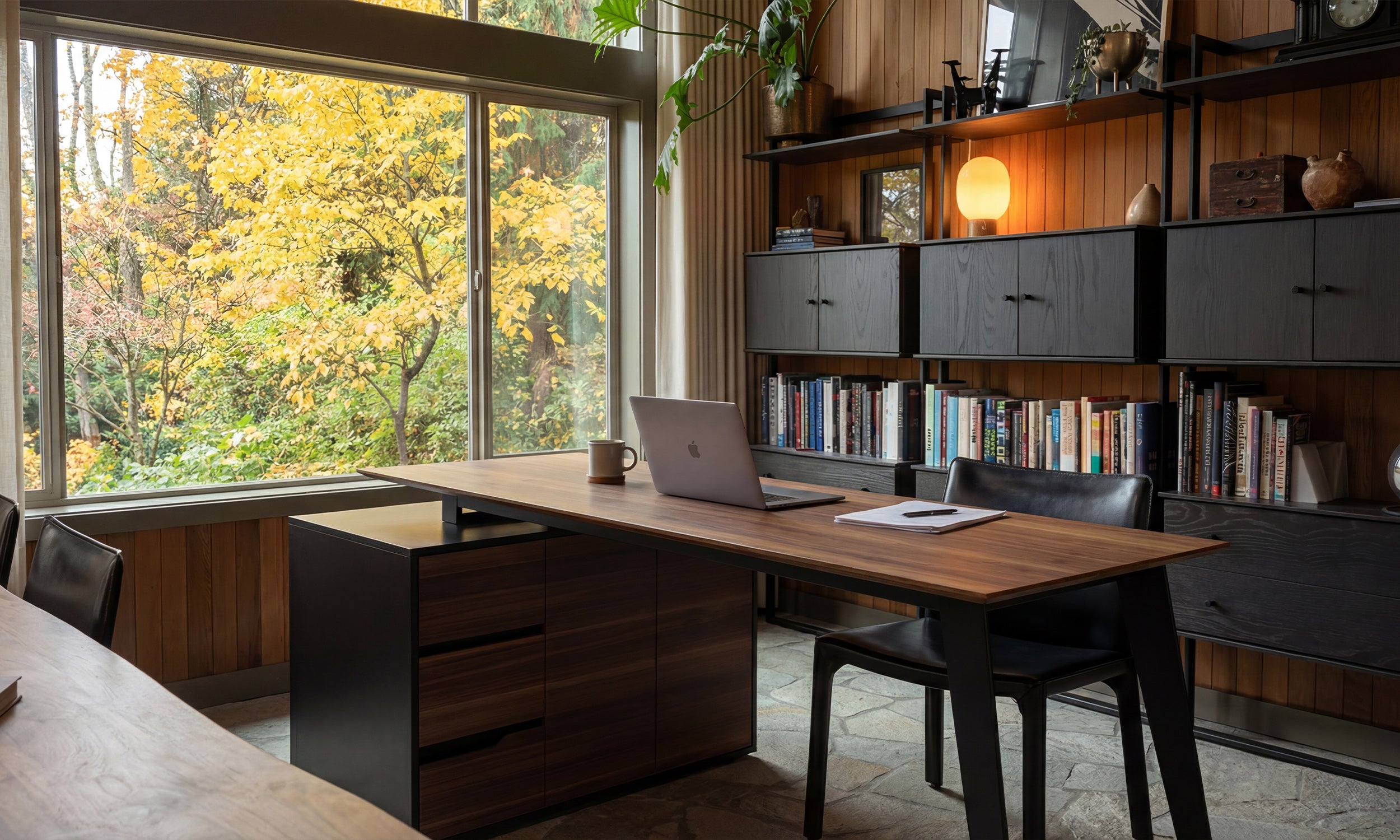
If your home office demands substantial organization beyond standard drawers, consider an all-in-one configuration. Choosing an office storage cabinet with desk setup unites deep shelving, enclosed cabinet cupboards, and broad work surfaces into a single unified piece. Balancing enclosed compartments with open shelving lets you hide unsightly office clutter while displaying a few personal books or decorative plants that complement your cottage style or farmhouse desk decor.
Surface Finishes and Everyday Maintenance
Because a two tone desk features two distinct colors and materials, understanding how to care for both finishes ensures lasting visual appeal. Most modern desks pair painted or laminated white structural legs with a textured wood grain or laminate brown top white desk surface.
How do I clean and maintain a two-tone desk surface?
Clean both finishes with a soft microfiber cloth lightly dampened with mild soapy water, avoiding abrasive scouring pads or harsh solvents. On the white base, prompt spot-cleaning removes accidental scuffs from shoes or chair wheels. On the warm wood tones of the desktop surface, wiping in the direction of the grain prevents streaks and preserves the rich visual depth.
To protect your white desk with wood top from daily wear, use wide desk pads beneath keyboards and optical mice. Always place coasters under warm coffee mugs or chilled glasses to prevent moisture rings from settling onto the brown top. Incorporating tidy cable management ties under the desktop also protects painted vertical legs from being scratched by dangling power cords and heavy power adapters.
Assembly Preparation and Long-Term Setup Tips
Taking a patient, methodical approach to assembly preparation makes putting your white and brown office desk together a straightforward project. Before beginning, clear a generous staging area on a soft rug or blanket to prevent scratching the white painted panels or wood grain tops during assembly.
Unpack the hardware and sort screws, cam locks, and drawer glides into separate small containers. When assembling a two tone desk with integrated storage, pay close attention to the orientation of finished edges. Taking time to ensure that all white facing panels face forward while raw unfinished backing faces the wall will prevent having to disassemble components later.
Once the desk frame is fully assembled and leveled on your floor, complete your workstation with proper cable management channels along the rear frame. Route monitor cords, charging bricks, and power strips neatly behind the white legs to preserve the crisp, clean look of your new white/brown desk.


Dejar un comentario
Este sitio está protegido por hCaptcha y se aplican la Política de privacidad de hCaptcha y los Términos del servicio.