










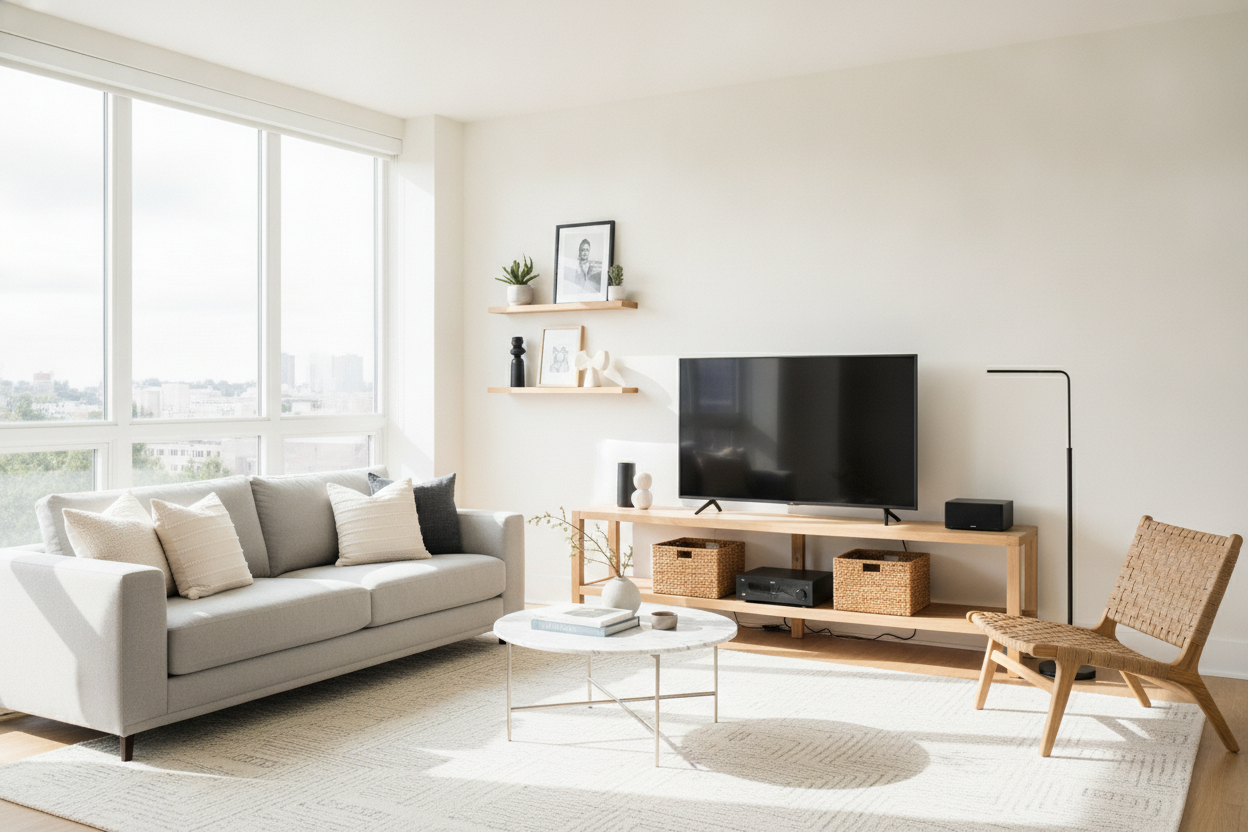
I spent three years staring at a massive, espresso-stained particle board wall unit that I bought during a late-night furniture binge. It was supposed to 'organize' my life, but mostly it just stored dust, old manuals, and a vague sense of claustrophobia. When I finally moved into a fourth-floor walk-up with a living room the size of a postage stamp, I realized the beast had to go. I swapped it for a table tv console and suddenly, I could actually breathe in my own house.
Quick Takeaways
- Legs create the illusion of more square footage by showing the floor.
- Open designs force you to declutter tech you don't actually use.
- Table-height units (around 30 inches) often provide a better viewing angle for smaller sofas.
- Cable management is the only real hurdle, but it is easily fixed with a few $10 accessories.
The 'Black Hole' Effect of Boxy TV Stands
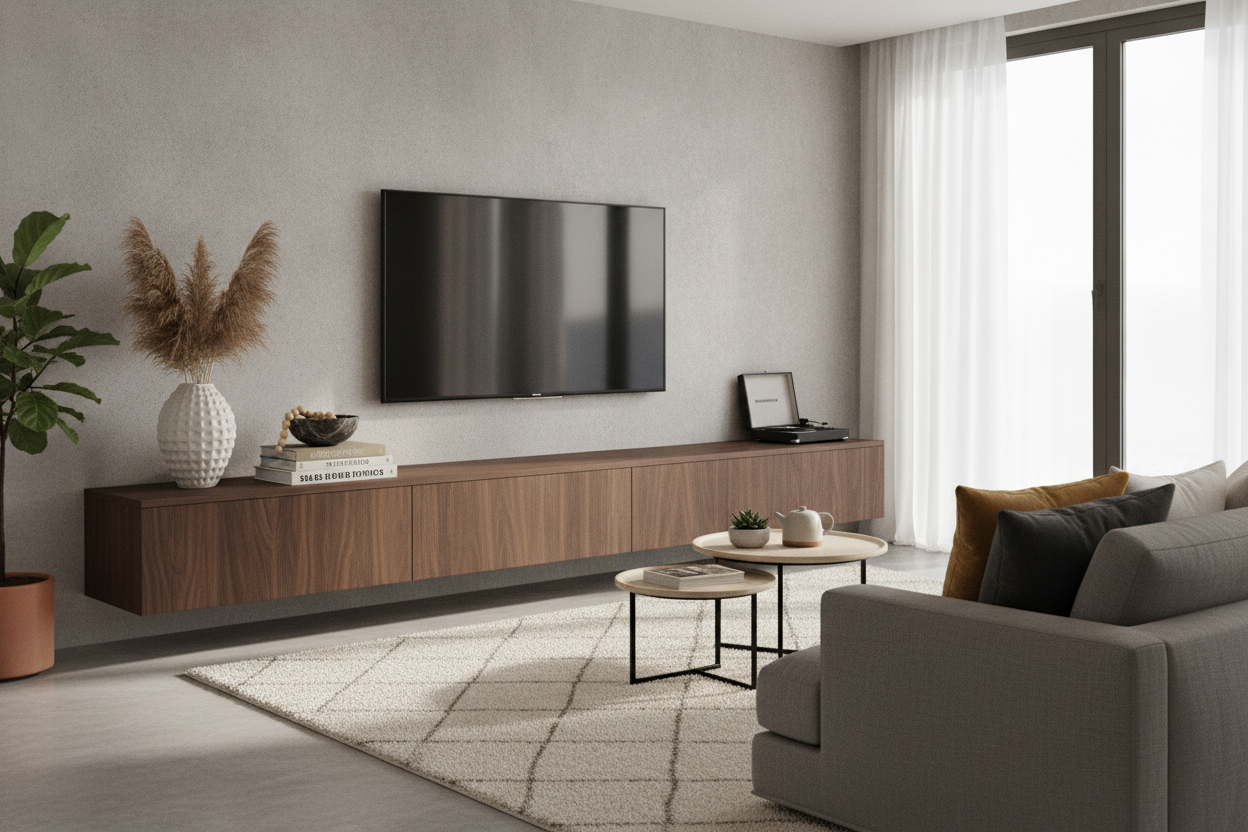
Traditional entertainment centers are the black holes of interior design. They suck the light out of a room and dominate the visual weight so much that you can't see anything else. I once tried a high gloss LED TV console thinking the reflective surface would help, but it still felt like a giant plastic block taking up four feet of precious wall space. In a small or awkwardly shaped living room, anything that hits the floor and stays there creates a 'dead zone' for your eyes.
When your furniture is a solid chunk of wood or MDF, your brain registers the room as ending exactly where that furniture starts. It’s a fast track to feeling boxed in, especially if you’re dealing with 8-foot ceilings and minimal natural light.
What Actually Makes It a 'Table' Console?
The distinction is all in the architecture. A traditional media cabinet is basically a box with doors. A table-style console, however, prioritizes legs and negative space. It’s essentially a reinforced hallway table that’s been built to handle the weight of a 55-inch OLED and a soundbar. You’re looking for a piece with at least 20 to 25 inches of clearance underneath.
This lighter structural footprint is what changes the vibe. Instead of a heavy anchor, you have a functional surface that feels like it’s floating. It’s the difference between a winter parka and a light linen blazer—both cover you up, but one makes you feel like you’re carrying a heavy load.
The Magic of Visible Floor Space
There is an old interior design trick: if you can see the baseboards and the floor stretching under your furniture, the room feels larger. A leggier stand achieves this instantly. I actually started my journey with a slim console table TV hack just to see if I could live without the bulky drawers. The shift was immediate. My living room didn't just look bigger; it felt less cluttered because the 'visual floor' was continuous.
By choosing a piece that stands on tapered or hairpin legs, you’re allowing light to pass through the furniture rather than hitting a dead end. It’s a psychological shift that makes a 200-square-foot studio feel like it has room to spare.
The Cord Anxiety (And How I Hid the Mess)
The biggest pushback I get about table consoles is the 'spaghetti' factor. Without a solid back panel, your wires are out there for the world to see. It’s a valid fear. I spent my first week with the new setup staring at a tangled mess of black HDMI cables and power bricks. It looked like a tech store exploded in my lap.
The fix is cheaper than a pizza. I used heavy-duty Velcro straps to route the cables down the back of the thinnest table leg. I also mounted a small power strip to the underside of the table using 3M Command strips. If that sounds like too much DIY stress for you, I’d suggest a solid wood modern sideboard. It gives you those high legs for the 'airy' look but includes enough closed storage to hide the router and the wire nest.
Do You Lose Too Much Storage?
When I ditched my wall unit, I had to confront the 'junk drawer' reality. I realized 90% of what I was 'storing' was garbage: dead AA batteries, a remote for a DVD player I sold in 2018, and manuals for a microwave. Giving up the drawers forced me to keep only the essentials—the Apple TV, the remote, and maybe a stray coaster.
If you genuinely need a place for your PS5 or a few books, there are ways to do it without the bulk. I found the perfect under TV table that used a single open shelf instead of a wall of cabinets. It kept the minimalist aesthetic without forcing me to put my gaming console on the floor. Most of us don't need more storage; we just need less stuff.
FAQ
Is a table console stable enough for a large TV?
As long as you check the weight capacity and choose a unit with a center support leg or solid wood construction, yes. Avoid the ultra-cheap hollow-core versions if you have a 65-inch screen.
How do I hide a router on an open table?
I use a decorative woven basket. It hides the blinking lights and the plastic casing while still allowing the signal to pass through easily. Just make sure it has enough airflow so the router doesn't overheat.
What is the ideal height for a TV table?
For most standard sofas, you want the center of the TV at eye level. A 30-inch console table is usually the sweet spot for a comfortable viewing experience without straining your neck.

Dejar un comentario
Este sitio está protegido por hCaptcha y se aplican la Política de privacidad de hCaptcha y los Términos del servicio.