










I remember the day I bought my first 'minimalist' desk. It was basically a slab of walnut on four thin hairpin legs. I felt like a design genius until I realized I had nowhere to put my stapler, my chargers, or the three half-filled notebooks I use daily. Within a week, that 'clean' surface was buried under a mountain of post-it notes and tangled cables.
I realized that functional desks aren't just about having a flat surface to park your laptop; they're about surviving a 9-to-5 without losing your mind. If you’re constantly hunting for a pen or tripping over your power strip, your furniture is failing you.
- Built-in storage beats plastic bins every single time.
- Depth matters more than width for multi-monitor setups.
- Cable management isn't a luxury—it's a requirement.
- Height adjustability is the only way to survive an eight-hour shift.
The Minimalist Desk Trap (And How I Fell For It)
We’ve all seen the Pinterest photos: a white desk, a single succulent, and a laptop. No mouse, no wires, no reality. I spent two years trying to live that lie. I bought a desk so thin it wobbled every time I typed more than 40 words per minute. Because it had zero drawers, my 'essentials' lived in a pile to my left, which made me feel like I was working in a storage unit.
The breaking point came when I knocked a full cup of coffee over my external hard drive because there wasn't enough clearance between my keyboard and my drink. Minimalist tables are great for entryways, but they are terrible for people who actually have to get work done. I traded the 'vibe' for utility, and my productivity tripled overnight.
What Actually Makes a Functional Office Desk?
A functional office desk needs to act as a command center, not just a pedestal. The biggest mistake people make is buying a table and then trying to fix its flaws with aftermarket accessories. You buy the desk, then you buy the acrylic bins, then you buy the monitor riser. Suddenly, you've spent an extra $200 and your desk looks like a cluttered craft project.
I’ve learned to look for desks with drawers and shelves built right into the frame. When your storage is integrated, the piece is structurally sound and the aesthetic remains cohesive. You want drawers that glide on metal tracks—not those cheap friction-fit ones that stick when the humidity hits 50%. A drawer at arm's reach is the difference between a clear head and a cluttered mind.
The Non-Negotiable Features I Look For Now
After testing everything from $50 folding tables to $2,000 custom builds, I have a strict checklist. First: depth. If a desk is less than 24 inches deep, your monitor is going to be right in your face, and you’ll have zero room for a keyboard and a notebook. Aim for 30 inches if you have the square footage.
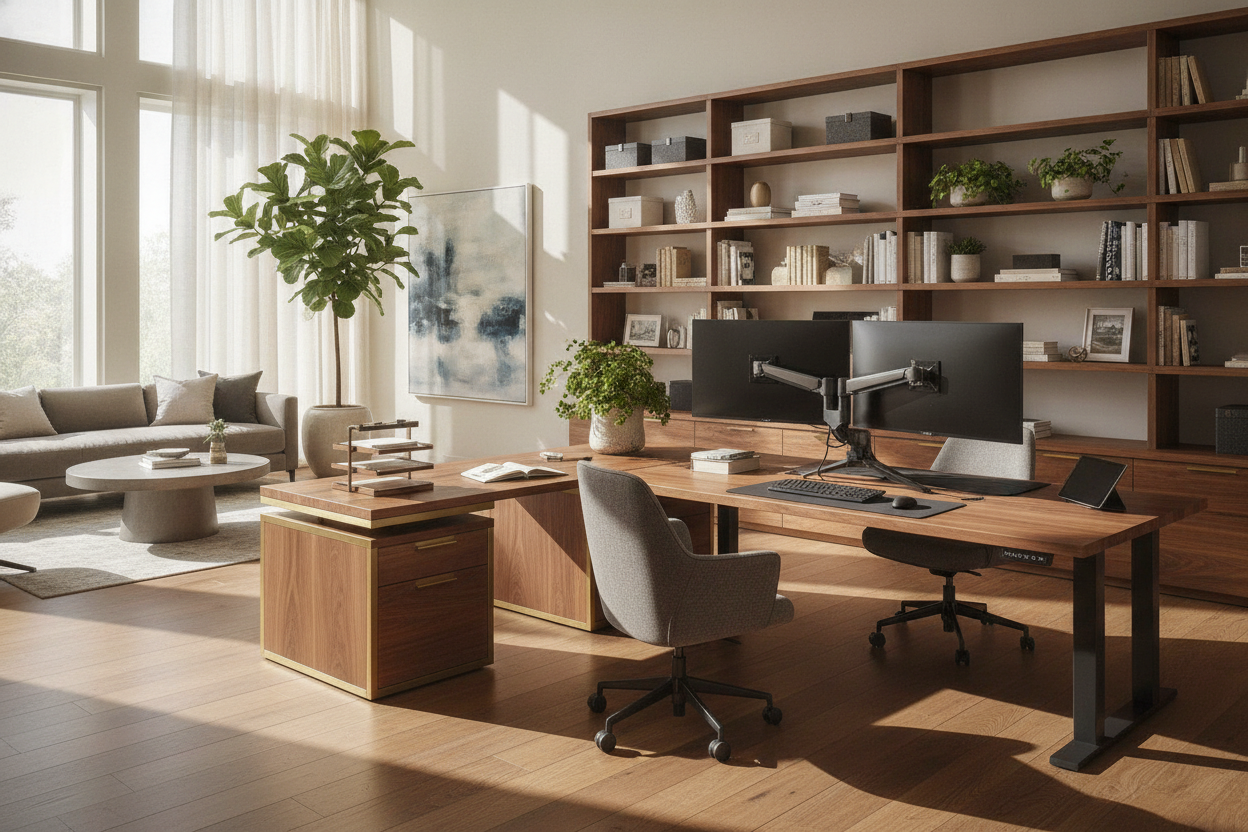
Second: movement. Sitting for eight hours is a recipe for lower back disaster. I finally invested in an ergonomic sit-stand up desk with a programmable controller. Don't get the manual crank version; you'll use it twice and then never again. You need the presets so you can hit a button and transition while you're on a Zoom call.
If you're working in a tight apartment, don't just shove a small desk against a flat wall. A corner desk with large storage can turn a dead corner into a massive workspace. It gives you two distinct zones—one for your computer and one for 'analog' tasks like signing papers or eating the lunch you’re too busy to move away from.
Where to Put Everything (Without Ruining the Vibe)
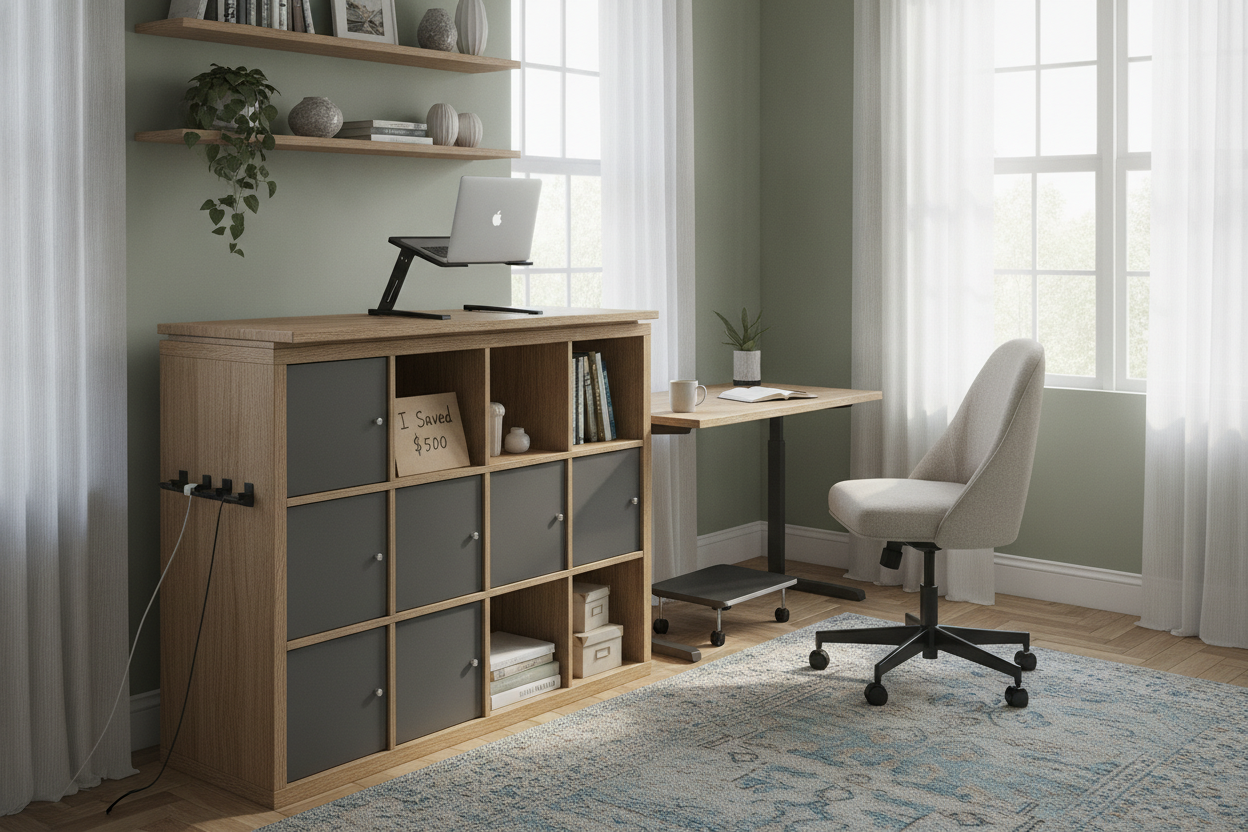
The fear is that a functional desk will look like a corporate cubicle from 1998. It doesn't have to. The trick is choosing materials that match your home—think oak or matte black metal—rather than that 'office grey' laminate. Hide your power strip in a dedicated cable tray under the desk. If it’s dangling, it’s distracting.
Be careful with your vertical space, too. A common desk and shelving layout mistake is mounting heavy shelves directly above your monitor at a height where you're constantly worried about a book falling on your head. Give yourself at least 18 inches of breathing room above your screen. It keeps the workspace feeling open and airy, even if the desk itself is a heavy-duty workhorse.
Ready to Reclaim Your Workflow?
Stop punishing yourself with furniture that looks good but works hard against you. Your desk is the most used tool in your professional life; treat it like one. Whether you need a massive L-shape for three monitors or a compact unit with deep drawers, prioritize the way you actually work over how you want the room to look in a photo. Finding a dedicated writing computer desk that fits your specific body and habits is the best gift you can give your career.
How deep should my desk be?
At minimum, 24 inches. If you use large monitors or like to spread out papers, 30 inches is much more comfortable. Anything less than 20 inches is basically a console table, not a desk.
Are standing desks actually worth the money?
Yes, but only if they have electric motors and memory presets. If you have to manually adjust it, you'll likely leave it in one position forever. The ability to shift heights in 10 seconds is what makes it effective.
What material is best for a long-lasting desk?
Solid wood or high-grade plywood with a thick veneer. Avoid thin particle board if you plan on using a monitor arm; the weight of the clamp can actually snap cheap MDF over time.

Dejar un comentario
Este sitio está protegido por hCaptcha y se aplican la Política de privacidad de hCaptcha y los Términos del servicio.