










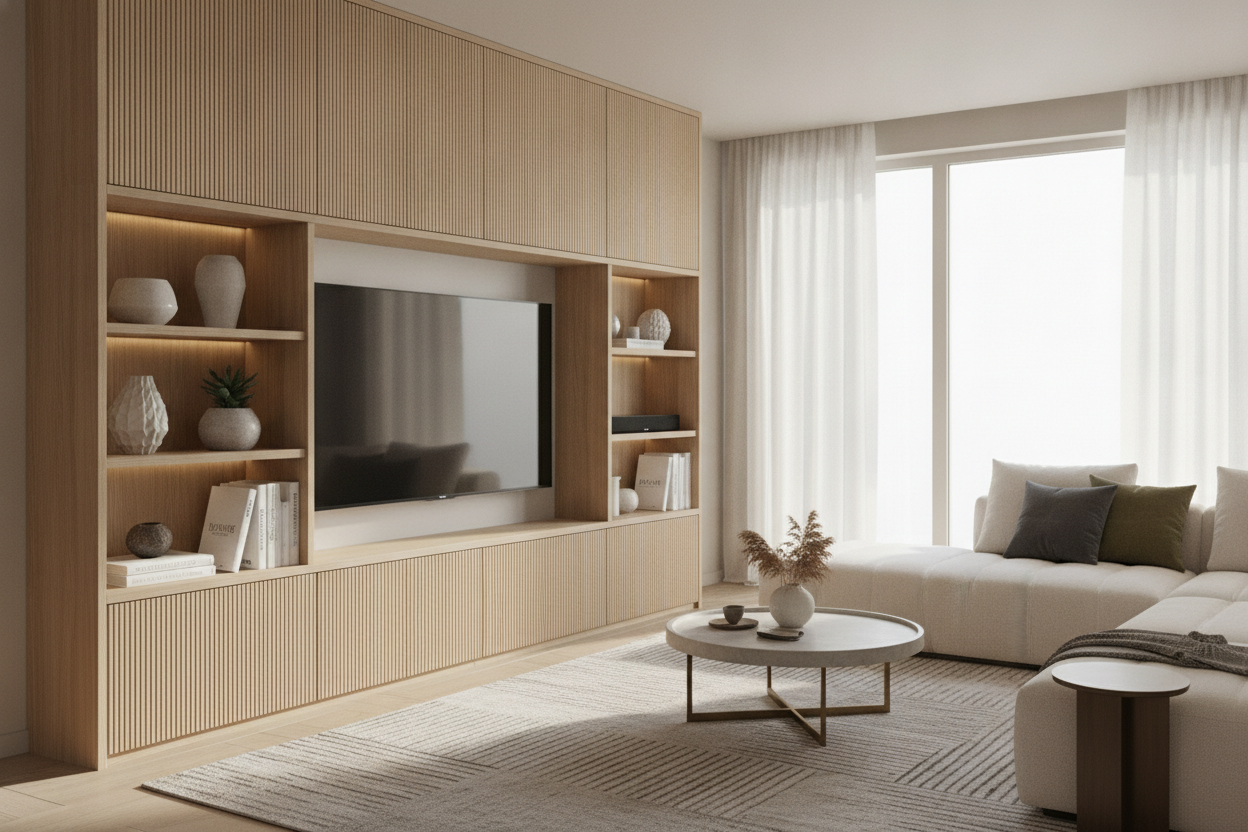
I spent three years staring at a 65-inch OLED sitting on a spindly, 16-inch-high mid-century console. On Instagram, it looked like a minimalist dream. In my actual house, it looked like I had run out of money halfway through furnishing the place. The TV felt like a postage stamp stuck to a billboard, leaving a massive, awkward void of drywall that no amount of 'gallery wall' fluff could fix.
The shift happened when I finally admitted that my living room cabinet tv setup needed some actual height and heft. Swapping that low-profile stand for a taller, more substantial cabinet didn't just give me a place to put my screen; it finally made the room feel like a grown-up lived there.
Quick Takeaways
- Low-profile consoles often leave too much 'dead air' on the wall, making rooms feel unfinished.
- A taller cabinet anchors the space and provides essential hidden storage for tech mess.
- Scale is everything: your cabinet should always be wider than your TV to avoid a top-heavy look.
- Solid doors are your best friend for hiding routers and tangled cords.
The 'Black Hole' Effect of Low-Profile Consoles
We’ve been told for years that 'low and sleek' is the peak of modern design. But unless you live in a concrete loft with 20-foot ceilings and zero clutter, those tiny stands are a trap. When you put a massive black rectangle on a tiny sliver of wood, you create a visual black hole. The eye doesn't know whether to look at the screen or the four feet of empty wall above it.
In my experience, this setup makes the room feel bottom-heavy. It’s physically uncomfortable, too. If your sofa has any kind of deep-seat lounge vibe, you’re basically looking down at your shins to see the screen. It’s not ergonomic, and it’s definitely not cozy. You want your furniture to command the wall, not hide from it.
The Day I Finally Got a Real Living Room Cabinet TV Setup
I eventually hauled that flimsy stand to the curb and brought in a piece with some actual verticality. The difference was immediate. A taller cabinet acts as an anchor, drawing the eye up and making the ceiling feel like it’s actually part of the design. It turns the TV into a piece of the architecture rather than a piece of plastic sitting on a shelf.
When I upgraded to a modern wall cabinet for living room storage, I stopped worrying about how to fill the 'dead zone' above the TV. The furniture did the heavy lifting for me. It brought a sense of warmth and permanence that a thin metal stand just can't replicate. My living room finally stopped looking like a temporary landing pad and started feeling like a home.
Hiding the Ugly Stuff (Routers, Cords, and Gaming Rigs)
Let’s be real: technology is rarely pretty. Between the mesh router, the PS5, and the nest of HDMI cables, the area around a TV usually looks like a high-tech bird's nest. Open shelving is a lie sold to people who don't actually own electronics. You need solid doors to hide that chaos.
I’m a big fan of the 'mix and hide' strategy. I use a solid-door cabinet for the electronics and then place a display cabinet with glass doors on the adjacent wall for the things I actually want people to see, like my vintage glassware and books. It keeps the room looking curated without forcing me to cable-tie every single wire to within an inch of its life.
Choosing Between TV Living Room Units
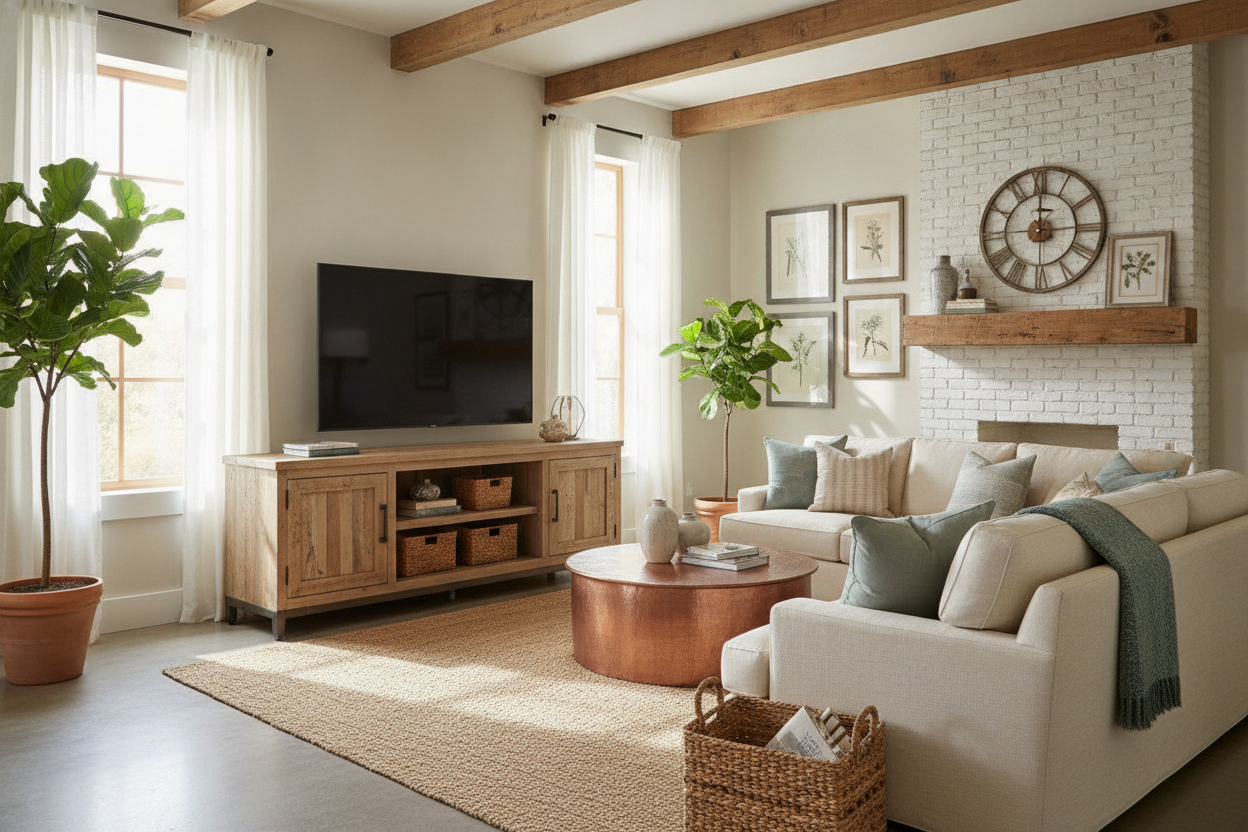
Finding the right piece means looking beyond the standard 'media' category. Sometimes the best tv living room units aren't even sold as TV stands. I’ve seen people use modified sideboards or even low armoires to great effect. The goal is to find something that has enough depth for your components but enough height to fill the visual field.
When you are browsing a broader Living Room collection, look for pieces with adjustable shelving and cord management holes. If the piece you love doesn't have them, a 2-inch hole saw bit and a power drill can turn almost any cabinet into a functional media hub in about five minutes. Don't limit yourself to the 'media center' aisle.
Getting the Scale Right for Living Room Furniture TV Stand Cabinet Pieces
This is where most people mess up. If you have a 65-inch TV, your living room furniture tv stand cabinet needs to be at least 70 inches wide. Ideally, you want a few inches of 'landing space' on either side of the screen. If the TV is wider than the cabinet, the whole room feels anxious and top-heavy, like a bodybuilder who skipped leg day.
I usually aim for the 1.5x rule: the cabinet should be about 1.5 times the width of the screen. This allows you to place a small lamp or a couple of decorative objects on the ends to soften the transition from the screen to the wall. It makes the TV feel integrated into the decor rather than just slapped on top of it.
The Verdict: Is the Extra Bulk Worth It?
I’ll admit, a larger cabinet takes up more physical floor space. If you’re in a tiny studio, every inch counts. But in a standard living room, that extra footprint is a small price to pay for a room that feels balanced. The added storage alone—for board games, extra blankets, or the 'everything' drawer—is worth the trade-off.
A substantial cabinet makes the room feel grander and more intentional. It’s the difference between a dorm room and a sanctuary. Once you have your piece in place, the next hurdle is styling it so it doesn't just look like a giant block of wood. If you're stuck, check out this guide on How to Actually Decorate a Living Room Cabinet TV Setup to get the finishing touches right.
FAQ
How high should a TV cabinet be?
For most setups, 24 to 30 inches is the sweet spot. It keeps the center of the screen at eye level when you're seated, which is much better for your neck than the 'TV over the fireplace' trend.
Do I need ventilation for my electronics in a cabinet?
Yes. If you’re running a gaming console or a high-end receiver with the doors closed, you need to cut a vent hole or leave the back panel off. Heat is the number one killer of electronics.
Can I use a dresser as a TV cabinet?
Absolutely. Dressers are often the perfect height (around 30-34 inches) and offer tons of storage. Just make sure the depth is sufficient for the TV's stand or feet.

Dejar un comentario
Este sitio está protegido por hCaptcha y se aplican la Política de privacidad de hCaptcha y los Términos del servicio.