










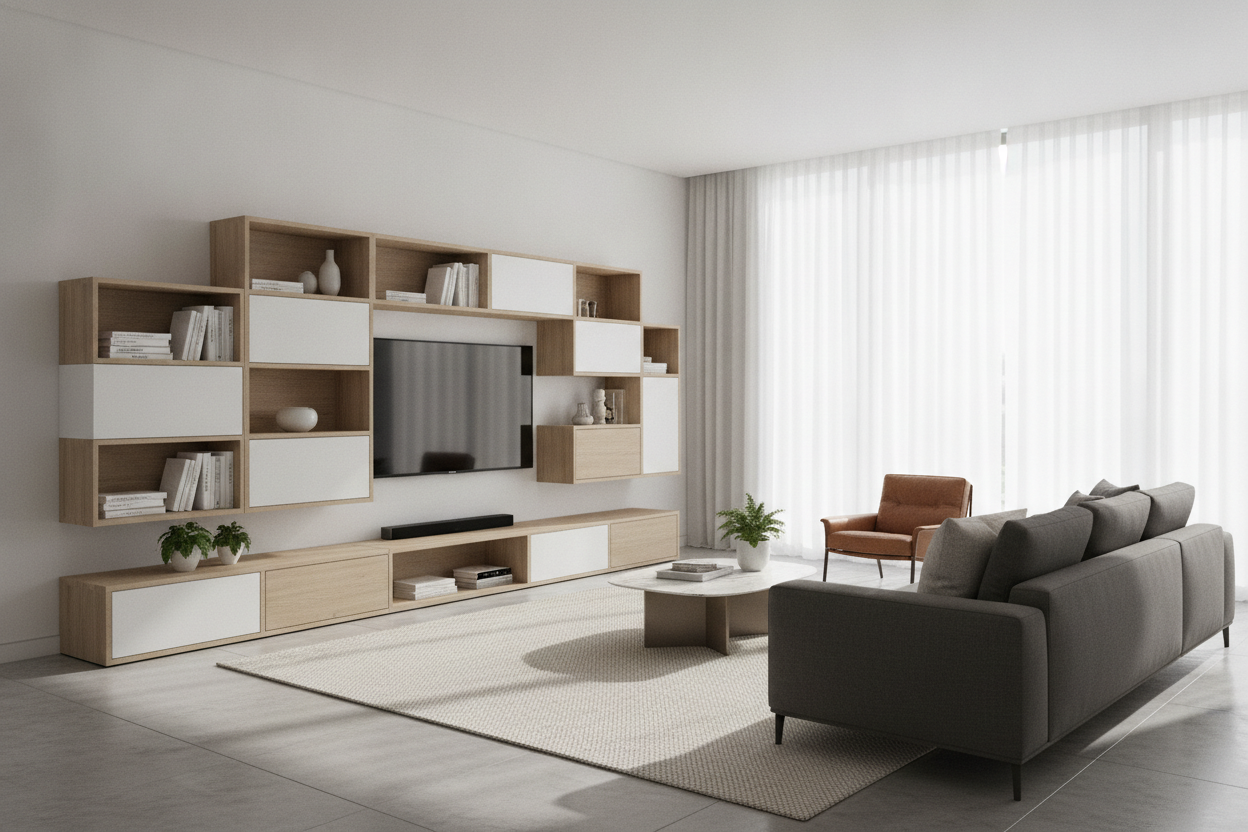
I remember staring at my $800 solid mango wood console in the middle of my third-floor walk-up. It was beautiful, heavy as a dead horse, and exactly three inches too long for the only usable wall in my new place. I ended up selling it for $100 on Craigslist just to get it out of the way. That was the day I swore off fixed-width furniture and finally invested in modular tv stands.
- Adaptability: Modular units can be split, stacked, or rearranged to fit any floor plan.
- Longevity: You don't have to replace the whole unit when you upgrade to a larger screen.
- Portability: Moving smaller boxes is infinitely easier than wrestling a 75-inch solid wood beast.
- Custom Look: You can create a high-end built-in aesthetic for a fraction of the cost of custom cabinetry.
The Problem With 'One and Done' Media Consoles
The standard media console is a trap. You buy a 70-inch unit because it looks great in your current open-concept living room, but two years later, you move into a pre-war apartment with a fireplace that eats up half your wall space. Suddenly, your expensive furniture is blocking a doorway or overlapping a window frame.
It’s the classic debate of tv cabinets or stands what designers actually think: do you go for the heavy, permanent look or something lighter? I've found that rigid, one-piece consoles almost always end up in the 'for sale' pile because they lack the flexibility to survive a move. They are designed for a single room, not a life that changes.
What Actually Makes a Setup 'Modular'?
A true modular system isn't just two random nightstands shoved together. It’s a series of components—base units, shelving modules, and bridge pieces—designed to lock together or sit flush. I prefer systems that offer both open and closed modular tv cabinets. This allows you to hide the messy tangle of HDMI cables and power strips behind a door while showing off your book collection or vintage turntable on an adjacent open shelf.
Three Times an Adaptable System Saved My Layout
I’ve lived in everything from a converted garage to a sprawling suburban ranch. Every time, my modular setup was the only thing that didn't need to be replaced.
The Narrow City Apartment
In one particularly cramped Brooklyn unit, the only wall for the TV was right next to the main walkway. A standard console would have meant shimmying sideways past the TV every day. Instead, I split my modular unit into two pieces, placing one under the TV and the other in a different corner as a bar cabinet. It kept the path clear and the room feeling intentional.
The Awkward Corner Dilemma
We once lived in a place where the only flat wall was interrupted by a radiator. By using an L-shaped configuration, I wrapped the modular units around the corner. It actually traded expensive built-ins for a tv modular wall unit look that guests assumed was original to the house. You just can't do that with a standard rectangular box.
The 'Wait, We Got a Bigger TV?' Crisis
When we finally jumped from a 50-inch to a 75-inch screen, we didn't have to worry about the 'overhang'—that hideous look where the TV is wider than the stand. I simply ordered one extra middle module, slid the existing pieces out, and dropped it in. Total cost? About $150. Replacing a whole high-end console would have been triple that.
How to Build Your Own Setup Without It Looking Choppy
The biggest fear people have with modular furniture is that it will look like a dorm room. The secret is consistency. If you're mixing pieces, ensure they share the same depth and height. I always recommend using a continuous top plate if the manufacturer offers one; it ties the separate bases into a single, sleek surface.
If you aren't confident in your DIY design skills, look for a modern 3 piece entertainment center. These kits give you the modular benefits—easier assembly and transport—but are pre-styled to ensure the proportions are perfect. Adding some overhead cabinets can also frame the TV, giving it that 'anchor' that small stands often lack.
Is the Upfront Cost Actually Worth It?
Yes, a high-quality modular system might cost 20% more than a cheap, one-piece particleboard unit from a big-box store. But when you consider that you'll keep it through three moves instead of trashing it after one, the ROI is obvious. You're buying a system, not just a shelf. If you're tired of the buy-and-toss cycle, it's time to browse flexible tv stands and invest in something that actually grows with you.
FAQ
Will modular pieces slide apart on hardwood floors?
Not if you use them correctly. Most systems come with metal joining plates. If yours doesn't, a few cheap rubber pads on the feet or a small strip of industrial velcro between the units will keep them perfectly aligned.
Do they look as high-end as solid consoles?
They can. The key is the material. Look for kiln-dried wood veneers or powder-coated steel rather than thin laminate. When the seams are tight and the hardware matches, it looks like a custom piece.
Can I add to my system years later?
Usually, yes, provided you buy from a reputable brand that keeps its 'staple' collections in stock. It’s always a good idea to check how long a specific line has been in production before committing.

Dejar un comentario
Este sitio está protegido por hCaptcha y se aplican la Política de privacidad de hCaptcha y los Términos del servicio.